

Father and Husband, President of The Linchpin Bunch Inc. and #CAMELS Founder.
Sarasota, FL
Joined February 2011
- Tweets31.2K
- Following1.1K
- Followers2.6K
- Likes3.8K





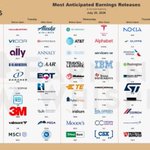

As the third quarter earnings season begins, investors are becoming more divided over artificial intelligence. Some believe AI will create enormous profits, while others worry companies are spending too much money without generating enough returns. Since ChatGPT launched in November 2022, a group of 41 AI related stocks has accounted for 75% of the S&P 500’s returns, 80% of its earnings growth and 90% of its capital spending growth, according to JPMorgan Private Bank. That means a large part of the stock market’s gains depends on the future of AI. The upcoming earnings reports from chipmakers, cloud computing companies and software providers could help determine whether that growth continues into 2027.
One major concern is the difference between how AI stocks and AI related bonds are performing. Stocks represent ownership in a company, while bonds are loans that companies must repay. Some AI stocks have recovered from recent declines, but the bonds issued to finance AI expansion are showing signs of stress. CoreWeave, an AI computing company backed by Nvidia, is losing money and carrying substantial debt. Its stock has fallen this year, while one of its bonds has dropped more than 20% since its April launch. Analysts disagree about the company’s future. HSBC believes its investments could destroy value and recommends selling the stock, with a price target of $39. Goldman Sachs, however, upgraded the stock to a buy, arguing that future revenue could improve. Its revised price target of $106 suggests substantial potential gains from its recent price near $62. That wide disagreement shows how difficult it is to determine which AI companies will become profitable.
Another problem is that demand for AI is growing faster than companies can turn it into revenue. AI models process information using units called tokens, and the number of tokens being used continues to increase. However, spending growth is slowing partly because token prices are falling. That raises questions about whether AI companies can turn rising usage into higher profits. Electricity is another major obstacle. Data centers need enormous amounts of power to operate their AI chips, but some facilities cannot get enough electricity to run. Microsoft recently withdrew from a proposed data center project in Britain after officials indicated that the site might not receive power until the 2030s. Morgan Stanley estimates that US data center developers could face a 30% to 40% power shortfall through 2028. This means companies could spend billions on chips and equipment that cannot be fully used because the necessary electricity and infrastructure are not available.
The biggest question is whether the money being invested in AI will eventually generate enough revenue to justify the cost. McKinsey and S&P Global estimate that six major US cloud computing companies alone will spend more than $7 trillion on data centers and other AI related investments between 2025 and 2030. Columbia University’s Stijn Van Nieuwerburgh estimates that financing the AI expansion from 2025 through 2032 could cost $10.3 trillion. To earn a 10% return on that investment, he estimates the industry would need approximately $3.55 trillion in annual revenue by 2032. Some analysts believe the required figure could exceed $4 trillion. That is an enormous target, representing more than 10% of projected US economic output in 2032. For investors, the key is not simply whether AI adoption continues to grow. It is whether the revenue and profits can eventually justify the trillions of dollars being spent.
$CCI Crown Castle (CCI) reported lower revenue and net income for the third quarter of 2026 compared with a year ago. Revenue from renting space on its wireless towers fell 5% to $966 million, while net income dropped 12% to $283 million. Adjusted EBITDA, a measure of operating performance, declined 6% to $673 million. However, adjusted funds from operations (AFFO), a key measure of cash available to support dividends and other financial needs, increased 8% to $530 million, or $1.24 per share, up 11% from last year.
The company said its results were affected by the loss of revenue from DISH and the cancellation of Sprint contracts. Excluding those impacts, Crown Castle's underlying tower rental business continued to grow, with adjusted organic growth of 3.8% during the quarter. The company also benefited from lower interest expenses and fewer shares outstanding, helping boost AFFO despite weaker revenue. Crown Castle paid shareholders $1.0625 per share in dividends during the quarter, unchanged from the same period last year.
Crown Castle raised parts of its full year 2026 financial outlook. The company now expects adjusted EBITDA of approximately $2.715 billion at the midpoint, up $25 million from its previous forecast. It also expects AFFO of approximately $1.98 billion, up $5 million from its earlier outlook, with AFFO per share projected at $4.60. The company expects full year site rental revenue of about $3.875 billion, down roughly 4% from 2025. Management said the improved outlook reflects cost savings, operational efficiencies, customer agreements and increased activity buying out land leases beneath its towers.
CEO Chris Hillabrant said Crown Castle is focused on improving efficiency, updating its systems and owning more of the land beneath its towers. The company also reported a strong financial position, with 97% of its debt carrying fixed interest rates, an average debt maturity of about seven years and approximately $3.9 billion available through its revolving credit facility. For investors, the key takeaway is that Crown Castle is facing lower revenue and operating earnings, but improving cash flow and a slightly higher forecast could help support its dividend. The question is whether those improvements can continue as the company works through customer losses and positions its tower business for long term growth.
$META Meta reported strong third quarter results, with revenue rising 26% from a year earlier to $64.6 billion. That beat analysts’ average estimate of $63.37 billion. Adjusted earnings per share reached $3.83, helped by growth in its core business. Advertising was the main driver, as the number of ads shown increased and the average price per ad rose 14%.
Meta said its investments in artificial intelligence are helping improve user engagement and generate more advertising revenue. Looking ahead, the company expects fourth quarter revenue between $73 billion and $76 billion. Meta also raised the low end of its 2026 spending forecast to $135 billion, while keeping the high end at $145 billion. The company said the updated outlook includes about $9.9 billion in legal charges.
Meta expects losses in its Reality Labs division, which develops virtual reality products and related technology, to narrow to between $18 billion and $19 billion in 2026. The company also approved a new Class C common stock and a one time stock dividend. For investors, the key points are strong advertising growth, AI investments that are helping the business, and the enormous amount of money Meta plans to spend. The big question is whether those investments will generate enough future profit to justify the cost.
$SPCX SpaceX reported a strong third quarter, turning a year ago’s loss into a profit as revenue climbed much higher than Wall Street expected. The rocket and satellite company earned 35 cents per share, compared with a loss of 36 cents per share a year earlier. Revenue jumped 161% to $14.58 billion, beating analysts’ expectations of $12.87 billion. Its artificial intelligence division was a major driver of that growth, with revenue soaring 830% to $7.56 billion. The company credited new cloud service agreements, its acquisition of Cursor and increased use of Grok, its AI technology.
SpaceX also saw strong growth in its connectivity business, which includes satellite internet and related services. Revenue in that division increased 69% to $5.25 billion. However, the company is spending heavily to expand its business. Capital expenditures, which are the money companies spend on major investments such as equipment and infrastructure, climbed to $19.59 billion from $6.88 billion a year earlier. That means SpaceX is investing aggressively in its future, but investors will want to see those investments produce lasting profits and cash flow.
One major goal is reaching $100 billion in annual recurring revenue by the end of the year. Annual recurring revenue estimates how much money a company can expect to bring in over a year from ongoing business agreements. Oppenheimer analysts said SpaceX appears to be on track, helped by major AI computing contracts. Four deals, including agreements involving Anthropic and Google, represent about $46 billion in annualized revenue, according to the firm. SpaceX is also expanding its wireless ambitions. Earlier this month, it agreed to acquire a nationwide portfolio of low-band wireless spectrum as it works to make Starlink Mobile a bigger player in the U.S. mobile phone market.
SpaceX shares rose about 1% in after-hours trading and have gained 20% over the past three months. The company went public in June in what was described as a record-breaking initial public offering. Investors are also watching speculation about a possible merger with Tesla, another company led by Elon Musk. Analysts expect SpaceX management to continue sharing ambitious growth plans. The big question for investors is whether the company can turn its rapid revenue growth and massive investments in AI, satellites and wireless services into sustainable profits over the long term.
$HAS Hasbro shares jumped 9.3% on Tuesday after the toy company reported better than expected third quarter results and raised its financial outlook for 2026. Revenue increased 15% from a year ago to about $1.6 billion, beating Wall Street's estimate of $1.48 billion. Adjusted earnings climbed to $2.90 per share, compared with $1.68 a year earlier, also beating expectations. Hasbro now expects full year revenue growth of 7% to 9%, up from its previous forecast of 5% to 7%. The company also raised its earnings outlook, helped by strong demand for its games.
Hasbro's biggest growth driver was its Wizards of the Coast and digital gaming business, which includes Magic: The Gathering. Revenue in that segment jumped 31% to $747.2 million, while tabletop gaming revenue surged 39% to $613.1 million. Magic: The Gathering generated more than $600 million in revenue during the quarter for the first time ever. The company's entertainment business also grew, supported by family brands, although declines in film and television partly offset those gains. Hasbro said it has now delivered four straight quarters of double digit revenue growth and expects the momentum to continue into 2027.
Hasbro is also increasing its planned stock buybacks to $400 million for 2026, double its previous target of $200 million. Buybacks allow a company to purchase its own shares, potentially increasing the ownership percentage of investors who continue to hold their stock. However, the company still faces rising costs, including expenses tied to oil, which can affect manufacturing and transportation. Hasbro said it is taking steps to offset those pressures. The strong earnings report and improved outlook helped push the stock's gains for the year to 31%, as investors reacted to stronger sales and growing demand for its gaming products.
$UAL United Airlines reported $17.9 billion in revenue for the third quarter of 2026, up 17.4% from the same period last year. The airline earned $1 billion in net income, or $3.14 per share. Higher fuel costs remained a challenge, with fuel expenses rising $1.8 billion compared with the third quarter of 2025. Despite those costs, United saw strong demand across its business, including a 17% increase in premium cabin revenue, a 16% increase in Basic Economy revenue, a 17% increase in loyalty program revenue and a 23% increase in cargo revenue. Revenue from corporate customers also climbed 26%, showing that business travel remained strong.
United is investing heavily in technology to attract more customers and stand out from competitors. Its Starlink satellite internet service is now available on more than 640 aircraft, and the airline plans to have it across its entire fleet by the end of 2027. More than 5.4 million passengers used Starlink on United flights in September. Customers can also watch live professional and college football on equipped seatback screens, with free Starlink access for MileagePlus members in every class of service. United said customer satisfaction reached its highest third-quarter level since 2022, and satisfaction scores on Starlink-equipped planes were nearly twice those on planes with other Wi-Fi services. The airline is also upgrading airport facilities, including a new Houston terminal concourse with a United Club lounge that can seat 800 people.
United also reported strong travel demand and operational results. The airline carried a record 49.5 million paying passengers during the quarter and averaged about 538,000 customers per day. It operated its largest domestic schedule ever, serving 241 airports across the United States and Canada. United also ranked among the most reliable major U.S. airlines this summer, recording the lowest seat cancellation rate among the country's three largest airlines. Looking ahead, the company announced plans to add 10 international destinations in summer 2027, including locations in Italy, Spain, France, Japan and Portugal. It also plans to expand several existing international routes and has added new domestic service from Newark, New Jersey.
United is also working to strengthen its finances while investing in its employees and communities. On October 16, the airline expanded its revolving credit facility from $3 billion to $5 billion, giving it more access to emergency funding and financial flexibility. United ended the quarter with $17.7 billion in available liquidity, which includes cash and other available financial resources. The company also expanded its pilot training center in Denver, adding simulators to help train up to 860 pilots daily. Beyond its business operations, United supported charities through donations, volunteer work and fundraising, including raising $1.3 million for Special Olympics. Overall, the results show an airline benefiting from strong travel demand while spending heavily on technology, airport improvements and future growth.
$NFLX Netflix reported a profit of $3.66 billion in the third quarter, equal to 87 cents per share. The streaming company, based in Los Gatos, California, performed better than Wall Street expected. Analysts had predicted earnings of 82 cents per share.
Netflix brought in $12.87 billion in revenue for the quarter, matching analysts’ expectations. Revenue is the money a company earns before paying its expenses. The results show that Netflix continues to generate billions of dollars from its streaming business.
Looking ahead, Netflix expects to bring in $13.44 billion in revenue for the quarter ending in December. For the full year, the company expects revenue to reach $51.1 billion. Investors will be watching to see whether Netflix can continue growing its revenue and profits as it competes for viewers in the streaming market.
$GM General Motors (GM) shares fell nearly 8% in premarket trading to $76.20 after the automaker updated its financial outlook. The company now expects to earn between $12.75 and $13.75 per share for the year. The midpoint of that range is below Wall Street’s estimate of $13.41, raising concerns that profits may not be as strong as analysts expected.
GM reported third quarter adjusted earnings of $3.70 per share, beating analysts’ expectations of $3.63. The company also narrowed its 2026 operating profit forecast to between $14.5 billion and $15.5 billion, compared with its previous range of $14 billion to $16 billion. This gives investors a more focused estimate of what the company expects to earn.
GM says it remains confident in its business, even as higher transportation costs, energy prices, tariffs and other expenses put pressure on profits. The key issue for investors is that GM beat earnings expectations for the quarter but lowered the midpoint of its full year earnings outlook. That helps explain why the stock could fall even after reporting better than expected results.


$WFC Wells Fargo reported third-quarter profit above Wall Street expectations on Tuesday, but its shares fell nearly 1% in volatile premarket trading after the bank missed estimates for revenue and net interest income.
The bank earned $1.87 per share, beating analysts’ expectations of $1.85. Revenue totaled $21.87 billion, below the $22.31 billion Wall Street expected. Net interest income, the money banks make from loans and pay out on deposits, increased 5% to $12.52 billion but also fell short of estimates of $12.63 billion.
Wells Fargo said lower interest rates on certain assets and higher deposit costs pressured its net interest income. The bank is also expanding its lending business after regulators removed its $1.95 trillion asset cap last year, allowing it to compete more aggressively with larger rivals.
However, provisions for potential loan losses rose to $1.03 billion from $681 million a year earlier. That means the bank is setting aside more money to cover loans that may not be repaid, although management has said it has not seen a deterioration in delinquency trends.
The results add to a mixed start to big-bank earnings. JPMorgan Chase fell short of quarterly profit expectations for the first time in nearly three years, while Goldman Sachs reported higher third-quarter profit.

$ACN Accenture finished its fiscal 2026 year with stronger than expected results. The consulting and technology company reported fourth quarter revenue of $18.7 billion, up 6% from a year ago and above the high end of its own forecast. For the full year, revenue reached $74.2 billion, up $4.5 billion, or 6%. Growth was spread across its different regions, industries and types of work.
Profitability also improved. Accenture reported fourth quarter earnings per share of $3.29, up 46%, while full year earnings per share reached $13.56, up 12%. The company generated $11.6 billion in free cash flow during the year, showing it is producing a large amount of cash from its business. Accenture also returned a record $11.5 billion to shareholders, including $7.5 billion through stock buybacks.
Looking ahead, Accenture expects revenue to grow between 3% and 6% in fiscal 2027. The company expects earnings per share to rise between 6% and 9% and plans to return at least $9.5 billion to shareholders. The outlook is slower than the 6% revenue growth reported in fiscal 2026, but the company is still expecting continued growth while maintaining strong cash generation and shareholder returns.
$FICO Fair Isaac shares fell sharply Tuesday after a U.S. housing regulator said changes could be coming to the way credit scores are used for mortgages. The move could weaken FICO’s long-standing control over mortgage credit scoring. Federal Housing Finance Agency Director Bill Pulte said Fannie Mae and Freddie Mac will use one pricing system that includes both FICO and rival VantageScore, putting the two companies on more equal footing.
FICO shares fell 27%, their biggest one-day drop in decades, reaching their lowest price since January 2023. FICO has long been the standard credit score used by banks, credit card companies and lenders. VantageScore was created by Equifax, Experian and TransUnion as an alternative. Deutsche Bank analysts said the change could mean more borrowers receive better mortgage pricing using VantageScore instead of FICO.
The pressure on FICO is already showing up in the mortgage business. Rocket Mortgage said it plans to make VantageScore 4.0 its preferred credit scoring model for eligible loans, making it the first major mortgage lender to do so. Equifax, TransUnion and Experian also saw their shares fall Tuesday, although by much smaller amounts. Pulte has repeatedly argued that FICO’s position in the mortgage market keeps borrowing costs too high and recently directed Fannie Mae and Freddie Mac to allow lenders to use VantageScore.
$COST Costco had a strong fourth quarter and fiscal year. For the fourth quarter, sales reached $93.9 billion, up 11.2% from $84.4 billion a year earlier. For the full fiscal year, sales rose 10.1% to $297.2 billion, compared with $269.9 billion last year. Sales at stores open for at least a year also increased, while digitally enabled sales jumped 20.9% for the full year.
Costco also made more money. Fourth quarter net income was $3.0 billion, compared with $2.61 billion last year. Earnings per share increased to $6.75 from $5.87. For the full year, net income reached $9.23 billion, up from $8.10 billion, while earnings per share rose to $20.76 from $18.21. Part of the fourth quarter increase came from about $0.15 per share in tariff refunds Costco received, although the company also used some of that money to provide greater value to members.
Costco ended the year with 939 warehouses worldwide, including 647 in the U.S. and Puerto Rico. The company also operates online stores across several major international markets. The numbers show that Costco continued to grow sales, profits and digital business while expanding its global store network.
$GOOG Tom Siegel, who previously led Google’s trust and safety team, is calling for a slowdown in the development of artificial intelligence because of concerns about how AI could affect children. He says the technology industry is repeating some of the mistakes made during the social media era, when companies faced lawsuits and government investigations over the impact of their platforms on young people. Siegel said he believes AI could create even more serious risks for children if companies are left to regulate themselves.
Siegel has now joined Common Sense Media, a nonprofit that focuses on children and technology, as the first executive director of its Youth AI Safety Institute. The group plans to create independent safety standards for AI tools, similar to the way cars are tested for safety in crashes. Siegel said AI companies need stronger protections for young users, including better age verification and controls that could limit children’s access to certain AI features. He pointed to possible risks ranging from suicide and psychosis to reduced critical thinking when people rely too heavily on AI to provide answers.
Google said parents can completely block their children from using its search engine and called its AI search features useful for helping young people learn and explore. Google also said its AI tools go through testing focused on child safety. OpenAI said it uses account and behavior signals, along with users’ reported ages, to identify people who may be underage and said it continues to improve those systems. Siegel said the new safety institute will work with AI companies and outside organizations to create independent standards, although he acknowledged that cooperation from the industry is not guaranteed.
$CBRL Cracker Barrel reported $849.3 million in sales for the fourth quarter of fiscal 2026, which ended July 31. That was 2.2% lower than the same quarter last year. Sales at restaurants open for at least a year fell 2.1%, while sales from its retail stores increased 0.7%. Even though sales were down, the company made more money than it did during the same quarter last year. Net income rose to $12.2 million from $6.8 million.
The company also reported adjusted earnings of $0.99 per share, compared with $0.54 in GAAP earnings per share. Adjusted EBITDA, a measure of how much money the business generates from its operations, increased to $62.1 million from $55.7 million a year earlier. That number included about $9.1 million from tariff refunds. Cracker Barrel also completed the sale of its Maple Street Biscuit Company business and a sale-leaseback deal during the quarter.
For the full fiscal year, Cracker Barrel generated $3.32 billion in revenue, down from $3.48 billion the year before. Net income fell to $31.7 million from $46.4 million. However, the company says several important business measures are improving, including customer traffic, customer satisfaction and operating results. New CEO David Deno said the company is focusing on its food, customer experience and employees as it enters fiscal 2027.
$GNRC Generac gave Amazon a warrant to buy up to 1.69 million shares of Generac stock at $200.92 per share. About 308,000 shares vest immediately, while the remaining shares can vest over time as Generac receives payments from Amazon and its affiliates for backup power generators used at Amazon data centers, with the deal tied to up to $8 billion in payments. In simple terms, the more Amazon spends with Generac on data-center backup power, the more of the stock warrant can vest.
