

Al Jazeera Journalism Review (AJR) is a forum for journalists to discuss, debate, and improve their craft—together. For Arabic @ajr_Arabic
Joined March 2016
- Tweets2K
- Following48
- Followers4.6K
- Likes699



What happens to war reporting when the assigned political angle collapses under the weight of daily survival?
In “Vases and Baby Diapers: War as Told by People, Not Politicians!”, Maram Humaid reflects on field reporting in Gaza, where questions about diplomatic recognition and ceasefire politics are repeatedly overtaken by the immediate realities of displacement, bombardment, hunger, missing shelter, and a mother’s search for diapers for her infant. Drawing on encounters in Deir al-Balah and northern Gaza, the article argues that human stories do not avoid politics; they expose the distance between official discourse and lived catastrophe.
Humaid shows how small details, from tea-table testimony to surviving family vases, become records of collective memory in a place where destruction targets not only buildings but the evidence of lives lived.
🔗 Here is the link to the article:
institute.aljazeera.net/en/a…
#GazaJournalism #WarReporting #FieldJournalism #MediaFraming #JournalismEthics #CollectiveMemory #Palestine


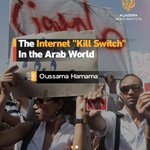
What happens to journalism when the infrastructure needed to report is deliberately switched off?
In "The internet "kill switch" in the Arab World" by Oussama Hamama, the article examines how Arab governments have used internet shutdowns, website blocking, and digital surveillance not simply to control communication, but to impose media blackouts during moments of protest and political crisis.
Using examples from Sudan, Egypt, Tunisia, Mauritania, and elsewhere, it shows how shutdowns disrupted journalism, hindered humanitarian response, deepened financial losses, and pushed reporters and activists toward improvised workarounds or self-censorship.
The broader point is that digital repression is not a technical side issue. It has become a core method of political control, one that targets the infrastructure of reporting as directly as the journalists themselves.
Here is the link to the article:
institute.aljazeera.net/en/a…
#InternetKillSwitch #InternetShutdowns #DigitalRepression #ArabWorld #PressFreedom #MediaBlackout #DigitalRights


When harassment, censorship and official narratives come from opposing ideological camps, is the real divide political at all, or simply between power and scrutiny?
In "The Left and the Right in One Front Against Journalism in South America" by Noe Zavaleta, the article argues that across Latin America, hostility to the press now cuts across ideological lines rather than following them. Drawing on examples from Mexico, Argentina, Cuba, Venezuela and Ecuador, it shows how governments of both the left and the right stigmatise critical reporters, pursue criminal complaints, impose institutional censorship or pressure editorial lines when coverage threatens their authority.
The broader point is blunt: in a deeply polarised region, journalism is increasingly squeezed not by one doctrine, but by a shared intolerance for accountability.
Here is the link to the article:
institute.aljazeera.net/en/a…
#SouthAmerica #LatinAmericanMedia #PressFreedom #MediaHarassment #PoliticalPolarisation #JournalismUnderAuthoritarianism #Mexico


How much context survives when reporters must win attention in the first three seconds? How can newsrooms reach audiences through platforms that increasingly keep users from visiting the websites behind the reporting?
In “News In the Race for Attention”, @Rehanqayoommir and @Sajad__Hameed examine how social media, short videos and AI are changing journalism, with Indian freelancers expected to report, photograph, film and edit while competing for commissions.
Journalists describe growing pressure to publish faster and shorten stories, while editors at Article 14 and the Kashmir Times explain how they adapt their presentation without allowing engagement metrics to dictate coverage. Their accounts expose the difficulty of sustaining detailed reporting as publishers lose control over distribution and their direct relationship with audiences.
Here is the link to the article:
institute.aljazeera.net/en/a…
#NewsDistribution #ShortFormVideo #FreelanceJournalism #India #EditorialIndependence #SocialMediaAlgorithms


How does a newsroom turn content from social media into verified reporting when social media is also a source of selective and inaccurate information?
In “How Has Social Media Affected Television in Yemen?”, Mohammed Alragawi draws on his study of Belqees TV to examine how audience participation reshapes broadcasting. Viewers submit accounts of human rights violations, online discussions prompt coverage of humanitarian aid sales, and audience feedback changes programme formats.
The study shows how this exchange gives viewers greater influence over television content while requiring journalists to verify submissions and exercise editorial judgement.
Thanks for reaching out! Here is the link to the article:
institute.aljazeera.net/en/a…
#AudienceParticipation #SocialMediaAndTelevision #BelqeesTV #Yemen #MediaConvergence #NewsVerification #DigitalJournalism


What happens to investigations into land seizures and violence when military statements are treated as instructions and independent reporting invites interrogation?
In “Bangladesh: Crackdown on Reporting on Indigenous Communities”, @MarziaMumu2 examines how state pressure over terminology restricts coverage of the Chittagong Hill Tracts. Indigenous journalists describe blocked reporting, pressure to remove stories and an online news outlet repeatedly changing domains to remain accessible, while senior officials deny the existence of Indigenous peoples in Bangladesh.
The reporting connects control over language to a broader struggle over whose identities, rights and experiences the press is permitted to document.
Here is the link to the article:
institute.aljazeera.net/en/a…
#IndigenousReporting #AdivasiIdentity #ChittagongHillTracts #Bangladesh #IndigenousRights #MediaCensorship #PressFreedom


when an image is lifted from its original context and recirculated through exhibitions, advertising, and social media, who remains responsible to the person in the frame?
In "The Afterlife of an Image: How Photojournalism Contests Shape Visibility and Responsibility" by Daniel Harper, the article examines how contests such as World Press Photo do more than reward photographers. They also give images a second life that can detach them from their original context, as in the 2025 winning portrait of nine-year-old Mahmoud Ajjour, a Gazan child who lost both arms in an airstrike, later used to promote exhibitions far from the conditions in which it was made.
The article’s broader point is that ethical responsibility in photojournalism does not end at publication: if institutions help determine which images become iconic, they also shape how violence, dignity, and memory are constructed in public life.
Here is the link to the article:
institute.aljazeera.net/en/a…
#AfterlifeOfAnImage #Photojournalism #WorldPressPhoto #PhotoContests #MediaEthics #PalestineNarrative #VisualCulture

when an image is lifted from its original context and recirculated through exhibitions, advertising, and social media, who remains responsible to the person in the frame?
In "The Afterlife of an Image: How Photojournalism Contests Shape Visibility and Responsibility" by Daniel Harper, the article examines how contests such as World Press Photo do more than reward photographers. They also give images a second life that can detach them from their original context, as in the 2025 winning portrait of nine-year-old Mahmoud Ajjour, a Gazan child who lost both arms in an airstrike, later used to promote exhibitions far from the conditions in which it was made.
The article’s broader point is that ethical responsibility in photojournalism does not end at publication: if institutions help determine which images become iconic, they also shape how violence, dignity, and memory are constructed in public life.
#AfterlifeOfAnImage #Photojournalism #WorldPressPhoto #PhotoContests #MediaEthics #PalestineNarrative #VisualCulture


What recovery is possible while Israeli restrictions obstruct the entry of essential equipment? How can Gaza’s press preserve evidence of the genocide while helping an exhausted society understand what comes next?
In “Priorities for Media Recovery in Gaza”, Sufian al-Shorbagy examines what restoring journalism requires beyond replacing cameras and rebuilding offices. Through accounts from journalists, editors and the Palestinian Journalists’ Syndicate, he describes reporting from tents and shared workspaces, alongside efforts to provide relief, establish media solidarity centres and plan reconstruction with UNESCO.
The article argues that recovery depends on protection, psychological support, sustainable institutions and the capacity to move beyond emergency updates into investigation, explanation and the preservation of collective memory.
Here is the link to the article:
institute.aljazeera.net/en/a…
#MediaRecovery #JournalismInGaza #PalestinianJournalists #Gaza #JournalistSafety #PressFreedom #CollectiveMemory

What recovery is possible while Israeli restrictions obstruct the entry of essential equipment? How can Gaza’s press preserve evidence of the genocide while helping an exhausted society understand what comes next?
In “Priorities for Media Recovery in Gaza”, Sufian al-Shorbagy examines what restoring journalism requires beyond replacing cameras and rebuilding offices. Through accounts from journalists, editors and the Palestinian Journalists’ Syndicate, he describes reporting from tents and shared workspaces, alongside efforts to provide relief, establish media solidarity centres and plan reconstruction with UNESCO.
The article argues that recovery depends on protection, psychological support, sustainable institutions and the capacity to move beyond emergency updates into investigation, explanation and the preservation of collective memory.
#MediaRecovery #JournalismInGaza #PalestinianJournalists #Gaza #JournalistSafety #PressFreedom #CollectiveMemory


What if your audience didn't just read your journalism, but memorised it and sang it?
In 1907, during Iran's Constitutional Revolution, Nasim-e-Shomal began turning political and social commentary into satirical poetry.
Its verses became so popular that people reportedly recited them and sang them at gatherings.
At a moment when Iran's press was rapidly expanding, Nasim-e-Shomal demonstrated that journalism could travel beyond the printed page through poetry, humour and language people wanted to repeat.
More than a century later, the question remains surprisingly familiar: what makes journalism memorable enough for people to carry it with them?
#JournalismTrivia #IranianJournalism #MediaHistory #JournalismHistory #Satire #NarrativeJournalism #GlobalJournalism #AJR #AJ_eLearning
What separates news that informs from information designed to persuade?
While both propaganda and journalism use storytelling and visuals, their goals are fundamentally opposite. Propaganda prioritizes persuasion using emotional appeal and selective facts to serve an agenda. Journalism relies on verification, transparency, and accountability to inform the public—even when challenging power.
Swipe through to see the key differences and learn how to spot propaganda when it mimics news.
#JournalismTrivia #MediaLiteracy #PropagandaVsJournalism #PressEthics #NewsLiteracy #AJR #AJ_eLearning
How can journalists ensure accurate reporting when official statements rely on military censorship, strategic leaks, and anonymous briefings that risk blurring verified facts with propaganda?
In "Why should journalists be cautious with Israeli sources" by Ahmad Al-Agha, the article explores how over-reliance on official and anonymous Israeli sources distorts narrative clarity and undermines public credibility. It highlights how reliance on unnamed officials, military-censored briefs, and unverified leaks leaves the public and Palestinian citizens in particular hostage to ambiguous, unchecked narratives.
The broader point is a call for critical journalism: media outlets must rigorously scrutinize official state narratives, verify anonymous claims, and avoid functioning as passive conduits for military public relations.
Here is the link to the article:
institute.aljazeera.net/en/a…
#PalestineMediaCoverage #MediaBias #JournalismEthics #SourceScrutiny #FramingMatters #PressCoverage
21s

How can journalists ensure accurate reporting when official statements rely on military censorship, strategic leaks, and anonymous briefings that risk blurring verified facts with propaganda?
In "Why should journalists be cautious with Israeli sources" by Ahmad Al-Agha, the article explores how over-reliance on official and anonymous Israeli sources distorts narrative clarity and undermines public credibility. It highlights how reliance on unnamed officials, military-censored briefs, and unverified leaks leaves the public—and Palestinian citizens in particular—hostage to ambiguous, unchecked narratives.
The broader point is a call for critical journalism: media outlets must rigorously scrutinize official state narratives, verify anonymous claims, and avoid functioning as passive conduits for military public relations.
#PalestineMediaCoverage #MediaBias #JournalismEthics #SourceScrutiny #FramingMatters #PressCoverage


How does media language turn military occupation into a vague “clash” while pushing the people under occupation to the margins of their own story?
In "The Palestinian struggle to be seen in the media" by Abeer Al-Najjar, the article argues that major Western coverage of Palestine often downplays Palestinian suffering through selective language, passive constructions, and a framing logic that privileges Israeli official narratives. It points to concrete patterns in coverage of May 2021, from headlines that described Israeli attacks as generic “clashes” or “escalation” to interviews in which Palestinian guests were pressed to condemn violence before being allowed to explain their reality, while Israeli officials were not subjected to the same scrutiny.
The broader point is not only about bias in wording. It is about how editorial choices, source order, and missing legal and political context can make occupation, dispossession, and state violence harder for audiences to see clearly.
Here is the link to the article:
institute.aljazeera.net/en/a…
#PalestineMediaCoverage #MediaBias #PalestineNarrative #JournalismEthics #FramingMatters #PressCoverage

How does media language turn military occupation into a vague “clash” while pushing the people under occupation to the margins of their own story?
In "The Palestinian struggle to be seen in the media" by Abeer Al-Najjar, the article argues that major Western coverage of Palestine often downplays Palestinian suffering through selective language, passive constructions, and a framing logic that privileges Israeli official narratives. It points to concrete patterns in coverage of May 2021, from headlines that described Israeli attacks as generic “clashes” or “escalation” to interviews in which Palestinian guests were pressed to condemn violence before being allowed to explain their reality, while Israeli officials were not subjected to the same scrutiny.
The broader point is not only about bias in wording. It is about how editorial choices, source order, and missing legal and political context can make occupation, dispossession, and state violence harder for audiences to see clearly.
#PalestineMediaCoverage #MediaBias #PalestineNarrative #JournalismEthics #FramingMatters #PressCoverage


How do freelance journalists keep reporting when they face the same bombs as staff reporters, but without insurance, legal cover or institutional backing?
In "The Double Ordeal of Freelance Journalists in Gaza" by Nour Abu Rokba, the article examines the layered precarity facing Palestinian freelancers who continue reporting under Israeli assault while excluded from the protections often available to staff correspondents. It details how many work without insurance, compensation, safety equipment or meaningful union and employer support, even after serious injury, displacement or the loss of equipment, despite performing the same frontline work as newsroom-affiliated journalists.
The broader point is devastatingly clear: in Gaza, freelance journalists are not only documenting war while living through it, but doing so in a system that leaves them exposed both to direct violence and to institutional abandonment.
Here is the link to the article:
institute.aljazeera.net/en/a…
#GazaJournalists #FreelanceJournalists #JournalistSafety #PressFreedom #GazaMedia #WarReporting #Palestine

How do freelance journalists keep reporting when they face the same bombs as staff reporters, but without insurance, legal cover or institutional backing?
In "The Double Ordeal of Freelance Journalists in Gaza" by Nour Abu Rokba, the article examines the layered precarity facing Palestinian freelancers who continue reporting under Israeli assault while excluded from the protections often available to staff correspondents. It details how many work without insurance, compensation, safety equipment or meaningful union and employer support, even after serious injury, displacement or the loss of equipment, despite performing the same frontline work as newsroom-affiliated journalists.
The broader point is devastatingly clear: in Gaza, freelance journalists are not only documenting war while living through it, but doing so in a system that leaves them exposed both to direct violence and to institutional abandonment.
#GazaJournalists #FreelanceJournalists #JournalistSafety #PressFreedom #GazaMedia #WarReporting #Palestine


What should journalists know before covering refugee stories?
Refugee stories are more than headlines , they are human experiences that require accuracy, sensitivity, and context.Responsible reporting means understanding the realities refugees face and giving space to their voices.
Learn how to report refugee stories ethically and professionally in the free "Covering Refugee Stories" course.
Here is the link to the course: elearning.aljazeera.net/en/c…
#AlJazeeraeLearning #AjeLearn #Journalism #RefugeeStories #LearnWithUs
