
Guiding Greater Health
Washington, DC
Joined March 2009
- Tweets17.4K
- Following1.9K
- Followers17.1K
- Likes2.3K


A new @washingtonpost op-ed from Brian Blase and Jackson Hammond of @Paragon_Inst is the latest example of broad consensus on the need to rein in provider-driven abuse of No Surprises Act arbitration, which is raising Americans’ healthcare costs. washingtonpost.com/opinions/…

New from @CBSMornings: Provider-driven abuse of the No Surprises Act is adding billions in wasteful spending and raising healthcare costs for everyone. There is growing bipartisan recognition that policy action is needed to end this gold rush and protect consumers. xitter.cf/CBSMornings/status/210…

Congress passed the “No Surprises Act” in 2020 to protect patients from surprise bills — but the legislation meant to rein in those costs has created another expensive problem.
A loophole has allowed doctors and private equity firms to rake in “many multiples of what a fair, typical in-network rate would be,” Leland Robbins, who works at data transparency startup Turquoise Health, told CBS News’ Anna Schecter.
And as Democratic Rep. Frank Pallone, the lead sponsor of the bill in Congress, plans to introduce legislation to overhaul the system, consumers could still see the impacts of the loophole during open enrollment, Robbins said.
As rising prices for hospital care, doctor visits and prescription drugs drive up healthcare spending and consumers' premiums, Americans across the political spectrum want policymakers to address the root causes of the healthcare affordability crisis. ahip.org/news/articles/ameri…

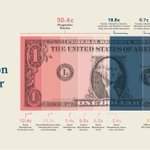
Brand drugmakers retain more than half of each dollar of premium and out-of-pocket spending on prescription drugs — more than health plans, PBMs, pharmacies, providers, and wholesalers combined. See where your prescription drug dollar goes. ahip.org/resources/where-doe…

A new AHIP analysis shows the majority of Americans’ premium dollars go toward paying the high and sharply rising prices charged by hospital systems and drugmakers, which together account for nearly two-thirds of Americans’ healthcare dollar. ahip.org/news/articles/nearl…


New data in the @washingtonpost show that hospital system consolidation continues to accelerate. Anticompetitive hospital consolidation brings higher costs, and experts agree it must be reined in. ahip.org/news/articles/new-d…
A new @Paragon_Inst report shows surprise billing arbitration is being used as “an alternative payment system” with higher payments, raising healthcare costs for everyone. Common-sense reforms are needed to restore the No Surprises Act’s original intent. paragoninstitute.org/private…

Research from @GtownCHIR shows how hospital systems' opaque billing and ever-higher prices are driving premiums higher. Bipartisan interest is growing in common-sense reforms to protect Americans from these practices. ahip.org/news/articles/data-…

ICYMI: A new @BMAlliance analysis underscores flaws in @medicarepayment’s comparisons in spending between Medicare Advantage and Fee-for-Service Medicare, adding to the growing body of research raising serious concerns about MedPAC’s estimates. ahip.org/news/articles/new-a…
Millions of seniors actively choose Medicare Advantage (MA) because it is proven to provide better outcomes. Research shows that MA delivers better prevention, care quality and value than traditional Fee-for-Service Medicare. ahip.org/resources/medicare-…

Brand drugmakers have raised list prices on nearly 250 prescription drugs this summer for a total of 1,284 price hikes so far this year. Common-sense policy solutions are needed to rein in drugmakers’ anti-competitive practices and bring drug prices down. ahip.org/news/articles/brand…
A new @GtownCHIR study in @Health_Affairs estimates that the No Surprises Act arbitration process has led to $22.4 billion in wasteful spending. It’s the latest evidence that Americans are paying for persistent abuse by certain private equity-backed providers and IDR middlemen. xitter.cf/Health_Affairs/status/…

The independent dispute resolution process within the No Surprises Act has contributed an estimated $22.4 billion in total costs, costs that are primarily driven by a high volume of disputes and dispute awards that far exceed expected in-network rates. | Forefront
Jack Hoadley and Kennah Watts | @GtownCHIR
healthaffairs.org/content/fo…

Medicare Advantage (MA) enrollees spend nearly $6,300 less per year on total healthcare costs than Fee-for-Service Medicare beneficiaries. Better care at lower costs is why millions of seniors choose MA. ahip.org/resources/medicare-…

The No Surprises Act has become a nearly $15 billion arbitration windfall that is driving up healthcare costs. Common-sense reforms are needed to make the law work as intended. Read more from AHIP President & CEO Mike Tuffin in @dcexaminer: washingtonexaminer.com/op-ed…


Blatant abuse of the No Surprises Act by certain private equity-backed providers and IDR middlemen is causing billions in wasteful spending and raising healthcare costs for everyone. Action is needed to restore the law’s original intent, protect consumers and stop this windfall. ahip.org/news/articles/provi…