

Los límites de mi lenguaje son los límites de mi mundo #LudwigWittgenstein. Comunicadora, editora
Ecuador
Joined December 2017
- Tweets5.9K
- Following187
- Followers205
- Likes10.9K








Anabel Castillo retweeted

La RAE abre su Biblioteca Digital con más de 4,800 libros para descargar gratis
generacionestudiantil.com/20…


Anabel Castillo retweeted

'Whatever women wear, wherever they go, indeed whatever they drink, they retain the right to say no' - Judge Bennathan
Anabel Castillo retweeted

We remember the first woman to be awarded a Nobel Prize, the first individual to be awarded two Nobel Prizes and still today the only individual with two Nobel Prizes in two different scientific categories: Marie Skłodowska Curie.
Curie was born #OnThisDay in 1867.

ALT Cartoon illustration of Marie Skłodowska Curie. She is wearing a black dress and holding a laboratory glassware.
Anabel Castillo retweeted

f.mtr.cool/1296lj52bi 👈Richard Carapaz fue nominado a mejor escalador del mundo por la UCI


Anabel Castillo retweeted

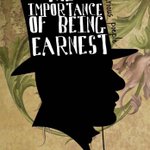
16 de octubre de 1.854, nació Oscar Wilde, fue un escritor, poeta y dramaturgo británico de origen irlandés.
De grandes obras:
- El retrato de Dorian Gray.
- La importancia de llamarse Ernesto.
- El príncipe feliz y otros cuentos.
- Balada de la cárcel de Reading.
- De profundis.
- El crimen de lord Arthur Saville y otras historias.
- Una casa de granadas.
El artista es creador de belleza.
Revelar el arte y ocultar al artista es la meta del arte.
El crítico es quien puede traducir de manera distinta o con nuevos materiales su impresión de la belleza.
La forma más elevada de la crítica, y también la más rastrera, es una modalidad de autobiografía.
Quienes descubren significados ruines en cosas hermosas están corrompidos sin ser elegantes, lo que es un defecto. Quienes encuentran significados bellos en cosas hermosas son espíritus cultivados. Para ellos hay esperanza.
Son los elegidos, y en su caso las cosas hermosas sólo significan belleza.
No existen libros morales o inmorales.
Los libros están bien o mal escritos. Eso es todo.
La aversión del siglo por el realismo es la rabia de Calibán al verse la cara en el espejo.
La aversión del siglo por el romanticismo es la rabia de Calibán al no verse la cara en un espejo.
La vida moral del hombre forma parte de los temas del artista, pero la moralidad del arte consiste en hacer un uso perfecto de un medio imperfecto. Ningún artista desea probar nada. Incluso las cosas que son verdad se pueden probar.
El artista no tiene preferencias morales. Una preferencia moral en un artista es un imperdonable amaneramiento de estilo.
Ningún artista es morboso. El artista está capacitado para expresarlo todo.
Pensamiento y lenguaje son, para el artista, instrumentos de su arte.
El vicio y la virtud son materiales del artista. Desde el punto de vista de la forma, el modelo de todas las artes es el arte del músico. Desde el punto de vista del sentimiento, el modelo es el talento del actor.
Todo arte es a la vez superficie y símbolo.
Quienes van más allá de la superficie, se exponen a las consecuencias.
Quienes penetran en el símbolo se exponen a las consecuencias.
Lo que en realidad refleja el arte es al espectador y no la vida.
La diversidad de opiniones sobre una obra de arte muestra que esa obra es nueva, compleja y que está viva. Cuando los críticos disienten, el artista está de acuerdo consigo mismo.
A un hombre le podemos perdonar que haga algo útil siempre que no lo admire. La única excusa para hacer una cosa inútil es admirarla infinitamente.
Todo arte es completamente inútil.

Anabel Castillo retweeted

One of the more disturbing elements of the world of Fahrenheit 451 is that the classics still exist, they’ve just been wholly rewritten to remove anything that makes them interesting or challenging. Our addiction to a fully frictionless existence is going to kill us.


Anabel Castillo retweeted

El cortometraje animado ucraniano «Viy» de 1996 es una de las joyas menos conocidas pero más fascinantes de la animación de Europa del Este de finales del siglo XX.
Producido por los legendarios estudios Ukranimafilm, este mediometraje de aproximadamente 19 minutos destaca por trasladar la atmósfera opresiva del cuento de terror gótico de Nikolái Gógol a una estética visual profundamente artística y sombría.
A diferencia de las adaptaciones de imagen real de Hollywood o las versiones rusas modernas que tienden hacia la acción y la fantasía digital, el corto de 1996 es aclamado por la crítica por ser extraordinariamente fiel al texto original de Gógol.
Capta a la perfección el ambiente barroco y rural de la Ucrania cosaca.

Anabel Castillo retweeted

In June 1860, Elizabeth Packard kissed her six children goodbye.
She thought about the dinner she would cook later. She thought about the laundry. She thought about the quiet life of a mother in Illinois.
She had no idea that when the front door clicked shut, it would stay locked for three long years.
Her husband, Theophilus Packard, was a respected minister. To the neighbors, he was a man of God. Inside their home, he could not stand a wife who thought for herself.
Elizabeth liked to read. She liked to debate religion. She had her own opinions about life and faith. In the 19th century, a woman with a mind of her own was treated as a danger.
Theophilus decided to end the argument. He didn’t need a crime. He didn’t need a witness. Illinois law let a husband commit his wife to an insane asylum without evidence or a public hearing. He simply had to say she was “disturbed.”
One morning men arrived at her home. They did not listen to her logic. They did not care about her tears. They took her to the Jacksonville Insane Asylum.
Elizabeth was 43, perfectly sane, and suddenly a prisoner.
Inside she expected people who needed medical help. Instead she found a warehouse of “inconvenient” women: wives who argued about money, daughters who refused marriages they did not want, women who were simply too independent.
“This is not a hospital,” she realized. “It is a cage for the unwanted.”
Doctors tried to break her. They told her that if she admitted her husband was right and she was wrong, she could go home. They wanted her to say she was crazy for wanting her own thoughts.
She looked them in the eye and said, “I cannot buy my liberty by a lie.”
She did not give up. She wrote. She hid scraps of paper in the linings of her clothes. She tucked notes under floorboards. She recorded every abuse and every story of the women around her. She became a secret journalist inside a living nightmare.
After three years she was released. Her husband locked her in a room at home and planned to send her to another asylum in a different state.
This time friends helped her reach a judge. A trial was ordered.
The courtroom was packed. Theophilus was confident. He brought “experts” who claimed her religious doubts proved her mind was broken.
Elizabeth stood up. She did not shout. She spoke with the calm power of the truth. She explained her beliefs. She showed the jury that a different opinion is not a disease.
The jury needed seven minutes.
They came back with one word: Sane.
She walked out a free woman and found that her husband had taken the furniture, the money, and the children. She was alone and penniless.
Most people would have disappeared. Elizabeth did the opposite.
She spent the next forty years traveling the country. She stood before legislatures and demanded new laws. She said a woman’s mind is her own, and the law must protect it.
Because of her, states changed their laws. They made it illegal to lock a person away without a fair trial and a medical exam.
She turned private pain into a public shield for thousands of other women.
You can take a woman’s home, her money, and her children.
You cannot take her voice. 🌹

Anabel Castillo retweeted
«Tiene que haber algo en los libros, cosas que no podemos imaginar para hacer que una mujer permanezca en una casa que arde. Ahí tiene que haber algo. Uno no se sacrifica por nada».
Fahrenheit 451, de Ray Bradbury.

Anabel Castillo retweeted

#PalabraDelDía | epatar
Aquí tienen uno de los ejemplos de uso de este verbo que se pueden encontrar en CORPES (ow.ly/E6Yr50ZLRIK): «No conocía “Las ridículas” de Molière, que le habrían encantado, tanto como a mí me epatan» (C. Boullosa, «Las paredes hablan»).
