

The American College of Osteopathic Surgeons promotes excellence in osteopathic surgical care through education, advocacy, leadership development, & networking.
Alexandria, Virginia
Joined November 2009
- Tweets4.9K
- Following3.3K
- Followers3.1K
- Likes2.7K



Every surgeon remembers the exact moment the path became clear. For some, it is a lifelong family calling; for others, a pivotal rotation in medical school. But for ACOS Past President Nelayda Fonte, D.O., DFACOS, FICS, the journey to a high-stakes career in trauma and critical care started in the most unexpected place: a second-grade classroom, a class pet frog, and a burning curiosity about how things work.
In this reflective piece, Dr. Fonte shares her personal story of how an early, hands-on fascination with anatomy blossomed into a dedicated career fixing what is broken, running toward the adrenaline of the trauma bay, and finding the profound, life-affirming joy that turns a demanding profession into a true calling.
As I ponder my love of surgery and what drew me to it, I must think back to when I decided I wanted to BE a surgeon.
We all have different moments in life that lead us to where we are today. A personal experience, a story told, advice given: they can all influence our decision-making. Mine comes from a very basic and early sense of curiosity: “What’s on the inside?”
A class pet frog died in second grade, and a brilliant teacher thought to make it a learning opportunity. A dissection was performed, and I was hooked. I even volunteered to do the dissection! That’s it, nothing more glamorous than a dead frog.
But that led to wanting to know more: How do things work? How do they interact? How do we fix what is broken? Science and medicine fed my curiosity and compelled me to learn more. But I’m a DOer, not just a thinker. I like to fix things, and that’s what surgery is all about.
Surgery has the ability to provide instant gratification, which I found very rewarding and directly attributable to something I did. It requires attention to detail, quick thinking, technical skills, and ownership of the patient unlike most other specialties. When you operate on someone, they are willfully putting their lives in your hands. That trust should be respected and paid back with our commitment to always do right by them.
I eventually went into trauma/critical care because there was nothing like the adrenaline rush that comes from a severely injured patient, maybe even coding, arriving in the trauma bay, and through our skills and knowledge, bringing them back, stabilizing them, and eventually watching them be discharged. That responsibility of assessing them, determining and prioritizing their injuries, operating and treating, and managing them through discharge is the most rewarding part of my career as a trauma surgeon.
When we do what we love, what gives us joy, what makes us feel like the day was worthwhile, then we aren’t really “working.”
Finding that passion is the biggest challenge and the biggest gift in life. A job is something people do to make a living and support their families. Surgery should never be a job. Yes, we work long hours; yes, we miss things at home. BUT when you walk into a recovery room after a long case and a new nurse comes running up to you, announcing to everyone in the room that YOU saved her life when she was a teenager after a horrific car accident, and here she is, now a nurse paying it forward thanks to you, your heart swells. And that is never a JOB.

The Centennial Class of Fellows and Distinguished Fellows is taking shape. Will you be part of it?
Over thirty surgeons were inducted at the Ceremonial Conclave in New Orleans this month. Hear from two members of the Class of 2026 on what earning the designation means:
“I had been contemplating becoming a Fellow for a couple of years knowing I had enough points. I realized it was easier than expected to put all the information together and submit. It was well worth it.”
— Penelope Mashburn, D.O., FACOS · Fellow, 2026
“Do it! Your colleagues know what it means to earn the Fellowship. Your hard work is recognized and appreciated. It speaks volumes about your commitment to your profession.”
— Daniel A. Pacella, D.O., FACOS, DFACOS · Distinguished Fellow, 2026
Take the next step in having your dedication and contributions recognized. Applications close November 16. An application fee, nonrefundable, accompanies the submission; the current fee is at facos.org/fellowship.
Apply: facos.org/fellowship
#ACOS #OsteopathicSurgery #FACOS #DFACOS #ACOS100Years

ACOS member Neely Burns recently published her article, "An Unusual Suspect in a Case of Fungal Necrotizing Soft Tissue Infection" in the ACOS General Surgery channel on Cureus.
"Our case report describes a patient who developed a necrotizing soft tissue infection (NSTI) following G-tube manipulation, with tissue cultures revealing an unusual combination of Pichia and Lactobacillus species. Although NSTIs are most commonly bacterial in origin, this case highlights the importance of considering atypical pathogens, particularly in patients with risk factors for immunosuppression. Fungal infections can be easily overlooked when selecting empiric antimicrobial therapy, but appropriate antifungal coverage should be considered in high-risk patients.
Despite presenting with a severe infection and progressing to septic shock, our patient recovered remarkably well following early recognition, aggressive surgical debridement, and targeted antimicrobial therapy. Her favorable outcome inspired us to share this case as a reminder that early surgical intervention remains paramount in the management of NSTIs. We hope this report encourages surgeons to maintain a high index of suspicion for atypical pathogens and consider fungal coverage when clinically appropriate, while recognizing that timely surgical source control remains the cornerstone of treatment."
Read more: cureus.com/articles/511156-a…

In his reflection below, ACOS member Lucas Shapiro, DO, shares the biggest lesson he has uncovered during his first 100 days in practice.
The biggest lesson I have learned in my first 100 days is that learning to be a great surgeon is all about learning surgical technique and transferable skills.
You can learn a lot from just paying attention to how other people approach surgeries, and many skills you may learn from simple procedures or off-service rotations can contribute to how you approach your own cases.
For Dr. Shapiro, every case and opportunity to observe others can be part of the learning process. It’s a reminder that surgical growth happens not only through the procedures you perform, but also through the skills and approaches you pick up along the way.

The right mentor can change the course of your career and even your life.
ACOS member Dr. Jasmine Park shares how mentorship helped shape her path to becoming an osteopathic plastic surgeon and the lessons she's learned along the way.
"Mentorship started to shape my journey long before I stepped into fellowship. Growing up, I did not have a clear path to a career in medicine laid out for me. My immigrant parents were not doctors or lawyers; they owned a dry cleaners. There, they spent years building relationships with people from all different backgrounds and professions. Through my mom and dad’s kindness and work ethic, they made meaningful connections while serving others every day—and I was introduced to mentors who helped me believe a career in medicine was possible. Looking back, I realize those early relationships changed the trajectory of my life.
From high school to today, mentorship has continued to guide every stage of my journey. Plastic surgery is one of the most difficult specialties to match into—especially as an osteopathic surgeon—and there were many moments when the future felt uncertain. However, every mentor who invested their time, advice, and belief in me helped put my dream within reach. I am incredibly grateful for the people who opened doors for me, and I hope to do the same for the next generation. I know firsthand that mentorship doesn’t just inspire future physicians, it creates them.
What I’ve learned about finding mentorship & opportunities:
• Mentorship is not just about networking; it’s about connection, guidance, and trust.
• Put yourself out there, even when it feels uncomfortable. My dad’s life motto is “Never Try, Never Get.” You have nothing to lose and everything to gain.
• Be prepared. Keep a polished CV/resume ready at all times. Have a short elevator pitch about who you are and what you’re passionate about.
• Follow up. A thoughtful email or message goes a long way.
• Be genuine and kind. People remember authenticity.
• Make and maintain connections. Relationships built early can shape your entire career trajectory and one conversation could completely change your future."
Mentorship has the power to change lives and strengthen the next generation of osteopathic surgeons. As Dr. Park’s story shows, one connection, one conversation, or one person’s belief can make all the difference.

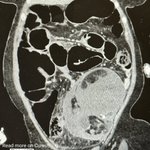
ACOS member Aleeza Mae Garcia recently published "Ovarian Teratoma in a Nonverbal Adult With Rett Syndrome" in the ACOS General Surgery channel on Cureus.
The case report describes the rare co-occurrence of an ovarian teratoma in a patient with Rett syndrome, a rare neurodevelopmental disorder. As Aleeza explains, patients with Rett syndrome now routinely survive into adulthood and may be found to have conditions that present more or less similar to the general population. While benign cystic ovarian teratomas are the most common ovarian germ cell tumor, its presentation in a patient with Rett syndrome has not yet been described.
The case also raises an interesting question surrounding MECP2 expression. Some malignancies have been described to have associations with increased MECP2 expression, making it interesting to note the development of an ovarian teratoma in this patient with Rett syndrome, a disorder most commonly caused by loss of function mutation of MECP2.
For Aleeza and her team, the rarity of Rett syndrome itself was a driving force behind the research. Literature discussing its association with gynecologic disease is very limited, and pursuing this case report has the potential to contribute to the small amount of research that describes Rett syndrome with any kind of malignancy.
The report also emphasizes the importance of a comprehensive clinical approach when medically evaluating patients with Rett syndrome, as their clinical course may deviate from what is routinely expected with the general population.
Read the full article: cureus.com/articles/486107-o…

Over 30 New Fellows and Distinguished Fellows inducted.
On October 2 in New Orleans, we welcomed our newest FACOS and DFACOS honorees at the 2026 Ceremonial Conclave. These surgeons have demonstrated exceptional commitment to the practice of surgery, teaching, and service to the profession.
Congratulations to the Class of 2026.
📍 Applications for the Centennial Class close November 16.
🔗 facos.org/fellow | facos.org/dfacos


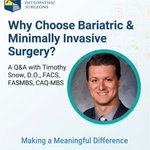
What draws a surgeon to a particular specialty? For ACOS member Timothy Snow, D.O., FACS, FASMBS, CAQ-MBS, it’s the opportunity to make a meaningful, lasting difference in his patients’ lives.
Q: Why did you choose your specialty?
A: I chose metabolic bariatric surgery and minimally invasive surgery because it's a field where I can make one of the most significant impacts on a patient's life. There's something deeply satisfying about surgery in general — we can identify a problem and directly remedy it. But bariatric surgery goes further than that. It doesn't just treat a single issue; it changes the entire trajectory of a patient's health.
Q: What do you enjoy most about your specialty?
A: Watching the transformation. Bariatric surgery is the most effective treatment we have for weight loss management, but the real reward is everything that follows: patients walking without getting out of breath, coming off medications for diabetes or hypertension, feeling comfortable in their bodies for the first time in years, gaining back time and quality of life. It's not just physical — the mental and emotional improvements are just as profound. Getting a front-row seat to that kind of change never gets old.
Q: What is a common misconception about your specialty?
A: That bariatric surgery is unsafe, unnatural, or "the easy way out." Obesity is a disease, not a failure of willpower or a lack of effort — and we should treat it like any other disease process, with the full range of medical tools available. Surgery isn't a shortcut; patients still have to make real, lasting lifestyle changes to see durable success. What surgery does is give them a powerful tool to make those changes stick, in a way that diet and exercise alone often can't achieve for this disease. I'd love for more colleagues — and patients — to see it that way.
Dr. Snow shares what he enjoys most about his specialty and addresses some common misconceptions about bariatric surgery. No matter your specialty, what inspired you to choose the work you do?

🔥 That’s a wrap on ACA 2026!
What an incredible few days in New Orleans. From engaging education and inspiring speakers to meaningful conversations and time spent connecting with colleagues, this year’s Annual Clinical Assembly was a celebration of everything that makes our osteopathic surgical community strong.
Under this year’s theme, “Lighting the Fire: Passing the Torch to the Next Generation of Osteopathic Surgeons,”we reflected on the importance of mentorship, leadership, lifelong learning, and the responsibility we share to strengthen the future of our profession.
Thank you to everyone who joined us, presented, volunteered, participated, and helped make ACA 2026 a success. We’re already looking forward to seeing you next year!
#ACOSACA2026 #LightingTheFire

At ACA 2026, Karen Zupko led an important session on Surgeon Reimbursement, giving attendees practical strategies to navigate the financial and administrative challenges that can impact surgical care.
The session focused on how osteopathic surgeons can:
• Improve the prior authorization process
• Increase success when appealing denials
• Develop a robust protocol to help under- and uninsured patients meet their financial obligations
Thank you to Karen Zupko for sharing her expertise and helping surgeons strengthen the business side of their practices.
#ACOSACA2026 #LightingTheFire

🎉 Congratulations to the 2026 ACOS College Service Award recipients: Gerard Baltazar, D.O., FACOS; Karla Witzke, D.O., FACOS; John Kowalczyk, D.O., FACOS; Fred Scott, D.O., FACOS; and Wayne Waterman, D.O.!
The College Service Awards honor members who demonstrate exceptional dedication to advancing the mission of ACOS through committee service, lecturing, mentoring, and recruitment.
👏 Please join us in celebrating these four outstanding members for their exceptional service and dedication to ACOS and the osteopathic surgical community!
To read more about each winner, visit facos.org/college-service-aw…
#ACOSACA2026 #LightingTheFire

👏 Congratulations to Benjamin Lam, D.O., DFACOS, FACOS, FACS, on his induction as President of the American College of Osteopathic Surgeons!
For more than 25 years, Dr. Lam has combined clinical practice with a deep commitment to surgical education, mentorship, and organized medicine. His extensive service to ACOS and his contributions to osteopathic surgical education have helped strengthen the profession and support future generations of surgeons.
As he begins his term as President, Dr. Lam shared a simple message that reflects his approach to leadership and service:
“Don’t Just Do Well. Do Good ... As Well.”
We look forward to his leadership and vision as he guides the College into its next chapter and continues his commitment to excellence, service, and the advancement of osteopathic surgery.
Please join us in congratulating Dr. Lam on this important new role!
#ACOSACA2026 #LightingTheFire

At the Annual Clinical Assembly, the Neurosurgery discipline invited medical students to give podium talks on their research. They each received generous scholarships and finished up a successful day celebrating and networking at the Neurosurgery Reception. The students are our future, and we are so incredibly proud of their hard work and dedication!
#ACOSACA2026 #LightingTheFire


🔥 The final day of ACA 2026 is here!
There’s still plenty of time to learn, connect, and make the most of your Annual Clinical Assembly experience in New Orleans.
As we continue “Lighting the Fire: Passing the Torch to the Next Generation of Osteopathic Surgeons,” take in another day of engaging education, meaningful conversations, and opportunities to connect with fellow osteopathic surgeons.
Make the most of your final day at ACA 2026!
Visit facos.org/aca for meeting details.
#ACOSACA2026 #LightingTheFire

From complex polytrauma to rare and challenging cases, Trauma Fright Night: How Expert Acute Care Surgeons Manage Complex Cases brought real-world expertise and critical decision-making to the forefront.
Attendees explored operative approaches, diagnostic and management strategies, and ways to prepare trauma teams for complex clinical situations. The session provided expert-informed insights to help surgeons navigate some of the most challenging cases in acute care surgery.
Learn more at facos.org/aca and follow along with #ACOSACA2026 and #LightingTheFire.

🚨 Preparing for the unexpected at ACA 2026
Zach Brown, D.O., FACOS, FACS, brought his unique perspective as a burn surgeon, surgical critical care physician, and retired U.S. Navy Captain to his presentation, “When the War Comes to You: Preparing the Civilian Medical System for Combat Casualties.”
Drawing on 21 years of active-duty military service and six deployments supporting combat operations, Dr. Brown explored the evolving nature of combat trauma and the challenges civilian medical systems may face when caring for military casualties.
His presentation examined changing mechanisms of injury, emerging threats, prolonged transport and evacuation, mass casualties, and the critical role of military-civilian partnerships in strengthening trauma readiness.
Thank you to Dr. Brown for sharing his experience and insights on preparing our healthcare systems to respond when the unexpected happens.
Learn more at facos.org/aca and follow along with #ACOSACA2026 and #LightingTheFire.

We are proud to grant Robert G. G. Piccinini, D.O., D.FACN an Honorary Member of the American College of Osteopathic Surgeons.
Dr. Piccinini is a distinguished leader, physician, and advocate whose decades of service have strengthened the osteopathic profession at the national, state, and specialty levels. As the immediate past president of the American Osteopathic Association (AOA), he made history as the organization’s first psychiatrist and the first graduate of Michigan State University College of Osteopathic Medicine to serve as president.
Throughout his career, Dr. Piccinini has championed physician wellness, medical education, collaboration among osteopathic specialty colleges, and the advancement of the osteopathic profession. His support of ACOS members and their involvement in AOA committees, task forces, and leadership initiatives reflects his commitment to strengthening the profession and fostering the next generation of osteopathic physicians.
Please join us in celebrating Dr. Piccinini for his exceptional leadership, dedicated service, and enduring commitment to the osteopathic profession.
#ACOSACA2026 #LightingTheFire
@AOAforDOs

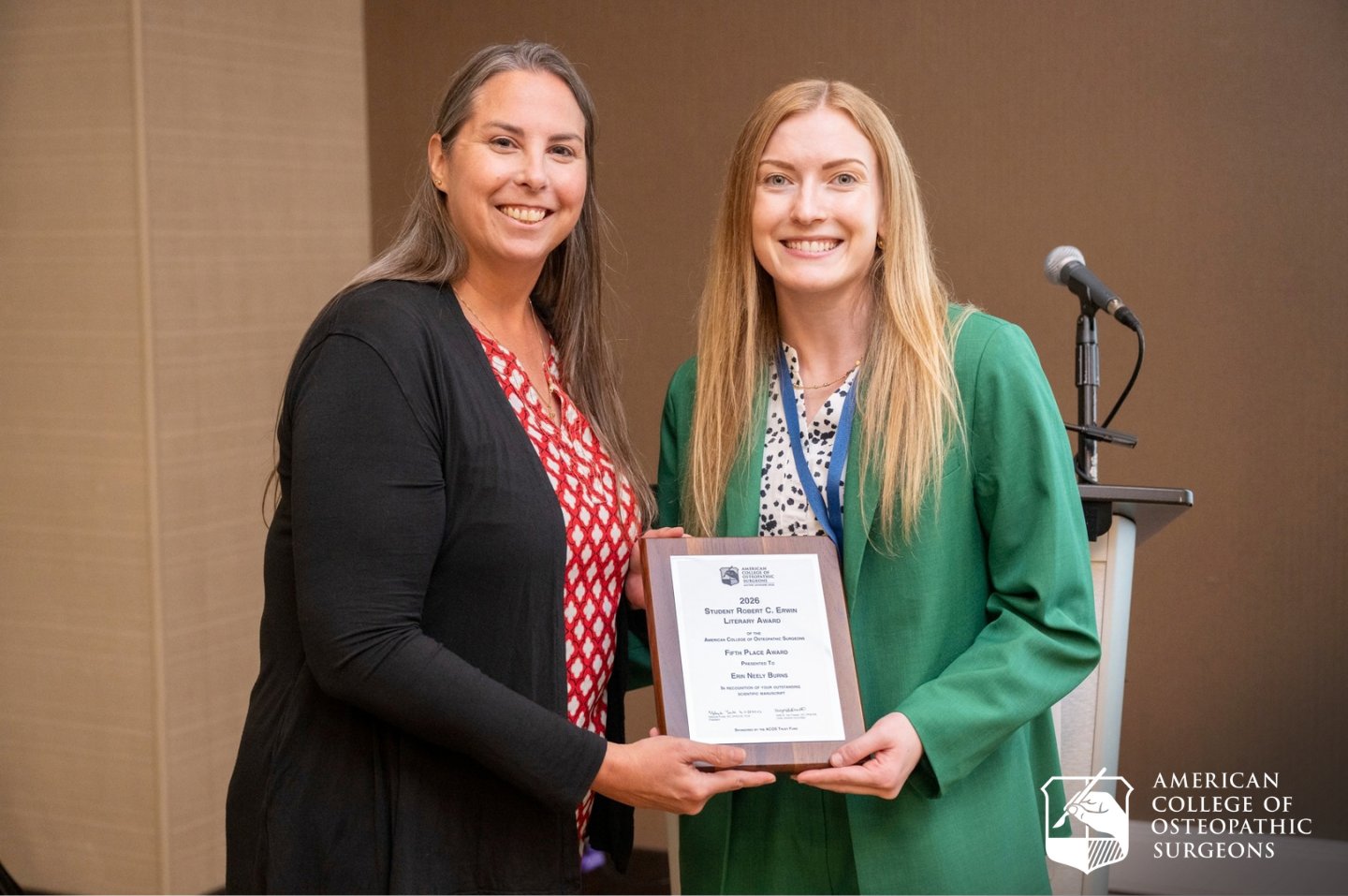
🎉 Congratulations to the 2026 ACOS Student and Resident Award Winners!
During ACA 2026, ACOS recognized outstanding students and residents for their academic achievement, research, leadership, and dedication to osteopathic surgery.
Congratulations to the recipients of the Robert C. Erwin Literary Awards, recognizing excellence in student and resident research and scholarship, as well as the Resident Achievement Awards, honoring residents who have distinguished themselves through their accomplishments and commitment to surgical education.
👏 We are proud to celebrate these emerging leaders and the important contributions they are already making to the future of osteopathic surgery.
Join us in congratulating all of this year’s award recipients!
#ACOSACA2026 #LightingTheFire


🎉 Congratulations to Shannon M. Davis, D.O., FACOS and Sharon Beth Larson, D.O., FACOS, recipients of the 2026 ACOS Presidential Recognition Award, selected by ACOS President Nelayda Fonte, D.O., DFACOS, FICS, in recognition of their exceptional service to the College!
Dr. Davis is recognized for her tireless work and dedication to ACOS. She rose through leadership in the General Surgery Discipline, serving as Discipline Chair, elected Governor, and Secretary-Treasurer of the Board of Governors. She has also led the extensive effort to update ACOS discipline and section bylaws, helping bring greater consistency and clarity to the organization.
Dr. Larson is recognized for her dedication to strengthening the Cardiothoracic and Vascular Surgery Discipline and creating opportunities for the next generation. She has expanded opportunities for students and residents to participate in the Annual Clinical Assembly through poster and podium presentations and developed financial assistance to help make attendance more accessible. She also created a “How to” manual for future CTV Discipline Chairs that has become a template for other disciplines.
👏 Please join Dr. Fonte in celebrating Dr. Larson and Dr. Davis for their leadership, initiative, and unwavering dedication to ACOS and the osteopathic surgical community.
#ACOSACA2026 #LightingTheFire
