

Zinātnieks kvantu stāvoklī. In a quantum state.
Riga, Latvia
Joined December 2015
- Tweets3.3K
- Following374
- Followers5.1K
- Likes4.2K



Andris Ambainis retweeted

Šodien 27 īsteno un 30 korespondētajlocekļu vēstule nosūtīta LZA prezidentam Ivaram Kalviņam, prasot atbildes un atbildību par viņa rīcību pilsonības piešķiršanas jautājumā. Sagaidām atbildes un rīkojamies tālāk atbilstoši demokrātiskajiem principiem un akadēmijas statūtiem.
Andris Ambainis retweeted

Kā @LZA_LV īstenais loceklis un pētnieks uzskatu, ka situācija ar Latvijas pilsonības piešķiršanu Indijas zinātniecei Divjai Kananai Višvanatai jau ir kaitējusi Latvijas Zinātņu akadēmijas un visas valsts reputācijai. Tāpēc jārīkojas ātri un atbildīgi!

"Viss ir slikti!" Skandālā ap Indijas zinātnieces pilsonību zinātnieki pieprasa skaidrojumus trib.al/7EjyqB3

Lasot par šo, rodas asociācijas ar barona Minhauzena stāstiem: delfi.lv/a/120139333?utm_sou…

Andris Ambainis retweeted

Man kā @LZA_LV īstenajam loceklim ir pilnībā nepieņemama maldinošas informācijas paušana no LZA prezidenta puses, virzot Indijas zinātnieci Latvijas pilsonības iegūšanai. Uzskatu, ka nākamajā pilnsapulcē jālemj par prezidenta atsaukšanu.


OpenAI publicējusi 722 matemātikas rakstus, kuros atrisinātas daudzas ļoti augsta līmeņa matemātikas problēmas. Arī tās, kuras es/mani kolēģi gadiem (vai ilgāk) centušies atrisināt. 1/5

We’re releasing a broad range of new mathematical results produced by an internal frontier model.
We’ve been consulting with the independent Advisory Group on Mathematics and Artificial Intelligence at the Institute for Advanced Study, and we have drawn on their advice and public recommendations to inform how we release these results.
github.com/openai/math

MI salicis klucīšus kopā un atradis risinājumu. Iespaidīgi. Risinājums balstās uz to, ko es un citi kolēģi gadu desmitiem ir būvējuši un bez šīs zināšanu bāzes MI tik tālu nebūtu ticis. Nu, vismaz šī MI versija nē, bet būs vēl jaudīgākas versijas... 4/5


Darba grupas ziņojums par to, kā mans zinātnes virziens mainīsies mākslīgā intelekta ietekmē un kā jāreaģē zinātnieku kopienai, saucās "AI and TCS: The Next Six Months". Viss attīstas tik ātri, ka kolēģi neuzdrošinās prognozēt tālāk uz priekšu.
Andris Ambainis retweeted
Terry Tao 2 years ago on working with o1: “The experience seemed roughly on par with trying to advise a mediocre, but not completely incompetent, graduate student.”
Think of what other fields AI is currently at that level.
MI jaunumi: romāns, kas pretendē uz Francijas galveno literatūras balvu izrādās "100% AI" (Pangram detektora vērtējums), organizatori izslēdz to no kandidātu saraksta. msn.com/en-us/news/other/fra…
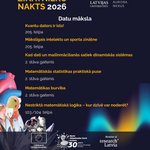
Piektdien Zinātnieku naktī demonstrēsim pirmo kvantu datoru Latvijā. LU Zinātņu māja (Jelgavas 3), 205. telpa.


Andris Ambainis retweeted

So, OpenAI claims to have solved so many (more than 100) long-standing open problems in mathematics and to have listened to the pushback by mathematicians on how previous results have been communicated, that they now want advice on how to move forward. openai.com/index/advisory-gr…

Matemātiķu aktuālais jautājums: kas ir starp 100 ilgstoši neatrisinātām matemātikas problēmām, ko atrisinājis jaunākais OpenAI modelis?

Un nākošais jautājums: kas notiks ar matemātiku kā zinātni? Te viena versija: scottaaronson.blog/?p=10116

Andris Ambainis retweeted

Durante años Finlandia fue presentada como el modelo: autonomía, competencias “transferibles”, menos énfasis en contenidos y menos evaluación.
Pero sus resultados PISA llevaban cayendo incluso cuando otros países trataban de imitarla.
La reflexión del Financial Times es interesante: pensamiento crítico y creatividad no sustituyen al conocimiento; en gran medida dependen de él.
El contraste con Inglaterra y con reformas como las de Mississippi vuelve a poner el foco en currículo, enseñanza explícita y exigencia académica.
ft.com/content/724f8ecb-1e2b…

Andris Ambainis retweeted

I don't think people realize just how much AI's latest breakthroughs in math have shocked mathematicians, myself included.
The main thing that leaves me and many mathematicians shocked is what AI is solving:
Early on – till about 4 months ago – AI was good at:
(i) solving problems that humans already solved, like Math Olympiad problems
(ii) finding out that a problem in field A was already solved by an obscure work in field B, using a different terminology (or language).
But starting with the shocking work on the Erdos Unit Distance Problem, and up till the recent advance on Navier–Stokes, a totally different AI is seen.
It is innovating.
It's bringing a new set of tools to the problem, and then proceeding to using those tools very delicately and accurately to achieve the result.
It's a bit like how a brain surgeon delicately operates on the exact region that needs fixing.
This is absolutely shocking and unexpected. It raises the question of what exactly constitutes mathematical intuition and brilliance. Many a mathematician have written about it (I love Henri Poincare's treatise "Mathematical Creation"). But we don't understand how mathematicians reach their breakthroughs.
Now, it's the same with AI, we don't understand how it goes about reaching these proofs but the end result is objectively new, and powerful.
This creativity, insight, ingenuity, is what's shocking to me.