

Building a documentation viewer for developers and LLM's https://xitter.cf/t.co/UBFSKFPbm5
Eindhoven, Netherlands
Joined August 2012
- Tweets11.5K
- Following649
- Followers1.4K
- Likes4.5K








LLM is always testing Posh MCP interface during usage.
Insanely effective approach to improve LLM tooling.

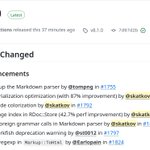
It turns out this is a bug in rdoc.
github.com/ruby/rdoc/pull/18…


Stanislav (Stas) Katkov retweeted

morluto/rea from @morluto
Reverse engineer anything with agents, from app behavior down to native binaries.
github.com/morluto/rea


Getting some crazy numbers for poshtui.com. My first eval benchmark shows following numbers:
- 67% token savings compared to web scraping from GitHub.
- If we include discovery (multiple http requests to find right source online), token saving go up to 96%.

0.2 version of opencode-vitals-terminal is out.
- Sidebar now has this information as well
- Costs are shown as well
- Published on npmjs.com

Released `opencode-vitals-terminal` plugin for opencode.
Track how fast agents go...
github.com/skatkov/opencode-…

Released v1 of opencode-lightpanda plugin.
It integrates with OpenCode v2.
npmjs.com/package/opencode-l…
Stanislav (Stas) Katkov retweeted

I strongly believe there are entire companies right now under heavy AI psychosis and its impossible to have rational conversations about it with them. I can't name any specific people because they include personal friends I deeply respect, but I worry about how this plays out.
I lived through the great MTBF vs MTTR (mean-time-between-failure vs. mean-time-to-recovery) reckoning of infrastructure during the transition to cloud and cloud automation. All those arguments are rearing their ugly heads again but now its... the whole software development industry (maybe the whole world, really).
It's frightening, because the psychosis folks operate under an almost absolute "MTTR is all you need" mentality: "its fine to ship bugs because the agents will fix them so quickly and at a scale humans can't do!" We learned in infrastructure that MTTR is great but you can't yeet resilient systems entirely.
The main issue is I don't even know how to bring this up to people I know personally, because bringing this topic up leads to immediately dismissals like "no no, it has full test coverage" or "bug reports are going down" or something, which just don't paint the whole picture.
We already learned this lesson once in infrastructure: you can automate yourself into a very resilient catastrophe machine. Systems can appear healthy by local metrics while globally becoming incomprehensible. Bug reports can go down while latent risk explodes. Test coverage can rise while semantic understanding falls. Changes happens so fast that nobody notices the underlying architecture decaying.
I worry.


One of the hardest things about living far away from family and childhood friends is that you can't just jump in a car and help them out.
Released `opencode-vitals-terminal` plugin for opencode.
Track how fast agents go...
github.com/skatkov/opencode-…
Would be really useful to get extra credits to polish up poshtui.com for Claude use.
Let's hope this works out!

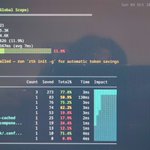
RTK saves up quite a lot of context during local command execution. It filters out all the fluff out of outputs.

Stanislav (Stas) Katkov retweeted

Box 3 is geen belastingtechnisch ongeluk meer.
Het wordt een ideologische aanval op particulier vermogen. De vrijstelling moet in 2027 bijna worden gehalveerd, van €59.357 naar €30.846. Daarmee trekt Den Haag honderdduizenden gewone spaarders en beleggers de vermogensheffing in. Vastgoed wordt harder aangepakt, ondernemers worden verder uitgeknepen en ondertussen kijkt de politiek naar de grootste resterende vermogenspotten: woningen en pensioenen.
Dit gaat over macht. Wie vermogen bezit, kan nee zeggen. Wie spaargeld heeft, kan zonder uitkering een crisis overleven. Wie een bedrijf bezit, hoeft niet bij de staat om inkomen te bedelen. Wie zelf voor zijn oude dag heeft gezorgd, is minder afhankelijk van politieke gunsten.
Daarom is particulier vermogen een obstakel voor iedere staat die zijn macht wil uitbreiden.
Nederland beweegt ondertussen precies de andere kant op. Eerst wordt een steeds groter deel van inkomen en vermogen afgeroomd. Vervolgens stroomt een deel daarvan terug via toeslagen, subsidies, uitkeringen en fiscale privileges. De staat maakt burgers eerst armer en verkoopt daarna hun eigen geld terug onder voorwaarden.
Dat noem ik economische Gleichschaltung.
De historische Gleichschaltung ging uiteraard veel verder. Vanaf 1933 werden in Duitsland zelfstandige instituties onder politieke controle gebracht. Mijn vergelijking zit in het mechanisme van machtsconcentratie: vernietig of onderwerp de onafhankelijke machtsbases tussen individu en staat.
Economische zelfstandigheid is zo’n machtsbasis.
Een overheid hoeft je bedrijf niet te nationaliseren wanneer zij kan bepalen hoeveel winst je mag houden. Zij hoeft je huis niet af te pakken wanneer zij bezit permanent kan belasten. Zij hoeft je spaargeld niet te confisqueren wanneer zij ieder jaar een steeds groter deel kan opeisen. Zij hoeft pensioenfondsen niet formeel te nationaliseren wanneer wetgeving bepaalt wat met het vermogen moet gebeuren.
Nederland bouwt tegelijkertijd een staat waarin vrijwel iedere burger financieel zichtbaar is, iedere grote geldstroom wordt geregistreerd, enorme hoeveelheden vermogen onder fiscale regels vallen en grote delen van maatschappij en bedrijfsleven rechtstreeks of indirect afhankelijk zijn van overheidsgeld.
Zet daar ooit een werkelijk autoritaire regering boven en die hoeft de economische controle niet meer te bouwen.
Die erft haar.
Dat is waarom de aanval op vermogen mij veel meer zorgen baart dan het zoveelste belastingpercentage.
Een vrije burger heeft eigendom nodig. Eigen geld. Eigen reserves. Eigen inkomen. Een eigen bedrijf. Een eigen huis. Vermogen waarmee hij desnoods tegen de staat kan zeggen: zoek het uit.
Haal die onafhankelijkheid weg en grondrechten worden steeds meer woorden op nat papier.
Economische Gleichschaltung is geen dictatuur.
Het is de voorhal ervan. En Nederland is die voorhal steen voor steen aan het bouwen.
🤖 Made with AI

Stanislav (Stas) Katkov retweeted

Stages of grief about the effect of AI on open source.
Denial:
- AI code is slop! Nobody serious will use this.
- Open source will keep working exactly like it always has.
Anger:
- These AI slop PRs are ruining GitHub!
- Ban AI-generated code!
- If you close PRs, you're not open source anymore!
Bargaining:
- Okay, AI can write code, but only if a human reviews every line.
- Maybe adversarial AI review will make arbitrary external code intake safe again.
Depression:
- Wait, if code generation is basically free, what is a contribution anymore?
- Is GitHub-style open source culture just going away?
Acceptance:
- Open source is still open source, even if the contribution model evolves.
- Good issues, test cases, benchmarks, specifications, and ideas become the scarce inputs.
- Upstream may stop accepting arbitrary code while forking becomes much easier.
Bonus stage! Reconstruction:
- Projects redesign around maintainer-controlled agents, issue-driven development, stronger test/validation infrastructure, and new ways for contributors to earn trust.