

Northern California Research Supply Independent testing · Batch-specific COAs Scan · Verify · Validate Research Use Only
Northern California, USA
Joined October 2022
- Tweets3K
- Following148
- Followers438
- Likes2K





Pinned Tweet
🚨 A MESSAGE FROM 5 STAR LABS 🇺🇸
We're not here to win a popularity contest, join your little buddy-buddy circles, exchange favors, or look the other way when something doesn't add up. And we're certainly not afraid of your threats. We believe business should be built on honesty, integrity, and accountability, not intimidation, popularity, or who happens to know whom.
WE STAND FOR THREE THINGS:
1. ACCOUNTABILITY. American, Chinese, big company, small company. Nobody gets a free pass. If you're making extraordinary claims, expect extraordinary questions.
2. EVIDENCE OVER MARKETING. Show us the COAs, manufacturing origin, independent testing, and documented facts. Your American flag, fancy packaging, and clever advertising aren't scientific evidence.
3. TRANSPARENCY. We're traveling halfway around the world, meeting manufacturers, asking to see facilities, and doing the work firsthand. We're not interested in repeating whatever story someone wants us to believe.
We don't need to parade our military history, ownership demographics, or personal circumstances around for recognition or extra credit. We respect those things, but none should place anyone above scrutiny. We're not special. We're ordinary, hardworking people building something for our families. We believe in standing our ground and refusing to be bullied into silence.
Block us if you want. We'll maintain a public record of those blocks as a badge of honor. But understand something: blocking questions doesn't answer them. We're not here to beg you to buy anything, bombard you with daily coupon codes, push endless bundles, or dress up gimmicks as opportunities. We're here to ask the questions others won't, challenge questionable claims, and give credit where it's earned, regardless of whose name is on the label.
If you believe business should be built on honesty, evidence, accountability, and integrity, you're welcome to follow along. We won't always be popular, and that's perfectly fine with us.
WE DON'T SELL TRUST. WE VERIFY IT.
⭐ 5 STAR LABS

FRUSTRATED THAT YOUR SUPPLIER IN CHINA CAN'T SHIP YOUR ORDER?
Wondering why shipments are suddenly being delayed or put on hold? Having just returned from my annual sourcing trip to China, I can tell you firsthand that security measures and police presence have noticeably increased throughout the Shenzhen and Guangzhou areas. With the upcoming APEC meetings scheduled for November 18–19, authorities have reportedly stepped up parcel inspections, shipment screening, and enforcement measures across the region.
During my visit, I witnessed an extraordinary security operation at the Four Seasons Hotel. Nearly the entire hotel was temporarily shut down for almost two hours to accommodate a VVIP delegation of Arab foreign nationals. A large convoy of vehicles arrived accompanied by government officials and an extensive security detail involving approximately 50 police officers. Police presence was everywhere, and the level of security was unlike anything I had personally experienced during my visit.
I've also been hearing directly from suppliers that some freight forwarders and trading companies have temporarily suspended operations, with concerns about additional disruptions between November 5–22. Official notices indicate increased inspections and potential delivery delays, although the full extent of these reported closures remains unclear.
To be clear, this is not affecting every supplier. While I've heard reports that some suppliers are experiencing shipping difficulties, we also have multiple sources in China that continue shipping without any issues whatsoever. This is certainly not an industry-wide shutdown, and I don't want to give that impression.
For those sourcing research peptides from China, it's simply something worth monitoring. Between what I personally witnessed on the ground and what some suppliers are now reporting, heightened security measures and additional shipping restrictions could create temporary supply-chain challenges, depending on the supplier, location, and shipping route.

It’s only 3 a.m. here on the West Coast, but it’s time to hit the gym. Peptides aren’t the answer to everything. There’s no substitute for discipline, consistency, and hard work. You still have to show up, put in the effort, and earn your results. No shortcuts, no excuses. The work doesn’t do itself.
A NC compounder just recalled 22 lots of compounded tirzepatide over sterility assurance. A Texas 503A got an FDA 483 for supplement-grade niacinamide in sterile stock. "Pharmacy" isn't a synonym for "tested." Every lot, independently verified. That's the standard.

$LLY $NVO
FDA Scrutiny Leads to Nationwide Recall of Compounded Lilly Weight-Loss Drug
Apothecary Pharma, a pharmaceutical compounding company based in North Carolina, has recalled 22 lots of compounded tirzepatide injections due to concerns about sterility.
Tirzepatide is the active ingredient in Eli Lilly's Mounjaro and Zepbound.
According to FDA records, the company initiated the nationwide recall in late September because of a lack of assurance that the products were sterile.
The FDA subsequently classified the recall as Class II, meaning the affected products could cause temporary or medically reversible adverse health consequences.
The recall follows earlier FDA inspections that identified several concerns at the company's manufacturing facility.
These included:
• Employees working in sterile production areas with exposed skin.
• Inadequate glove disinfection and changing procedures.
• Insufficient airflow testing in areas used to manufacture sterile products.
• Potential contamination risks during the manufacturing process.
The FDA had previously issued a warning letter in December 2025, and another inspection took place in September 2026.
Importantly, the recall concerns compounded tirzepatide produced by Apothecary Pharma, not Eli Lilly's FDA-approved Mounjaro or Zepbound products.
The FDA has emphasized that compounded medicines are not FDA-approved and are not reviewed for safety, effectiveness, or quality before being marketed.
As shortages of branded GLP-1 medicines have eased, the FDA has also begun restricting the circumstances under which compounding facilities can manufacture copies of these treatments.
The development highlights the regulatory and quality challenges facing parts of the compounded GLP-1 market.
Link: bizjournals.com/triangle/new…

WHAT EXACTLY ARE THE NEW 503A PEPTIDE TESTING STANDARDS THAT API SUPPLIERS MUST MEET?
Following our earlier discussion about potential supply chain bottlenecks, we decided to examine the actual HHS policy released on October 28, 2026. Appendix B outlines a much more comprehensive testing framework for the six peptides covered by the new interim policy: BPC-157, TB-500, Epitalon, KPV, MOTS-c, and Semax.
We're talking about more than a COA showing 99% purity. The framework includes peptide identity verification using independent analytical methods, quantitative assay, actual peptide content, impurity profiling, residual solvents, elemental impurities, counter-ion content, water content, and applicable microbial and endotoxin testing. Additional characterization, including structural analysis and aggregation testing, applies to certain larger peptides. Testing methods must also be appropriately validated or verified, with supporting documentation and reference standards.
Then there's manufacturer accountability. The original API manufacturer must be FDA registered and comply with applicable manufacturing standards. COAs must include detailed manufacturer identification, batch information, analytical methods, and supporting documentation. Resellers and repackers must also validate the original manufacturer and its COA.
SO HERE'S THE BIG QUESTION: How many peptide API manufacturers can actually provide this level of testing and documentation today?
And if only a limited number can meet these expectations, what happens to pricing, availability, and the ability of compounding pharmacies to source compliant materials?
These standards may help improve quality and accountability, but their practical implementation raises important questions. We'd be interested in hearing directly from API manufacturers, analytical laboratories, and compounding pharmacies about which requirements present the greatest challenges.
Are the testing capabilities and supply chain infrastructure ready to support this new policy, or are we looking at a bottleneck before the industry even gets started?
This is an interesting announcement. Following our recent discussions about independent testing, regulatory oversight, and transparency, Strive's statement raises several important questions. In a recent discussion, a Strive representative confirmed that every sterile batch undergoes independent third-party testing before dispensing, with results available upon request. Strive now acknowledges that certain requirements surrounding peptide API sourcing, testing, and verification still need to be developed or satisfied by suppliers. Which specific requirements are proving most challenging, and how do they differ from Strive's existing quality-control standards? Will Strive independently verify the actual peptide content and potency of each finished compounded batch, in addition to qualifying the raw API? Will independent, batch-specific testing results be publicly accessible rather than available only upon request? And will Strive disclose the countries where its peptide APIs are actually manufactured? These questions aren't about whether regulated pharmacies have oversight. They're about understanding how that oversight translates into independently verifiable product quality, from the original API manufacturer through the finished compounded preparation. We appreciate Strive's commitment to doing things right and believe greater transparency would benefit the entire industry.

Strive’s position on the HHS interim policy:
The U.S. Department of Health and Human Services (HHS) approved an interim enforcement discretion policy that creates a potential pathway for 503A pharmacies to compound six peptides: BPC-157, Epitalon, KPV, MOTS-c, Semax, and TB-500.
This is a significant step forward for patient access, our industry, and Strive! We have been working behind the scenes to prepare for this opportunity, including in Washington DC, to advocate for regulated peptide access. While this is exciting news, we want to emphasize that how we enter this market is just as important as when we enter it.
What this means for Strive Peptides:
The interim policy includes very specific requirements surrounding API sourcing, quality, testing, reporting, and other operational considerations. Some of which are new and require development and verification by suppliers themselves.
We’re reviewing every requirement to confirm the right processes and controls are in place before we launch any peptides.
Our goal isn’t to be first. It’s to enter this market the right way and build a foundation that lets us serve patients for the long term. That’s how Strive has always operated, and we take that responsibility seriously.
We’ll launch once our regulatory and operational readiness is confirmed.
Why this matters beyond Strive:
This policy is interim. How our industry shows up now will help shape whether regulated peptide access lasts. We encourage every compounding pharmacy to approach this opportunity with rigor, compliance, and care for the patients and providers counting on us.
We look forward to serving you and your patient needs.
Learn more about Strive Peptides here: strivepharmacy.com/peptides

IS THE NEW 503A PEPTIDE POLICY CREATING AN API TESTING BOTTLENECK?
With the recent announcement of HHS's new peptide compounding policy, an important question is emerging. Can API manufacturers actually meet the sourcing, documentation, and testing standards required for pharmacies to take advantage of these changes?
We've seen concerns raised that very few suppliers can produce COAs meeting the expected standards. If that's the case, how are compounding pharmacies navigating this challenge? Are they conducting additional independent testing to qualify their raw materials? And how many suppliers can actually meet these expectations?
Regulatory requirements are important, but so is understanding whether the supply chain can realistically support them. If pharmacies cannot consistently source compliant API, could that create shortages, increase costs, or push consumers back toward the unregulated research peptide market?
We're genuinely interested in hearing from compounders, API manufacturers, testing laboratories, and anyone familiar with these requirements. Are we looking at a significant supply chain bottleneck that deserves more attention? The goal here is education, transparency, and a better understanding of how this industry actually operates.
You may not have heard much about CBL-514, but it's definitely one to watch. This research compound is gaining attention for its investigational approach to targeting fat cells, making it an interesting development in adipose tissue research. CBL-514 on deck at 5 STAR LABS.

We initially planned to offer this product but decided to hold off after further investigation. The potential risks, limited independent testing options, and lack of well established testing protocols raise too many uncertainties for us. We'll continue monitoring developments and reconsider once more reliable testing methods and evidence become available.
🚨 WHO'S GOING TO TEST THE PHARMACIES?
When the seller becomes the manufacturer, the testing lab, AND the one certifying the results, who's holding them accountable?
With the peptide industry entering a new chapter, here's a question I haven't seen enough people asking. As more pharmacies and pharmaceutical companies enter the peptide market, who's going to independently verify the products they're selling?
In the RUO industry, vendors are routinely challenged to produce independent third party laboratory results. And rightfully so. At Five Star Labs, we believe independent verification is essential to establishing credibility.
But what happens when a large pharmacy manufactures, tests, and certifies its own products? Are we simply supposed to accept those results because the company operates under a pharmacy license?
In house testing can be legitimate and subject to regulatory oversight, but it isn't the same thing as independent third party verification. If an RUO vendor handed you a COA generated entirely by its own operation, wouldn't you want outside confirmation? Why should that question suddenly disappear when the seller is a multimillion dollar pharmaceutical operation?
This isn't an accusation against pharmacies. It's a question about transparency, accountability, and applying consistent standards before the market expands. Independent testing. Batch matched documentation. Verified identity, actual content, and endotoxin results where applicable. If independent verification builds confidence in the RUO market, it should be just as valuable in the pharmaceutical market.
The size of the company shouldn't determine how much scrutiny its products receive. WE DON'T SELL TRUST. WE VERIFY IT.


Hey
@grok
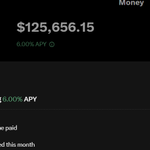
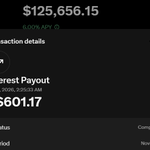
If we never touch this money again and let it grow at 6% annual compound interest, how many years would it take to reach $1,000,000?

“Made 100% in the US” is a location. Consistency is a result. We found 31.6% overfill on a US fill-and-finish vial. Where it's made tells you nothing until every lot is tested for identity, content and endotoxin. Ask for the batch COA.
Clarifying: the “Made 100% in the US” line isn’t our claim. It’s quoting the viral Hims / Andrew Dudum pitch circulating on X “100% American made peptides… made 100% from start to finish in the U.S.”
xitter.cf/himshouse/status/21157…
Point stands either way: country of manufacture is a location. Lot testing for identity, content, and endotoxin is the result. The 31.6% overfill was a published third party result on a US fill and finish vial not our assay.
$HIMS CEO ANDREW DUDUM CONFIRMS THEY WILL SELL 100% AMERICAN-MADE PEPTIDES
"MADE 100% FROM START TO FINISH IN THE U.S."
🇺🇸🇺🇸🇺🇸

THIS! Exactly what I've been arguing about. And just to be clear, this is absolutely not directed at Krysia or her reasons for asking. I have no idea what she's trying to verify, and her question is perfectly legitimate. I'm speaking about a much broader problem in the research peptide industry.
People are searching for a COA from a kit that looks similar to theirs and treating it as verification of what they're actually selling. Meanwhile, vendors are reusing labels, caps, and batch numbers, making it even harder to establish what's legitimate.
A similar looking kit is NOT proof of identity, purity, or content. Someone else's lab results don't automatically verify your inventory!
Too many vendors are unwilling to spend the money on independent testing, yet they're perfectly comfortable selling products backed by documentation they can't reliably connect to their actual inventory. And when these products end up being used by people, despite their RUO labeling, the potential consequences become much more serious.
Stop cutting corners. Test your actual products. Verify your batches. Stop treating borrowed COAs like they're proof of anything. People's health could be at stake, and this industry desperately needs more accountability.

A lot of new followers over the last few days! Here's a quick introduction to our operation.
We are a smaller organization based out of Northern California. We pride ourselves on offering some of the highest quality RUO peptides on the market. We combine that premium quality with some of the most competitive prices around.
Our customer service is an area we take great pride in and consider top tier, along with our order fulfillment. Orders placed before 2 PM Monday through Friday ship the same day. We use discreet, secure packaging to ensure your products arrive safely and quickly, without fail.
Orders over $150 qualify for free standard shipping, and orders of $250 or more receive free express shipping. Be sure to ask about our local delivery service if you're located within a 50-mile radius of our shipping facility!
If there's anything you need or any questions we can answer, please feel free to message us! We are forever grateful for your business.