John retweeted
A 65-year-old woman with locally advanced carcinoma of the pancreatic uncinate process involving the SMV and first jejunal vein.
The SMA-first approach allows early dissection of the mesopancreas off the SMA before undertaking venous resection.
John retweeted
This is one of the funniest things to me. I will often ask someone who tells me that they’re dry. How is it that they got that way and then there’s usually a little bit of silence, a mumble about insensible losses, a limited PO intake, despite the 3 L that have been given in the last 48 hours, lol. The reality is that unless you were getting aggressive diuretic therapy or you have severe G.I. losses, your so-called intravascular dry patient likely has a main systemic filling pressure problem and you don’t wanna miss the septic source because you thought they were dry.
I've been continuously 🔁 this episode that sometimes I have to pause to give y'all a breathing break😂
So sooo good🔥 @CritCareTime
open.spotify.com/episode/4tl…
John retweeted
A 60YM, A know Hypertensive on Amlodipine, managed for TIA
What's EKG diagnosis! Next step⁉️
John retweeted
"Crêpe-paper esophagus" refers to unusually weak & inelastic esophageal mucosa that develops a superficial tear just from the passage of the endoscope (without dilation). Typical for a longstanding Eosinophilic esophagitis.
#Endoscopy #GITwitter #EOE
John retweeted
Leukopenia in septicemia.
Leukopenia in septicemia (sepsis) is an abnormally low white blood cell (WBC) count—specifically below 4,000 cells per microliter—that indicates a critical and overwhelming systemic infection.
While the classic response to an infection is an elevated white blood cell count (leukocytosis), the development of leukopenia is a highly worrisome clinical sign that signifies the body's immune defenses are failing or becoming exhausted.
●Why Sepsis Causes Leukopenia
When a patient experiences septicemia, the drastic drop in white blood cells typically occurs due to two primary mechanisms:
• Accelerated Destruction and Consumption:
During severe sepsis, neutrophils and other white blood cells migrate rapidly out of the bloodstream and into the tissues to fight the infection.
In the process, they form neutrophil extracellular traps (NETs) to capture bacteria, which ultimately leads to active leukocyte destruction and rapid depletion.
• Bone Marrow Suppression:
The intense systemic inflammatory response syndrome (SIRS) can cause "maturation arrest" or inadequate supply of progenitor cells in the bone marrow.
This temporarily shuts down or impairs the production of new white blood cells.
■Clinical Significance and Prognosis
Leukopenia is recognized under clinical criteria as a strong indicator of severe systemic inflammation.
• Increased Mortality Risk:
Studies show that ICU patients who present with sepsis and leukopenia have significantly higher in-hospital mortality rates compared to those who exhibit a high white blood cell count.
• Associated Cytopenias:
Leukopenia in septicemia is frequently accompanied by thrombocytopenia (low blood platelet count).
When both occur together, it reflects a severe hematological organ dysfunction that drastically lowers the body's ability to combat the infection and maintain proper blood clotting.
●Treatment Strategy
Managing a septic patient with leukopenia requires immediate, aggressive critical care:
1. Broad-Spectrum Intravenous Antibiotics:
Administered immediately to target the underlying blood infection.
2. Aggressive Hemodynamic Support:
Intravenous fluids and vasopressors to maintain blood pressure and protect organ perfusion.
3. Bone Marrow Stimulation (In select cases):
In specific populations, such as neonates or patients with severe neutropenia, medical teams may utilize granulocyte-macrophage colony-stimulating factor (GM-CSF) or G-CSF to actively stimulate the bone marrow into producing more white blood cells.
****
A clinical Approach to Leukopenia in ICU, specifically focusing on the management of neutropenia based on the Absolute Neutrophil Count (ANC).
link.springer.com/chapter/10…
1/5 🧭 Appendix position dictates clinical presentation. Atypical appendicitis is often just a typical appendix in an atypical position. Review of key anatomical variants.
#SoMe4Surgery #Anatomy #Surgery #MedEd
John retweeted
Heart pulses seen through the stomach wall!
Large hiatal hernias can bring the stomach high in the chest to compress the heart (you can see during endoscopy) & mechanically trigger arrhythmias (ex: Afib). This is known as gastrocardiac syndrome, or Roemheld Syndrome
سيطروا علي ضغط الدم المرتفع:
- كلوا طعام صحي به خضار وفاكهة وقليل الملح.
-حركة يومية ومشي وسلالم ورياضة
-رجيم قليل السكر والنشويات لتخفيض الوزن.
-منع تدخين كامل.
-سماع نصيحة الطبيب بخصوص دواء الضغط اليومي.
-قياس ضغط بالمنزل بجهاز معاير.
هذه النصائح ربما تساهم في منع ارتفاع الضغط
Keep your blood pressure under control. 💙
🥗 Eat healthy, low-salt meals
🏃 Stay physically active
🚭 Quit/avoid tobacco
💊 Take medicines as prescribed
⚖️ Maintain a healthy body weight
👩🏾⚕️ Follow your doctor’s advice
#Hypertension #HeartHealth #HealthyLiving #HealthForAll
John retweeted
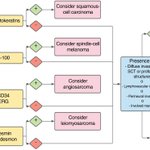
It’s so difficult to treat PRURITUS in patients with cholestasis.
How can we alleviate it ?
Dr. Rodriguez-Tajes proposes this algorithm:
#IMTLD2026
John retweeted
Equal time for the Diencephalon
Thomas Willis & Christopher Wren demonstrated diencephalic enthusiasm in this engraving of the thalami ["E"] in Cerebri Anatome (1664)
A pocket edition 2 yrs later had a frontis possibly w/ Willis in skullcap,Wren w/foldover leggings & a dalmatian!
John retweeted
Excellent!
CKD is usually associated with small and atrophic kidneys, so preserved (or enlarged) kidney size is a useful clue that narrows the differential to specific processes!
John retweeted
Dx: Low-grade myofibroblastic sarcoma (LGMS).
This rare, locally infiltrative spindle-cell sarcoma typically presents as a slow-growing mass in the head & neck. Bx showed a spindle/epithelioid malignant neoplasm w/ low-grade cytologic features & low mitotic activity; SMA & h-caldesmon were +ve, while S100, CD34, desmin, SOX10, cytokeratins, ERG, & other lineage markers were -ve, supporting myofibroblastic differentiation.
Given its infiltrative growth & risk of local recurrence, the tumor was treated w/ complete circumferential peripheral and deep margin assessment (CCPDMA), achieving clear margins in one stage, followed by local rotation-flap reconstruction. No recurrence was noted at 1-month follow-up.

ALT Histopathologic findings of low grade myofibroblastic sarcoma (A) & (B) Histological section stained with hematoxylin and eosin showing a highly cellular malignant tumor consisting of proliferating epithelioid and spindle-shaped cells scattered in a nodular pattern. C) Immunohistochemical study with diffuse positivity for caldesmon, consistent with myofibroblastic differentiation. D) Positive immunostaining for smooth muscle actin (SMA) supporting the mesenchymal origin of the tumor.
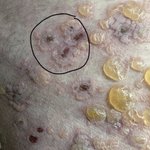
A man in his 30s w/ no significant PMHx presented w/ a ~10-mo hx of a progressively enlarging lesion in the L retroauricular region.
O/E: a firm, well-defined 0.5-cm cutaneous nodule overlying a palpable 4-cm subcutaneous mass, w/ a linear scar corresponding to a prior Bx site.
What’s the diagnosis❔
🙌🏿
The Surviving Sepsis Campaign has shaped sepsis care for decades. But do some of its core recommendations now lag behind the physiology and the evidence?
Rory Spiegel @TheEMNerd led this new dissenting opinion, which I was very pleased to contribute to.
We challenge:
• fixed 30 mL/kg fluid loading
• chasing lactate with fluid
• fluid responsiveness as a sufficient reason to give fluid
• pressure-centric resuscitation
• the omission of POCUS from modern haemodynamic assessment
• rigid bundle-driven care
The argument is not for less treatment. It is for more individualised, physiology-driven treatment of shock.
authors.elsevier.com/c/1npdk…
The 2026 Surviving Sepsis Campaign Guidelines: The dissenting opinion
Spiegel et al. AJEM, just published.
John retweeted
Delusions affect up to 1 in 3 older hospital patients with delirium.
They may believe they are imprisoned, that staff mean them harm, or that they are somewhere else entirely.
A question that helps: “can you tell me where you think you are right now?”
#delirium


