

From Terrestrial To Celestial📡
Herndon, VA
Joined July 2015
- Tweets1.8K
- Following239
- Followers3.5K
- Likes2.2K




Heathkit Visual-Aural Signal Tracer, Model IT-12, 3 Vacuum Tubes, Metal Cabinet, Made In USA, circa 1962


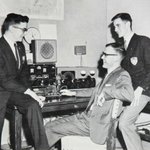
W1AE, circa 1950, operating his 40-meter rig in his basement radio shack. He sends Morse code with his right hand while holding a pencil in his left. This was a common practice among commercial radio operators of the era, allowing them to copy incoming messages by hand while continuing to transmit.


The first amateur superheterodyne receiver, an illustration for a do-it-yourself article in a 1920 amateur radio magazine.


WHAT IS YOUR EXCUSE?
Bad key! Bad mill!
Too hot! Too cold!
Key not adjusted!
Too fast! Too slow!
Can't copy my own sending!
Too nervous! Too tired!
PERFORMANCE COUNTS!
Southeastern Signal School, Georgia, circa 1951.


Radio Mechanics, October 1926 - edited by M. B. Sleeper. Cover attributed to Howard V. Brown as the artist responsible for the cover paintings. The first issues were designed around practical construction, circuits, components, experimentation and explanations.


"A Low-Cost Single-Signal Receiver" build-it-yourself project described in the October 1938 issue of QST in an article by George Grammer. It was subsequently included in the 1939 edition of The Radio Amateur's Handbook.

