

2014 MU69, has been officially named Arrokoth, a Native American term meaning “sky” in the Powhatan/Algonquian language.
Kuiper Belt #2014mu69 #MU69
Joined August 2015
- Tweets4.2K
- Following2K
- Followers1.8K
- Likes2.8K


2014MU69 - Arrokoth retweeted

Project Agorá prototype illustrates the potential of #tokenisation to modernise wholesale cross-border payments, ensuring greater efficiency, security, and inclusivity in the global financial system. Read more bit.ly/4ar02cj


2014MU69 - Arrokoth retweeted

BREAKING: G7 countries are now preparing for a major AI cyberattack on the banking system.
G7 governments and central banks have agreed to run simulated AI attacks to test how they would respond to a major incident.


It’s slower than we all think it’s gonna be .. Banks not ready

Almost one year later, everything is playing out exactly as expected for $XRP Ledger adoption.
Mastercard ✅
Visa ✅
Stripe ✅
PayPal 🚨
X Money 🚨
Worried about price? You’ll get tired of winning in the bull market.
Bookmark this.
NOV 2/4
Popcorn please

🚨RED OCTOBER DEBRIEFING: THE HOUSE WINS ON VOLUME
My read: when Bessent said "I am the house," he wasn't bluffing about the long end. He was telling you where he plans to win. The short end.
Here is what's on the record.
September 8, 2026. Southern Methodist University. The Treasury Secretary tells bond traders: "I am the house now."
Over the next three weeks, the 30-year yield climbs from about 5.25% to 5.69%. The highest since 2002. Critics say the market called his bluff.
But look at where the pain is.
October 7. The 2-year rises about 3 basis points. The 10-year and 30-year rise about 8. The market is happy to lend Washington money for two years. It's nervous about thirty.
The short end is calm. And it's crowded with buyers.
The stablecoin law requires every regulated digital dollar to be backed by short-term Treasury bills.
The Fed takes every dollar from its old mortgage bonds and buys short-term bills. That's about $15 to $17 billion a month.
Cayman Islands hedge funds pushed their T-bill holdings to a record this summer.
And Wall Street's own read on the upcoming refunding: cut long-term bond sales because demand for bills is so high.
Now look at what Treasury did at the long end.
Buybacks of long bonds: $2 billion per operation. Then $4 billion. Then about $6 billion.
Put it together. Borrow short, where the buyers are lined up. Use that strength to defend the long end. Shrink the long end over time.
A casino doesn't win every hand. It wins on volume. Treasury doesn't have to win at the 30-year. It has to win where it borrows the most.
The other side, in fairness:
Short-term money has to be borrowed again every few weeks. If the Fed raises rates, the cost of that whole pile goes up almost immediately. The house only wins while short rates stay put.
The long-end defense hasn't worked yet. Buybacks tripled and yields still rose. A former Comptroller General and a Johns Hopkins economist say the real problem is credibility: over $40 trillion in debt, at least $147 trillion in total promises, and trust funds that run dry in 2032 and 2033. Their argument is that no amount of short-term buying fixes that.
And the biggest captive buyer, stablecoins, doesn't fully arrive until 2027.
What settles it:
November 2 and 4. Treasury's next borrowing plan.
If the house is playing the short end on purpose, you'll see it: more bills, smaller long-bond auctions, maybe the 20-year cut altogether.
If auction sizes stay the same and the long end keeps climbing, the market is forcing Treasury's hand, not the other way around.
Either way, the scorecard drops in three weeks.
They have been telling us the whole time.
I am the guy on the couch, and you have been debriefed.

I bought XRP for retirement. At this point, the most realistic roadmap is transferring it to my heirs and letting them be disappointed too. 💀🚀📉
XRP isn’t a cryptocurrency.
It’s a support group for people who mistake patience for a retirement strategy. 🚀📉💀
2014MU69 - Arrokoth retweeted

BREAKING: An armed Kelly Clarkson has taken Grimace hostage at a New York McDonalds and is threatening to "paint the whole place purple" if they don't sell her the broken ice cream machine.


2014MU69 - Arrokoth retweeted
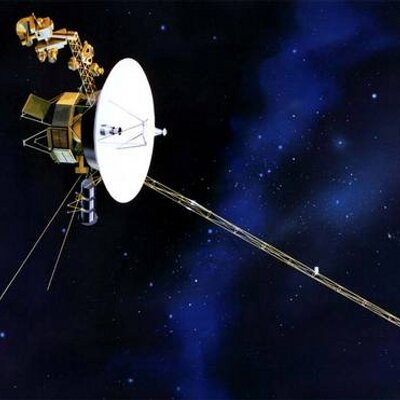
Sister ship Voyager 1 is currently ~23h 54m 20s of light travel time from Earth (2026:285:120000:1L)
2014MU69 - Arrokoth retweeted

Kelly Clarkson walked into my home, threw 45 dollars in my face, picked up my cat and left.
If I wasn’t on a GLP-1 - total cake binge day - instead I had butter noodles with salmon
#faceplant
XRPN is the Nasdaq ticker for Armada Acquisition Corp. II Class A ordinary shares (the security shown in your screenshot). It is a Cayman Islands SPAC that just completed its merger with Evernorth, an XRP-focused digital asset treasury company. Trading under XRPN began (or resumed post-merger) around October 12, 2026, after the deal closed on October 9.
The screenshot matches exactly:
• Full name: Armada Acquisition Corp II CL A
• Identifier G0R38G104 (the CUSIP; the ISIN is KYG0R38G1040, which starts with “KY” for Cayman Islands)
• Price around $17.09 (the prior close; the stock has been trading in the mid-teens recently after earlier volatility)
Fidelity (and many brokers) often displays the official long-form legal/security name plus the ISIN or CUSIP for foreign-incorporated companies, SPACs, or newly listed/restructured securities rather than (or alongside) just the short ticker. Data feeds and display systems frequently lag a day or two after a SPAC business combination and ticker-related corporate actions, so the full Armada description appears until everything fully updates to the post-merger Evernorth entity.
In short, you are looking at the correct security for XRPN—it is not a different stock. The display is normal for this type of Cayman SPAC share, especially on the first post-merger trading day.
Core pacs payment instruction messages (especially pacs.008 and pacs.009) became the required digital format on 22 November 2025.
This was the end of the SWIFT CBPR+ (Cross-Border Payments and Reporting Plus) coexistence period between legacy MT messages and ISO 20022 MX messages for payment instructions. From that date:
• MT103 → pacs.008 (FI to FI Customer Credit Transfer)
• MT202 / MT202 COV / MT205 → pacs.009 (and variants)
• Related returns and status messages also shifted to pacs.004 / pacs.002
ISO 20022 is now the exclusive standard for these in-scope cross-border payment instructions on the SWIFT network. Contingency MT-to-MX conversion services still exist for some cases but incur charges and stricter validation. Adoption reached roughly 97–98% of payment instructions shortly after the deadline.
Swift delayed the structured/hybrid postal address requirement (and the broader payments portion of Standards Release 2026) primarily because large parts of the industry were not ready.
Key Reasons
• Uneven readiness across the industry: As the original 14 November 2026 deadline approached, progress was inconsistent in every region. Readiness data (around April 2026) showed roughly 61% of payments still carried fully unstructured debtor addresses and ~63% unstructured creditor addresses. Surveys indicated nearly half of banks were not on track, and about 20% of the largest banks called the deadline unrealistic.
• Formal community requests for more time: Several banking communities and domestic payment market infrastructures asked Swift (and their local infrastructures, which had aligned deadlines) for additional preparation time.
• Data-quality and systems challenge: The 2025 MT-to-MX migration for core payment instructions was largely achieved with translation layers. Structured addresses, however, require clean, structured data captured at origination (in core banking, onboarding, and corporate systems). There was no practical network-level contingency to fix unstructured addresses after the fact—non-compliant messages would simply be rejected (NAK’d).
• Coordination with market infrastructures: Swift consulted with banks, central banks, and payment market infrastructures and agreed to a controlled extension to avoid widespread rejections and operational disruption. This also led aligned infrastructures (e.g., Bank of England RTGS/CHAPS) to defer their own related releases.
What Was Delayed
On 27 August 2026, Swift deferred all payments-related changes in Standards Release 2026 (not only the address rule). SR 2025 remains in effect until a future release. Non-payments elements (e.g., certain securities and trade changes) were decoupled and moved on a separate track (later set around June 2027).
Swift is consulting stakeholders on the optimal new timing and approach and has indicated it will provide an update by December 2026 at the latest. The underlying requirement (minimum structured town name + country, preferably fully structured or hybrid) has not been dropped—only the enforcement date has been postponed.
In short, the delay was a pragmatic response to industry readiness gaps rather than a change in the strategic goal of richer, structured data for better straight-through processing, screening, and interoperability.
Sit your ass down nobody is ready
2014MU69 - Arrokoth retweeted

While observing the universe, @NASAHubble caught a galaxy cluster smiling for the camera. 😊
The smile lines are arcs caused by an effect known as gravitational lensing, where massive structures warp spacetime with their powerful gravitational forces and act as a cosmic lens.

2014MU69 - Arrokoth retweeted
Sister ship Voyager 1 is currently ~23h 54m 09s of light travel time from Earth (2026:284:120000:1L)
2014MU69 - Arrokoth retweeted

Tomorrow, the 2026 IMF-World Bank Group Annual Meetings open in Bangkok, Thailand, at the Queen Sirikit National Convention Center. Join us for a week of high-level dialogue on the global economy. Watch live and follow the program. imf.org/en/meetings/2026/ann… #IMFMeetings


2014MU69 - Arrokoth retweeted

Krak Card landed in the U.S.🇺🇸
Up to 2% cashback. 600+ currencies. No hidden fees. Built with @Visa .
Get your Krak Card:
m.krak.app/Qq7r/krak_card_us