

Published by the University of Pennsylvania Press, ECTI fosters theoretical and interpretive research on all aspects of Western culture, 1660-1800.
Philadelphia, PA
Joined September 2018
- Tweets252
- Following183
- Followers1.2K
- Likes14




We’re looking for a new associate editor to collaborate with our production team & work closely with writers! Unpaid position best for individuals interested in national-level service and editorial experience. Apply by Feb 28: see attachment for details.


We’re excited to share The Future World of Eighteenth-Century Studies, a special issue of ECTI edited by Manushag N. Powell and inspired by the work of Felicity Nussbaum!
muse.jhu.edu/issue/49466

The UCLA English Department is hiring and welcomes applicants from diverse methodological backgrounds! Read full job description & apply by Nov 16th: recruit.apo.ucla.edu/JPF0789…

Sharpen your quills! ECTI is accepting ongoing submissions: ecti.scholasticahq.com/for-a…

With ASECS underway (April 7-11), ECTI would like to highlight some upcoming pieces. Read Al Coppola’s (John Jay College CUNY) abstract to an upcoming article at ecti.english.illinois.edu/fi…
Call for Proposal for Summer Online Issue (2021) of ECTI. For information please go to ecti.english.illinois.edu/fi…
The Eighteenth Century: Theory and Interpretation would like to announce its newest Editor’s Picks. Please visit ecti.english.illinois.edu/fi… for the full list.

ECTI Call for Papers: We would love the opportunity to see you work. If you’re interested, please submit to our new administrative platform, Scholastica: ecti.scholasticahq.com/for-a…
"ECTI is proud to announce the publication of its "Scholarship in a Time of Crisis" special issue. We would like to thank all of our contributors. Please find the issue at ecti.english.illinois.edu/cf…".

ECTI is pleased to announce that we are now using Scholastica for our online peer-review submission system! To submit an essay, log on to our administrative platform, at ecti.scholasticahq.com/for-a…
In ECTI, Q. S. Tong and Liu Chen review Jonathan Schlesinger's A WORLD TRIMMED WITH FUR ( @stanfordpress ) - "a story of nature and culture, a historical process in which nature was opposed to, and eroded by, Han Chinese culture."
muse.jhu.edu/article/757076

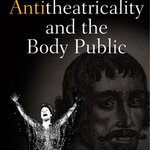
In ECTI, @LauraRosenthal reviews Lisa Freeman's Antitheatricality and the Body Public ( @PennPress ). It is "scholarly, precise, and careful in its full exploration and contextualization
of different high-profile instances of antitheatricality"
muse.jhu.edu/article/757082

From the Editors of ECTI: A Diversity, Inclusion, Equity, and Access statement: ecti.english.illinois.edu/ab…
In ECTI, Richard Squibbs of @DePaul_English looks to translations of Lazarillo de Tormes and the domestication of the picaro. The fate of the picaro shows "an emergent literary history of the novel...beginning to coalesce along with the genre itself."
muse.jhu.edu/article/757083

The Eighteenth Century: Theory and Interpretation retweeted

Hello Restoration fans! 44.1—our Spring 2020 special issue on Eliza Haywood, edited by @NushPowell—is now accessible via Project Muse: muse.jhu.edu/journal/415
We’ll be tweeting out a few previews of the various articles and reviews soon— it’s all such fabulous scholarship!
thanks @kathylubey for tagging the author!

In ECTI, Emily M. West of @uhmanoa explores "Technologies of Epistolarity and Embodiment in John Cleland’s Memoirs of a Woman of Pleasure" - "the eighteenth-century writing body is a hybrid form that can destabilize binary models of gendered embodiment."
muse.jhu.edu/article/757078

In ECTI, @AliceTMcGrath of @BrynMawrCollege traces Jane Barker’s “patchwork” aesthetic of imperfection as a methodology of queer failure that allows her to resignify disappointment and inaction as creative vitality.
muse.jhu.edu/article/757077
