
@0xsingletonly
Account based inSingapore!
About this account
- Account based in
- Singapore
- Connected via
- Singapore App Store
X says this location may be affected by a proxy or VPN.
Account-level information from X, not a live location or the device used for a specific post.
applied ai engineer. looking for next venture.
Joined April 2022
- Tweets4.1K
- Following88
- Followers1.2K
- Likes387




Pinned Tweet
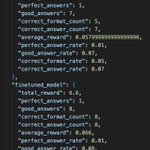
just wrapped up my latest side project- ai agents that play the resistance: avalon! built both rule-based and llm agents to see if ai can master social deduction, deception, and hidden info gameplay.
how do you think they fared?
1/n
So much quality work comes from having a well rested and peaceful mind.
People mistake activity for impact.
Corporate speak bullshit detector going off.
I hate fluff words lol

Thank you for this, @_NathanCalvin. I appreciate and am a fan of the investigative work you’ve done on behalf of AI safety and believe your comments are coming from a constructive, honest place, and that it benefits the public to have people whose job is to scrutinize the actions of frontier AI companies. I think something would be wrong if companies of the size of Anthropic didn’t get harshly criticized basically every day; strong antibodies against corporate power are a healthy feature of a free society, and especially so when issues of the gravity of the one we’re facing are at play. I also do agree that some of the examples you cite were mistakes by Anthropic.
That said, I disagree with the thrust of your post. At the core, a good fraction of the things you criticize are consequences of Anthropic’s basic theory of change that we have held for many years. Our strategy has always been what I’ve called the “race to the top” — by showing how it’s possible to build the technology responsibly, we can raise the bar for the entire industry. The forces that drive the race to the top are hugely more effective if the company practicing them is at the frontier; that’s one lesson I’ve learned repeatedly. And looking at that strategy as a whole, I’m proud of our track record and stand by it.
I believe that if we take a list of things that Anthropic did in the past year that were pro-safety and commercially costly to us, they far outweigh the list you’ve made, while at the same time I also disagree with some of the items on your list. Here are some things Anthropic has done, in the same period you’ve cited (the last year), which were very costly to us commercially while having strong safety benefits:
1. We played a key role in SB53 (and other state laws), at a time when doing so was politically perilous to the company and AI regulation was very unpopular. We in fact argued for a stronger version of SB53 than was ultimately passed; there were a lot of stakeholders and we were not the limiting factor in the strength of the bill that was passed.
2. We have very strong biological safeguards on our models, because we’ve seen concerning results in bio uplift trials and even seen and blocked potential attempts to misuse our models for bioweapons (as seen in our threat intelligence report from a few weeks ago). This is a very serious threat that we want to have zero tolerance for. But having very low false negatives means having significant false positives (despite months of effort on our part to improve the classifiers), enough so that biologists joke about how restrictive our classifiers are, and competitors sometimes sell against us by touting their more permissive bio capabilities. This has been very painful to us in an area where we care a lot about supporting an ecosystem of Claude users (biomedical science; and it is particularly frustrating to me as a biologist), but it’s the right thing to do and we intend to keep doing it.
3. Similarly, we first had Mythos-class models in February but didn’t make them generally available until June (when we had stronger cyber safeguards in place). We only offered them to a limited set of partners in order to focus on cyberdefense. It would have been much more economically rational to simply release the model to everyone. We likely sacrificed a significant chunk of a several-month model lead. But because of this, many companies secured their cyber infrastructure before the deluge of widely available cyber-capable models. Of course there are ways it could have gone better or been run better, but this was what we were aiming to do.
4. I advocated forcefully and publicly, in my essay Policy on the AI Exponential in June of this year, for the government to have the power to block model releases. Back then this was still outside or maybe on the edge of the Overton window, though I understand the window has moved since then. We were attacked intensely for this.
5. I don’t want to re-ignite conflict, but the events of February 2026 are a strong example. It is clear that our public stance could have seriously damaged the company’s future.
6. We’ve continued to advocate for export controls on chips and chipmaking equipment to China, because we think it allows democracies to negotiate from a position of strength on AI safety agreements. We’ve done this despite problems it’s created for us with industry partners who hold very different views and on whom we are very dependent.
7. As far as I’m aware we were the first, and still only, frontier company to restrict the sale of AI services to PRC-controlled companies, including those operating through third countries (otherwise a major loophole). We’ve therefore forfeited significant short-term business to prevent fueling AI platforms and applications that would help the CCP’s military and intelligence services. We are also cracking down on distillation; generally, distillation is not a major threat to us commercially, but like chip exports it has concerning national security and safety implications, so we expend significant energy and company resources to address it.
8. As you mentioned, we’ve put out a lot of reports, announcements, long model cards, public advocacy, etc, all trying to inform the public about the risks of AI. These involve a level of detail and effort that would be implausible for a purely profit-maximizing company.
9. Just this week, we announced we were putting 5% (and possibly more over time) of the company into a public benefit fund.
All of these decisions came with very substantial costs to us. To be fair, those that involved holding back or restricting access to frontier capabilities also had a broader cost — for example, the public might otherwise have benefitted from faster progress in biology, so I am not saying that our decisions were without tradeoffs — but they were not driven by profit-seeking.
For each decision, you can come up with ulterior motives that could have driven us — I think it is a general truth that any decision, on any topic, can always be portrayed as a nefarious scheme. But most of those end up being pretty farfetched or don’t fully make sense if you actually examine them closely. For example, it is deeply implausible that it would be a shrewd business move to block a large swath of research biology in order to do the work ourselves and compete with our customers; we expect the benefit to the ecosystem to greatly exceed the work Anthropic does itself, and for the two to complement each other. It is not in Anthropic’s interest to be perceived as unfriendly to biologists. Our Life Sciences Verification Program, which gives vetted biology professionals access to our models, also refutes this idea.
Of course, a different set of people will see this and make a different criticism: that Anthropic shouldn't be making decisions about who gets access to what in the first place. I agree, in the sense that ideally the government would be making these decisions, and that’s why we advocate for regulation. But for now we are forced to make them, and enabling bioterrorism isn’t a better option.
I think that even if I conceded every item in your list, I would happily hold up mine next to it; I don’t think it’s a close call. That is of course partly subjective and different things are important to different people. Maybe one way you could object is that several of the items above relate to AI misuse and not loss-of-control; if you think the latter is much more important than the former, that might change your calculus. But this is not Anthropic’s view — we view both as serious issues. You can also disagree with our decisions, as many have, but they are consistent.
But I also disagree with at least some of your list. Several items don’t represent a deviation from Anthropic’s strategy or values at all, once we postulate the “race to the top” strategy that requires being a frontier AI company. Your items 1-4 are all simply examples of what it means to compete at the frontier, and we stand by them, both in the sense that they are transparently ordinary things to do as part of that strategy, and that we stand by the strategy as a whole.
To be fair, there are important questions worth confronting (and that we are confronting) about what to do when the AI-driven acceleration gets fast enough that it is hard for safety to keep up. We are nearing that point and that’s what’s driving some of our thinking about “pacing.” But 1-4 are actions taken before that point and should be perfectly expected based on Anthropic’s strategy as a company. Of course it is possible to disagree with that strategy, but that’s a more fundamental disagreement that you could have had any time over the last few years.
I agree we could have handled your items 7, 8, and 9 better. All fall into the category of “rhetoric or policy communication that wasn’t carefully written or resulting from fast-changing circumstances not propagating from one team to another fast enough.” This kind of thing happens a lot in large organizations (Anthropic is over 5,000 people), and doesn’t even necessarily represent a failure or mistake of any single person. I am of course the CEO, and I take responsibility. The volume of communication from Anthropic is enormous and if these are the worst examples, I think we’re frankly doing pretty well, though I will continue to work hard to make sure we do even better.
Your 5th item (the change to our RSP) is the most substantive item, and people can debate this, but I think that the old, more rigid RSP created a lot of situations where we were technically required to do something that required a lot of effort but in retrospect wasn’t very important for safety, as well as not covering some of the most important things. Our current RSP’s focus on transparency brought things like risk reports and roadmaps, and its emphasis on independent external review laid the groundwork for even more intensive embedded evaluation, all of which I think have been valuable in driving a race to the top. In the original announcement in September 2023, we described the RSP as an “early iteration that we [would] build on” and said that “rapid iteration…will almost certainly be necessary.” I understand that changing plans is always a move that creates justifiable scrutiny — I just don’t think we ever represented that we wouldn’t do so.
Relating to your 6th item (having an FCF in addition to our RSP), I know our intent is to meet the letter and spirit of our regulatory obligations (via our FCF) while also remaining able to experiment with more novel approaches to risk management that go beyond what the law currently requires (via our RSP). I promise to look into it further, as it’s a complex issue and it is possible we are not weighing the considerations in the right way.
Overall, although Anthropic has made plenty of mistakes as an organization — including some of the items on your list — I feel that we have repeatedly taken serious and substantive actions counter to our bottom line and that there is a significant negativity bias distorting assessments like the one you are making above. We’ll always try to do better but, again, I am extremely proud of our track record and stand by it. I will have more to say soon about how we are going to further live our values in this moment of rapid change.
0xso retweeted

DeepSeek's open-source streak is getting absurd:
- FlashMLA: 580 TFLOPS attention on H800
- DeepEP: MoE comms
- DeepGEMM: 1350+ FP8 TFLOPS matmul
- 3FS: they built an entire file system
- and today: the full inference engine behind V4.1-Flash, Apache 2.0
Mad respect

🚀 Introducing DeepInfer, our in-house inference framework, now fully open source!
Powering DeepSeek-V4.1-Flash at scale with high throughput and low latency. We’re sharing our production stack to help the community lower compute costs, reduce energy use, and make AI more affordable.
🔗 github.com/deepseek-ai/DeepI…
1/4


Another angle- it’s a lot of learned helplessness on our end too.
The haze has been around for decades; it’s extremely hard to enforce cross border laws (we don’t want to negatively impact our relationship with Indonesia).
So we do mostly nothing. Hunker down and get over it.

What strikes me about Singapore right now is how calm the response is, even with the air this bad.
Here's what's going on.
Singapore has been under haze for over a month. The PSI, Singapore's equivalent to AQI, crossed into the unhealthy range on September 4.
On October 9, it hit 192 in central Singapore, the highest reading this year. Anything above 100 is unhealthy and anything above 300 is hazardous.
The smoke is drifting over from forest and land fires on Sumatra and Kalimantan in Indonesia. On some days you can barely see Marina Bay Sands from a few kilometres away.
The worst part is how long this could last.
Singapore's Health Minister Ong Ye Kung has said he expects the haze to stick around for a few more weeks. Emergency departments are seeing more patients with breathing problems every week.
Across the water, Johor in Malaysia shut all its schools for a week.
But why is it so bad this year?
Let me explain.
There's a very strong El Niño going on, which some experts are calling a "Godzilla" El Niño.
It means less rain and more heat across Indonesia, Malaysia and Singapore. This causes dry land to burn easily.
See, a lot of the burning land in Indonesia is peat, which is thick, spongy soil made of old plants.
Once peat catches fire, it can smoulder underground for weeks. So, even if you put out the flames on top, it keeps burning below.
That's why there's so much smoke.
When I read about this, I expected Singaporeans to be furious at their government right now. The air is bad, kids are coughing, and nobody can go for a run outside.
But the mood online is mostly "how are we going to get through this," not "who do we blame."
The government too, has been very proactive.
From October 12, Singapore switched on a Haze Subsidy Scheme.
So any citizen who goes to a polyclinic for a haze-related problem like asthma, bronchitis, or itchy eyes pays at most S$10.
A haze task force with the education, health and defence ministries has said that if the PSI crosses 200, it will hand out free N95 masks to people who need them most, like the elderly and low-income families.
Singapore also passed a law in 2014 that lets it fine companies anywhere in the world if their fires cause haze in Singapore.
The ASEAN countries also have a regional agreement on cross-border haze, which Indonesia signed onto in 2014.
On the Indonesian side, about 60,000 people have been sent to fight the fires, with helicopters, water bombing and cloud seeding.
Malaysia's Prime Minister Anwar Ibrahim called Indonesia's President Prabowo, asked him to act, and also offered help.
So yes, people are frustrated. But the conversation is mostly about getting through the next few weeks and putting the fires out.
Also, this isn't only Southeast Asia's problem. Almost every big farming country struggles with this.
We know it best in India.
Every October and November, farmers in Punjab and Haryana burn leftover paddy straw to clear their fields fast for the next crop.
The smoke drifts into Delhi, and the city disappears under a grey cloud for weeks.
Northern Thailand too has a burning season every spring.
Farmers burn fields after harvest, and forest fires add to it. Chiang Mai, a city tourists love, often ends up on lists of the most polluted cities in the world in March and April.
In Brazil, farmers used to burn sugarcane fields before harvest to clear the leaves.
São Paulo state worked with farmers and mills to phase that out, mainly by switching to machines.
The pattern is the same everywhere.
See, burning is always fast and cheap for the farmer,
so we need to give farmers a cheaper way to clear land than fire.
Also, punish companies that burn on purpose. Watch for fires early with satellites. And have a plan ready, just like the Singaporean government.
Singapore can't stop the fires.
But it's clearly ready for the smoke. We need to learn.

IMO a lot of it is just that LLMs have a different sort of intelligence. One that isn’t grounded the way ours is.
We are gonna see a bimodal distribution of content- on one hand, AI as mass distribution. Cheap, flexible, easy. On the other, human-made. Ironically the imperfection in a “manual” video will make others feel more connected to it.
LinkedIn could have been the perfect social media for intellectual stuff, but failed.
Is it because it tried to appeal to everyone?
0xso retweeted

Don’t work on your business near bedtime. No tickets, no reviews, no social media.
Don't activate your brain or get your emotions riled, when you're trying to be calm and stop having thoughts.
Rest is tomorrow’s productivity.


I’ve thought about this since Feb- agentic coding is about the outcome you want to achieve (product).

0xso retweeted

Remember the guy who hacked his gym using AI, Andrew Bird?
Well, I did a little OSINT, and it turns out he is the Conference Co-Director of Effective Altruism Global since 2015.
Isn't it interesting that every major "AI" hack has been made by people directly connected to Effective Altruism?


