

Blockchain x Security
onchain
Joined February 2021
- Tweets6.9K
- Following270
- Followers356
- Likes7.4K


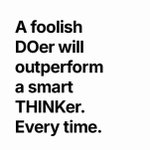





You can decentralize the protocol as much as you want,
But humans will always centralize power and authority
And it really makes sense.
It's not ideal, but it's better than the alternative

Centralised entities stepping in to save the day after major crypto hacks. Is this really what decentralised finance was supposed to look like?
Security shouldn’t be a reaction to exploits. It should be a priority from day one.
Prevention over recovery. Always.
3
76


Growing up, I've always wanted to become a world class mathematician.
At some point, I'm just going to ditch all these and go all in.
You might be reading this tweet from the next Terrence Tao.
56
There is actually more to this which I must point out.
The argument that Bor proposers are trusted does not address this vulnerability.
A proposer is trusted to produce and sign blocks, but it still executes untrusted transactions supplied by the mempool. A crash that is caused by transaction content does not require the attacker to be a proposer.
An external user can create an otherwise valid blob transaction with a valid sidecar and a valid KZG proof.
Bor’s production transaction-pool validation accepts it. When an honest proposer selects that transaction for a block, the miner executes it locally through core.ApplyTransaction and crashes with a nil-pointer panic before it finish building the block.
No malicious proposer, crafted block, invalid signature, malformed sidecar, or compromised validator is needed.
This happens because proposer trust is about block authorship, not transaction safety. The proposer does not manually inspect every transaction type executing it; it relies on the pool and execution layers to reject unsupported transactions with an error.
The required invariant is that every pool-valid transaction must either execute safely or be rejected with an error. It must never crash the process. Bor violates that invariant for type-3 transactions.
The crash also happens before the block is sealed and before other validators can apply their own trust checks. So the proposer’s honesty cannot prevent it, and other validators rejecting the resulting block is not a useful defense: the proposer may already be dead before that block exists.
There is a scope distinction to be made here.
Making every importing validator crash requires a malicious proposer who sets BlobGasUsed so the block passes ValidateBody. But crashing the current proposer during block construction requires only that an external user get a valid blob transaction into that proposer’s pool and have it selected.
The transaction can be broadcast to multiple proposers and offered with a high fee to make selection likely, allowing repeated disruption of block production without the attacker ever becoming a proposer.
My question is, Does @0xPolygon consider crashing their proposer not to be a serious issue?
I mean anyone could crash the proposer right now. Is that not a serious enough issue to be considered valid?
It is one thing for the report to be duplicated to another report, But being a duplicate of an invalid either means the original submitter did not find this same issue or the duplication was only a ploy to avoid paying.
So which is it??
Disclaimer: This issue have been confirmed to be invalid by the protocol team which is why I can discuss it publicly.

Today I found a vulnerability which allows a proposer to halt Bor (@0xPolygon execution chain).
It is a deterministic halt meaning that it's not up to chance. A proposer could halt the chain at will.
On my end, I rated the finding as critical, but the protocol team had a different thought.
The issue was downgraded to a low and closed as "Duplicate of invalid report".
What was the issue?
Apparently, polygon considers the Proposer as a trusted role. The argument is that the proposer role represents a supermajority trusted role rather than an arbitrary validator rotation.
The funny bit about this is that there is nothing special about this supermajority election. Heimdall validators simply ranks a set of validators and whoever has the super majority becomes the elected proposer.
In addition, currently the proposer is no longer a single validator but a set of validators and there is nothing special about their selection.
There is nothing about proposer selection on Polygon that justify treating the role as trusted but the team have spoken, a PROPOSER is trusted y'all.
yet again, I was not shown the original report (which is invalid by the way) ro which mine was duplicated to, with the infamous excuse that it contains other findings which mine did not include.
Since when do white hats submit aggregate reports to immunefi?
Let's keep hunting Guys, today is a malicious proposer - chain halt bug, tomorrow could be Theft of funds bug.
No dispair!
Disclaimer: I only discuss invalid vulnerability reports publicly. I mean there is no reason not to, right?
One of my findings on immunefi was recently closed as a "Duplicate of invalid report" which I find really fishy.
First and foremost, the protocol team (@0xPolygon) and the @immunefi mediator made no comment about the validity of the report.
Is the issue not reachable?
Does the vulnerability not produce the listed impact?
Is the impact not in scope?
All that was said is that some other person have reported the root cause.
Now, funny enough, I was not shown the original report. And their argument is that the original report pointed out an issue which mine didn't, therefore they can't show me.
But that's what makes it even more fishy,
you just claimed that the report is invalid, so why hide it?
What harm can an invalid report do?
Now how am I even sure that the issue is valid?
First of all, the bug is simple (it's invalid anyway, so there is no point hiding it)
in the polygon's fork of cometbft, VerifySignature did not validate the recovery byte (the v part of v,r,s) which allows a validator to include any byte as the recovery byte. You can change the v value to anything and the verify will still treat the signature as valid, so as concensus.
Where does this cause issue?
After a block is finalized and committed to state, Heimdall bridge (responsible for synchronizing Heimdall and the Ethereum) picks up the committed checkpoint, which the altered signature is part of and validated it.
This time around, v is validated. if v value is outside {0,1,27,28}, it considers the signature invalid and halts checkpointing.
so, as long as a validator keeps altering his signature, Heimdall cannot checkpoint to Ethereum.
Here is what you should know, without checkpointing, no validator can withdraw from Ethereum.
So this is not a cosmetic issue. It causes a denial of an important service.
But obviously, this is invalid without reason.
Root cause is valid.
it is reachable.
Impact is material.
None of the parties disputed any of these.
All they said was that someone else have submitted an invalid issue with the same root cause before me. An invalid issue!
Mediation lasted less than 30 minutes to support the claim by the protocol team. Did the mediator even look at the issue? I doubt it.
This is the state of bug hunting in 2026.
Keep hunting guys.
Today was a DoS.
Tomorrow might a be theft of funds critical.
Don't give up and have fun!
5
235
Fact versus Myth
is there any advantage to include preambles like: "you are a ..."?
Mostly no. For current models, "You are a senior security auditor with 20 years of experience..." style preambles are largely leftover prompt-engineering folklore. A few honest nuances:
Why they're weak
The model's capability doesn't change with a persona. Declaring it an expert doesn't give it knowledge it lacks, and it was already trained on everything a senior auditor knows. There's no evidence of meaningful accuracy gains from role declarations on tasks like code auditing.
The effect they do have is a subtle shift in tone and vocabulary. The output reads more like an audit report.
They consume attention. Every prompt has a finite "instruction budget" before the model starts dropping constraints; a persona sentence displaces a sentence that could carry an actual rule (like the prioritization or dynamic-confirmation lines from my previous reply).
When persona-like opening can earn its place
As compression for a concrete stance, not a title. "You are an adversarial reviewer trying to disprove each claim" works because it encodes a behavior "attack your own hypothesis". But then you're better off just the behavior.
For weaker or older models, where role framing measurably shifted output quality. If your runner dispatches to arbitrary provider CLIs (--provider codex, --agent-cmd), a one-line stance could be cheap insurance for less capable backends, but test it rather than assume it.
The failure mode to avoid
Personas invite the model to perform the role; confident tone, authoritative hedging, audit-shaped prose, rather than do the work. In a bug hunt that's actively harmful: you want "unconfirmed, needs execution," not the polished certainty of a veteran auditor.
Bottom line for bug hunting prompts: don't add one. If you're tempted by "you are an elite bug hunter," translate it into two or three behaviors you actually want from an elite bug hunter (dynamic confirmation, impact-first prioritization, dead-end abandonment) and write those as rules. That gets you the real effect instead of the vibe.
....
You can deliberately improve your auditing outputs by improving your approach to prompting. Ai can find all kinds of bugs if:
1. it has the right context
2. You ask the right question
The question is what questions/prompts is right and what context counts as "Good enough context"?
I've been trying to answer these questions through research. Follow me to learn more about what I find.
2
165
One person submitted 79 findings in a single context with a reward port of 14k
He paid $5 for each submission
Followed by 54 and a 39
Lesson: even if you treat audit as gambling, there is always someone willing to bet more than you.

4
24
1,887
It feels good to get a timely response from your bounty submission.
Even if the outcome didn't print 6 figures or any figures at all,
it is encouraging to know that the team took their time to look into your report and empowers you to spend more time going deeper
2
215
Damn right

Bug bounty has definitely changed.
I used to spend hours analyzing HTTP requests, switching back and forth between Firefox and Burp Suite.
Now, I open my terminal, point my AI skills at a target, intercept and analyze HTTP traffic using Burp Suite MCP, and offload heavy tasks to my HackBot running on a VPS.
But here’s the thing: AI doesn’t replace your hacking skills. It scales them.
The goal is to get really good at manual hacking first, then use AI to automate and scale what you already know.
Not the other way around.
You don’t start by building a HackBot and expecting it to hack for you when you don’t even understand what it’s doing.
Learn to hack first. Automate second. Scale third.
Keep hacking! ✌️
3
104

What is wrong with @AnthropicAI,
why is my account being restricted for trying to upgrade my account?
1
31
There's actually a way around this and that is to read past security fixes and see what others found.
All the critical fixes are there hidden away in commits, find them, study them
It's important to find bugs but it's even more important to know what you missed

Today I decided to experiment with @asen_sec ai web3 security course.
so I hacked it a bit to use codex instead of API_KEY. The project is a very interesting one and opens up a whole new world of research around Ai auditing.
My first observation was the consistent inconsistencies across runs.
[module 1:without context]
Each run surfaced a different set of vulnerabilities with at most 50% overlap. That's crazy!
Each run could not find more than 5 vulnerabilities at a time. For some reason, codex stopped looking for bugs after it had found up to 5.
So I switched to module 2 by adding --context and --loops
The findings count jumped to 11 and remained fixed across runs
but the inconsistencies remained consistent,
Different runs surfaced it's own set of vulnerabilities with at most 50% overlap.
Even the findings that was found consistently had different severity assigned to it across different rounds.
This goes to highlight that the performance of Ai agents could be highly indeterminate if not structured well.
The challenge of Ai agent have always been to give structure to a tool whose output is not determinate.
Overall, I am impressed by the continious improvements across modules and curious to see how future enhancements improves the perfomance.
This is the first hands-on project that shows and teaches how to build and improve an Ai agent, so Kudos to @asen_sec
while more modules are still in the making, I will branch off from here to conduct my own research on how to bring structured procedures to Ai audits.
2
10
809
Let's celebrate Immunefi for taking 🥇 1st position
earning $5,800 in fees

The @QuantusNetwork Audit Competition is a wrap!
🏆 Top Winners:
🥇 @therealbytes - $3,286
🥈 @ZealynxSecurity - $2,366
🥉 @Valistheaeth - $2,145
🏅@hnaito_eth - $1,449
🏅@maakayjunior - $1,324
Congrats to all participants & winners! 🎖
