

vx | systems | networks | security | prof @uc3m
Joined August 2012
- Tweets5K
- Following253
- Followers1.7K
- Likes8.3K






Juan Tapiador retweeted

The back of the Navier-Stokes milestone shirt is the last line of the chain-of-thought from the solution:

Juan Tapiador retweeted

New #blog! The story of two suburban Chicago kids who #hacked a university computer & tried to hold it to ransom in 1980. Really early #hacker #history & a thread in the history of #ransomware, data extortion is almost as old as personal computing itself.
realhackhistory.org/2026/10/…


Juan Tapiador retweeted

Try opening a Microsoft Word document from 1992, a Flash project from 2006, or a proprietary database dump from 2010. Half of it is unreadable binary rot.
Now open a .c source file or a plain .txt file written on a UNIX PDP-11 in 1973. It opens in 0.001 seconds on every computer on Earth.
Plain text is the only truly immortal data format humanity has ever invented.
Juan Tapiador retweeted

📢 Call for Workshop Proposals: IEEE EuroS&P 2027!
Looking to organize a workshop in security & privacy? Join us in Madrid, Spain (July 5 & 9, 2027)! 🇪🇸
🗓️ Proposal Deadline: Oct 30, 2026 (23:59 AoE)
Guidelines & Call For Workshops:
🔗 eurosp2027.ieee-security.org…
#EuroSP27


Juan Tapiador retweeted

Margaret Hamilton, computing pioneer who led software development for the Apollo program, dies at 90 news.mit.edu/2026/margaret-h… 😢😢😢

Juan Tapiador retweeted

Math is progressing by hours now, not years

We are publishing an update to OpenAI Problem #109 (integer multiplication) with a substantial further tightening:
T(n) = O(n (log n)^(1 − κ)),
With κ = 2⁻⁷⁸ (tightened from κ = 2⁻¹⁸²)
Approximately 570 million fold improvement over our previous result and a 2¹⁰⁴ fold improvement over original OAI result.
Our earlier ceiling applied to a cubic bottleneck in the network. The new witness scales quadratically; we haven't established a new ceiling.
The key was using nonadjacent axis swaps to route around the cubic bottleneck. The original manuscript already supported nonadjacent axis swaps. Using them directly reduces layout routing from O(d²) to O(d) swaps.

Juan Tapiador retweeted

[continued]
I say "almost" because there is going to be one way to maintain secrecy. Software as a service with the executable hiding behind a network connection to the cloud. But as of now, we must assume that anything shipped as an executable, or even a firmware image, is as transparent as glass. It won't keep its secrets for any longer than it takes for somebody to be motivated to throw an LLM at it.
I did not see this coming. When I wrote down the theory of open source, 30 years ago now, I thought closed source would be gradually driven towards extinction by cost gradients, but survive indefinitely in certain niches. I did not foresee it being wiped out in a technoapocalypse.
Ironically, I thought one of the application areas in which closed source would persist longest was games.
There are still some obstacles. In US law, decompilation of a binary is a derivative work of the binary that falls under whatever copyright it had. However, it is also settled law that if you decompile binary code to a precise specification of what it does, then generate fresh code from that without looking at the decompiled stuff, you're in the clear. This was the case law that allowed PC clones to exist, after Phoenix Technologies reverse engineered the original IBM PC BIOS.
The two-step process - binary to specification to unencumbered code - will no longer takes a large number of programmers and years of development time. With an LLM, it's now a thing you can do in a day. Ubiquity will make it impractical to prosecute all the people who might skip the specification step.
Source code can also be covered by patents. You can be able to see their source code for a patented technique and not be able to use it without violating the law. Linux has evolved practices for dealing with this problem - one is not shipping patented video codecs, but requiring you to download them as plugins from jurisdictions where U.S. patents can't be enforced. This presents patent holders with the impractical challenge of individually suing millions of end users, assuming it can even figure out who they are. To date, AFAIK, this has not been attempted.
And that's about it. If there are any other ways left to retain software secrecy and lock-in than SaaS or patents, I can't think of any. Well, you could epoxy-pot a firmware ROM, I suppose, but that can be defeated with a heat gun and a dental pick. Device manufacturers will learn not to pay for an assembly step that has become useless.
Forced migration from shipped binaries to tied cloud services will be tried - Adobe pioneered this, and Microsoft is pushing it as hard as they can given that their OS is a binary that has to run locally. Both companies are seeing massive user revolts over this. There is good reason to doubt that it's a strategy that can hold customers in the long term.
Also, a lot of things can't safely be tied to the cloud at all, because they can't tolerate a random network outage. Machine tools, medical devices...
A whole lot of proprietary software business models are going to collapse. Hard. One that I think might survive is tax software; being able to decompile it doesn't necessarily do you a lot of good because its actual value is tracking a ruleset that changes over time and has to be maintained by vendor specialists. But cases like this are unusual.
I think some dirty laundry is going to get aired, too. It has long been rumored that the reason graphics card manufacturers are so stubborn in their secrecy is that they've all been committing massive intellectual-property theft on each other for decades. If this is true, it will be exposed, and the lawsuits will be entertaining.
We're entering a new world, with a lot of ancient comfortable assumptions being blown up. It's going to be fun to watch.
2/2
Juan Tapiador retweeted

I like Meta's formatting decision to unobtrusively highlight "AI" and "Human" contributions to a paper. Will try to adhere to this practice in the future.

Juan Tapiador retweeted

Brookings just published a brutally honest paper on what the AI buildout is costing America.
A Columbia economist added up every data center, chip, power line and cooling system the US plans to build for AI, and the total reads like a warning to anyone with a pension.
$10.3 trillion between 2025 and 2032. That's 3.6% of the entire US economy, every year, for eight years.
No American infrastructure boom has come close. The railroad boom of the 1800s, the usual benchmark, peaked at about 2.2% of GDP. Canals, electrification, the interstate highways and the internet all came in smaller.
The numbers are rough. Big tech's spending on AI infrastructure went from $97 billion in 2020 to about $400 billion in 2025, and it's on track for $800 billion next year. Over $1.3 trillion in debt is already committed to it. A growing share of that money moves through private credit, special-purpose vehicles and off-balance-sheet deals, where outsiders struggle to see who holds the risk.
The economist stopped short of calling it a bubble. He said it's too early to compare it to the credit booms that ended in crashes, and he still doubts the payoff.
"Silicon Valley wants all of us to believe that this is a miracle technology... it has to generate trillions of dollars of revenues to be financeable. I'm just not sure how likely it is."
His main recommendation is to measure the exposure and make it public now, while the money is still moving, before a downturn reveals where it sits.
I've been asking the AI labs for the same thing all week. Show us the incidents, show us the debt, show us who's exposed.
Whose savings are underneath it when the bill comes due?

Juan Tapiador retweeted

Took a minute to write a few words about security & safety as someone who lived through it all at OpenAI. I hope my thoughts help someone out there.

Juan Tapiador retweeted

We’re sending TPUs to space (yes, really).
After years of research, we’re launching a satellite to evaluate if and how Google Tensor Processing Units (TPUs) hold up in orbit.
The test mission, as part of our latest moonshot — Project Suncatcher — is designed to gather data exploring how we can one day host machine learning infrastructure in space.

ALT White text on a black background with photos of a TPU and a rocket orbiting Earth. The text reads: “Meet Project Suncatcher, our moonshot to test whether we can host AI infrastructure in space.”

ALT An image showing circuit boards, overlaid with text that reads: “We partnered with Planet to send a prototype satellite carrying four TPUs into orbit. We’ll be looking to see how well the TPUs withstand the harsh conditions of space to assess whether we can eventually host machine learning in orbit.”
Juan Tapiador retweeted
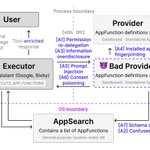
New paper on Android 16 security and AI agent orchestration to appear at PETS 2027!

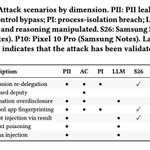
We validated these issues on real Google Pixel and Samsung devices. Our findings show that AI-mediated orchestration challenges long-standing mobile OS trust assumptions, calling for entirely new approaches to permission mediation and access control.

This work was led by Tautvydas Jackevičius (it's actually his MSc dissertation!) and co-authored by @__aniketh, Vinuri Bandara, @gsuareztangil and @narseo.
Read the paper here:
dspace.networks.imdea.org/bi…