

Deep into Inference Engineering SDE 3 @ UBER as EXT ex DEFI Solutions Developer building @meetdooora
Bengaluru
Joined April 2018
- Tweets1.7K
- Following1.9K
- Followers379
- Likes659






1/12
MHA vs MQA vs GQA
Watched a few videos on attention today.. then worked through the cache math.
Multi-head, multi-query and grouped-query attention change how much memory a model needs while it generates text.
#buildinpublic

ALT MHA GQA MQA
1
1
38
11/12
That is 48 mebibytes (MiB).
One MiB is 1,048,576 bytes.
It is 0.046875 gibibytes (GiB), or 0.047 rounded. One GiB is 1,024 MiB.
This is just the KV cache.
It does not include model weights, temporary calculations or runtime memory.
1
2
1/4
My first pull request got merged into @vllm_project today. it is a small fix in the documentation, But somewhere we have to start.
github.com/vllm-project/vllm…
#buildinpublic

1
70
3/4
The docs said otherwise. One page said the default is 4 GB. Another page said 0. A third page used GiB instead of GB.
Note: 1 GiB is about 7% more than 1 GB.
1
1
16

9/10
But now someone has to manage that changing group.
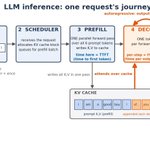
The scheduler is the part deciding which requests get work next. Every round, it checks who's done and who can join.
More moving parts.. we still can't add every waiting request if there's no capacity.
1
10