

Finding new ways to make Web3 smarter
努力中
Joined December 2024
- Tweets998
- Following361
- Followers342
- Likes7.9K



Season 1 of @The_Beacon_GG goes live May 25 alongside $BCN!
Use my code and get a 50 Gobloonz + 1 Umbra Chest head start on everyone else 👇🏼
app.thebeacon.gg/pre-registe…
1
10
Season 1 of @The_Beacon_GG goes live May 25 alongside $BCN!
Use my code and get a 50 Gobloonz + 1 Umbra Chest head start on everyone else 👇🏼
app.thebeacon.gg/pre-registe…
11
1 year 😌
My Abstract Wrapped recap on @AbstractChain! wrapped.abs.xyz
18
𝗧𝗵𝗲 𝗦𝗲𝗹𝗳-𝗖𝘂𝘀𝘁𝗼𝗱𝗶𝗮𝗹 𝗡𝗲𝗼𝗯𝗮𝗻𝗸 𝗬𝗼𝘂 𝗠𝗮𝘆 𝗛𝗮𝘃𝗲 𝗠𝗶𝘀𝘀𝗲𝗱👀
Tria - a self-custodial "borderless neobank". What is borderless neobank?
Borderless Neobank is a digital banking program that allows to hold and spend money globally without relying on local bank
𝘽𝙚𝙣𝙚𝙛𝙞𝙩𝙨 𝐎𝐟 𝐓𝐫𝐢𝐚 ?
➡️ keep control of own crypto
➡️ get a Visa card to spend it
➡️ trade & earn yield
All in ONE app
𝐖𝐡𝐲 𝐢𝐬 𝐓𝐫𝐢𝐚 𝐝𝐢𝐟𝐟𝐞𝐫𝐞𝐧𝐭?
Most crypto cards are custodial.
Means, send coins & they hold the funds.
But with Tria:
✅ Stay self‑custodial
✅ Tria handles routing and gas in the background
✅ Get a simple neobank‑style UX
𝐈𝐧𝐭𝐞𝐫𝐞𝐬𝐭𝐢𝐧𝐠 𝐭𝐡𝐢𝐧𝐠𝐬 𝐚𝐫𝐞-
- Top up your card with 1000+ coins
- Spend in 150+ countries
- 0% fees on top-ups, deposits, withdrawals (network/FX applies)
- Up to 6% cashback on higher tiers
- Single transaction across multiple blockchains
Let's imagine, you have $USDC on @arbitrum $SOL on $Solana. Now You use your Tria card to pay for a coffee at Starbucks. But You don't have to bridge or worry about gas. Tria determines the optimum route, provides gas and makes the final decision for you. You just see that your balance is decreasing.
𝐖𝐡𝐲 𝐈 𝐜𝐚𝐫𝐞-
@useTria is running a campaign on @cookiedotfun and giving opportunities to the creators
Here creators can-
• Earn SNAPS for good content
• Earn cSNAPS by actually using the app
=Better mindshare + capital mindshare
almost 7k have joined there , now it's your call

📸 𝗙𝗮𝗰𝗲 𝗹𝗼𝗴𝗶𝗻 𝗶𝗻 𝗹𝗲𝘀𝘀 𝘁𝗵𝗮𝗻 5𝘀?
Yep. It is Possible with @idOS_network
◆ 𝗛𝗼𝘄?
idOS runs a privacy-preserving face verification on your device. creates an encrypted credential associated with wallet key .
so you can authenticate in seconds and apps don’t get raw biometric data.
◆ 𝗪𝗵𝗮𝘁 𝗜𝗳 𝗮 𝗱𝗲𝘃𝗶𝗰𝗲 𝗶𝘀 𝗹𝗼𝘀𝘁?
idOS supports wallet-based recoverability so access can be restored without revealing personally identifiable information in-short PII.
This is built into idOS ’s SDK and system design. providing a fast and secure onboarding flow for developers
Follow this for better understanding-docs.idos.network/how-it-wor…

8
9
89
🧩Keep KYC - Not platform’s
What if you could verify your document once and use it in many places? What if you had control over it?
I know, it would be great if you were thinking like that. Because I know like me, you also want to get rid of this hassle, verifying documents again and again is a hassle.
Here @idOS_network is giving this privilege 👇
⇒ idOS lets you run a one-time identity check and creates a privacy-preserving proof
⇒ proofs are encrypted and tied to your wallet or keys. apps request only what they need, you approve. No app needs to keep your full PII forever
⇒ faster onboarding across wallets, card issuers and stablecoin services. fewer data copies lowers leak risk. developers get a standard SDK to accept reusable KYC.
idOS positions itself as an identity layer for the stablecoin economy and OpenFi collaborating with numerous ecosystems and providing SDKs that let developers to use reusable, privacy-preserving identity proofs while meeting compliance requirements. Their public documents describe the verification and proof-sharing flows. @wallchain Spotlights demonstrates idOS demo flows and consortium partners.

4
4
85
$Bitcoin is now becoming a liquidity hub through @beyond__tech
Beyond introduces key tokens like $USDT $ETH $SOL to $Bitcoin L1 as native assets. Instead of spreading liquidity across several chains assets can "board" $Bitcoin and work there with BTC serving as a settlement base for sweeps, lending, and pools.
🔗 How it works-👇
Beyond links 70+ chains. Bridges tokens to $Bitcoin via safe cross-chain messaging and mints them in your choice $Bitcoin token standard BRC-20, Runes, etc.
If you prefer not to use L1 you can modify the standard.
This means that a previously distributed deep liquidity pool can now be concentrated in one location.
🔗Why does it matter to the market?
Large $BTC pools result in reduced slippage on DEXs. new $BTC denominated yield products and simplified custody or settlement for treasuries. Beyond's stack reduces bridge risk using LayerZero, guardian checks and audits.

14
15
154
👨🏻💻One KYC - Unlimited Apps
In our daily life we need to fill KYC forms repeatedly in many places. But filling KYC forms repeatedly is a boring and time-consuming task. But here @idOS_network come up with a solution to save our time and eliminate this annoyance.
How?
Verify your identity and personal information once with @idOS_network & then maintain ownership of your encrypted data and reuse the verification across apps.
In Short-
One KYC in idOS and 100 time use in 100 different apps.

11
13
162
idOS allows you to validate your identity once and then share only the required credentials with apps. Your KYC travels with you and is stored in self-contained encrypted storage. It enables privacy-preserving face verification in less than 5 seconds and recovery via wallet signature. It also offers an SDK for apps to accept reused KYC.
1
29
𝐶𝑜𝑛𝑓𝑖𝑑𝑒𝑛𝑡𝑖𝑎𝑙 𝑠𝑚𝑎𝑟𝑡 𝑐𝑜𝑛𝑡𝑟𝑎𝑐𝑡𝑠 𝑎𝑟𝑒 𝑡ℎ𝑒 𝑓𝑢𝑡𝑢𝑟𝑒 𝑜𝑓 𝑝𝑟𝑖𝑣𝑎𝑡𝑒 𝐷𝑒𝐹𝑖 𝑎𝑛𝑑 𝑍𝑎𝑚𝑎 𝑖𝑠 𝑝𝑟𝑜𝑣𝑖𝑑𝑖𝑛𝑔 𝑡ℎ𝑒 𝑚𝑒𝑎𝑛𝑠 𝑡𝑜 𝑐𝑟𝑒𝑎𝑡𝑒 𝑡ℎ𝑒𝑚 𝑡𝑜𝑑𝑎𝑦
𝗘𝗻𝗰𝗿𝘆𝗽𝘁𝗲𝗱 𝘁𝘆𝗽𝗲𝘀- 𝘄𝗵𝗮𝘁 𝗮𝗻𝗱 𝘄𝗵𝘆
⇒ euint64 is the encrypted integer contained in the contract.
⇒ externalEuint64 is the encrypted value given by an external user (a ciphertext pointer)
These types conceal the numeric value while allowing the contract to function on it.
𝗛𝗼𝘄 𝘁𝗼 𝘂𝘀𝗲 𝗦𝗼𝗹𝗶𝗱𝗶𝘁𝘆 𝘁𝗼 𝘄𝗿𝗶𝘁𝗲 𝗲𝗻𝗰𝗿𝘆𝗽𝘁𝗲𝗱 𝗹𝗼𝗴𝗶𝗰
You make use of the well-known Solidity foundation. However you call TFHE.add(a, b) in place of the standard + and TFHE.le(a, b) in place of <=. The contract exposes events to carry out complex computations independently; coprocessors generate new ciphertext by performing homomorphic calculations off-chain. Although its semantics are encrypted the developer UX is purposefully kept close to standard Solidity.
𝗧𝗼𝗼𝗹𝗸𝗶𝘁 𝗳𝗼𝗿 𝗧𝗙𝗛𝗘 𝗼𝗽𝗲𝗿𝗮𝘁𝗶𝗼𝗻𝘀
⇒ TFHE.add(cipherA, cipherB) => new ciphertext (for A+B)
⇒ TFHE.le(cipherA, cipherB) → encrypted boolean check (A <= B)
The contract can enforce rules without ever decrypting them thanks to these inherent homomorphic processes.
𝗔𝗖𝗟𝘀 𝗮𝗻𝗱 𝗽𝗿𝗼𝗴𝗿𝗮𝗺𝗺𝗮𝗯𝗹𝗲 𝗽𝗿𝗶𝘃𝗮𝗰𝘆
Now that privacy can be programmed the contract uses on-chain ACL entries (like FHE.allow) to specify who can decrypt particular ciphertext.
Only when permitted by the ACL can decryption take place using a distributed KMS. This combines off-chain, trust-minimized key management with on-chain policy.
𝗙𝗹𝗼𝘄 (𝗲𝗻𝗱-𝘁𝗼-𝗲𝗻𝗱)-
1⃣The user encrypts the value on the client side and then sends the ciphertext to the contract.
2⃣The "do this operation" event is released by the contract.
3⃣Using TFHE procedures, the co-processor completes the computation and returns the ciphertext.
4⃣The KMS decrypts the threshold for the authorized party if required and permitted.
The goal of a subscription service is to bill users without disclosing their precise usage. Encrypted use counters are submitted by users. TFHE.add is used in the contract to add consumption, while TFHE.le is used to verify the billing threshold. The usage count is concealed; the service only verifies and charges when the billing requirements are fulfilled.
𝑖𝑓 𝑦𝑜𝑢 𝑤𝑎𝑛𝑡 𝑡𝑜 𝑐𝑜𝑛𝑠𝑡𝑟𝑢𝑐𝑡-
Get tutorials from zama.org and test out Zama's public testnet.
You can take part in the Creator Program and receive rewards if you provide beneficial instructional content
@zama

2
46
🪪 @beyond__tech - The passport of $Bitcoin
It makes it possible for big tokens, like $USDT or $ETH to live directly on $Bitcoin L1 and be moved to other chains and token standards without the need for difficult workarounds
Through @beyond__tech 's interoperability layer, you bridge a token to Bitcoin L1 select your preferred $Bitcoin token standard such as BRC-20, Runes, etc. use that token in apps or move it to other chains.
The question is why it matters now?
@beyond__tech announce 4% of total supply to @wallchain quackers
Quackers don't fade it
you still have 17 Days reamining

16
21
227
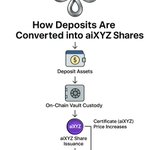
𝐇𝐨𝐰 𝐝𝐞𝐩𝐨𝐬𝐢𝐭𝐬 𝐚𝐫𝐞 𝐜𝐨𝐧𝐯𝐞𝐫𝐭𝐞𝐝 𝐢𝐧𝐭𝐨 $aiXYZ 𝐬𝐡𝐚𝐫𝐞𝐬
When deposit assets into @Neuravaults the vault mints a token that represents your shares. This token part of the $aiXYZ family is an ERC-20 share token that follows the vault’s tokenized standard. You hold this token in your wallet for your own custody. Over time, the vault’s strategy is to generate revenue, increasing the value of each aiXYZ token. you don’t get additional tokens, but rather the value of each token increases. This design keeps accounting simple and maintains composability in DeFi.
𝐒𝐞𝐜𝐮𝐫𝐢𝐭𝐲 𝐌𝐨𝐝𝐞𝐥: 𝐇𝐨𝐰 𝐀𝐈 𝐰𝐨𝐫𝐤𝐬, 𝐛𝐮𝐭 𝐝𝐨𝐞𝐬𝐧’𝐭 𝐡𝐨𝐥𝐝 𝐭𝐡𝐞 𝐟𝐮𝐧𝐝𝐬
The key security distinction here is custody vs control. NeuraVaults are explicitly non-custodial- deposited assets are held in an on-chain vault account and executed through permissioned modules. The AI runs off-chain agents that propose rebalances. Execution occurs through an on-chain vault module/role system (e.g. Zodiac style modules). In practice this means that the AI can propose and trigger rebalances within specific coded guardrails but cannot withdraw funds to any address at will. This separation reduces risk and enables continuous automation.
𝐂𝐨𝐦𝐩𝐨𝐬𝐚𝐛𝐢𝐥𝐢𝐭𝐲 - 𝐚𝐢𝐗𝐘𝐙 𝐚𝐬 𝐚𝐧 𝐄𝐑𝐂-𝟐𝟎 𝐬𝐡𝐚𝐫𝐞
Because $aiXYZ tokens are standard ERC-20 shares, they can be used in other DeFi protocols. You can hold them, stake them, or provide them as liquidity while the vault continues to generate revenue. This maintains a key feature of DeFi: composability. It is also practical: institutions can include aiXYZ in treasury programs or collateral stacks, without losing exposure to the vault’s revenue.
𝐇𝐨𝐰 𝐖𝐢𝐭𝐡𝐝𝐫𝐚𝐰𝐚𝐥𝐬 𝐀𝐫𝐞 𝐃𝐨𝐧𝐞 ?
Withdrawals are done by returning (burning) your $aiXYZ tokens to the vault. The vault then redeems the underlying asset and earned income to your wallet according to your share. Notably, many NeuraVaults use asynchronous flow (ERC-7540) which processes requests in batches on the APC. This reduces gas costs and protects users from front-running. This may result in a slight delay between request and settlement, but it is a conscious trade-off for cost and security.
𝐑𝐞𝐚𝐥-𝐰𝐨𝐫𝐥𝐝 𝐞𝐱𝐚𝐦𝐩𝐥𝐞- 𝐚 𝐜𝐨𝐨𝐩𝐞𝐫𝐚𝐭𝐢𝐯𝐞 𝐠𝐫𝐚𝐢𝐧 𝐬𝐢𝐥𝐨
Imagine a regional grain cooperative. Farmers bring grain to a communal silo and receive a certificate showing their ownership share. The cooperative manager sells the grain to various markets, routing the sale to the highest bidder each day. All the grain stays in the silo (custody is never transferred to the manager). The value of the certificate increases as the cooperative earns income. Members can lend their certificates or use them as collateral, while the cooperative is in operation. When a farmer wants to exit, he returns the certificate and gets his share of the crop and profits.
This model clearly matches NeuraVaults-
𝐃𝐞𝐩𝐨𝐬𝐢𝐭 → 𝐎𝐧-𝐜𝐡𝐚𝐢𝐧 𝐯𝐚𝐮𝐥𝐭 𝐜𝐮𝐬𝐭𝐨𝐝𝐲 → 𝐚𝐢𝐗𝐘𝐙 𝐬𝐡𝐚𝐫𝐞 𝐢𝐬𝐬𝐮𝐚𝐧𝐜𝐞 → 𝐀𝐈-𝐦𝐚𝐧𝐚𝐠𝐞𝐝 𝐦𝐚𝐫𝐤𝐞𝐭 𝐚𝐥𝐥𝐨𝐜𝐚𝐭𝐢𝐨𝐧 → 𝐂𝐞𝐫𝐭𝐢𝐟𝐢𝐜𝐚𝐭𝐞 (𝐚𝐢𝐗𝐘𝐙) 𝐩𝐫𝐢𝐜𝐞 𝐢𝐧𝐜𝐫𝐞𝐚𝐬𝐞𝐬 → 𝐑𝐞𝐝𝐞𝐞𝐦 𝐛𝐲 𝐛𝐮𝐫𝐧𝐢𝐧𝐠.
𝐅𝐢𝐧𝐚𝐥𝐥𝐲
✔️ $aiXYZ = a share token that increases in price, not in number.
✔️ The system is non-custodial. AI proposes and triggers but does not hold the funds.
✔️ Composability and transparent on-chain execution make aiXYZ viable for retail and institutional use.

🔐 𝗔 𝗡𝗲𝘄 𝗘𝗿𝗮 𝗼𝗳 𝗣𝗿𝗶𝘃𝗮𝗰𝘆 𝗼𝗻 𝗕𝗹𝗼𝗰𝗸𝗰𝗵𝗮𝗶𝗻- 𝗛𝗼𝘄 𝗭𝗮𝗺𝗮 𝗪𝗼𝗿𝗸𝘀
Today’s public blockchains give us trust through transparency but that transparency means that anyone can see our data. Every transaction is like writing on a global whiteboard. our account balances, decisions, and behavior are visible to everyone. That’s fine for open data, but it’s unbearable for private data.
@zama wants to fill this privacy gap. It brings Fully Homomorphic Encryption (FHE) to the blockchain world. A type of cryptography that allows computations to be performed on encrypted data. That is smart contracts can perform calculations or execute logic even when the data is locked. Zama uses this technology to make smart contracts private by default. inputs, states, and outputs. all fully encrypted. Even nodes and validators only see the ciphertext, not the plaintext.
𝗘𝘅𝗮𝗺𝗽𝗹𝗲- On-chain voting. Normally when you vote in a blockchain-based election everyone can see your encrypted vote and associate it with you. But with Zama your vote remains fully encrypted. The blockchain only sees an encrypted tally but the result is still verifiable. It’s like casting a ballot in a sealed box which anyone can then open and count with a public key but no one can see your vote individually.
🧩 𝗪𝗵𝗲𝗿𝗲 𝗱𝗼𝗲𝘀 𝗭𝗮𝗺𝗮 𝗳𝗶𝘁 𝗶𝗻?
It’s a privacy layer not its own blockchain. It acts as a privacy middleware on top of existing L1/L2 blockchains. Developers can use Solidity, EVM chains, and wallets as before but now get the privacy benefits. Zama offloads encrypted computation to specialized co-processors and uses multi-party protocols to ensure security. This results in better performance and lower gas costs.
🌐 𝗭𝗮𝗺𝗮’𝘀 𝘃𝗶𝘀𝗶𝗼𝗻-
“Encrypted by default, verified by everyone” that is. every dApp will have encryption by default but the public verification capabilities of the blockchain will remain intact. Blockchains will move from public ledgers to privacy-ledgers where transparency is automatically built in.
🏥 𝗥𝗲𝗮𝗹-𝘄𝗼𝗿𝗹𝗱 𝗲𝘅𝗮𝗺𝗽𝗹𝗲-
Today’s $Ethereum means broadcasting your medical records to the town square. $Zama wants you to be able to talk to your doctor privately the network confirms that it was seen, but the details remain private. This allows you to use on-chain loans or personal wallets where outsiders can verify that you’re following the rules but no one can see your actual financial information.
Zama aims to solve the most difficult privacy problem in Web3 making on-chain confidential computing scalable and usable. If successful, Web3 will be an Encrypted-by-default, Trust-by-proof ecosystem.
@zama
#ZamaCreatorProgram

🔗 Decentralization Matters More Than Our Thinking
Remember AOL? The gatekeeper of the internet? Now imagine- OpenAI is the new AOL, and Sentient is its answer.
The Pattern We Repeat Over and Over
The Age of Centralization (1990-2000)
Remember AOL and MSN?
→ They were the gatekeepers of the Internet. If you wanted to see anything online, you had to go through them. They controlled-
➡️What you could see
➡️Who could publish
➡️ How the profits would be distributed
The result? AOL and MSN took billions of dollars. Everyone else got little. Then something changed.
Decentralization (the Google Era)
Google came along and opened the floodgates. Anyone could build a website. Anyone could publish. Anyone could get an audience. Google didn’t own the internet-it just indexed it.
The result?
➡️ The open web exploded.
➡️ New innovations grew faster.
➡️ More developers earned more because barriers were lowered.
The Crypto Lesson (2010s)
Bitcoin came with a revolutionary idea. What if no one controlled the money?
Decentralization wasn’t just about fairness. it was about faster innovation and greater participation. Thousands of developers contributed from all over the world. Miners, validators, developers. everyone earned money. The network became more powerful than any centralized alternative.
AI is getting centralized again (2020s)
Look what’s happening in AI now.
➡️ OpenAI raised billions of dollars.
➡️ Google built Gemini.
➡️ Meta built Llama.
All of it?
➡️Centralized control.
➡️Centralized profits.
➡️Centralized decisions.
We’re back to the AOL model.
The problem with centralized AI
1. Concentration of power
OpenAI controls-
➡️What the model will learn
➡️What it can say
➡️What values will be reflected
➡️Where all the profits go
➡️One company. Billions of dollars worth.
Thousands of creators get nothing.
2. Innovation slows down
Thousands of talented developers around the world can’t make meaningful contributions.
Why?
OpenAI has already taken over everything- Good pay huge resource network effects. As a result, talented researchers go to work at OpenAI or Google. Innovation gets stuck in 3–4 companies.
Compare that to open source software-
Thousands of communities are building thousands of projects.
Innovation explodes.
3. Creators are invisible
Your data is used to train billions of dollars worth of models. What did you get? Nothing.
A researcher spent six months fine-tuning?
No one can do anything if someone copies.
A data provider gives you a valuable dataset?
OpenAI buys it cheaply and makes billions, and gives you little. That’s the AOL model gatekeeping, rent-seeking.
4. Progress becomes political
When a CEO sets AI direction, progress no longer depends on innovation it depends on his or her values.
OpenAI’s alignment decisions are made by a single company. What if they’re wrong?
We all suffer.
The main disadvantage→ financial inequality
The revenue structure of a centralized model-
➡️OpenAI: 90% profit
➡️Researchers: just salary (no ownership of results)
➡️Data providers: a small one-time payment
➡️Infrastructure operators: contract labor
Everyone else- limited access, expensive APIs
That’s the winner-take-all economy.
It demotivates the 99% of people who don’t work for one company.
Now let’s look at @SentientAGI 's model
The Sentient model turns the whole game upside down-
✅Developer builds agents→ gets $SENT when used
✅Data provider provides dataset→ gets paid per query
✅Infra operator computes→ gets rewards
✅Token holder stakes in the project→ gets proportional rewards
✅No AOL-style gatekeeping.
✅No winner-take-all.
✅The rewards are spread across the network.
Let’s say you’re a talented developer in Nigeria.
In the OpenAI model- Competition is impossible. They’re a billion-dollar company. You either work for them, or you build something small.
In @SentientAGI -
➡️ You deploy an AI agent on the GRID.
➡️Start earning money as soon as you use it.
➡️ 1,000 queries? Earn money.
➡️ 100,000 queries? Earn more.
Your work has a direct market value.
The internet became decentralized because:
→ Open publishing is cheaper than gatekeeping
→ Distributed systems are more sustainable
→ Open collaboration creates innovations that centralized systems cannot
Crypto succeeded because-
→ Decentralized validation is more secure than central authority
→ Incentive systems create sustainable ecosystems
→ Community ownership accelerates adoption
Sentient is applying the same principle to AI. Why it matters to Web3?
Web3 stands on one principle-
Decentralization makes systems fairer and faster.
⁘ But if AI is centralized, what is the purpose of Web3?
⁘ If OpenAI controls AI, blockchain will become a second-class technology.
⁘ But if AI were decentralized in a system like Sentient-
✅ Crypto developers would get direct revenue
✅ Data providers would get fair compensation
✅ Innovation would explode when 10,000 teams work together
✅ Web3 and AI are not competitors—they would be collaborators
This is existential for the future of Web3. Differences in the pace of innovation
Centralized AI:
OpenAI makes a decision → takes months to implement → requires approval from a leadership team
Pace of innovation→slow
Decentralized AI:
1,000 creators get an idea → they start building immediately → the market decides
Pace of innovation→ exponential
History has proven that decentralization is faster:
➡️Linux won
➡️Bitcoin won
➡️Ethereum won
➡️Sentient AI ❓
Centralized AI creates inequality-
→ OpenAI employees: life-changing wealth
→ Investors: billions of dollars
→ Everyone else: expensive access, zero ownership
Decentralized AI creates opportunity:
→ Anyone can contribute
→ Income according to what they pay
→ Not one winner, many winners
This is not just fairness- it’s a good economics.
The more people are rewarded, the stronger the network, the faster the innovation.
My personal opinion- Why it’s existentially important
I came to crypto out of a belief in decentralization. But I realized- if AI is centralized, decentralization fails.
Why?
Because AI will control everything- media, finance, science, law.
If one company controls AI, they control the future. Blockchain will become irrelevant.
But if AI is decentralized through GRID, ROMA, distributed agents-
➡️ Crypto’s value will be realized
➡️ Decentralization will change the course of the world
➡️ Web3 will deliver on its promise
This is why @SentientAGI matters-
It’s not just “another AI project.” It’s a proof that AI can be decentralized. The future is of networks, not gatekeepers.
Lastly
We’ve seen it before.
1990s→ AOL locked up the internet. Everything was better when it was open.
2010s→ Bitcoin proved that decentralization works. It did.
2020s→ OpenAI locked up AI. But Sentient is opening it up.
The pattern is clear-
Centralization is temporary but Decentralization is permanent
Sentient is just getting us there faster.

OpenAI raised a billion dollars.They built ChatGPT. Now they’re making billions more. But the crazy thing is who actually created this value? They got almost nothing.
Think about the data scientists around the world. Thousands of people. Brilliant minds. But they can’t compete with OpenAI so they just work on someone else’s dream.
Think about the people who collect the data. They provide information that is worth billions of dollars.
The pay? Zero.
Think about the GPU operators who rent out the compute. They are virtually interchangeable.
There is no ownership. No real reward.
So where does all this value go? To three or four companies in California.
That is the problem.
That’s the $100 billion problem.
Innovation is stifled. Money goes to shareholders, not creators. Talent from around the world can’t participate in any meaningful way.
It’s broken.
But if a say @SentientAGI is fixing it.
How?
You contribute something valuable and get paid for it.
✅ Build agents? Get paid.
✅ Provide data? Get paid.
✅ Run computations? Get paid.
No middleman will take a 90% cut. No CEO will tell you you’re undervalued.
You’ll get paid what you’re worth.
Really?
Think You are a researcher in Nigeria with incredible insights into blockchain. Today you can’t build competitive AI. Game-fixing.
On @SentientAGI? Build an agent. Deploy it. Start earning $SENT immediately.
You’ve got a unique dataset.
Today OpenAI buys it and makes billions and you get little.
But On @SentientAGI? Your data is valuable infrastructure. You earn on every query. And most importantly it’s not imposed from above. The community decides what’s important.
Your vote counts. The direction is set by us, not by an executive.
That is why it matters. It’s not just a open-source. It’s real economic participation in the AI revolution.
The $100 billion problem?
It’s finally being solved by @SentientAGI
Now the big AI platforms like OpenAI and Google are essentially in control. They make all the rules, sell us access, and keep all the profits. Even if our data helps train their AI and we won’t get a penny. If we want AI to share your values or opinions it never will. These platforms decide what is safe and what is forbidden.
imagine a different world-
⇒ Where everyone can participate in creating AI.
⇒ Where everyone gets a share of the value created.
⇒ Where you can vote on what AI believes or does.
That’s exactly what @SentientAGI is building.
It’s like transforming AI into a community owned project Where the rewards and decisions belong to everyone not a few.
When i start research about this - this resonates deeply with me.
I started with @ethereum find a way to make the money system more fair. Then comes @aztecnetwork for true privacy on the blockchain. Now with @SentientAGI it feels like the next big leap.
We are finally talking about real AI ownership and real freedom.
If you make a compare between Wikipedia vs. encyclopedia.
One is built by thousands of people, open to everyone.
the other is controlled by a small team, hidden behind a paywall.
SentientAGI brings exactly this change to AI
✅ Community first.
✅ Open rewards.
✅ Your voice matters.
And that is why I’m really excited.
7
9
165
Thinking- When will the time come?
waiting for the biggest Rabbit Hole of the year.
are you guys ready?
venue- discord.gg/aztec
time- 10 PM BST
gAztec 🔥

5
171
Every whale trade in crypto is being watched.
Fund managers moving $10M+ BTC?
Visible.
VC firms exiting positions?
Public.
Your entire strategy?
Exposed on-chain for everyone to see.
Aztec just released the solution that TradFi figured out 20 years ago 👇
1
1
58
The transparency that made crypto revolutionary is also its Achilles heel for institutions.
Aztec isn't compromising on decentralization or security.
They're adding the ONE thing that was missing: true programmable privacy
This is how the next wave of capital enters crypto
1
42
If you're building in:
Privacy tech
Institutional DeFi
OTC infrastructure
Enterprise blockchain
Aztec's proof-of-concept is live and open-source.
Check out: @aztecnetwork
gAztec 🔥
@realRoberto38
37