

Engineering graduate working in financial markets. Blockchain and a Web3 enthusiast.
Joined August 2024
- Tweets550
- Following676
- Followers218
- Likes1.3K

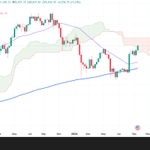







BTC weekly chart.
we’re now inside the weekly Kumo supply zone.
I think btc will eventually get rejected from the top of the kumo and go into a correction.
most likely this will be more of a time correction/long consolidation, range between $70k - 90k
don’t expect a new low!

4
37

Farhad retweeted

Be quick
First 999
docs.google.com/forms/d/e/1F…

Farhad retweeted

built a perfect automated agent workflow to scrape a handful of top meme traders alpha posts and their onchain buys, and copytrade every time they posted or bought
currently sitting on -12k pnl
the wild part is they lowkey dump the wrong calls in silence, and never mention the bag again, while putting every green screenshot straight into your eyes
this whole space runs on “dyor bro. don’t blindly follow”
behind every big pnl is a bigger silent L they will never reveal
the real printers are the ones with zero noise on ct. no threads, no “i called it”, no flexing… just eating
there’s no alpha better than you watching those so-called alphas, never feel behind, and make your own calls in the right time
tldr: be you. your shot will come!
got my reward from @predictdotfun !
sometimes showing up early is the whole edge.
worth checking out if you’re interested in predictions: predict.fun?ref=C7B37

3
64
Farhad retweeted

Soooo...
- Umbra: TVL ATH at $600K, up $100K from last week
- ZINC: $60M round volume, consistently top 3 in revenue on Solana the past month
- Crafts: Next sealed-bid ICO incoming
- Bench and Epoch launching soon 👁️👁️
- Arcium Blackthorn...
The ecosystem wins as one


Farhad retweeted

You can now bridge privately to 32 different chains with Umbra.
Only on app.umbraprivacy.com

!!!!!!!!!!!!!!!!! 88 !!!!!!!!!!!!!!!!! days offline!
!!!!!!!!!!!!!!! 2088 !!!!!!!!!!!!!! hours!
finally posting on X again. paid a lot for this international internet!

2
33


Farhad retweeted

Let yourself drift into the purple realm.
Mondana.
premint.xyz/mondana
Farhad retweeted

𝗧𝗵𝗲 𝗳𝘂𝘁𝘂𝗿𝗲 𝗼𝗳 𝗔𝗜 𝗣𝗼𝘄𝗲𝗿𝗳𝘂𝗹 𝗮𝗻𝗱 𝗣𝗿𝗶𝘃𝗮𝘁𝗲
In many common AI architectures access to powerful models requires sending user data for processing while the model itself remains proprietary
This creates a structural conflict
Either one gains access to powerful models and exposes data
Or one preserves data privacy and uses open source but more limited models
This limitation is part of the technical and economic design of major providers and there is no simple solution to it
@Arcium does this with an architecture where
Model weights remain encrypted
User data remains encrypted
And the entire inference process runs while encrypted
The model is not revealed
The data is not exposed
Yet inference still happens
This is Access Without Disclosure
In Arcium privacy is not an optional feature
It is the design principle
The model stays with the model owner
The data stays with the user
But computation is done jointly without revealing anything
This was practically impossible before Arcium
Arcium is built on Solana not on a new chain
So there is no need to bootstrap liquidity from zero
It remains connected to Solana’s public market
Heavy computation happens off chain
And only results or proofs are synced on chain
This enables scalability without burdening the network
Simply put
Arcium is building an encrypted supercomputer at network scale
Not just security in transit
Not just security in storage
But security in the computation process itself
This is the private execution layer that has only existed in theory for years
The result for users
They can use powerful models without revealing a single bit of their data
The result for enterprises and investors
They can operate and position themselves without exposing sensitive information
Arcium makes this practical and economically viable
Summary of Arcium
The model remains proprietary
The user data remains private
Inference is executable
Connection to the Solana market is preserved
Off chain compute is scalable
Arcium is not a marketing slogan
Arcium is a cryptographically secured execution layer for private AI at network scale
A foundation for the next generation of financial organizational and computational infrastructure

Farhad retweeted
gPengz and gMelee
We're partnering with the @pengztracted team to give community members early Melee Alpha access.
NFL market for Pats vs Jets game goes live in one hour
Farhad retweeted

Prediction markets are surging.
But is the industry ignoring several multi-billion dollar verticals?
As it stands, two event types dominate prediction-market volume: NFL football and political elections.
- Kalshi + Robinhood currently lead in professional football, recording ≈ $1.1 billion in NFL contract volume in September 2025 alone (Legalsportsreport, Investopedia).
- Polymarket leads global and political forecasting — its NYC mayoral election market traded ≈ $429 million, versus ≈ $71.5 million on Kalshi (Fox Business, Polymarket).
Monthly volumes for both platforms regularly reach into the billions, but >80 % of that activity remains concentrated in only a few verticals.
So what happens when prediction markets scale beyond sports and politics and what is a potential TAM if creating and speculating in markets becomes as frictionless as using social media?
That’s the logical endpoint of permissionless prediction markets: removing gatekeepers so that competition, not curation, drives discovery.
Let's play with some numbers. The mid-to-long-tail of prediction markets, covering entertainment, crypto launches, e-sports, fandom, and celebrity outcomes, is still small (≈ $0.6 B in 2024) but growing at 30–40 % CAGR.
At that pace, it could reach $2–4 B annual volume by 2030 (MetaTech Insights, internal projections). These estimates don’t yet include a fully permissionless model achieving global product-market fit.
Now what about opinion markets? These markets let people speculate on subjective truths, pricing belief not just information:
- “Which K-pop group is better?”
- “Is Lionel Messi the GOAT?”
- “Is Israel committing genocide?”
Using attention-based logic:
- 5 B internet users × 0.5 % participation × $40/month average volume ≈ $12 B/year potential volume.
- Add creator-economy spillover (projected $250 B by 2030; 2–3 % participation = $5–7 B).
- Together, opinion markets could represent $15–20 B/year by 2030.
Combined TAM (2030 projection):
Mid-to-long-tail = $2–4 B
Opinion/subjective = $15–20 B
→ $17–24 B total annual volume by 2030
→ ≈ $340–480 M industry-wide platform revenue (2 % take rate).
Recap:
These projections almost certainly undersell the upside of mid-to-long-tail traditional prediction markets — especially as permissionless systems unlock global participation.
At the same time, they likely overestimate near-term growth for opinion markets, which remain an entirely new market primitive still finding its footing.
But the direction of travel is clear: there’s a massive, untapped opportunity in subjective markets where speculation, identity, and culture collide.
Markets built on facts are bounded by the number of events.
Markets built on beliefs are bounded only by the internet.
Let the games begin.
New market on @meleemarkets !
Manchester city vs. Liverpool football match.
It’s still early, so you can be one of the first community members of melee.
hurry up and bet on Manchester🫡

1
3
78
