

Legends aren't born. They're coded. Crypto × AI × Web3
Joined October 2021
- Tweets3.6K
- Following3.1K
- Followers956
- Likes3.4K
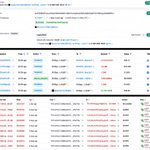


🚨 $613,000 DRAINED FROM TREZOR AND EXODUS — WITHOUT THE OWNER'S APPROVAL?
One investor reportedly lost over $613K across multiple crypto wallets, raising serious questions about hardware wallet security.
📌Here's what happened:
▪️ $580,000 in USDT on TRON — Trezor Safe 7
▪️ $23,400 in USDC on Solana — Trezor Safe 7
▪️ $9,500 from Exodus
📌What's particularly concerning?
• All wallets were reportedly used on the same iPhone 17 Pro Max running iOS 27.2.1.
• The Trezor seed phrase was allegedly stored offline on paper.
• No unauthorized person reportedly had physical access to the hardware wallet.
• The owner claims they never approved the outgoing transactions.
The exact attack vector remains unknown.
Was the iPhone compromised? Was there a vulnerability in the wallet's firmware or transaction-signing process? Or was the seed phrase exposed through an entirely different attack?
One thing is important: compromising a phone alone should not normally be enough to drain a properly secured hardware wallet.
If the seed phrase was truly offline and no transaction was approved, how did the attacker get control of the funds?
This incident deserves a serious technical investigation.
Because if the reported circumstances are accurate, this is much bigger than another $600K crypto theft.
It's a question about the security assumptions behind self-custody.
@Cointelegraph @WatcherGuru @zachxbt @Trezor @exodus @binance

🚨 JENSEN HUANG IS BACK AS NVIDIA CEO!
NVIDIA has officially reinstated co-founder Jensen Huang as President and CEO, effective immediately.
The board voted unanimously to bring him back following his resignation on November 12.
📌A few key details:
• Huang is returning as both CEO and a member of NVIDIA's Board of Directors.
• Colette Kress will return to her role as CFO after serving as interim CEO.
• The board says it is confident Huang's reinstatement poses no national security risk.
• The independent investigation into reports that Huang was targeted by a foreign intelligence operation will continue.
This is a remarkable turnaround in less than two weeks.
Huang isn't just another CEO. He's the person who helped transform NVIDIA from a gaming GPU company into the backbone of the global AI revolution.
His return brings leadership continuity at a critical moment for the AI industry.
One thing is clear: NVIDIA's story is far from over.
What do you think — was bringing Jensen back the right decision?
@JensenHuang @nvidia @elonmusk @Cointelegraph @CoinDesk
🚨 Your iPhone could be hacked just by viewing an advertisement.
A new investigation by Confiant has uncovered MoldyRoost — a large-scale malvertising operation turning ordinary online ads into delivery systems for sophisticated iOS exploits.
And the scary part? You don't need to download anything, install an app, or enter your credentials.
Simply opening a malicious landing page can be enough.
📌Here's what makes this operation particularly dangerous:
🔴 480+ malicious advertising domains identified between May 12 and November 17, 2026.
🔴 47+ countries targeted across six different campaign clusters.
🔴 Four exploit kits involved: Coruna, DarkSword, SilkPath and GhostWave.
🔴 Attackers can steal crypto wallet seed phrases, passwords, private messages, photos and other sensitive data.
🔴 Wallets including MetaMask, Phantom and Trust Wallet are among the targets.
The operation uses sophisticated cloaking techniques to identify iPhones and selectively deliver exploits based on the device and iOS version.
In some cases, victims see a fake website or even a fake Cloudflare verification screen while the exploit runs silently in the background.
This is not your typical phishing attack.
We're talking about exploit chains capable of breaking through browser security and gaining deeper access to the device.
📌The bigger picture is even more concerning:
Tools originally associated with highly sophisticated surveillance operations are now appearing in financially motivated campaigns.
And crypto users are particularly attractive targets because compromising one device can mean draining an entire wallet.
My takeaway: hardware security, software updates and wallet hygiene are no longer optional.
Your seed phrase can be perfectly secure on paper, but if your device gets compromised, that may not matter.
The next crypto hack might not start with a smart contract. It might start with an ad.
Full investigation by Confiant:
blog.confiant.com/p/moldyroo…
@Cointelegraph @Google @zachxbt @WatcherGuru @Apple


🚨 BREAKING: FUSIONIST IS BEING EXPLOITED ON BNB CHAIN.
Another day, another DeFi security incident.
According to Blockaid, an attacker has compromised Fusionist’s token bridge on BSC, abusing a privileged minter role to mint unbacked ACE tokens and dump them for USDT.
Exploiter addresses:
0x3f1045210a80a375d6C7CBAD57800D5e8f30F34E
0x1029aa6AbBb46c88C3B1F668757184F64d9e12C5
0xB335Cd8771c9f0469D5c3214F24945EF9aB019B5
Victim token : bscscan.com/token/0xc27A7191…
Here’s what we know so far:
🔴 ~$1.04M in USDT extracted
🔴 Dozens of transactions identified
🔴 Multiple exploiter addresses involved
🔴 Unbacked ACE tokens minted and sold
🔴 Attack reportedly still ongoing
But there’s a bigger issue here.
A bridge is supposed to guarantee that tokens on one chain are backed by assets on another.
If a privileged role can simply mint tokens without proper backing, the entire security model falls apart.
And this raises some serious questions:
• How was the minter permission compromised?
• Were there safeguards against unauthorized minting?
• Why wasn’t the bridge able to stop the attack immediately?
• Are other contracts or chains exposed to the same vulnerability?
The $1.04M extracted so far may only be part of the story.
DeFi doesn’t just need more audits. It needs better privilege management, real-time monitoring, and emergency mechanisms that actually work.
Your funds are only as safe as the permissions behind the protocol.
Stay alert. Don’t interact with suspicious contracts.
@fusionistio @BNBCHAIN @binance
@blockaid_ @Cointelegraph @zachxbt

1
27
1,169
🚨 ANOTHER CROSS-CHAIN BRIDGE INCIDENT — $1M AT RISK.
Cyber (formerly CyberConnect) is investigating suspicious activity involving its CYBER bridge.
Here's how the incident unfolded:
🔴 5.21M CYBER unexpectedly appeared on Solana.
🔴 Just 2 minutes later, an equivalent amount left the Ethereum bridge contract.
🔴 The attacker began dumping tokens through KyberSwap and MetaMask Swaps, reportedly selling them in batches of 150,000 CYBER.
🔴 Approximately $968K in ETH was extracted, with 575.29 ETH subsequently transferred to a fresh wallet.
The response was immediate.
South Korean exchanges @Official_Upbit and @BithumbOfficial suspended CYBER deposits and withdrawals to protect users while the incident is being investigated.
But trading remained available.
The biggest concern isn't just the money lost. It's how this happened.
Was the cross-chain verification mechanism compromised? Was there an authorization vulnerability? Or was the issue somewhere in the bridge architecture itself?
The exact root cause has yet to be publicly confirmed.
📌And this raises an uncomfortable question:
How many more bridge exploits will it take before cross-chain security becomes a top priority rather than another checkbox in an audit report?
Crypto keeps building a multi-chain future, but its security infrastructure still has serious weaknesses.
Your thoughts: Are cross-chain bridges fundamentally too risky, or is this simply a failure of implementation?
@BuildOnCyber @Cointelegraph @zachxbt
2
18
550
🚨 $5 MILLION GONE. Chainflip just became another reminder that DeFi security is far from bulletproof.
Two separate security incidents are raising serious questions about the resilience of crypto infrastructure.
Let's break them down. 👇
🔴 1. CHAINFLIP: ALMOST $5 MILLION EXPLOITED
Cross-chain DeFi protocol @Chainflip confirmed a potential exploit targeting its vaults.
Here's what reportedly happened:
• Nearly $5M in assets were stolen.
• The withdrawal was authorized using a valid signature from the aggregated vault key.
• The attacker quickly swapped stablecoins into ETH through Uniswap.
• Approximately 2,909 ETH ($4.75M) was subsequently moved through operations involving Tornado Cash.
The team immediately activated full safe mode, disabling deposits, withdrawals, swaps and quoting services while investigating.
📉 ethereum:0x826180541412d574cf1336d22c0c0a287822678a took a serious hit, reportedly dropping approximately 40%.
One compromised authorization mechanism can put millions at risk. That's a painful reminder that decentralization doesn't automatically mean security.
🟠 2. BITCOIN CORE: CVE-2026-117348
While Chainflip was dealing with an exploit, Bitcoin Core disclosed a separate medium-severity vulnerability.
The issue could allow a malicious node to temporarily disrupt another node's ability to process blocks and transactions.
How did it work?
• An attacker sends an orphan transaction with thousands of missing parent transactions.
• The attacker repeatedly announces the same transaction ID.
• A single INV message can contain up to 50,000 entries.
• Bitcoin Core failed to properly skip duplicate entries.
• Processing these repeated announcements could stall a node for more than 12 seconds per message.
During that time, the affected node couldn't process messages from other peers, including new blocks.
This could potentially delay transaction processing and interfere with miners working with outdated blockchain information.
🛠 Affected versions:
Bitcoin Core 29.0–29.5
30.0–30.4
31.0–31.2
🛠️Patched versions:
30.5
31.3
32.1
Important: The 29.x branch is no longer supported and will not receive a fix. Operators need to migrate to a supported version.
Interestingly, the vulnerability was discovered through an automated AI-assisted code scan by Project Loupe, associated with Spiral.
⚠️ THE REAL PROBLEM
These are two completely different incidents, but they highlight the same fundamental issue:
Crypto doesn't just need decentralization. It needs resilient infrastructure, secure authorization systems, properly maintained software and constant security research.
A DeFi vault can lose millions through a compromised authorization mechanism. A Bitcoin node can be temporarily stalled through repeated transaction announcements.
Security isn't optional. It's the foundation.
Are we building a truly decentralized financial system, or are we just moving traditional security risks into blockchain infrastructure?
Curious to hear your thoughts. 👀
@Cointelegraph @Chainflip @zachxbt @TheBlockCo
7
28
1,268
🚨 WALL STREET IS BLEEDING. CRYPTO IS GETTING DESTROYED.
Something bigger than a crypto correction is happening right now.
And the numbers are getting ugly.
📉 Traditional markets are under pressure:
• S&P 500 and Nasdaq face heavy selling.
• AI stocks are experiencing a major reality check.
• Investors are increasingly questioning sky-high tech valuations.
₿ Crypto is taking an even harder hit:
• Bitcoin crashed below $56K.
• Ethereum plunged towards $1,550.
• Billions in market value have disappeared.
💀 THE LIQUIDATION CASCADE:
• $2.38 BILLION in leveraged positions liquidated in 24 hours.
• 343,889 traders got REKT.
• $2.21B in long positions wiped out.
• $176M in short positions liquidated.
• Over 92% of liquidations came from bulls betting on higher prices.
🔴 BEARISH SCENARIO
If BTC loses the $57.7K–$58K support zone, we could see another leg down towards:
• $55K
• $53.7K–$54K
Losing these levels would make the situation even more dangerous.
🟢 BULLISH SCENARIO
If buyers manage to defend current levels and reclaim $60K–$62K, a relief rally towards $64K–$65K becomes possible.
However, I wouldn't call it a trend reversal until BTC starts reclaiming key resistance levels and building higher lows.
📌MY PERSONAL TAKE:
I think we're entering a critical phase for the entire market.
The AI trade is being questioned, institutional capital is becoming more cautious, and crypto is once again proving how vulnerable it is to global liquidity conditions.
I wouldn't rush to catch this falling knife.
There may be much better opportunities ahead, but the market needs to show some strength first.
The real question is whether $55K will be the bottom or just another stop on the way down.
@Cointelegraph @Bitcoin @BlackRock @saylor

3
14
301
🚨 $13M EXPLOIT. 99%+ CRASH. ANOTHER DeFi NIGHTMARE.
Wagyu.xyz just became the latest victim of a major security incident.
An attacker reportedly withdrew 5.2M XMR1 tokens from the deployer wallet on Hyperliquid and dumped them for roughly $13M.
📌What followed was absolute chaos:
💀 XMR1 crashed from ~$493 to almost $1.
💸 Around $13M worth of tokens were sold.
🐳 The attacker converted the proceeds into USDC and used approximately $13.22M to accumulate 7,467 ETH.
Think about that for a second.
One security breach was enough to wipe out millions in market value and leave XMR1 holders watching their positions collapse.
In crypto, you can spend months farming, investing and building a position.
But it only takes one exploit to lose everything.
Not your keys, not your coins? Sometimes even the protocol itself isn't safe.
Another painful reminder: security is not optional in DeFi.
arkm.com/explorer/address/0x…
@HyperliquidX @realScamSniffer @Cointelegraph @zachxbt

I’m honestly getting tired of these Binance IPO campaigns.
First SpaceX. Now Anthropic.
Every time it’s the same story: you lock up your USDC, keep your capital frozen while waiting for an allocation, and expect an opportunity worth participating in.
And what do you get?
Binance now admits that the Anthropic IPO allocation was “not ideal” compared to total user commitments.
Sure, they’re returning everyone’s USDC and distributing the available shares for free, plus a $1M ANTB airdrop. That’s appreciated.
But let’s be honest: that’s not what people signed up for.
The problem isn’t losing money. It’s the opportunity cost of having your capital locked up for something that ultimately delivers nowhere near the expected result.
After the SpaceX campaign and now Anthropic, I’m seriously questioning whether these Binance Wallet IPO campaigns are worth my time anymore.
binance.com/en/support/annou…
@binance @BinanceWallet @cz_binance

1
13
189
🚨 Security Alert: Another DeFi Exploit!
Blockaid has detected an ongoing exploit targeting @gonka_ai on Ethereum.
According to Blockaid, the attacker compromised the Ethereum bridge's epoch BLS group key, draining remaining stablecoin reserves and minting unbacked WGNK tokens.
💸 Around $1.05M reportedly extracted across approximately 5 transactions so far.
⚠️ The exploit is still ongoing.
Another reminder that bridge security remains one of the biggest challenges in DeFi. Stay alert and protect your assets!
@Blockaid_ @Cointelegraph @zachxbt
xitter.cf/blockaid_/status/21231…

🚨 Blockaid detected an ongoing exploit on @gonka_ai on Ethereum.
An attacker rotated the Ethereum bridge's epoch BLS group key and used it to empty remaining stablecoin reserves and mint unbacked WGNK.
~$1.05M realized from the bridge drain so far across ~5 txs. still ongoing🧵
1
13
330
Finally received my @BeldexCoin ($BDX) airdrop!
But honestly… I expected quite a bit more. I was top 50 in the leaderboard.
Received 705 BDX, currently worth approximately $49.27.
After all the time spent participating, collecting points and completing activities, I was hoping for a more rewarding allocation.
Still, free tokens are free tokens. Not complaining, just being realistic.

🚨 LIGHTER JUST SURVIVED A $5M SECURITY INCIDENT
Lighter has restored deposits and withdrawals after a security incident involving compromised API credentials.
📌Here's what happened:
• Around $5M USDC was recovered.
• The attack reportedly involved leaked API keys belonging to a market maker.
• The attacker exploited reused nonce values in unofficial signing code to derive private keys.
• Lighter activated Guardian Mode as a precaution.
• The team says its core protocol and smart contracts were never compromised.
Now withdrawals are back to normal.
But there's a bigger takeaway here.
Security is only as strong as its weakest link.
You can build sophisticated ZK infrastructure, run audits, and secure your smart contracts — but one compromised API key can still create a multimillion-dollar incident.
Credit where it's due: recovering $5M and restoring operations is a positive outcome.
Still, trust isn't rebuilt with one announcement. It takes time, transparency, and proof that the same vulnerability cannot happen again.
Lighter handled the aftermath. Now comes the real test.
xitter.cf/Lighter_xyz/status/212…
@Lighter_xyz @TheBlockCo @WuBlockchain @Cointelegraph

Deposits and withdrawals are back to normal following the deactivation of Guardian Mode by the Lighter Security Council.
More details on what happened: xitter.cf/Lighter_xyz/status/212…
1
13
89

🚨 $6.45 MILLION. GONE.
Imagine trusting a multisig wallet with millions of dollars… and still getting wrecked.
According to @PeckShieldAlert, a Gnosis Safe may have been compromised.
Here's what reportedly happened:
💸 $4.3M in USDC drained
💸 $1.7M in syrupUSDC drained
👀 ~$813K used to buy XMR via Hyperliquid.
debank.com/profile/0x67e0baa…
DeFi promises financial freedom. But apparently, sometimes it also offers a $6.45M lesson in security.
CZ keeps talking about SAFU, but who keeps the wallets safe?
Is this a security failure or just another day in crypto?
xitter.cf/PeckShieldAlert/status…
@gnosis_ @safe @cz_binance @zachxbt


#PeckShieldAlert Specter has reported that a Gnosis Safe may have been compromised, resulting in $6.45M being drained, including $4.3M in $USDC and $1.7M in $syrupUSDC. The hacker has spent ~$813K to buy $XMR on Hyperliquid.


1
14
299
🚨 POSSIBLE EXPLOIT: LIGHTER UNDER ATTACK?
A wallet just received $10.2M in stablecoins from Lighter, apparently originating from its mainnet.
debank.com/profile/0xb3fffca…
So far, there’s no confirmed evidence of a hack. The Robinhood network also appears unaffected.
But if you have funds on Lighter, it might be time to play it safe:
⚠️ Consider withdrawing your funds.
⚠️ Revoke unnecessary token approvals.
Meanwhile, $LIGHTER is down around 10%, and the market isn't looking pretty.
No confirmed exploit yet, but better safe than sorry.
@Lighter_xyz @RobinhoodCrypto @CertiK
