

Data Editor and columnist, @thetimes 🇬🇧 How is Britain doing? 👉 https://xitter.cf/t.co/jdqY7y0Tj7
London
Joined November 2013
- Tweets4.5K
- Following2.4K
- Followers16.5K
- Likes11.7K





Pinned Tweet
A Friday reminder for Brits who enjoy monitoring the situation: we have a dashboard for you!
🇬🇧 thetimes.com/data

Tom Calver retweeted

Have online ‘e-consult’ forms made it any easier to see your @rcgp GP?
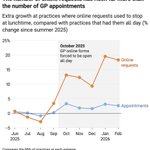
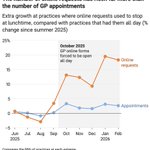
@NHSEngland may have made it easier to contact your doctor’s practice, but do you now have a better chance of getting an appointment? via @TomHCalver
thetimes.com/comment/columni…

Tom Calver retweeted

“Have online ‘e-consult’ forms made it any easier to see your GP?” asks @TomHCalver
My answer to this question would be a resounding “no”. This was entirely predictable.
Will an Amazon prime mentality ever be sustainable in healthcare? 🤷♀️
I wrote about this years ago… (1/2)


This week's column is about the latest revolution in primary care: the e-consult
A good idea in principle, but in many GP practices, badly executed, and another example of the British state automating the front door without fixing the rest
1/6

Why haven't appointments risen? Primary care right now is in a difficult spot
* Funding hasn't risen as much as in hospitals
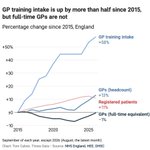
* And while training posts have soared, lots of licensed GPs don't actually end up working in NHS general practice
* Finally, although headcounts have risen, each GP is doing fewer hours than they used to. Average working hours fell from 41.8 to 34.9 between 2017 and 2024.

E-consults, if implemented correctly, should be a sensible way to triage requests. But right now, in some practices, they appear to be a barrier to access.
Ministers are right to look at ways AI can help modernise the state, but a faster front door is no use if there is not enough resource put behind it
thetimes.com/article/b37dbc8…





The November migration figures, for the year ending June 2026, will be fascinating. Some independent projections suggest 50-60k. If that’s the case, it’ll suggest we’re on our way to net zero for the calendar year


Fascinating context, although I do wonder if the IMF has taken Britain's fiscal forecasts a little too seriously
Almost every recent budget has predicted a future surplus that never materialises


Data? At a literature festival??
If you happen to be in Cheltenham tomorrow morning, please do consider coming to my session!
I'll be speaking about Times Data, the numbers we use to report the news, and what they tell us about modern Britain. Immigration, crime, pensions, song lyrics – we'll cover it all
cheltenhamfestivals.org/even…

Tom Calver retweeted

The Times story was inspired by a taxi driver who told DWP he was better and didn't need sickness benefit (he showed us the messages)
He was told: sorry, you can't sign off. Wait for the reassessment
FoI found 1.8m (!) others awaiting reassessment. Av wait: 2yrs. Max: 14 yrs

Since 2019, UK government spending has risen unsustainably. Ahead of the budget, this week I give three reasons why it doesn't feel like it's good value for money
1/6

But public sector productivity aside, I think there's a third reason why we feel like we're getting poor value for money. The share of taxpayer money spent locally in Britain used to be about 30%; now it's 20%, making us one of the most centralised states in the world
5/6

In other words, an increasing chunk of taxpayer money is spent out of sight, on things like debt interest and public sector wages, rather than on things that make a tangible, noticeable impact.
More in my column
thetimes.com/article/d77573a…
