

occasional uncommon insights into, and reflections on what was once the world's greatest game...
Joined February 2013
- Tweets14K
- Following36
- Followers5K
- Likes13.2K







"This race we feel is beyond just a French Group 1, but the pinnacle European race. To allow geldings to run and – some will win – would change the status of the Prix de l'Arc de Triomphe by cheapening it.
"Many three-year-old colts and fillies may bypass the challenge as they will not be robust and mature enough, both mentally and physically, to compete with strong, cast-iron, seasoned geldings, thereby diminishing the race. The value of these horses will be preserved rather than risked until their four-year-old career."
Wait – he wants to preserve the status of Europe's "pinnacle" race because, according to him, should geldings be allowed to compete, they might prevent fragile and/or immature three-year-old colts and fillies from winning?!
Ludicrous!
Of the past 25 runnings, 13 winners (males and females) were of ages four or five. Did they not hold essentially the same advantages that the author complains about in relation to geldings?

"To allow geldings to run and – some will win – would change the status of the Prix de l'Arc de Triomphe by cheapening it," writes Joe Hernon, chairman of the European Federation of Thoroughbred Breeders' Associations (EFTBA).
thoroughbreddailynews.com/to…

12
1,248
This apparent conflict of interest story appears likely to damage the credibility of HISA and HIWU, even if it was ultimately about appearance, rather than wrongdoing. The excerpt below is of Andrew Cohen's conclusion to his linked article in The Paulick Report, but I recommend reading the full piece.
"HIWU and HISA say this is much ado about nothing. I think they are wrong. This is a bad look for federal racing regulators as they gear up for the constitutional showdown that awaits them at the U.S. Supreme Court. One of the best arguments HISA has been able to make on its own behalf is the competence it has brought to some layers of racing regulation and enforcement. This conflict-of-interest story undermines that important argument even though HISA and HIWU say they were aware of a potential problem. The appearance of impropriety, even if no such actual impropriety exists, is what matters in lawfare like this. Everyone in power at HISA, HIWU, and SMRTL should have understood that back in 2022 and should truly grasp the concept now."

Racing regulators know they have plenty of powerful adversaries in Thoroughbred racing just waiting to pounce on mistakes. But then HIWU goes and loses industry respect (and maybe the benefit of the doubt) over an obvious conflict of interest: paulickreport.com/features/k…

Even when riders lose their irons and balance late in a race, in most jurisdictions the placing of the horse will be made official as long as the jockey doesn't touch the ground before the finish. The embedded image is the most remarkable example of such an event that I have ever seen!

#Hipismo #RecordarEsVivir El 29/08/1981 ROSCOE ZEE 🇺🇸 con BERNON SAYLOR ganó en #RiverDowns una carrera increíble: Cuando iba a cruzar la meta RESBALÓ en el fango y por inercia se deslizó. El jockey nunca abandonó su montura y por reglamento se adjudicó la victoria. Vean la foto.

‡
About Those Boxes
According to Coolmore, its new stallion prospect Paladin "TICKS ALL THE BOXES".
The colt raced THREE TIMES before suffering a condylar fracture in his right front ankle, an injury that for all practical purposes ended his racing career.
It's almost tempting to give credit to Coolmore for saying the quiet part out loud, namely that evidence of durability is not a box that needs to be ticked in the context of today's insidious breed-to-sell paradigm. Those who are making money from it, including major stud farms, certainly don't give it a second thought, and naïve owners who ultimately spend big money at sales are advised by the very same people not to.
After all, if they purchase an expensive colt by a hot sire, they are not only showered with praise by those who benefit financially from the transactions (directly or indirectly), and celebrated in the media, but as the embedded advertisement clearly implies, all that may be required in order to get a notable return on "investment" is a single Graded stakes win, and the mere perception that the horse could have been a serious Derby contender.
If only there were KY Derby future book wagering available on "fast" and expensive two-year-old in training purchases, the favorites might garner yet another specious box to tick in stallion advertisements, and irrespective of whether or not they even make it to the races!

‡
When Churchill Downs Comes Knocking...
About a month ago Mike @RepoleStable announced that he had purchased $80m of Churchill Downs Inc. (CHDN) stock. Here's an excerpt from the related tweet:
Nobody loves building epic businesses and brands in a disruptive way more than I do.
I believe a meaningful ownership stake in Churchill gives me the greatest opportunity to help create value for Churchill shareholders AND make a positive financial impact across all of racing.
Growing this sport means growing opportunities for everyone, owners, breeders, track operators, horseplayers, fans, and everyone whose livelihood depends on racing.
I really look forward to working with CEO Bill Carstanjen, his board, and management team to help turn that potential into both short term and long term results.
Given that in the racing industry it is axiomatic that Past Performances provide data that is of crucial importance to bettors, owners, trainers, and breeders, in their efforts to make good, informed decisions, I'm curious about how Mike interprets the PPs of Churchill Downs. While the the attached meme is admittedly a rather crude summary, I would be interested to learn whether Mike – or anyone – believes that the closure of three very important regional racetracks, and likely death knell of the most successful marketing device that the industry has ever created (see embedded DRF post), are the kind of "disruptions" that ultimately benefit it?
Or are they instead examples of yet another corporation "increasing shareholder value", at the expense of the broader ecosystem?
I'd direct the attention of anyone who doubts the latter to CDI's current website, in which a document called "Corporate Governance Guidelines" can be found. Under the first section, entitled "Roles of Board and Management", this is the very first thing listed under "Management":
It is the responsibility of management to operate the Company in an effective and ethical manner in order to produce long-term value for shareholders.
Not the "goal", but the responsibility.
Given its PPs, I'll be first in line to congratulate Mike if he proves able to "disrupt" CDI's pattern of selfishly causing major damage to the racing industry. If he is able to pull it off with a mere ~1.5% of the company's outstanding shares, and somehow reverse the damning trend, it would indeed be impressive. But the damage that the company has already wrought cannot be undone, and the painful repercussions, particularly in California, Florida and Illinois, will likely continue to be felt for decades to come. And now Maryland's crown jewel, The Preakness, is in the cross-hairs.


"Thoroughbred Championships Series announces fees, deadlines, signaling end of traditional Triple Crown"
@DRFGrening has the details.
drf.com/news/thoroughbred-ch…

‡
The Dubious White Abarrio Lawsuit – UPDATE
The embedded/linked post was my in-depth response to the announcement, back in April, that the owners of White Abarrio had filed a lawsuit relating to the scratch of the horse close to post time of the 2025 Breeders' Cup Dirt Mile at Del Mar.
The targets of the suit were BREEDERS’ CUP LIMITED, the CALIFORNIA HORSE RACING BOARD, and the DEL MAR THOROUGHBRED CLUB.
You can view the basics in the first attached image.
The second attached image is of the update, posted today by the same ownership group. This is the gist:
"After further careful evaluation, Gary Barber and C2 Racing Stable have concluded that the Breeders' Cup Limited and Del Mar Thoroughbred Club are not the responsible parties for the scratch of White Abarrio from the 2025 Breeders' Cup Dirt Mile, but rather the CHRB is. Accordingly, Gary Barber and C2 Racing Stable have dismissed with prejudice their claims against Breeders' Cup and Del Mar arising from the scratch."
The implication is that they intend to pursue the case against the CHRB, but that is far from being clear, given that they have not yet elaborated.
What is apparently clear is that they were wrong about the Breeders' Cup or Del Mar somehow being culpable of any related wrongdoing.
Whether there was, in fact, any wrongdoing or negligence on the part of the veterinarians who were involved, or the CHRB, may remain open questions as they relate to the case. But until or unless any relevant new information is released, I will maintain my skepticism, supported by the arguments that I laid out in the embedded/linked post.


‡
The Dubious White Abarrio Lawsuit
As many are likely already aware, the owners of White Abarrio recently revealed that they have filed a lawsuit in connection with the late scratch of their horse, prior to last year's Breeders' Cup Dirt Mile.
While I am not a lawyer, I characterize the suit as being dubious because I believe that it is fundamentally flawed, and for rather obvious reasons.
I wrote in-depth on the related complaints, lodged publicly by the owners soon after the Breeders' Cup, including relevant and supporting video clips. Those who are interested in the issue are encouraged to carefully read the post linked below, as it touches on a number of important aspects.
xitter.cf/Tinky47flat/status/198…
In this post, I will outline the reasons why the arguments presented in the lawsuit appear to have very shaky foundations.
Below is an excerpt from Point 1, taken directly from the lawsuit. You can read the full lawsuit through the link in the embedded tweet. Note that all bold emphases are mine:
But just minutes before the start, as White Abarrio was warming up in the post parade, Defendants decided to “late scratch” White Abarrio because of his “choppy” gait, which they described as “unsound in the LF,” barring him from competing for a share of the $1 million purse
I have yet to see any evidence produced by WB's owners that contradicts the claims made by the regulatory vets. They (the owners) have gone to great lengths to argue that the horse was travelling no differently than usual, but to my knowledge, they have not produced any video clips of the horse being inspected by the vet(s) on the track, just before the race. So how could they possibly know that he was moving normally (for him) during those crucial moments?
I believe that they are intentionally attempting to conflate the way that he galloped, or cantered in the days leading up to the race, with that particular afternoon at Del Mar. They are doing it for tactical legal purposes, attempting to argue that if he was moving consistently all along, the vets therefore had no basis on which to scratch him at the 11th hour.
But anyone who knows a fair bit about horse racing and horse safety, would easily see through that tactic. I say that because it is a simple fact that horses can, and at times do experience changes (in terms of soundness) from one minute to the next, let alone hours or days. It does not matter how White Abarrio was moving in the days leading up to the BC, nor even the morning of the race. Those events were rendered irrelevant if the horse was "off" in his left front just prior to the race, as the vets claimed, and if that was the case, then they obviously made the correct decision.
Point 2:
Defendants’ conduct was not a mere exercise of reasonable veterinary judgement. It had no rational basis and constituted multiple violations of the regulatory rules and written protocols—including those implemented by the Horseracing Integrity and Safety Act (“HISA”) Rules, the California Horse Racing Board (“CHRB”) Rules, and Defendants’ own Veterinary and Horsemen’s Guides—that govern how a Breeders’ Cup horse can be scratched. By ignoring those requirements and relying instead on a last‑second, subjective impression
No rational basis? It wasn't rational to scratch a horse that presented evidence of perceived unsoundness to a vet/vets who are experts at making such judgments?
Relying instead on a last‑second, subjective impression? Every single time that there is a scratch just before a race, it is a result of "last‑second, subjective impressions", as there is no time for anything else! Those who filed the suit might as well have argued that all late scratches should be abolished, on the same basis.
Point 3 essentially presses the argument that White Abarrio was moving no differently in training, racing, or during vet exams, than he had previously. But it is easy to demonstrate that he has in fact, moved noticeably differently at different points in his career. For example, consider the video clips in the four links below. Note that the first two were of pre-Breeders' Cup training prior to the contested scratch, and the following two were from earlier in his career.
One needn't be a vet, or expert at watching horses move, in order to discern that the horse was moving more fluidly earlier in his career. No experienced horseman or vet would suggest that the first two and second two were the same.
Oct. 26th: youtube.com/watch?v=kkY7zCWa…
Oct. 28th: youtube.com/watch?v=g7wYdh6I…
youtube.com/watch?v=LrsIA0dV…
youtube.com/watch?v=n32RUOq1…
The following was excerpted from Points 4 and 5:
...for seven straight days before the race, Defendants’ veterinarian team had inspected, tested, and scanned White Abarrio. They noted his gait. Yet every day they declared him “racing sound.” Nonetheless, on the basis of nothing more than a cursory visual inspection, Defendants ignored and contradicted the substantial and objective medical evidence of White Abarrio’s soundness that Defendants’ veterinarian team had collected before the race, and scratched him because he had the same gait that he had successfully raced with his entire career.
Those claims strike me as being easily refuted. The clips above alone, and I am sure that there are others floating around, demonstrate that the horse's gait has, in fact, changed, and to significant degrees, over his career. And again with the "cursory visual inspection" nonsense. It's literally the only way that horses can be judged with a few minutes to post!
***
Beyond the weaknesses in the above arguments made by White Abarrio's owners, which are essentially the basis for the lawsuit, consider these additional points:
• There is video evidence, consistent with the vet(s)' claim that he was off in his LF, which I included in my original post on the topic. He appears to be "nodding" while escorted off the track by a pony. His head goes down slightly down when he puts pressure on his (sound) right foreleg, and raises slightly up when the pressure is switched to the leg in question. That is a classic "tell" that a horse is "off", and is consistent with a LF issue. And if that asymmetry is discernible on video, while he was carrying no weight, would it be difficult to imagine that the favoring might have been even more obvious with 126lbs on his back, when the BC vets made their decision?
• White Abarrio did not work for 52 days after the BC scratch. He was also scratched from the Mr. Prospector Stakes in late December. Does that strike anyone as being consistent with a horse that is asserted to have been sound in early November?
• After he finished second to his stable-mate Skippylongstocking in the Pegasus WC at Gulfstream in January, his trainer, Saffie Joseph expressed great emotion, and palpable relief, in a widely circulated post race interview. He spoke about how relieved he was that White Abarrio had completed the race safely, and literally said:
"How White Abarrio ran with the preparation that he had...he didn't have preparation to compete like how he just did."
So the trainer himself, with what certainly appeared to be emotionally charged candor, admitted both to having had significant concerns about the horse's safety in a race run ~84 days after the BC scratch, and that his preparation for the race was far from ideal. Now why would that be the case with a sound horse that was perfectly normal in early November, as the owners claim?
***
Finally, as I have pointed out more than a few times over the past couple of years, owners and trainers of horses entered in big races are highly susceptible to bias. Forced scratches are embarrassing, and complaints are not uncommon. For that reason, such complaints should always be taken with a grain of salt.
There is also a growing body of evidence that a significant percentage of the vets' decisions are justified. Of course they are not always correct, and at times likely too cautious, etc. But the statistics clearly suggest that their work is very important, and that they discern issues that their trainers (and certainly owners) may have missed. And they do so under immense pressure, in big races.
Unless some shocking, explosive evidence of intentional wrongdoing emerges from this lawsuit, I would expect it to fail. And without such evidence, I would argue that lawsuits of this kind are a blunt, and questionable tool to use in efforts to address the perception amongst owners and trainers that the system is not working well, and needs to be changed.
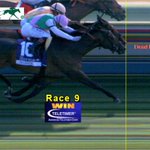
A remarkable photo for two reasons. Not only the "effort" being put forth by the rider of the grey horse, but because we can now add a racetrack in Istanbul (Turkey) to the list of those with photo-finish technology that is apparently superior to Keeneland's. 😂


‡
Speaking of Ted Noffey...
Yes, I am cherry-picking in order to amplify the contrast, but the Hall of Fame horse Round Table made his sixth start on July 21st of his two-year-old season, while Ted Noffey was retired recently at three, having raced five times. Round Table started in ~13x (66) the number of races that Ted Noffey contested (5), and won nearly 9x (43) that number. He also set or equaled 16 track records, 10 of which carrying 130lbs. or more, and spotting his rivals significant weight.
Setting aside those rather unflattering comparisons, Ted Noffey was understandably named the 2025 Champion Two-Year-Old after his undefeated campaign, which included three straight Grade I victories. Having said that, one of the dubious incentives that helps to fuel the insidious breed-to-sell paradigm are Grade I races for two and three-year-olds that too often, on close analysis, fail to warrant their lofty status.
Everyone knows that some Grade I races are stronger than others, but given the shallow resumés of many of the horses that contest valuable two-year-events, awarding Grade I status to the winners can reasonably be seen at times as more of a case of gifting dubious bona fides to valuable young stallion prospects, than awards based on merit. And it's ironic that the latin phrase "bona fides" translates to "good faith", given how risky it is to make assumptions about the value of restricted Grade I black type on the pages of auction catalogues.
For example, here's a relatively simple analysis of the three Grade I races won by Ted Noffey, based on the accomplishments of the horses which placed second and third behind him.
Hopeful Stakes (Gr. 1)
2nd: Buetane
• failed to win in five subsequent starts
• Grade II and III placed
• no published works since May
3rd: Curtain Call
• 6th beaten 19 lengths in only subsequent start
• no published works since March
KY Breeders' Futurity (Gr. 1)
2nd: Blackout Time
• won one of seven subsequent starts (allowance race)
• once minor Black Type-placed
3rd: Litmus Test
• won one of six subsequent starts (Gr. II Los Alamitos Futurity)
• finished 7/8 and 17/18 in two subsequent Grade I races
• remains in training
Breeders' Cup Juvenile (Gr. I)
2nd: Mr. A. P.
• won two of five subsequent starts (alw. and minor stakes)
• unplaced in only subsequent Grade I start
• remains in training
3rd: Brant
• unplaced in two subsequent starts
• won the Grade I Del Mar Futurity in previous start
• retired to stud
So to review, just one of the six horses that placed behind Ted Noffey in the three Grade I races that serve as the foundation for his stud value either won or placed in a similar event. And that one, Brant, beat a weak field at odds of 1/10 while "earning" his Grade I status.
It's also worth pointing out that the only two Grade I winners to compete in those three races, Ted Noffey and Brant, were kept apart in early September when the former won the Hopeful on the 1st, while the latter won the Del Mar Futurity six days later. It is a prime example of the dishonesty, some might even call it corruption, of the American Graded Stakes Committee (AGSC). Those two-year-old Grade I races are identical (7f. dirt), and the scheduling of them so close together has the effect of splintering the division, which is precisely the opposite of the original intent of the Graded Stakes program. It was, of course, instead designed to bring the best together, and test them so than fans, professionals and breeders could all judge them on their true merits.
Fracturing a division dilutes, rather than concentrates quality. In an honest system, that was not designed to line the pockets of owners, breeders, and those involved in the sales process, such races would be Grade II or III events. And until the deceptive scheme is revised, colts such as Brant and Ted Noffey will continue to be retired prematurely, and often command higher than warranted stud fees, based at least in part on dubious Black Type.


‡
Too Bloody Predictable
To the surprise of no one who has been paying attention to the continued fallout from the insidious breed-to-sell paradigm in the American racing industry, another talented three-year-old colt has been retired prematurely due to injury.
Englishman, to his credit, was notably faster than most. From a speed-figure standpoint, he recorded lofty Beyers of 115 and 117 when winning the Woody Stephens and Allen Jerkens at Saratoga, and likely a 110 when settling for second behind T O Elvis (112) in the Breeders' Cup Sprint.
Well faster than average for a "good" three-year-old over any distance, but historically not quite as impressive when compared with the very best. Between 1993 and 2022 there were 25 sprinters that recorded Beyer figures of between 121-124, and presumably quite a few more that exceeded 117. Limited to three-year-olds over all distances, there were 25 that produced numbers from 119-122.
Setting any fine parsing of speed aside, no one would dispute that Englishman was an exceptionally fast colt, but the more salient points, in my view, are that he raced only six times, was retired due to multiple ankle chips, and earlier in his career, according to his trainer, "a relatively minor injury took him out of training" after his debut, and he did not race again for six months.
So it is clear that Englishman was not a sound horse. And that wouldn't be such a problem if breeders were to thoughtfully mitigate any related genetic and/or physical flaws by sending relatively durable and correct mares to him, or those with proven records of producing such types. But there is no reason to expect that to happen, as the market has now discounted the importance of durability to such an extant that it is barely an afterthought.
I think it's a good time to re-post a couple of relevant quotes from the outstanding owner/trainer/breeder John Nerud (1913-2015), bold emphasis mine:
"We didn't breed to unsound, light-boned horses," he said. "Today, our horses are very delicate, very light-boned. I don't blame the breeders. They have to breed a cosmetic horse who will show good in the sales ring. But we are breeding ourselves into a hole. We breed light-boned sires that run five or six times to mares who run five or six times. Now what do you expect to get? The resulting foal ends up lucky to run five or six times."
“In those days, we bred to race. You took a sound horse and a sound mare and you’d breed them. Everyone wondered how I did what I did right off the bat with no experience breeding horses. I used common sense. Common sense died about 20 years ago and nobody went to his funeral.
“Today we’re not breeding with any intelligence...we’re breeding with only one thing in mind – the sales ring sign at Fasig-Tipton and Keeneland. The only thing we look at is the flash on the board – $200,000, $300,000.”
Some like to point out that exceptionally fast horses are more likely to be unsound than slower runners, and that is true. But to tie the above together, Nerud trained Dr. Fager (see attached image of him leading the colt), a horse that may be unmatched in terms of brilliant speed. He raced 22 times from two through four, winning 18 races (would have been 19 were it not for a DQ). His mile dirt record of 1:32 1/5 stands to this day, nearly 60 years after he set it in the Washington Park Hcp. at Arlington.
Dr. Fager's sire, Rough'n Tumble, raced 16 times. His dam-sire, Better Self, started 50 times. His dam, Aspidistra ran 14 times, and produced other runners that started 86, 30, 29, and 24 (x2) times. His second-dam started 23 times. Etc.
Nerud practiced what he preached, and I would argue that it is long past time for today's commercial breeders to reflect on his related wisdom, consider that the average number of career starts was 30+ in 1970 and is half that today, then take a long hard look in the mirror.

🗣️ “Englishman is the fastest horse I've ever worked with.” - @reredevaux
Englishman (Maxfield) has been retired from racing and will take up residence at @LanesEndFarms for the 2027 breeding season.
thoroughbreddailynews.com/mu…

‡
𝙒𝙝𝙚𝙣 𝙃𝙤𝙧𝙨𝙚𝙨 𝙖𝙣𝙙 𝙖 𝙎𝙬𝙚𝙚𝙩 𝙏𝙤𝙤𝙩𝙝 𝙄𝙣𝙩𝙚𝙧𝙨𝙚𝙘𝙩
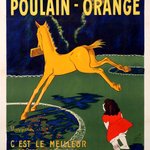
The French word "poulain" translates literally to foal (i.e young horse), or a colt (the Poule d'Essai des Poulains is the most important Group 1 mile race in France for 3yo colts) . Long ago it was adopted by one of the oldest chocolate companies in France, which began mass production in 1848. While the company's products still exist, it was bought out by Cadbury in 1988, and the latter was in turn bought out by Kraft Foods in 2010, with two subsequent mergers/acquisitions since.
The attached image is of a charming vintage poster advertisement that dates to the early 1920s. It was designed by Leonetto Cappiello (1875–1942), and features the iconic foal that has long been associated with the brand's marketing.

1
20
989
‡
𝗢𝗻𝗴𝗼𝗶𝗻𝗴 𝗞𝗲𝗲𝗻𝗲𝗹𝗮𝗻𝗱 𝗣𝗵𝗼𝘁𝗼 𝗙𝗶𝗻𝗶𝘀𝗵 𝗣𝗿𝗼𝗯𝗹𝗲𝗺𝘀
As many readers are likely to recall, Keeneland released a notably dubious photo after the Grade I Jenny Wiley was judged to have been a dead-heat back in April. In it, the nose of the inside horse, Expensive Queen, can clearly be seen to protrude past the superimposed "wire" (see first attached image). While less obvious, it can also be seen in the mirror-image.
I wrote several times about the issue, and have embedded a link to my second related post. There is a link embedded in that post to the first, for those interested.
𝗧𝗵𝗮𝘁 𝗞𝗲𝗲𝗻𝗲𝗹𝗮𝗻𝗱 𝗳𝗮𝗶𝗹𝗲𝗱 𝘁𝗼 𝗿𝗲𝘀𝗽𝗼𝗻𝗱 𝗻𝗼𝘁 𝗼𝗻𝗹𝘆 𝘁𝗼 𝘄𝗶𝗱𝗲𝘀𝗽𝗿𝗲𝗮𝗱 𝗽𝘂𝗯𝗹𝗶𝗰 𝗾𝘂𝗲𝘀𝘁𝗶𝗼𝗻𝘀, 𝗯𝘂𝘁 𝗮𝗹𝘀𝗼 𝘁𝗼 𝗱𝗶𝗿𝗲𝗰𝘁 𝗲𝗺𝗮𝗶𝗹𝘀 𝘁𝗵𝗮𝘁 𝗜 𝘀𝗲𝗻𝘁 𝘁𝗼 𝗶𝘁𝘀 𝗰𝘂𝘀𝘁𝗼𝗺𝗲𝗿 𝘀𝗲𝗿𝘃𝗶𝗰𝗲 𝗱𝗲𝗽𝗮𝗿𝘁𝗺𝗲𝗻𝘁, 𝗮𝗻𝗱 𝗚𝗮𝘁𝗲𝘄𝗼𝗼𝗱 𝗕𝗲𝗹𝗹, 𝘄𝗵𝗼 𝗶𝘀 𝘁𝗵𝗲 𝗞𝗲𝗲𝗻𝗲𝗹𝗮𝗻𝗱 𝗩𝗶𝗰𝗲-𝗣𝗿𝗲𝘀𝗶𝗱𝗲𝗻𝘁 𝗼𝗳 𝗥𝗮𝗰𝗶𝗻𝗴, 𝗶𝘀 𝗯𝗼𝘁𝗵 𝗱𝗮𝗺𝗻𝗶𝗻𝗴 𝗮𝗻𝗱 𝗮𝗿𝗴𝘂𝗮𝗯𝗹𝘆 𝘀𝗲𝗹𝗳-𝗶𝗻𝗰𝗿𝗶𝗺𝗶𝗻𝗮𝘁𝗶𝗻𝗴. 𝗔𝗳𝘁𝗲𝗿 𝗮𝗹𝗹, 𝗶𝗳 𝘁𝗵𝗲𝗿𝗲 𝘄𝗲𝗿𝗲 𝗶𝗻𝗻𝗼𝗰𝗲𝗻𝘁 𝗮𝗻𝘀𝘄𝗲𝗿𝘀 𝘁𝗼 𝘁𝗵𝗲 𝗾𝘂𝗲𝘀𝘁𝗶𝗼𝗻𝘀 𝘁𝗵𝗮𝘁 𝗜, 𝗮𝗻𝗱 𝗺𝗮𝗻𝘆 𝗼𝘁𝗵𝗲𝗿𝘀 𝗿𝗮𝗶𝘀𝗲𝗱, 𝘁𝗵𝗲𝗻 𝘄𝗵𝘆 𝘄𝗼𝘂𝗹𝗱 𝗞𝗲𝗲𝗻𝗲𝗹𝗮𝗻𝗱 𝗳𝗮𝗶𝗹 𝘁𝗼 𝗿𝗲𝘀𝗽𝗼𝗻𝗱 𝘁𝗼 𝗽𝗼𝗹𝗶𝘁𝗲, 𝗳𝗮𝗰𝘁-𝗯𝗮𝘀𝗲𝗱 𝗲𝗻𝗾𝘂𝗶𝗿𝗶𝗲𝘀?
I am bringing this topic up again for two reasons. The first is that no one should consider it to be a closed subject because Keeneland has thus far decided to adopt a corporate non-response approach. On the contrary, it should be assumed that they will continue to hide the truth, possibly a placing judge error, until they open up and explain the anomaly.
The second is that there was a very close photo in the Breeders' Cup Dirt Mile. And while I see no reason to believe that the placing judges were wrong in that instance, the relatively low quality of the photo that was released to the public (see second attached image) warrants further criticism.
For comparison, the third and fourth images are from a contemporary South Africa Racing event, and a Mooney Valley (Australia) photo-finish from 1948.
𝗞𝗲𝗲𝗻𝗲𝗹𝗮𝗻𝗱 𝗶𝘀 𝗼𝗻𝗲 𝗼𝗳 𝘁𝗵𝗲 𝘄𝗲𝗮𝗹𝘁𝗵𝗶𝗲𝘀𝘁 𝗼𝗳 𝗮𝗹𝗹 𝗔𝗺𝗲𝗿𝗶𝗰𝗮𝗻 𝗿𝗮𝗰𝗲𝘁𝗿𝗮𝗰𝗸𝘀. 𝗧𝗵𝗮𝘁 𝗮 𝗽𝗵𝗼𝘁𝗼-𝗳𝗶𝗻𝗶𝘀𝗵 𝗶𝗺𝗮𝗴𝗲 𝗳𝗿𝗼𝗺 𝗮 𝗿𝗮𝗰𝗲 𝗰𝗼𝗻𝗱𝘂𝗰𝘁𝗲𝗱 𝗻𝗲𝗮𝗿𝗹𝘆 𝟴𝟬 𝘆𝗲𝗮𝗿𝘀 𝗮𝗴𝗼 𝗶𝘀 𝗮𝗿𝗴𝘂𝗮𝗯𝗹𝘆 𝗲𝗮𝘀𝗶𝗲𝗿 𝗳𝗼𝗿 𝗳𝗮𝗻𝘀 𝘁𝗼 𝗶𝗻𝘁𝗲𝗿𝗽𝗿𝗲𝘁 𝘁𝗵𝗮𝗻 𝗼𝗻𝗲 𝗮𝘀𝘀𝗼𝗰𝗶𝗮𝘁𝗲𝗱 𝘄𝗶𝘁𝗵 𝘁𝗵𝗶𝘀 𝘆𝗲𝗮𝗿'𝘀 𝗕𝗿𝗲𝗲𝗱𝗲𝗿𝘀' 𝗖𝘂𝗽 𝗯𝗲𝗴𝘀 𝗮𝗻 𝗲𝘅𝗽𝗹𝗮𝗻𝗮𝘁𝗶𝗼𝗻 𝘁𝗵𝗮𝘁 𝗜 𝗰𝘆𝗻𝗶𝗰𝗮𝗹𝗹𝘆 𝗱𝗼𝗻'𝘁 𝘀𝗲𝗲 𝗰𝗼𝗺𝗶𝗻𝗴.
There were undoubtedly numerous contributors to the 14.6% decline in wagering handle at Keeneland's recently concluded Fall Meet, but I don't think that it is a stretch to imagine that its poor handling of the Jenny Wiley photo issue, and continued use of photo-finish technology that is clearly well behind the current state-or-the-art, are among them.
@keenelandracing @keeneland @Gabby_Gaudet_ @Shanbisharv


‡
Keeneland's Deafening Silence
I waited a few days after writing the embedded/linked post, in order to give Keeneland some time to respond to the widespread questions about the confusing Jenny Wiley "dead-heat" photo. To my knowledge, they did not provide any detailed explanations.
So I wrote an email to their customer service department. This is what I wrote:
Good morning,
Could someone please explain why there has yet to be either any public explanation for what appears to be a dubious dead-heat decision made in the Jenny Wiley Stakes, or a higher quality photo-finish image provided than the one that was posted on Keeneland's X account?
As you are likely aware, the issue has received a lot of attention on social media. The post that I wrote (linked below), which includes a number of pertinent questions, has already received over 25,000 views, and many others have been posting on the topic as well.
To summarize some of the questions that the decision and confusing photo have raised:
• How can the public assume that the decision was correct, given that the nose of the inside horse, Expensive Queen, can clearly be seen to appear past the superimposed "wire"? Though less obvious, the same anomaly can be discerned in the mirror image.
• Should it not be the case that the superimposed "wire" should always show the nose(s), of the winning horse (or horses) to the left, with no part of it protruding through the line? And if so, how do you explain this particular image?
• Especially given the importance of the race, why was a relatively crude image released to the public, rather than a higher quality version of the one that the Placing Judges presumably used?
Thank you.
I received no response.
I then wrote a similar email to Gatewood Bell, who is the Keeneland Vice-President of Racing.
Again, no response.
***
If there were innocent answers to the questions that I, and many others have raised, then why would Keeneland fail to respond to polite, fact-based enquiries?
The most obvious, and I'm afraid likely answer, is that the responses may not reflect well on them, and could possibly ignite further controversy. So they have apparently chosen instead to clam up, in hopes that the controversy, and related questions, will soon be forgotten.
That is a tactic that is commonly used by perfidious politicians, when faced with uncomfortable questions. An important, and highly regarded racetrack such as Keeneland should display much higher standards.
It's not too late for them to address the issue seriously, and transparently, but time is running out.
@keenelandracing @keeneland @Gabby_Gaudet_ @Shanbisharv
‡
Blast From the Past: New York OTB
Readers who have any interest in the history of off-track betting (OTB) in New York, and have not seen the documentary linked below, I encourage you to watch it. It was written, narrated, and directed by Joseph Fusco, and while excellent, is only about a half-hour in length.
To provide a bit of its flavor, I have also excerpted a brief, simultaneously interesting, amusing, and sad clip below.
Off-Track Betting documentary – Finish Line OTB youtu.be/fxMy_M5-JVs?si=iIq8…
I'm not really joking when I say that the industry should develop over/under prop bets based on the number of career races contested by high-profile colts such as this. At least bettors would have opportunities to somehow benefit if/when they are rushed off to stud after only a handful of races.
I genuinely hope that Ted Noffey proves to be an exception, but if such a wager were available, I'd bet against it.
The undefeated son of Into Mischief makes his return in Saturday’s Dwyer Stakes at Belmont Park: paulickreport.com/news/thoro…

This is hilarious! Well worth watching the full clip.

Man, for a second I thought I was at @FasigTiptonCo or @keenelandsales, watching a broodmare in foal to Gun Runner go through the ring! 😂 Turns out it was Missouri Congressman Billy Long (@auctnr1) running a fake auction in the middle of a congressional hearing just to drown out Laura Loomer! 🤣
That's the Missouri I know and love! I lived in Kansas City, Warrensburg, and Springfield. Some of the friendliest folks in America, and being funny is just in their DNA! 😂 Missouri will always be my favorite state! ❤️🇺🇸
The subject billionaire is Alejandro Betancourt Lopez.
Some – ahem – interesting background/context:
theguardian.com/us-news/2026…
english.elpais.com/internati…
miamiherald.com/news/local/a…


A third Lambourn training yard has been snapped up by a Venezuelan billionaire extending his multi-million pound outlay on equine properties
Read with Racing Post+ 👇
🔗 racingpost.com/news/people/t…

‡
Yet Another
The three-year-old colt Local Knowledge has been retired to stand at Spendthrift Farm. He was purchased out of the Ocala 2025 Spring two-year-old in training sale by Spendthrift for $625,000.
He won two of five starts. His claim to fame, as it were, is that he won the Grade II Amsterdam over 6.5f. at Saratoga (103 Beyer), a race restricted to three-year-olds. The runner up, Solitude Dude, has subsequently finished fourth in a Listed race, and 9th of 10 in the Grade III Perryville at Keeneland. The third-place finisher, Obliteration, subsequently finished sixth in a turf stakes (he had raced well on grass previously), and a close third in the Perryville.
So Local Knowledge is a horse that, from a racing standpoint, will stand largely on the "strength" of having won what appears to have been a relatively weak Grade II race against his own age group. To his credit, he did display gameness in that lone stakes victory.
So why, aside from the fact that they own the horse, might Spendthrift be excited to bring him into the fold as a stallion prospect? Because his sire, Yaupon, though unproven as a sire of sires, and yet to produce a Grade I winner, is off to a promising start at stud; Local Knowledge was a "fast" (:20 2/5), and pricey graduate of a two-year-old sale; he won at two, and won a Graded stakes.
In other words, he is a good example of the type of cookie-cutter "breed-to-sell" stallion prospects that have, broadly speaking, been contributing to the degradation of the game for some time now.
Speaking of which, I haven't yet touched on durability, so let's get to it. A career consisting of five races, as is the case with all truncated careers, implies dubious soundness. It's also worth noting that Local Knowledge was off for eight months after his lone start at two (in October). Unsurprisingly, there was no mention of either that gap, nor the reason for his premature retirement, in any of the articles relating to his retirement that I have seen.
What about his pedigree? Well, these are the number of starts made by the male influences that appear in the first three generations:
8 → Yaupon
8 → Uncle Mo
5 → Indian Charlie
9 → Scat Daddy
4 → Vindication
9 → Johannesburg
3 → Red Ransom
Not one of his seven closest male genetic influences reached 10 starts, and they averaged <7.
What about the dam of Local Knowledge, Chestnut Street? Five starts. She has produced two other runners to date. Country Luck, a gelding, raced three times, and hasn't recorded a workout since May. The other, Ang N Ash, has raced 18 times, including a recent placing in a Grade III event at Santa Anita.
None of the above, of course, insures that Local Knowledge will not become a successful sire, nor that he will necessarily prove to be a source of unsoundness. But – how shall I put it? – it certainly doesn't inspire confidence in the inverse, either.
👉 Local Knowledge (Yaupon), named a debut 'TDN Rising Star' and impressive winner of this year's GII Amsterdam Stakes at Saratoga, will enter stud at his owner's @spendthriftfarm in 2027.
thoroughbreddailynews.com/lo…
