

Bringing forgotten works to light, translating Late Ottoman & Early Republican works. OUT NOW! In Tripoli: Enver Pasha's Diary during the Turco-Italian War
Joined June 2025
- Tweets83
- Following8
- Followers345
- Likes263




Pinned Tweet
OUT NOW!
The long-awaited and first ever English translation of Enver Pasha's letters during the Turco-Italian War (1911-1912), compiled into the form of a diary alongside the letters he sent to his wife.
Available on Amazon!
amazon.com/dp/9090403671


A drawing Enver Pasha made of a cat he was taking care of while in Bukhara which he sent to his wife

Mehmed Âkif Ersoy, scholar & national poet of Turkey on the Jews in Berlin during his visit there in 1915, foreshadowing the rise of Nazism:
“In Berlin, I kept encountering Jews everywhere: banking, the stock exchange, books, music, everything is in Jewish hands. The same goes for bread and butter sold without ration coupons. I fear that one day this country (Germany) will settle accounts with them!”


Suavi Publishing House retweeted

“‘A gentle lamb had succeeded a fierce lion,’ Paulus Jovius wrote, while Pope Leo X had prayers sung all over Rome.”
The sheer power projection of Sultan Selim despite not having waged any grand conquests against Europe, his death was deemed a miracle to Christendom.


Enver Pasha’s letter to his wife Naciye Sultan, on his way to Libya, 20 October 1911:
“My soul, my Sultan!
As I had previously stated, the debt all of us owe to the homeland and nation comes before and above everything else. And besides, do you remember? When you wrote to me when I was in Shkodra, even then, you favored war against the infidels. Well, now I am going to defend an entirely Muslim land. Yes! I too, know well, that my body alone cannot serve as a shield to defend the homeland. But let it be so, at the very least, in doing this, I will have fulfilled my duty! I hope that instead of feeling regret, you will appreciate this step of mine, perhaps even encourage me, and take pride in me for this step. The homeland expects service from us today. At such a time, one must forget every sorrow, think of the homeland’s pain, and run to its remedy.
My soul! Say what you please, even if you try to prevent me from writing my feelings, know that the emotional bond I have formed in my heart toward you shall be eternal, even if I die. My soul shall always accompany you and protect you spiritually. Now, pray first for our success and second, insha’Allah, for our safe return.
If during these difficult times you wish to help in another way, then send letters often; with this kindness, you would at least create for me a means to brighten my heart in idle moments.
Now I entrust you to the Oneness of my God, I kiss your eyes, my Sultan, my master.
Your Enver.”

Suavi Publishing House retweeted
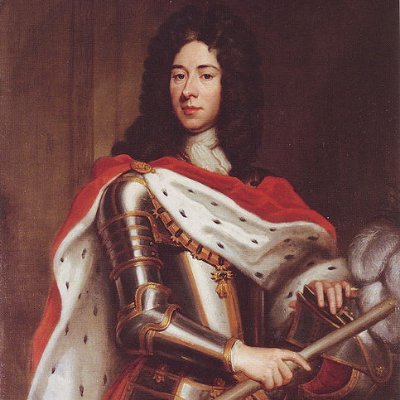
Drawing of different types of Ottoman military tents by Luigi Ferdinando Marsigli, 1732.

Mustafa Kemal Pasha's declaration in 1920 regarding the Allied occupied of Istanbul, and thus the seat of the Caliph:
“This blow, this humiliation, and this attack have been directed squarely against the tens of thousands in Egypt stirred with zeal for the salvation of their religion, against the sons of Syria and Mesopotamia, and against Azerbaijan, the Northern Caucasus, Turkestan, Afghanistan, and Iran, in a word, against Islamic public opinion.
The enemies will not succeed in destroying the morale of the Islamic world as they believe they will. Consequently, we believe that the Islamic world will perform wonders and demonstrate its capacity for development.
When the attack upon the Caliph and the nation began, the Turkish national forces rose in resistance and, despite the gravity, instability, and determination [of the situation], believed that the entire Islamic world, with its spirit and strength of resistance, would take its place at their side against the assault of this modern crusade. By the grace of Allah, through determination and faith, they shall succeed in this struggle.
The final grievous blow of this new crusade is directly squared against Islamic enlightenment and independence. We are certain that this will awaken the same feelings of resistance and condemnation in the hearts of all our brothers, and that, moved by the same sense of duty, they will rise up and revolt.
By the grace of Allah, we pray that our sacred struggle will succeed, and that the Prophet will aid our united and growing organization.”


İstanbul’un işgali sonrası Mustafa Kemal Paşa’nın 19 Mart 1920 tarihli İslam alemine beyannamesi:
“Bu darbe, bu aşağılama ve bu saldırı doğrudan Mısır’daki on bin şehide, dinlerinin kurtuluşu için heyecanlanan Suriye ve Irak’ın çocuklarına ve Azerbaycan, Kuzey Kafkasya, Türkistan, Afganistan ve İran, tek kelime ile İslam kamuoyuna karşı yapılmıştır. Düşmanlar, inandıkları gibi İslam dünyasının ahlâkını yıkmayı başaramayacaklardır. Sonuç olarak biz inanıyoruz ki İslam dünyası harikalar sergileyecek ve gelişim yeteneğini gösterecektir.
Allah’ın inayetiyle kutsal mücadelemizin başarılı olması, birleşen ve gelişen teşkilatımıza Peygamber’in yardımcı olmasını diliyoruz.”
Şeklindeki ifadelerle ağırlıklı olarak Panislamist bir yaklaşım sergilenmiş, İslam dünyası emperyalistlere karşı üstü kapalı bir şekilde cihada davet edilmişti.


Enver Pasha's 'last will' from the Caucasus Front:
"Until now, the soldiers and officers have fought without mistake. They have carried out every maneuver. If Allah also grants His Help, victory is certain. If I cannot succeed, I shall die together with my last soldier. In that event, this is my last will:
I believe I have done my duty, and I die believing so. Resist the enemy to the very end. In any event, we shall ultimately succeed. I die with my heart at peace, without regretting my actions.
Long live my religion, my homeland, my Emperor.
If you wish to assist those I leave behind, the allowance of Her Highness the Sultana, my wife, is not sufficient. In order that she may live in comfort, I request that at least my allowance as Commander-in-Chief be added to her own allowance; that the welfare of my parents be secured; and that several charitable deeds be performed so that I may attain God's Divine Mercy.
I pray for the elevation of my religion and nation, having cherished no aim other than to strive for their elevation, and I send my greetings to those who know me.
Long live Islam and Ottomanism and the Sultan of the Ottomans, Sultan Mehmed Khan!
Enver.
I possess nothing in the way of wealth. Nevertheless, whatever I have, I leave to Her Highness the Sultana, my wife.
Enver."

Enver read Faust by Goethe on his way to Alexandria in 1911, his opinion:
“While I was on the ship, I read Faust. There are beautiful ideas in it, but which, as true as they may be, I cannot make my own.”

Events were unfolding rapidly, the Ottoman Grand Vizier Mahmud Şevket Pasha was assassinated on 12 June 1913 and the 2nd Balkan War would break out a month later, as it did, Enver Bey urged the Ottoman government to enter the war as well.
Kuşçubaşı Eşref would reach the Midye-Enez line on 15 July 1913 with his Afghan, Iranian, Caucasian and local volunteers at the behest of Enver.
The government hesitated and Enver would give his ultimatum once more "If those officially responsible for the administration lack the courage to set the army in motion, I will do it myself without waiting for orders."
Finally, after waiting for 2 days at the north of Çatalca, the order to march would arrive.

Just came across a wargame on the Turco-Italian War with In Tripoli used as a main source🫣 balkandave.blogspot.com/2026… by @Balkan_Dave
3
217
ENVER BEY AT TRIPOLI.: Proof That Famous Revolutionist is Fighting the Italians.
"CONSTANTINOPLE, Nov. 15.-Although much secrecy was observed over the departure of Major Enver Bey for parts unknown a few weeks ago, the news of alleged Turkish successes at the front (against the Italians) is accompanied by the official announcement that the man, who overthrew Abdul Hamid, is at the head of the army in Tripoli.
Some believe that he crossed to Egypt by sea, and was thus able to reach Tripoli. Others say that he took the Anatolian Railway, then proceeded by the railway running down to Mecca, and then took ship along the coast of Egypt. In any case, Enver Bey has arrived at the front, and Italian reverses have commenced, just as the checkmating of the Sultan commenced when Enver Bey was in the Macedonian hills.
Arabs and Turks are in military conjunction, just as all the warring tribes of Turkey grew into immediate and unaccustomed conjunction by the influence of Enver Bey when the Sultan was to be attacked.
Of what kind is this man who concentrates in his own personality the military genius of Turkey, who has the success of the revolution to his credit in the eyes of the general public of Turkey, and whose arrival at the Tripolitan front has already coincided with such disaster for Italy?
Enver Bey is of middle height, not much darker in skin than a European, wearing pince-nez, a dandy, exquisitely careful of the most precise appointments of dress, reticent, social, a favorite with women.
But the question which is chiefly arousing speculation at present is how he reached Tripoli. That he eluded the vigilance of the Italians by some deep-laid wile is, however, only one inheritance of the skill acquired by the Turkish officers while they prepared the attack on the Sultan. For that despot's espionage had defeated its object, had created an antagonism of secret subtleties, and had instructed the prospective revolutionaries in protean changes of personality. Turkish officers masqueraded as tramps, as peddlers, as strolling players, disseminating their principles."


Enver Pasha to his wife Naciye Sultan:
“My Sultan, my master.
It has been three days since I left Istanbul. But my entire being, my
thoughts, my mind, has remained with you, you who stayed in Istanbul
and to whom, as I have come to see and feel, I am bound beyond the
limits of imagination. Now, like a machine without a soul, without life,
I go only in the direction to which duty drives me.
I kiss your eyes and pray for your health and happiness. My Sultan, my soul.
Your Enver.”
12 October 1911
From “In Tripoli: Enver Pasha’s Diary during the Turco-Italian War”

A drawing Nuri Pasha (Enver Pasha's brother) made of himself while looking in the mirror, 1911-1912 during the Turco-Italian War


"The entire spiritual poem of the night quivered before my awakened thought like a plume of inspiration: On this exceptional little hill, which was at times a throne of revelation for you, I now found myself without you in a serene ecstasy.
The hills of the Bosphorus, stretching within a long chain of beauties, had become sleeping poetry—a sleeping dream; and the sea, still and calm like a maiden of union within the embrace of their sanctuary of love, itself endowed with the sublimity of a profound, exquisite, eternal poem sleeping before my soul, remained so intoxicated with passion."
'From a Friend’s Notebook of Sentiments' by Ömer Seyfettin


A bombastic review of ‘In Tripoli: Enver Pasha’s Diary during the Turco-Italian War’ by @BheriaMS, a special thanks to the team of @MuslimSkepticHQ @Haqiqatjou for taking their time to post this

[Book Review] What If, Instead of Ataturk, Turkiye Had Been Shaped by Enver Pasha?
muslimskeptic.com/2026/04/14…
