

Sam Wouters retweeted

If you keep your Bitcoin on an exchange there are two doors that need to be guarded to keep your funds safe: your account login and the exchange custody system.
Multi-factor authentication, device verification, withdrawal restrictions like ForceField, etc. are great features to prevent an attacker from compromising your account.
However, none of these protections help you if the custody system backing the exchange is compromised, which is what just happened at Binance.
Here is how River manages securing your coins internally:
Hot wallet:
Coins in a hot wallet are the most at risk. These coins are on systems connected to the public internet to process demand withdrawals for clients. The strategy is to keep enough coins in here to allow everyone to withdraw on-demand, but never too much that a hack could be financially devastating. River maintains a very low hot wallet balance, and on top of this we have strict internal manual approval policies if withdrawals exceed certain rate limits. Even if an attacker got through every single line of network defense and completely compromised our systems, they wouldn't be able to walk away with much BTC before being shut out.
In order to ensure we always have sufficient coins hot, we have a staging "warm" wallet that is not accessible to process demand withdrawals, but can send funds to top up the hot wallet with sufficient internal approvals.
However, the ultimate layer of defense is cold storage:
Cold storage is a custody system where the signing keys are held offline, such that a full compromise of all computer systems could still not lead to a theft of funds.
At River, we prove every month that we have more coins cold than we have in client BTC liabilities. You can verify this yourself at river.com/reserves. Our multi-sig cold storage system is designed for Bitcoin and Bitcoin alone. We are not exposed to any of the smart contract complexity that was exploited in the Binance hack. We will be sharing more in depth about our cold storage in the coming months.
Some exchanges outsource custody, which effectively removes their ability to make any direct claim to you about the integrity and security of their systems. Choose your exchanges carefully. Ask yourself: “are the people running my exchange the most qualified to build a highly secure custody system?”

Sam Wouters retweeted
Bitcoin is the only major asset class primarily held by individuals.
Bonds, stocks, and gold have existed for centuries. So naturally they are more institutionalized.
As bitcoin matures, we expect ownership to shift towards institutions. Its ownership distribution will look more similar to gold.
This is not necessarily a good or bad thing. It is simply the inevitable consequence of global adoption.

In hiring interviews people ask what it’s like working at River.
My honest answer:
If a competitor offered me 5x the salary I’d say: No thank you. You can’t buy what I have here.
Brilliant colleagues & leadership.
A phenomenal company culture.
Full alignment with the mission.


Sam Wouters retweeted
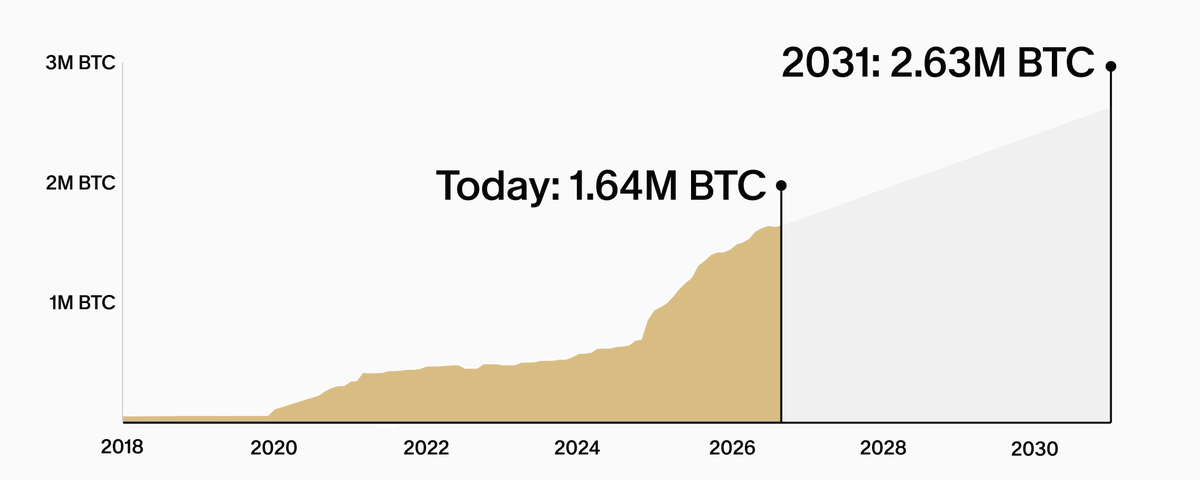
1 million more bitcoin.
That's how much businesses are on track to buy within five years.
Our new report shows the biggest trends shaping business bitcoin adoption in 2026.
Sam Wouters retweeted
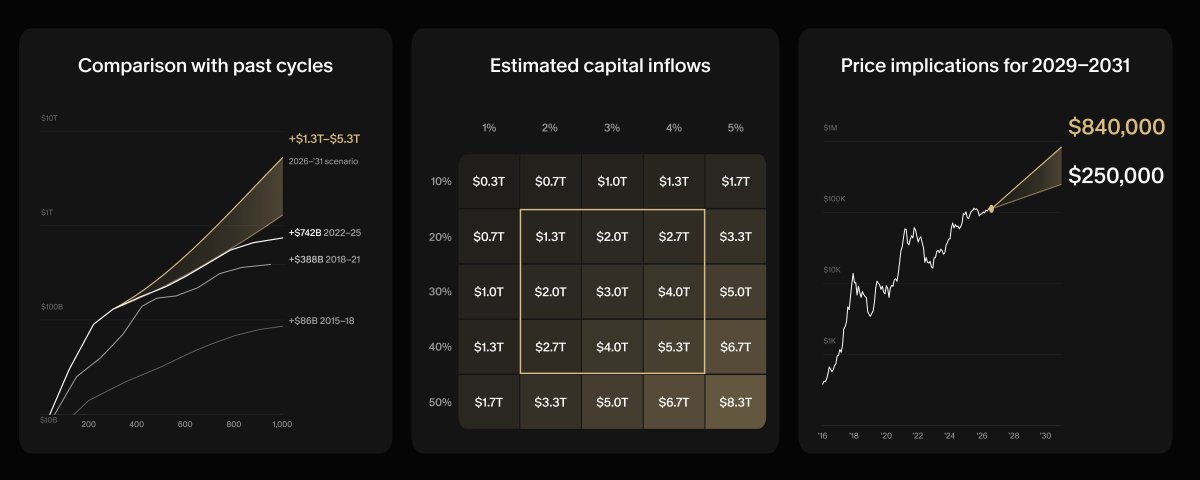
Looking for in-depth research on all things bitcoin?
Ours is completely free.
You can easily find all our work at River.com/research


I'm hiring for two video roles to expand our marketing team at River.
We're looking for an experienced:
1. Video Content Strategist who will be ideating, filtering, packaging, and writing video scripts.
2. Video Host & Producer who will be self-shooting videos and guiding the edit.
We aim to grow the Bitcoin space by producing content on economics you'd love to watch, with a trickle of Bitcoin at the right times, and minimal self-promotion of River.
If you would love to help build this or know someone who does, check out river.com/careers.
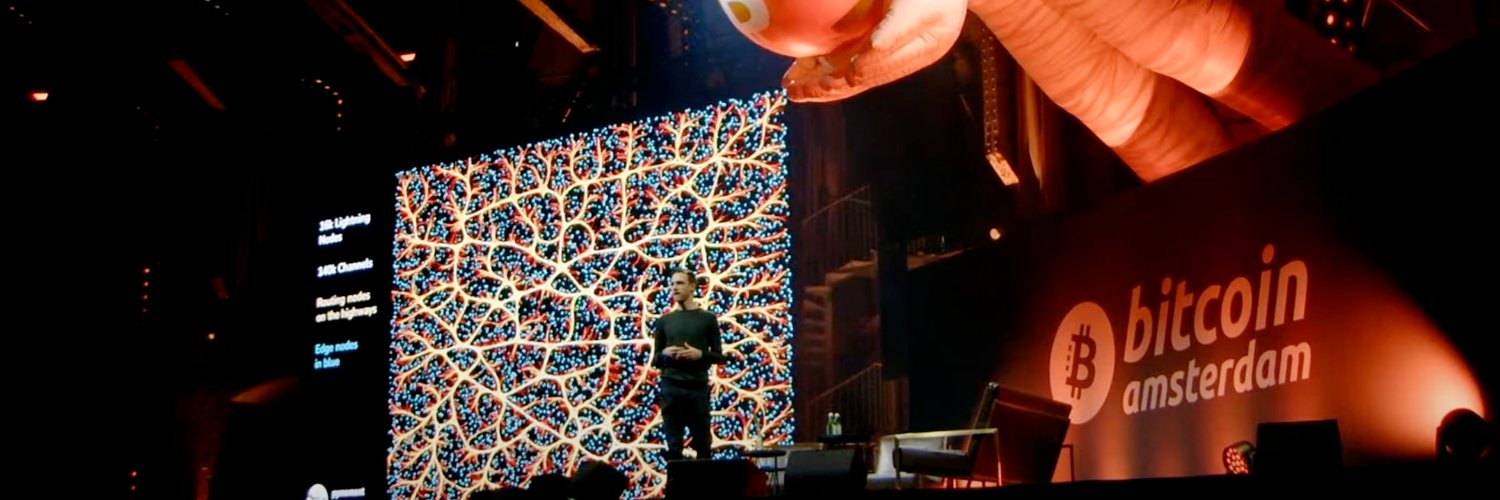
This is a huge breakthrough for Lightning if this works as described in the paper.
Critics have pointed to bitcoin capacity on the Lightning Network not growing exponentially.
Part of this has been due to the risks associated with single sig keys on internet connected devices. Would you trust (part of) your bitcoin stack to that for some routing returns? Most Bitcoiners wouldn’t.
If that risk is significantly reduced, billions of dollars worth of capacity might get deployed in the coming years.

Turns out that with enough math a counterparty can do multisig in a Lightning channel without changing the protocol: eprint.iacr.org/2026/1757


Sam Wouters retweeted
Ahead of publishing our August proof of reserves, we will be migrating our cold storage to a new address.
The current cold storage address is: bc1qysj2w7xsw09datsy9mt9x50jn7qjd6qde6d66qm3ce0a4y9uzdpqcavdr0
The new one will be: bc1qeh5e4ndkrs9sxw8wed2yce69tkrg7t003rz4vk5jhkaf6knkem4q944qvt
Note that clients will not be sending or receiving funds from this address directly, as it is only used by River. Clients will continue to use the standard send and receive flow in the River app.
Once the migration is complete, we will perform a new proof of reserves. As always, you will be able to verify this at river.com/reserves.
Today’s migration is a step in a series of planned security upgrades to our custody system to add further layers of defense as our assets under custody grow. We will be performing another migration in three months as part of this larger custody infrastructure upgrade.
River has not been affected by the recent security incidents. We have, however, seen a significant influx of deposits and are preparing our custody infrastructure for our next phase of growth to ensure River remains a safe haven for the Bitcoin community.
Security is the most important feature of any Bitcoin exchange and we will continue to invest in having the best-in-class custody for our clients.