

Rightify Ghana is a human rights organization in Ghana. Focus: Advocacy | Community Empowerment | Media Monitoring on Human Rights | Document & Report Abuses
Ghana
Joined August 2019
- Tweets21.1K
- Following1.1K
- Followers10.7K
- Likes43K




Pinned Tweet
Breakdown of the Human Sexual Rights and Family Values Bill, 2025 (Anti-LGBTQ Bill)
The reintroduced Anti-LGBTQ Bill now contains nineteen (19) clauses, reduced from the twenty (20) clauses in the version previously passed by the Parliament of Ghana before it lapsed. Despite...


Rightify Ghana retweeted
Ghana Votes to Erase LGBTQI+ People from UN Resolution Against Extrajudicial Killings; A Move Against It's Own Constitutional Protection of Right To Life
On 13 November 2026, Ghana voted at the UN General Assembly's Third Committee to remove explicit protection for LGBTQI+ people from the resolution on extrajudicial, summary or arbitrary executions.
The resolution has one purpose: to make sure that when people are unlawfully killed, states investigate, prosecute the people responsible, and provide justice to victims' families. It names groups who are especially at risk of being targeted, including journalists, human rights defenders, religious minorities, Indigenous Peoples, and people killed because of their sexual orientation or gender identity.
An amendment led by Egypt, on behalf of the Organisation of Islamic Cooperation, tried to replace that explicit reference with vague wording. Ghana voted in favour. The amendment failed, 74 votes to 69 with 24 abstentions, but Ghana's position sends a troubling message: that the lives of LGBTQI+ Ghanaians are less deserving of protection, investigation and justice.
This is a step backwards. In 2022, Ghana voted in favour of this same resolution, including its protection for people targeted because of their sexual orientation or gender identity. This year, Ghana backed an attempt to remove that protection.
Being named in this resolution creates no new rights and no special treatment. It asks only that when someone is killed because of who they are, the killing is not ignored. Outright International has documented more than 230 targeted killings of LGBTQI+ people across every region between January 2020 and July 2026, and many more cases never get recorded or prosecuted.
Ghana's 1992 Constitution guarantees every person the right to life and equality before the law. Ghana is also a party to the International Covenant on Civil and Political Rights, which protects the right to life without discrimination. A vote to make some victims invisible goes against these commitments.
Through our Equality Envoys network across all 16 regions, Rightify Ghana continues to document violence against LGBTQI+ people and the impunity that follows it. Silence at the UN feeds impunity at home.
The resolution now goes to the full General Assembly in December, where a similar amendment may come up again. We urge Ghana's Permanent Mission to the United Nations to vote against any attempt to remove sexual orientation and gender identity, and to support the resolution as a whole. The right to life must protect every Ghanaian, without exception.

Rightify Ghana retweeted

Dear @JDMahama Ghana’s human rights records continues to fail when it comes to minority rights especially the LGBT+ community. Your government is hurting its own people and can do better.

Ghana Votes to Erase LGBTQI+ People from UN Resolution Against Extrajudicial Killings; A Move Against It's Own Constitutional Protection of Right To Life
On 13 November 2026, Ghana voted at the UN General Assembly's Third Committee to remove explicit protection for LGBTQI+ people from the resolution on extrajudicial, summary or arbitrary executions.
The resolution has one purpose: to make sure that when people are unlawfully killed, states investigate, prosecute the people responsible, and provide justice to victims' families. It names groups who are especially at risk of being targeted, including journalists, human rights defenders, religious minorities, Indigenous Peoples, and people killed because of their sexual orientation or gender identity.
An amendment led by Egypt, on behalf of the Organisation of Islamic Cooperation, tried to replace that explicit reference with vague wording. Ghana voted in favour. The amendment failed, 74 votes to 69 with 24 abstentions, but Ghana's position sends a troubling message: that the lives of LGBTQI+ Ghanaians are less deserving of protection, investigation and justice.
This is a step backwards. In 2022, Ghana voted in favour of this same resolution, including its protection for people targeted because of their sexual orientation or gender identity. This year, Ghana backed an attempt to remove that protection.
Being named in this resolution creates no new rights and no special treatment. It asks only that when someone is killed because of who they are, the killing is not ignored. Outright International has documented more than 230 targeted killings of LGBTQI+ people across every region between January 2020 and July 2026, and many more cases never get recorded or prosecuted.
Ghana's 1992 Constitution guarantees every person the right to life and equality before the law. Ghana is also a party to the International Covenant on Civil and Political Rights, which protects the right to life without discrimination. A vote to make some victims invisible goes against these commitments.
Through our Equality Envoys network across all 16 regions, Rightify Ghana continues to document violence against LGBTQI+ people and the impunity that follows it. Silence at the UN feeds impunity at home.
The resolution now goes to the full General Assembly in December, where a similar amendment may come up again. We urge Ghana's Permanent Mission to the United Nations to vote against any attempt to remove sexual orientation and gender identity, and to support the resolution as a whole. The right to life must protect every Ghanaian, without exception.
Rightify Ghana retweeted
On 13 November 2026, Ghana voted at the UN General Assembly's Third Committee to remove explicit protection for LGBTQI+ people from the resolution on extrajudicial, summary or arbitrary executions.
The resolution has one purpose: to make sure that when people are unlawfully killed, states investigate, prosecute the people responsible, and provide justice to victims' families.

Ghana Votes to Erase LGBTQI+ People from UN Resolution Against Extrajudicial Killings; A Move Against It's Own Constitutional Protection of Right To Life
On 13 November 2026, Ghana voted at the UN General Assembly's Third Committee to remove explicit protection for LGBTQI+ people from the resolution on extrajudicial, summary or arbitrary executions.
The resolution has one purpose: to make sure that when people are unlawfully killed, states investigate, prosecute the people responsible, and provide justice to victims' families. It names groups who are especially at risk of being targeted, including journalists, human rights defenders, religious minorities, Indigenous Peoples, and people killed because of their sexual orientation or gender identity.
An amendment led by Egypt, on behalf of the Organisation of Islamic Cooperation, tried to replace that explicit reference with vague wording. Ghana voted in favour. The amendment failed, 74 votes to 69 with 24 abstentions, but Ghana's position sends a troubling message: that the lives of LGBTQI+ Ghanaians are less deserving of protection, investigation and justice.
This is a step backwards. In 2022, Ghana voted in favour of this same resolution, including its protection for people targeted because of their sexual orientation or gender identity. This year, Ghana backed an attempt to remove that protection.
Being named in this resolution creates no new rights and no special treatment. It asks only that when someone is killed because of who they are, the killing is not ignored. Outright International has documented more than 230 targeted killings of LGBTQI+ people across every region between January 2020 and July 2026, and many more cases never get recorded or prosecuted.
Ghana's 1992 Constitution guarantees every person the right to life and equality before the law. Ghana is also a party to the International Covenant on Civil and Political Rights, which protects the right to life without discrimination. A vote to make some victims invisible goes against these commitments.
Through our Equality Envoys network across all 16 regions, Rightify Ghana continues to document violence against LGBTQI+ people and the impunity that follows it. Silence at the UN feeds impunity at home.
The resolution now goes to the full General Assembly in December, where a similar amendment may come up again. We urge Ghana's Permanent Mission to the United Nations to vote against any attempt to remove sexual orientation and gender identity, and to support the resolution as a whole. The right to life must protect every Ghanaian, without exception.
Rightify Ghana retweeted

I am so disturbed by the African Diaspora; I am trying to understand why they're at the UN begging for the rights to dehumanize Queer people? HELLEI?
Ghana Votes to Erase LGBTQI+ People from UN Resolution Against Extrajudicial Killings; A Move Against It's Own Constitutional Protection of Right To Life
On 13 November 2026, Ghana voted at the UN General Assembly's Third Committee to remove explicit protection for LGBTQI+ people from the resolution on extrajudicial, summary or arbitrary executions.
The resolution has one purpose: to make sure that when people are unlawfully killed, states investigate, prosecute the people responsible, and provide justice to victims' families. It names groups who are especially at risk of being targeted, including journalists, human rights defenders, religious minorities, Indigenous Peoples, and people killed because of their sexual orientation or gender identity.
An amendment led by Egypt, on behalf of the Organisation of Islamic Cooperation, tried to replace that explicit reference with vague wording. Ghana voted in favour. The amendment failed, 74 votes to 69 with 24 abstentions, but Ghana's position sends a troubling message: that the lives of LGBTQI+ Ghanaians are less deserving of protection, investigation and justice.
This is a step backwards. In 2022, Ghana voted in favour of this same resolution, including its protection for people targeted because of their sexual orientation or gender identity. This year, Ghana backed an attempt to remove that protection.
Being named in this resolution creates no new rights and no special treatment. It asks only that when someone is killed because of who they are, the killing is not ignored. Outright International has documented more than 230 targeted killings of LGBTQI+ people across every region between January 2020 and July 2026, and many more cases never get recorded or prosecuted.
Ghana's 1992 Constitution guarantees every person the right to life and equality before the law. Ghana is also a party to the International Covenant on Civil and Political Rights, which protects the right to life without discrimination. A vote to make some victims invisible goes against these commitments.
Through our Equality Envoys network across all 16 regions, Rightify Ghana continues to document violence against LGBTQI+ people and the impunity that follows it. Silence at the UN feeds impunity at home.
The resolution now goes to the full General Assembly in December, where a similar amendment may come up again. We urge Ghana's Permanent Mission to the United Nations to vote against any attempt to remove sexual orientation and gender identity, and to support the resolution as a whole. The right to life must protect every Ghanaian, without exception.
Rightify Ghana retweeted

And guess who was at the UN in 2022 lobbying with the missions and met with the then Ghanaian ambassador to Geneva to make that happen while the rest of the Ghanaian activists took money from donors to stay in their Airbnb to cook? Well, I enjoyed the meals tho😂😂😂.
Rightify Ghana retweeted
This is a step backwards. In 2022, Ghana voted in favour of this same resolution, including its protection for people targeted because of their sexual orientation or gender identity.
Ghana Votes to Erase LGBTQI+ People from UN Resolution Against Extrajudicial Killings; A Move Against It's Own Constitutional Protection of Right To Life
On 13 November 2026, Ghana voted at the UN General Assembly's Third Committee to remove explicit protection for LGBTQI+ people from the resolution on extrajudicial, summary or arbitrary executions.
The resolution has one purpose: to make sure that when people are unlawfully killed, states investigate, prosecute the people responsible, and provide justice to victims' families. It names groups who are especially at risk of being targeted, including journalists, human rights defenders, religious minorities, Indigenous Peoples, and people killed because of their sexual orientation or gender identity.
An amendment led by Egypt, on behalf of the Organisation of Islamic Cooperation, tried to replace that explicit reference with vague wording. Ghana voted in favour. The amendment failed, 74 votes to 69 with 24 abstentions, but Ghana's position sends a troubling message: that the lives of LGBTQI+ Ghanaians are less deserving of protection, investigation and justice.
This is a step backwards. In 2022, Ghana voted in favour of this same resolution, including its protection for people targeted because of their sexual orientation or gender identity. This year, Ghana backed an attempt to remove that protection.
Being named in this resolution creates no new rights and no special treatment. It asks only that when someone is killed because of who they are, the killing is not ignored. Outright International has documented more than 230 targeted killings of LGBTQI+ people across every region between January 2020 and July 2026, and many more cases never get recorded or prosecuted.
Ghana's 1992 Constitution guarantees every person the right to life and equality before the law. Ghana is also a party to the International Covenant on Civil and Political Rights, which protects the right to life without discrimination. A vote to make some victims invisible goes against these commitments.
Through our Equality Envoys network across all 16 regions, Rightify Ghana continues to document violence against LGBTQI+ people and the impunity that follows it. Silence at the UN feeds impunity at home.
The resolution now goes to the full General Assembly in December, where a similar amendment may come up again. We urge Ghana's Permanent Mission to the United Nations to vote against any attempt to remove sexual orientation and gender identity, and to support the resolution as a whole. The right to life must protect every Ghanaian, without exception.
Rightify Ghana retweeted

The way homosexuality was legalized in Czechoslovakia was a banger, scientists just went to the government and said "we did a study and we're sure homosexuality is innate and not a choice" and the government said "well if it's not a choice then we can't punish it" and then they legalized it. This happened in 1961 btw.
This is a step backwards. In 2022, Ghana voted in favour of this same resolution, including its protection for people targeted because of their sexual orientation or gender identity.
Ghana Votes to Erase LGBTQI+ People from UN Resolution Against Extrajudicial Killings; A Move Against It's Own Constitutional Protection of Right To Life
On 13 November 2026, Ghana voted at the UN General Assembly's Third Committee to remove explicit protection for LGBTQI+ people from the resolution on extrajudicial, summary or arbitrary executions.
The resolution has one purpose: to make sure that when people are unlawfully killed, states investigate, prosecute the people responsible, and provide justice to victims' families. It names groups who are especially at risk of being targeted, including journalists, human rights defenders, religious minorities, Indigenous Peoples, and people killed because of their sexual orientation or gender identity.
An amendment led by Egypt, on behalf of the Organisation of Islamic Cooperation, tried to replace that explicit reference with vague wording. Ghana voted in favour. The amendment failed, 74 votes to 69 with 24 abstentions, but Ghana's position sends a troubling message: that the lives of LGBTQI+ Ghanaians are less deserving of protection, investigation and justice.
This is a step backwards. In 2022, Ghana voted in favour of this same resolution, including its protection for people targeted because of their sexual orientation or gender identity. This year, Ghana backed an attempt to remove that protection.
Being named in this resolution creates no new rights and no special treatment. It asks only that when someone is killed because of who they are, the killing is not ignored. Outright International has documented more than 230 targeted killings of LGBTQI+ people across every region between January 2020 and July 2026, and many more cases never get recorded or prosecuted.
Ghana's 1992 Constitution guarantees every person the right to life and equality before the law. Ghana is also a party to the International Covenant on Civil and Political Rights, which protects the right to life without discrimination. A vote to make some victims invisible goes against these commitments.
Through our Equality Envoys network across all 16 regions, Rightify Ghana continues to document violence against LGBTQI+ people and the impunity that follows it. Silence at the UN feeds impunity at home.
The resolution now goes to the full General Assembly in December, where a similar amendment may come up again. We urge Ghana's Permanent Mission to the United Nations to vote against any attempt to remove sexual orientation and gender identity, and to support the resolution as a whole. The right to life must protect every Ghanaian, without exception.
On 13 November 2026, Ghana voted at the UN General Assembly's Third Committee to remove explicit protection for LGBTQI+ people from the resolution on extrajudicial, summary or arbitrary executions.
The resolution has one purpose: to make sure that when people are unlawfully killed, states investigate, prosecute the people responsible, and provide justice to victims' families.
Ghana Votes to Erase LGBTQI+ People from UN Resolution Against Extrajudicial Killings; A Move Against It's Own Constitutional Protection of Right To Life
On 13 November 2026, Ghana voted at the UN General Assembly's Third Committee to remove explicit protection for LGBTQI+ people from the resolution on extrajudicial, summary or arbitrary executions.
The resolution has one purpose: to make sure that when people are unlawfully killed, states investigate, prosecute the people responsible, and provide justice to victims' families. It names groups who are especially at risk of being targeted, including journalists, human rights defenders, religious minorities, Indigenous Peoples, and people killed because of their sexual orientation or gender identity.
An amendment led by Egypt, on behalf of the Organisation of Islamic Cooperation, tried to replace that explicit reference with vague wording. Ghana voted in favour. The amendment failed, 74 votes to 69 with 24 abstentions, but Ghana's position sends a troubling message: that the lives of LGBTQI+ Ghanaians are less deserving of protection, investigation and justice.
This is a step backwards. In 2022, Ghana voted in favour of this same resolution, including its protection for people targeted because of their sexual orientation or gender identity. This year, Ghana backed an attempt to remove that protection.
Being named in this resolution creates no new rights and no special treatment. It asks only that when someone is killed because of who they are, the killing is not ignored. Outright International has documented more than 230 targeted killings of LGBTQI+ people across every region between January 2020 and July 2026, and many more cases never get recorded or prosecuted.
Ghana's 1992 Constitution guarantees every person the right to life and equality before the law. Ghana is also a party to the International Covenant on Civil and Political Rights, which protects the right to life without discrimination. A vote to make some victims invisible goes against these commitments.
Through our Equality Envoys network across all 16 regions, Rightify Ghana continues to document violence against LGBTQI+ people and the impunity that follows it. Silence at the UN feeds impunity at home.
The resolution now goes to the full General Assembly in December, where a similar amendment may come up again. We urge Ghana's Permanent Mission to the United Nations to vote against any attempt to remove sexual orientation and gender identity, and to support the resolution as a whole. The right to life must protect every Ghanaian, without exception.
An amendment led by Egypt, on behalf of the Organisation of Islamic Cooperation, tried to replace that explicit reference with vague wording. Ghana voted in favour. The amendment failed, 74 votes to 69 with 24 abstentions, but Ghana's position sends a troubling message: that the lives of LGBTQI+ Ghanaians are less deserving of protection, investigation and justice.

Rightify Ghana retweeted
Rightify Ghana's new study, 'Navigating Democracy: Safety, Inclusion, and Political Participation of Sexual and Gender Minorities during #Ghana's 2024 Presidential and Parliamentary Elections', heard from 218 participants across six regions: 176 survey respondents, plus 42 people in focus groups and key informant interviews.
Here is what LGBTQI+ respondents told us 👇
🗳️ PARTICIPATION
64.8% voted in 2024, but only 26.1% joined campaigns and 20.5% took part in policy discussions. Almost a third (30.1%) have never taken part in any civic activity.
🚧 BARRIERS
94.3% cited fear of stigma and discrimination, and 61.9% cited safety concerns.
⚠️ DISCRIMINATION
75.6% faced or witnessed discrimination in civic or political spaces. The most common forms were verbal harassment (64.2%) and online abuse (54.0%).
📢 MISINFORMATION
72.7% see misinformation about LGBTQI+ persons very often. Social media is the top source (85.8%), followed by radio and TV (65.9%) and religious platforms (60.2%).
🎤 CAMPAIGN RHETORIC
56.8% said political campaigns affected LGBTQI+ persons negatively.
🛡️ SAFETY
78.4% feel unsafe taking part in civic activities; only 7.4% feel very safe. The risks they named most were harassment (87.5%), violence (80.1%) and blackmail (75.0%).
✅ WHAT NEEDS TO CHANGE
🔹 Electoral Commission: non-discrimination guidelines and training for election officials
🔹 CHRAJ: a safe, anonymous complaints pathway
🔹 NCCE: voter education on constitutional rights and the difference between a Bill and a law
🔹 Civil society: more civic education and leadership pathways for LGBTQI+ persons
🔹 Development partners: long-term support for psychosocial care, economic empowerment and legal aid
Democracy works best when every citizen can take part freely, safely and meaningfully. 🇬🇭
👉 Swipe through the findings and share to raise awareness.
🔗 Read more at rightifyghana.org
#NavigatingDemocracy #RightifyGhana #lgbtq #HumanRights InclusiveDemocracy Ghana Elections CivicParticipation LGBTQI EqualityForAll
Rightify Ghana retweeted
📢 NEW STUDY | Navigating Democracy: Safety, Inclusion, and Political Participation of Sexual and Gender Minorities (LGBTQI+) during Ghana's 2024 Presidential and Parliamentary Elections
Ghana's 2024 elections were marked by unprecedented anti-LGBTQ+ rhetoric, misinformation and hostility. To understand how this affected the democratic participation of LGBTQI+ persons, Rightify Ghana commissioned a baseline study across six regions: Greater Accra, Ashanti, Northern, Central, Bono and Volta.
The study heard from 218 participants: 176 survey respondents, plus 42 people in focus group discussions and key informant interviews with community members, Electoral Commission and CHRAJ officials, legal practitioners, traditional leaders and civil society.
Here is what we found 👇
🗳️ THEY VOTE, BUT STAY OUT OF PUBLIC VIEW
64.8% of LGBTQI+ respondents voted in 2024, close to the national turnout. Participation drops sharply where people have to be visible: only 26.1% joined political campaigns and 20.5% took part in policy discussions. Almost a third (30.1%) have never taken part in any civic activity.
🚧 FEAR, NOT LACK OF AWARENESS, HOLDS PEOPLE BACK
94.3% cited fear of stigma and discrimination as a barrier, followed by safety concerns (61.9%) and family or community pressure (47.2%). Yet 45.5% said they are very familiar with Ghana's democratic processes.
"Participating in public democratic processes becomes a risk rather than a right." (Survey respondent)
⚠️ DISCRIMINATION IS WIDESPREAD
75.6% faced or witnessed discrimination in civic or political spaces, and 51.1% deliberately avoided taking part because of their identity. The most common forms were verbal harassment (64.2%), online abuse (54.0%) and physical threats (48.9%).
📢 MISINFORMATION IS CONSTANT
72.7% see misinformation about LGBTQI+ persons very often. Social media is the biggest source (85.8%), followed by radio and TV (65.9%), religious platforms (60.2%) and political speeches (57.4%).
🎤 CAMPAIGNS TARGETED IDENTITY INSTEAD OF ISSUES
56.8% said political campaigns affected LGBTQI+ persons negatively, and 42.6% said very negatively.
"All candidates seemed to agree that I should be persecuted. I did not want to be responsible for electing my hangman." (Survey respondent)
🛡️ NEARLY FOUR IN FIVE FEEL UNSAFE
78.4% feel unsafe taking part in civic activities, and only 7.4% feel very safe. The risks they named most were harassment (87.5%), violence (80.1%), blackmail (75.0%) and public outing (62.5%). 59.7% said safety fears linked to the anti-LGBTQ+ Bill discouraged them from voting, even though the Bill was not law at the time.
🏛️ LOW TRUST IN INSTITUTIONS
47.2% gave state institutions the lowest possible rating for responsiveness. Fear of reporting creates a cycle of silence: with no complaints, institutions can say there is no problem.
💪 COMMUNITIES ARE RESPONDING
Despite these challenges, participants are asserting their constitutional rights, running their own community protection systems, and using music, drama and creative messaging to encourage civic participation.
"My vote counts... I have the right to express my opinion." (Focus group participant)
✅ WHAT NEEDS TO CHANGE
🔹 Electoral Commission: issue non-discrimination guidelines, train all election officials, including on respecting gender expression at polling stations, and set up safe reporting channels
🔹 CHRAJ: create a safe, anonymous complaints pathway and strengthen referrals to the Ghana Police Service
🔹 NCCE: include constitutional rights, and the difference between a Bill and a law, in voter education
🔹 Political parties: adopt codes of conduct that ban hate speech and focus campaigns on issues
🔹 Media: commit to ethical reporting, fact-checking and non-stigmatising language
🔹 Civil society: expand civic education, legal aid, psychosocial support and leadership pathways for LGBTQI+ persons
1/2
🔹 Development partners: provide long-term funding for safety, inclusion and evidence-based advocacy
Inclusive participation is not only about one group's rights. It strengthens Ghana's democracy for everyone. 🇬🇭
👉 Read, share and join the conversation.
🔗 rightifyghana.org
📧 info@rightifyghana.org
#NavigatingDemocracy #RightifyGhana #HumanRights #InclusiveDemocracy #Ghana #Elections #CivicParticipation #EqualityForAll
2/2
2
45
Rightify Ghana retweeted

No Gana os Bispos não se preocupam com um caso de estupro contra 19 garotas em escola, ao invés disso estão apoiando uma lei que criminaliza relações consensuais, enfim.
The Bishops Have Found Their Voice. Just Not for the Girls of Obuasi.
For weeks, Ghana has been reeling from allegations that the headmaster of Obuasi SHTS sexually abused up to 19 of his students. Parents, alumni, civil society, political parties and even other churches spoke up and demanded justice.
The Ghana Catholic Bishops' Conference said nothing.
Now the Bishops have spoken, and with real urgency:
"We'll not let reconsideration of the anti-LGBTQ+ bill drag on. Parliament must act with urgency and uphold the constitution."
So the urgency is there. It just goes to a bill that criminalises consenting adults, not to 19 schoolgirls who say they were abused by the man meant to protect them.
The Bishops met in the Ashanti Region, the same region as Obuasi. They said they would not let a bill "drag on." Meanwhile, the girls of Obuasi wait for justice, counselling and safety. Who is speaking up so that their case doesn't drag on?
A church that demands urgency for a bill that criminalises people, but has none for children who say they were abused, is choosing its causes, not protecting the vulnerable.
Ghana's children deserve that urgency too.
#RightifyGhana #HumanRights #KillTheBill #LGBTQ #Ghana

Rightify Ghana retweeted
The rescission, however, does not mean the controversial legislation has been abandoned or withdrawn. Rather, it creates an opportunity for Parliament to revisit the bill, address the identified inconsistencies and proceed with another vote.
Ghana’s Parliament reverses Anti-LGBTQ+ Bill passage for reconsideration, with third-time passage expected
Ghana’s Parliament has rescinded its earlier passage of the Human Sexual Rights and Family Values Bill, 2025, popularly known as the Anti-LGBTQ+ Bill, paving the way for lawmakers to reconsider the legislation and address inconsistencies identified in its provisions.
Speaker of Parliament Alban Bagbin announced the decision on Tuesday, November 10, 2026, following a vote by the House to reverse its earlier resolution on the bill, which was passed on May 29, 2026.
According to Mr Bagbin, the decision followed a review by Parliament’s Legislation Drafting Department, which identified discrepancies between the decisions taken by lawmakers during deliberations on the bill and the provisions subsequently captured in the final draft.
Speaking on the floor of Parliament, the Speaker explained that although the drafting department could identify the errors, it had no authority to independently alter provisions reflecting decisions already taken by the House.
“The draft people could put them right. But once there are decisions, they cannot tamper with the decision of the House. It has to be brought back for the House to do the proper thing,” he said.
He further explained that the bill had consequently been returned to Parliament to enable lawmakers to formally rescind their previous decision and make the necessary corrections.
Putting the motion to a vote, Mr Bagbin asked members who supported the rescission to indicate their position.
“Those in favour, say aye. Those against, say no,” he declared before announcing the outcome.
“Honourable members, the ayes have it. The House has accordingly rescinded its earlier decision, which was taken on Friday, May 29, 2026, in respect of the third reading of the Human, Sexual Rights, and Family Values Bill 2025,” the Speaker announced.
The rescission, however, does not mean the controversial legislation has been abandoned or withdrawn. Rather, it creates an opportunity for Parliament to revisit the bill, address the identified inconsistencies and proceed with another vote.
The bill is therefore expected to return before the House for reconsideration, with lawmakers anticipated to pass it for the third time.
Rightify Ghana retweeted
The Bishops Have Found Their Voice. Just Not for the Girls of Obuasi.
For weeks, Ghana has been reeling from allegations that the headmaster of Obuasi SHTS sexually abused up to 19 of his students. Parents, alumni, civil society, political parties and even other churches spoke up and demanded justice.
The Ghana Catholic Bishops' Conference said nothing.
Now the Bishops have spoken, and with real urgency:
"We'll not let reconsideration of the anti-LGBTQ+ bill drag on. Parliament must act with urgency and uphold the constitution."
So the urgency is there. It just goes to a bill that criminalises consenting adults, not to 19 schoolgirls who say they were abused by the man meant to protect them.
The Bishops met in the Ashanti Region, the same region as Obuasi. They said they would not let a bill "drag on." Meanwhile, the girls of Obuasi wait for justice, counselling and safety. Who is speaking up so that their case doesn't drag on?
A church that demands urgency for a bill that criminalises people, but has none for children who say they were abused, is choosing its causes, not protecting the vulnerable.
Ghana's children deserve that urgency too.
#RightifyGhana #HumanRights #KillTheBill #LGBTQ #Ghana
Rightify Ghana retweeted
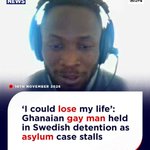
‘I could lose my life’: Ghanaian gay man held in Swedish detention as asylum case stalls
A 33-year-old Ghanaian man seeking asylum in Sweden because of his sexuality says he fears for his life if he is returned to Ghana, where he claims he could face imprisonment and brutal attacks for being gay.
Samuel Asiamah, whose asylum application remains unresolved, has been held at a detention facility in Åstorp, about an hour north of Malmö, for six months, according to a report by The Irish Times published on September 12, 2026.
Despite having valid asylum papers, Asiamah was detained after running away from an asylum camp. His lawyer has reportedly been unable to obtain answers from Swedish authorities about why he continues to be held.
The Ghanaian, who fled the country in November 2024, told The Irish Times that he would not cooperate with efforts by Swedish authorities to arrange his return to Ghana because of what he believes awaits him if he is sent back.
“There is a difference between co-operation and placing your life in jeopardy,” he said.
“If people in prison know you are homosexual, you will be brutalised and assaulted, and you could lose your life.”
His case has drawn attention to the difficulties facing asylum seekers as Sweden tightens its migration and refugee policies, despite its longstanding reputation as a country that offers protection to people fleeing persecution.
From family rejection to physical attacks
Asiamah told The Irish Times that his difficulties in Ghana began within his family after his mother became suspicious of his sexuality.
He was raised by his grandmother in the countryside before moving to Accra at the age of 18 to live with his mother, who, according to him, was deeply troubled by the possibility that he was gay.
He said she took him to regular church blessing services, hoping to address what she considered a source of shame to the family.
“She was upset, then furious and gradually started to neglect me, making comments about me being a shame to her and the family,” he recounted.
His home became a place of persistent conflict, prompting him to leave at 19. He subsequently found support through a local LGBTQ+ group called Solace.
However, he said his relationship with his first boyfriend exposed him to further hostility, with verbal insults escalating into repeated physical attacks. He still carries a scar from one of the assaults, the report said.
Asiamah later met a man identified as “Brother Kofi”, who promised to help him travel to Europe.
He reportedly took 60,000 Ghana cedis from his mother's savings to finance the journey. He was flown through Mauritius to France before travelling to Sweden, where he arrived in November 2024. The man who facilitated the journey allegedly abandoned him.
After spending a week homeless, he was offered accommodation by a woman who later asked him to leave when she discovered his sexuality.
He told the newspaper that he eventually sought help from Swedish police after they found him on the street one snowy day.
Asylum application in limbo
Asiamah applied for asylum in Malmö in February 2026, hoping Sweden would provide protection from the hostility he says he experienced in Ghana.
But his application has since become a source of uncertainty.
According to The Irish Times, he told his case officer in May that Ghana's Parliament had passed a Bill seeking to criminalise the promotion of LGBTQ+ activities, with proposed prison sentences of up to 10 years. He also referred to a provision that would require friends and family members to report one another.
The case officer reportedly dismissed the development as irrelevant to his application because Asiamah had not personally experienced the proposed legal regime.
The newspaper reported that the Ghanaian's concerns about returning home are compounded by the prospect of imprisonment and the risk of abuse if his sexuality becomes known while in custody.
....
myjoyonline.com/i-could-lose…
