

Trend, value, quality, carry, volatility. Tentmaker (eating vol-targeted Sortino to fund Christian work). See the pinned tweet for compound return generators.
Joined July 2011
- Tweets42.2K
- Following152
- Followers16.5K
- Likes38.5K




Pinned Tweet
1/ How do you maximize compound returns?
A. Don't use too much risk.
B. Don't rely on bounce-backs.
C. Appropriate risk depends on expected Sharpe ratios.
D. Diversification increases Sharpes.
E. Hedge the (relevant) tails.
"Rule #1: Never lose money."
xitter.cf/ReformedTrader/status/…

1/ Fortune's Formula (William Poundstone)
"Even unlikely events must eventually come to pass. Therefore, anyone who accepts small risks of losing everything eventually _will_ lose everything. The compound return rate is acutely sensitive to fat tails."
amazon.com/Fortunes-Formula-…

The stocks people want to own (large caps, tech, AI) have been expensive for some time, and what happened this month isn't inconsistent with that view.
But there are better options than the boat if people are willing to look at the ignored and hated assets over the past decade.


A story from the dot-com bubble burst, which feels apropos today:
in 2000, my mom sold her company. Not huge money, but a nice reward after 20 years of hard work.
One of the things my folks did was buy a boat (a cool racing sailboat on Lake Michigan).
At the same time the S&P fell by like 40% and took 10 years to fully recover.
Mom sold the boat a few years later for close to what she paid for it. Had she invested the cash in the markets instead, she'd have lost significant portion of it.
I try to remind myself that there are moments when a boat may be the best investment option on the table 😜
The future looks even brighter if you can add trend following, carry, L/S equity factors, and tail hedging and then leverage up to fractional Kelly. More on that here:
xitter.cf/ReformedTrader/status/…
1/ How do you maximize compound returns?
A. Don't use too much risk.
B. Don't rely on bounce-backs.
C. Appropriate risk depends on expected Sharpe ratios.
D. Diversification increases Sharpes.
E. Hedge the (relevant) tails.
"Rule #1: Never lose money."
xitter.cf/ReformedTrader/status/…
2
3
869

"As is often the case in financial markets, when the opinions are all on one side, the opportunities are usually on the other." -Bill Miller (@B3_MillerValue)

1
284
There are some great observations in this tweet. Here are the two that stuck out to me:
"I’ve studied the history of markets sufficiently to understand that those long-term growth charts exist because governments completely bail out investors occasionally. And the exceptions to this rule -Great Depression, Japan post-1990, Weimar Germany, Communist revolutions in China and Russia, etc demonstrate what happens when governments can’t - either politically or fiscally - or won’t bail them out."
"If you don’t already understand why managed futures should be a core investment for sub-institutional investors, I’m not going to be able to convince you."

So much brain damage.
I’ve spent the last few months trying to write a paper on managed futures trend. I’ve written three full papers: a 50 pager: a 30 pager and a 15 pager. I’ve created over 60 illustrations, exhibits, figures and tables to build my case. They’re all just shouts into the void.
The overarching challenge is that I no longer believe anyone can be persuaded of anything. If you try to convince someone who is on a streak at the craps table that they’re making bad choices, they’ll laugh in your face. Nobody finds God on prom night.
I started building a research package containing the details of all my experiments and results. I figured I’d just release it and let people interrogate it with their own LLMs. But I’ve realized that people will actually just use the data to support whatever biases they already have. If you torture they data for long enough, it will always confess. Passive cultists will find reasons passive still rules. DFA cultists will find reasons why small value still rules. Thematic cultists will find reasons why their theme still rules. Macro cultists will continue to delude themselves. And trend cultists already get it.
I also understand that I’m not immune to this phenomenon. My own experience in markets has produced a profound cynicism about how markets work, and an unshakeable dread about the deep risks at the heart of market systems. I’ve been there when markets were on the brink of collapse. I’ve studied the history of markets sufficiently to understand that those long-term growth charts exist because governments completely bail out investors occasionally. And the exceptions to this rule -Great Depression, Japan post-1990, Weimar Germany, Communist revolutions in China and Russia, etc demonstrate what happens when governments can’t - either politically or fiscally - or won’t bail them out.
For these reasons, I personally would never invest a material portion of my wealth in passive strategies. I’m just too hyper-aware that wealth actually does get wiped out occasionally. Some of this is a result of genuine trauma. Some of it is because I know too much.
Honestly, it’s so obvious to me that managed futures should be the core holding in most individual portfolios that I don’t have a theory of mind for those that don’t already hold this view. Sure, people shouldn’t blindly pay 3% a year in fees - the approximate fee drag embedded in most managed futures indices - for access to a basic managed futures trend following strategy. But you don’t have to. We’d happily run it in SMAs for >$10m accounts at fees under 1%, and much less for investments above $100m. And I know other firms who would run SMAs at these rates. It definitely requires infrastructure and expertise to run them properly, but it’s no longer rocket science.
But I also know if you don’t already understand why managed futures should be a core investment for sub-institutional investors, I’m not going to be able to convince you. You’ll either learn sufficiently hard lessons to open your mind to the type of diversification and risk management that only managed futures can provide, or you won’t. If you learn those lessons, and literature about managed futures enters your attention cone during that brief moment of dissonance and trauma, then you might come around. But you probably won’t. It’s like I often say: “If you don’t get it, I can’t explain it to you.” Which prompts the question at the heart of my dilemma: who am I writing for? And why? I honestly don’t know anymore.
"I no longer believe anyone can be persuaded of anything."
Yep! More on this: The Structure of Scientific Revolutions
xitter.cf/ReformedTrader/status/…
"An unshakeable dread about the deep risks at the heart of market systems"
More on this: Wealth, War, and Wisdom
xitter.cf/ReformedTrader/status/…
1/ Wealth, War, and Wisdom (Barton Biggs)
"WWII was the war of the century. Its effect on occupied countries and later on the losers of the war was the ultimate test in modern times of which assets could preserve the purchasing power of wealth." (p. 2)
amazon.com/Wealth-War-Wisdom…

2
656
Multifactor investing improved information ratios (2004-26), but a diversified set of factor timing signals didn't add any measurable additional value.
Diversification all the Way Down: Multifactor Investing Within Factors, Across Factors and Across Time (Renshaw et al.)


Interesting paper on factor diversification
papers.ssrn.com/sol3/papers.…
@ReformedTrader
Factor momentum was directly or indirectly used in two of the three factor timing strategies for a total of 50% weight. This 2019 paper is related:
Factor Momentum Everywhere
xitter.cf/ReformedTrader/status/…
1/ Factor Momentum Everywhere (Gupta, Kelly)
"Time series factor momentum benefits investment strategies that employ traditional momentum, value, and other factors. The momentum phenomenon is driven in large part by persistence in common return factors."
papers.ssrn.com/sol3/papers.…

3
576
Darren r-σ²/2 retweeted

At Ambrus we do a lot of philanthropy work.
I personally gravitate towards Christian organizations and work towards underprivileged kids.
With the holiday season coming up, shoot me over some of the best smaller organizations you guys think we should take a look at.

This year Ambrus donated $100k to @sonofasaintorg .
This is an organization that does real hands on work to provide long-term mentorship and support to boys and young men who are growing up without their fathers, in socioeconomically deprived areas.
If you are a trader/ investor looking to pay back your blessings. This is an organization worth looking into.
For some, homeownership is essentially religious. Belief comes first, and evidence is re-interpreted if necessary.
Worldviews matter because even scientific evidence isn't interpreted in a vacuum. But consider what you put your faith in. Be sure it's worthy of your devotion.

Multiple studies find no relationship between homeownership and happiness after controlling for confounders like income and housing quality. Bucchianeri finds that for women, owning a house is associated with having less joy from people and relationships.
There is also no financial benefit for most people compared to renting and investing the difference. (see first comment for links)
2
12
1,716
Thomas Kuhn describes the same pattern for scientific beliefs:
xitter.cf/ReformedTrader/status/…
Some of the debates between Christians and atheists here explore how important assumptions are for interpreting evidence:
youtube.com/playlist?list=PL…
1/ Structure of Scientific Revolutions (Thomas Kuhn)
"A new theory is not chosen because it is true but because of a worldview change. Progress is not a simple line leading to the truth. It is progress away from less adequate conceptions of the world."
amazon.com/Structure-Scienti…

471
1/ Buffett: The Making of an American Capitalist (Roger Lowenstein)
"Buffett shunned Wall Street's venal excesses and rediscovered the art of pure capitalism. His shareholders got rich in exactly the same proportion to their capital that he did." (p. 12)
amazon.com/Buffett-American-…

227/ "After Black Monday in 1987, Doris owed roughly $2 million following a margin call on uncovered put options. The brokerage that had talked her into the strategy collapsed. She was close to losing her home."
xitter.cf/fomoliver/status/21064…

When Buffett's sister owed $2 million and was about to lose her home, he said one sentence to her - and refused to pay.
After Black Monday in 1987, Doris owed roughly $2 million following a margin call on uncovered put options. The brokerage that had talked her into the strategy collapsed. She was close to losing her home.
Warren refused to cover the debt. His reasoning: "The money would not really save her. It would just pay the people on the other side of a gamble she should not have taken."
He didn't hand her money. But he also didn't walk away - he just refused to turn someone else's mistake into someone else's profit, paid for out of his pocket.
Years later, Doris inherited Berkshire Hathaway stock from their mother. This time she wasn't trading risky schemes - she just held an asset that did the work on its own. Her capital rebuilt itself, with no bailout and no catch-up bets.
After that, she personally gave away more than $100 million - one person at a time, reading each story before writing a check.
Her brother's refusal wasn't cruelty. It was the only way she actually learned the lesson, instead of just getting the same money back to lose it again.
2
1
712
228/ “I think our chief contribution to the businesses we acquire is what we don’t do.”
xitter.cf/wkndinvestor/status/21…

At Berkshire’s 1995 annual meeting, a shareholder asked whether Berkshire improved the businesses it acquired.
Buffett explained that Berkshire provides or removes capital and eliminates unnecessary corporate rituals.
Munger added: “I think our chief contribution to the businesses we acquire is what we don’t do.”

1
330
Multiple studies find no relationship between homeownership and happiness after controlling for confounders like income and housing quality. Bucchianeri finds that for women, owning a house is associated with having less joy from people and relationships.
There is also no financial benefit for most people compared to renting and investing the difference. (see first comment for links)

"Based on the critical comments under the post I have written [on homeownership, November 11, 2026], does homeownership resemble a religion in that it is used as a criterion to interpret evidence rather than the other way around?"
xitter.cf/ReformedTrader/status/…

In my experience, there is a religious quality to the American dream. Homeownership and college education are values that are used to interpret evidence rather than the other way around.
There's nothing inherently bad about religious assumptions - evidence can't be interpreted in a vacuum. Why do we assume being honest is better than lying, and why do we assume that the world is governed by predictable laws that are comprehensible to the human mind, for example?
But anything that we ascribe religious qualities to had better be worthy of our devotion, and I don't think the American dream makes that cut.
Some commenters seem to think that I am arguing against private property, but they don't seem to have read the first link in the thread, which argues that if you rent and invest the difference, you are likely to have more money (in other words, a larger amount of private property).
xitter.cf/ReformedTrader/status/…
They could also easily have read my profile description or even asked an AI to summarize it instead of assuming that I take a position that is pretty close to the opposite of what I have publicly stood for and taken a lot of heat for in the past, especially during the pandemic.

I looked at several Rent vs. Buy calculators and have settled on All Invest View's for now.
It defaults to using the current mortgage rate, investing the difference at a 7% return, and a 10-year time horizon.
For a typical U.S. starter home: Renting is projected to provide a $52,000 higher net worth than buying.
Affordable area: Renting comes out ahead by $35,000.
Expensive city: Renting wins by $411,000.
The sensitivity analysis for the expensive city shows that this conclusion is robust to a wide range of assumptions about the expected returns of the house vs. the substitute portfolio.
Note that the calculator compares a 5x leveraged house with an unleveraged investment portfolio. There is no setting to leverage up the portfolio. The conclusions drawn here would be even stronger if the house and substitute portfolio could be compared at the same level of risk.
Margin calls are a danger here, but so is losing a job or running into unexpected expenses and not being able to make mortgage payments. Declining home values are also a real (and not temporary) risk. If the model allows home buyers to throw extra money at the house to avoid losing it, renters should be allowed to do the same in the case of a margin call.
I plan to write an article comparing a house to funds at the same level of risk. I asked Gemini to use INVH and AMH to give me a quick estimate for what the volatility of a single house would be if properly marked to market. It told me 10% to 15%, a reasonable starting point for making proper comparisons.
Options that a sophisticated retail investor could use include
Leveraged ETFs
Return stacking
CTAs
Please comment and let me know what you'd suggest that I use in the comparisons.

ALT U.S. starter house (rent vs. buy)


1
291
I looked at several Rent vs. Buy calculators and have settled on All Invest View's for now.
It defaults to using the current mortgage rate, investing the difference at a 7% return, and a 10-year time horizon.
For a typical U.S. starter home: Renting is projected to provide a $52,000 higher net worth than buying.
Affordable area: Renting comes out ahead by $35,000.
Expensive city: Renting wins by $411,000.
The sensitivity analysis for the expensive city shows that this conclusion is robust to a wide range of assumptions about the expected returns of the house vs. the substitute portfolio.
Note that the calculator compares a 5x leveraged house with an unleveraged investment portfolio. There is no setting to leverage up the portfolio. The conclusions drawn here would be even stronger if the house and substitute portfolio could be compared at the same level of risk.
Margin calls are a danger here, but so is losing a job or running into unexpected expenses and not being able to make mortgage payments. Declining home values are also a real (and not temporary) risk. If the model allows home buyers to throw extra money at the house to avoid losing it, renters should be allowed to do the same in the case of a margin call.
I plan to write an article comparing a house to funds at the same level of risk. I asked Gemini to use INVH and AMH to give me a quick estimate for what the volatility of a single house would be if properly marked to market. It told me 10% to 15%, a reasonable starting point for making proper comparisons.
Options that a sophisticated retail investor could use include
Leveraged ETFs
Return stacking
CTAs
Please comment and let me know what you'd suggest that I use in the comparisons.
ALT U.S. starter house (rent vs. buy)
I ran similar numbers a while back taking volatility drag into account as a proxy for the risk of using leverage.
The difference was large enough to retire off. (No need to wait 30 years - just sell the house now and invest the proceeds.)
xitter.cf/ReformedTrader/status/…


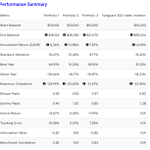
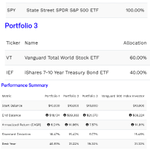
Portfolio 1: American Homes 4 Rent
Portfolio 2: SPY
Portfolio 3: Global 60/40
Jan 2017 - Oct 2026
A diversified portfolio of single-family rental properties underperformed SPY and global 60/40 in terms of annualized return, Sharpe, Sortino, and IR.
xitter.cf/ReformedTrader/status/…

It literally buys and holds single-family houses and rents them out. This has diversification and economies of scale that a single house doesn't.
Over the relatively short history we have, the rental portfolio underperformed both SPY and global 60/40.
portfoliovisualizer.com/back…

1
1
480
Homeownership as a religion:
xitter.cf/ReformedTrader/status/…
"Based on the critical comments under the post I have written [on homeownership, November 11, 2026], does homeownership resemble a religion in that it is used as a criterion to interpret evidence rather than the other way around?"
xitter.cf/ReformedTrader/status/…
337