

Director, Westminster Menswear Archive | Menswear Consultant | Brand, Archive and Cultural Strategy
London and Manchester
Joined July 2018
- Tweets164
- Following539
- Followers217
- Likes136




The new Dior show didn’t open with glamour; it opened like a warning.
I’ve written about how Dior became a horror story about itself.
Read Do You Horror Behind the Gilded Doors on Substack:
👉 profandrewgroves.substack.co…
#Dior #AdamCurtis #FashionCriticism #Couture #FashionHistory

Why Vince Garments Are So Rare - and So Important
These swim briefs by Vince Green, now on display in the Splash! exhibition at the Design Museum, offer a rare glimpse into a pivotal moment in British menswear.
Originally a photographer for postwar physique magazines, Bill ‘Vince’ Green began selling continental-style swim briefs through classified ads in the Daily Mirror in the early 1950s. In 1954, he opened Vince Man’s Shop in Soho, widely regarded as London’s first dedicated menswear boutique.
Over the past 8 years, we’ve been actively collecting garments from the shop for the Westminster Menswear Archive. But they remain incredibly hard to find. Few have survived, and even fewer are publicly accessible. Yet their influence is undeniable.
Green’s imagery carried a distinctly homoerotic charge, shaped by his background in physique photography and resonating strongly with a gay clientele. His swimwear shared that sensibility, cut high, made from clinging towelling, or boldly patterned. What made his work so radical, however, was his ability to translate that aesthetic into the mainstream. Vince normalised a body-conscious masculinity that was modern, aspirational, and unashamedly visible.
His designs helped shape what would later become the Carnaby Street look, years before that scene emerged. In doing so, he not only challenged ideas of how British men should dress, but also who they were allowed to be.
Images:
– Vince Man’s Shop swimwear display, Splash! Design Museum
– Hawaiian print towelling trunks, 1968. Vince Green. Westminster Menswear Archive
– Striped swim shorts, 1968. Vince Green. Westminster Menswear Archive
– Men’s Beach Shorts, 1960s. Vince Green. The Textiles & Dress Collection at Falmouth University
#menswear #archivemenswear #1960sstyle #britishmenswear #carnabystreet #designmuseum #vintagemenswear #swimwearhistory #vincemanshop #fashionarchive #exhibitionloan #splashdesignmuseum #physiquemagazines #mensweararchive


Before the Internet, This Was How Gay Men Found Style, and Themselves
In 1968, Vince Man’s Shop in Soho offered a pair of boldly striped swim trunks called ‘Pearl Divers', designed “for swimming or walking,” made from stretch fabric with a nylon zip, and advertised for their snug fit. Price: 42 shillings.
But here’s what really mattered:
You didn’t have to live in London to buy them.
You just had to send off a letter.
Vince Man’s Shop (1954–1969) was based in Soho, but its influence travelled across Britain. Through its bold, image-filled mail-order catalogues, Vince offered men, especially gay men outside of major cities, access to a new kind of menswear: tight, tailored, and body-conscious.
Filled with shirtless models in stretch briefs and snug shorts, these catalogues gave visibility to a new vision of masculinity: confident, coded, and queer. For many, it was the first time fashion had reflected their identity, available by post, no questions asked.
This 1968 pair of trunks, now part of the Westminster Menswear Archive, features in the Design Museum’s new exhibition Splash! A Century of Swimming and Style (28 March – 17 August 2025), alongside other rare menswear artefacts from our collection.
Curated by Amber Butchart, Splash! explores a century of swimwear, design, and social change, from lidos to Lycra, Baywatch icons to body politics.
📅 Splash! opens today, 28 March 2025 at the Design Museum, London.
#WestminsterMenswearArchive #VinceMansShop #MailOrderFashion #MenswearHistory #SplashExhibition #DesignMuseum #SubculturalStyle #BritishMenswear #FashionArchives #AmberButchart #MensSwimwear #IndependentRetailers #FashionAndIdentity #LGBTQHistory #SohoStyle

To mark the launch of his new collaboration with Clarks, I spoke to Esquire magazine about the unexpected thread linking Liam Gallagher, Charles Baudelaire, and Manchester’s 19th-century Monkey Parades.
“The figure of the flâneur, the idle urban wanderer immortalised by Baudelaire, found its working-class counterpart in the Clarks-wearing Gallagher of the ’90s, not a detached observer, but a swaggering participant, turning the streets into a stage for presence, attitude, and ownership. His Clarks-shod strut wasn’t just part of his look, it was the look.
Like Manchester’s Monkey Parades of the 19th century, where young working-class men turned walking into a performance of status, the Mancunians of the ’90s revived this ritual; only now in Wallabees, their crepe soles adding a distinctive bounce to their swagger.”
#LiamGallagher #Clarks #Baudelaire #MonkeyParades #MenswearHistory #StreetStyle #90sFashion #Wallabees #MancunianSwagger #Oasis #FashionCulture #FootwearHistory #BritishStyle #Menswear

Last Friday at the 4th @artefacta2025 Conference at the University of Helsinki, we explored a fundamental question: should archives focus solely on collecting finished garments, or should they also document the processes that shape them?
Traditionally, museums acquire objects long after their cultural significance is established. But by the time a garment reaches an archive, the decisions, constraints, and revisions that shaped it are often lost. Through our collaboration with the Massimo Osti Studio, the Westminster Menswear Archive embedded itself in the brand’s development process, acquiring not just the final garments but also documenting the prototypes, iterations, and shifting strategies that determined their design.
This approach raised crucial reflections:
- Garments do not emerge fully formed, so why do we only archive them once they are ‘complete’?
- If we don’t document the choices that shaped a design, what knowledge are we losing?
- How do we balance collecting the ‘finished’ with understanding the tensions, constraints, and negotiations that led to its creation?
- Can archives remain neutral observers, or does engaging in the process inevitably shape the outcome?
The response to these ideas was incredibly insightful, reinforcing the need to rethink how fashion is archived. If we only collect what survives the commercial and creative process, do we truly understand how design functions?
Thank you to everyone at Artefacta for an inspiring discussion, we’re only beginning to explore what this means for the future of archiving fashion.
#Artefacta2025 #MenswearArchives #FashionHistory #MassimoOstiStudio #WestminsterMenswearArchive #FashionResearch #ArchivalPractice #MuseumStudies #FashionDocumentation #DesignProcess #MaterialCulture #MenswearInnovation

Thrilled to have made it into Private Eye's Pseuds Corner for a record third time!
#PrivateEye #PseudsCorner #Humour #Satire #keepitcasual #Milestone #RecordAchievement #BritishHumour #ThirdTimeLucky #Publications #MediaMentions

I spoke to @lanre_bakare at The Guardian this week about the rise of Stone Island in the UK and its historical precedents.
“The football casuals of the 1980s were, in many ways, the modern-day equivalents of the young men embarking on the Grand Tour in the 18th century, rather than bringing back art and antiquities, they brought back Italian menswear.”
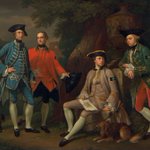
Image: A Conversation Piece in Rome, c.1760. With apologies to Nathaniel Dance-Holland
theguardian.com/fashion/2024…
#StoneIsland #FootballCasuals #MenswearHistory #GrandTour #ItalianFashion #SubcultureStyle #1980sFashion #UKMenswear #CulturalHistory #StoneIslandUK #FashionNarratives #HistoricalFashion #casualsculture

I am excited to share my latest article, co-authored with Dr Danielle Sprecher, which explores how Massimo Osti's visionary work influenced the development and direction of the Westminster Menswear Archive. Osti’s approach to archiving—a detailed collection of technical, military, and utilitarian garments—laid the foundation that inspired our collection strategies, educational focus, and commitment to industry engagement. His legacy shapes how the WMA functions today, providing a critical resource for understanding menswear's past and future.
Link to the article here: tandfonline.com/share/BZWETC…
Photo: The Massimo Osti Archive, Bologna
#FashionTheory #Menswear #WestminsterMenswearArchive #FashionResearch #MassimoOsti #FashionStudies #ArchiveResearch #DesignInnovation

Just published in Fashion Theory.
I am excited to share my latest article, co-authored with Dr Danielle Sprecher. It explores how the visionary work of Massimo Osti influenced the development and direction of the Westminster Menswear Archive.
Osti’s approach to archiving - a detailed collection of technical, military, and utilitarian garments - laid a foundation that inspired our collection strategies, educational focus, and commitment to industry engagement. This legacy shapes how the WMA functions today, providing a critical resource for understanding menswear's past and future.
Link to the article here:
tandfonline.com/eprint/IDMJ5…
Images
1. The Massimo Osti Archive, Bologna
2. Westminster Menswear Archive Initial Fit-Out, 2016
3. Invisible Men Exhibition, 2019
4. 18th-Century Frock Coat vs. Alexander McQueen
5. Research garments selected for an Italian brand, 2022
6. Umbro 100 Exhibition, 2024
#FashionTheory #Menswear #WestminsterMenswearArchive #FashionResearch #MassimoOsti #FashionStudies #ArchiveResearch #DesignInnovation

Great evening at Stone Island, Soho, celebrating the launch of the revised and updated Storia book. Fantastic to catch up with Carlo and spot some serious archival jackets worn by familiar faces. A fantastic celebration of Stone Island’s heritage, innovation and passion.
#StoneIsland #CarloRivetti #StoriaBook #MenswearArchive #FashionHeritage #casuals #IconicOuterwear #ArchivalFashion #terracecasuals #StoneIslandSoho #FashionCommunity

Last week, while researching Umbro at the British Library, I was struck by how, by the 1950s, sportswear brands were already competing intensely to have teams wear their kits—a practice we often think of as a more modern strategy.
For example, during the 1955 FA Cup final at Wembley, both Manchester City and Newcastle United wore Umbro kits, underscoring Umbro’s significant presence in the market. However, the competitive nature of 1950s sportswear was evident in Litesome Sportswear’s decision to provide Manchester City with a distinctive two-colour tracksuit specifically for the event. This choice highlighted Litesome’s ambition to distinguish itself within an increasingly crowded market, aiming to position the brand as a preferred choice for professional sports teams.
Images
Manchester City, 1955 FA Cup Final
Litesome advert, 1955
Bobby Johnstone FA Cup shirt, 1955
Umbro advert, 1955
#Umbro #BritishLibrary #SportswearHistory #1950sFootball #FACupFinal #ManchesterCity #NewcastleUnited #WembleyStadium #LitesomeSportswear #FootballHeritage #KitCulture #VintageSportswear #FootballHistory #RetroFootball #1955FACup #TeamKit #SportswearCompetition #FootballMemorabilia #FashionInFootball #TracksuitHistory


In 2000 Levi’s formed a design research label, the Industrial Clothing Division+ (ICD+) in collaboration with Philips Electronics and Italian designer Massimo Osti. Philips had been focusing their research and development on a project called Philips Wearable Electronics, and the ICD+ range was the first outcome available to consumers.
DRAFT Revision 6
Introduction
Levi’s Industrial Clothing Division and Philips Electronics have developed clothing for the next generation of workers, featuring exclusive technology.
Levi Strauss & Co was founded by providing strong utility pants with reinforced pockets for the Californian gold miners in 1850’s. This new Levi’s ® brand ICD+ is a natural evolution of the company’s ‘form follows function’ work-wear heritage.
The ICD+ range of wearable electronics combines modern day garment functionality with up to the minute communication technology and has been designed for people who live life under their own rules.
#ICDPlus #WearableTech #FashionInnovation #TechInFashion #PhilipsFashionCollab #SmartClothing #Techwear #FutureOfFashion #FashionTech #MenswearInnovation #DesignAndTech #InnovationInFashion #JacketTechnology #HighTechFashion #FashionDesign #FashionCollaboration #Philips #massimoosti


Just Released! The Westminster Menswear Archive Annual Review 2023/24
We are excited to announce the publication of the Westminster Menswear Archive's Annual Review for 2023/24. This has been a pivotal year for the Archive, marked by significant milestones, from landmark exhibitions such as Umbro 100: Sportswear x Fashion to exclusive collaborations with brands like Massimo Osti Studio.
Download your copy now via our website.
mensweararchive.com/annual-r…
#WestminsterMenswearArchive #MenswearHistory #FashionArchives #MassimoOsti #Umbro100 #AlexanderMcQueen #CPCompany #FashionExhibitions #WMAResearch #Sportswear #MenswearInnovation

Exciting to see our book, "Inside the Westminster Menswear Archive," available in some of the most iconic bookshops around London—Foyles, Waterstones, and Hatchards.
Whether you're exploring the fascinating history of menswear or discovering the hidden stories behind some of fashion’s most influential garments, this book offers an in-depth look at the Westminster Menswear Archive's collection.
Have you spotted it in-store yet?
#WestminsterMenswearArchive #InsideTheArchive #FashionHistory #Menswear #BookRelease #Foyles #Waterstones #Hatchards #FashionResearch #BritishMenswear"


Great afternoon yesterday at The Manchester Metropolitan University's Institute of Sport, discussing ‘A Century of Umbro and the Aesthetic of Sporting Englishness.’
Our paper delved into the 2009/10 England home shirt, examining how Umbro employed tailoring and fashion techniques to shape ideas of Englishness through cut, fit, and style. We also explored Paul Smith’s reimagining of the 2002 England shirt and Peter Saville’s design for the 2010 England shirt.
Huge thanks to all the hosts and speakers:
Alex Ireland
Jean Williams
Liza Betts
John Devlin
#Umbro #SportingAesthetic #FootballHistory #SportsResearch #ManchesterMetropolitanUniversity #SportsMarketing #SportsHistory #FootballCulture #SportsFashion

Looking forward to presenting our paper later today at the Institute of Sport, at Manchester Metropolitan University.
Tailored by Umbro, Tailored by England: Constructing Englishness Through Cut, Fit, and Style explores how Umbro utilised the language of tailoring to reposition the England shirt following the 2006 FIFA World Cup in Germany.
This symposium, funded by the @pasoldfund and the @BritSportHisSoc brings together leading researchers to examine the development, marketing, and sales of an English sporting aesthetic, particularly in football. A Century of Umbro and the Aesthetic of Sporting Englishness, Wednesday, 9 October 2024
#Umbro #SportingAesthetic #FootballHistory #SportsResearch #FashionInSport #PasoldResearchFund #BritishSocietyofSportsHistory #ManchesterMetropolitanUniversity #SportsMarketing #SportsHistory #FootballCulture #SportsFashion

Tailored by Umbro, Tailored by England: Constructing Englishness Through Cut, Fit, and Style
Excited to be presenting our paper on Wednesday at the free one-day symposium, A Century of Umbro and the Aesthetic of Sporting Englishness, hosted by the Institute of Sport at Manchester Metropolitan University.
We'll be focusing on the 2009/10 England home shirt and exploring how Umbro utilised tailoring and fashion techniques to construct, deconstruct, and reconstruct ideas of Englishness through cut, fit, and style.
This symposium, funded by the @pasoldfund and the @BritSportHisSoc brings together leading researchers to examine the development, marketing, and sales of an English sporting aesthetic, particularly in football.
A Century of Umbro and the Aesthetic of Sporting Englishness
Wednesday, 9 October 2024
Institute of Sport, Manchester Metropolitan University
eventbrite.co.uk/e/a-century…
Schedule Highlights:
12:00-12:40 - Prof. Andrew Groves & Dr Danielle Sprecher (University of Westminster) – Tailored by Umbro: Football, Fashion, and Englishness
12:40-13:10 - @AlexDIreland (Author)- Umbro: Innovating the Iconic
14:10-14:40 - Prof. Jean Williams (University of Reading) - Chris Waddle’s Mullet: Umbro and Changing Celebrity
14:40-15:10 - Dr Liza Betts (London College of Fashion) - Casual Class Resistance
15:40-16:10 - Jacqui McAssey (Liverpool John Moores University) - Football Catalogues and Male Fashion
16:10-16:40 - John Devlin (Author)- The Football Shirt: Umbro’s Impact On and Off the Pitch
Images:
2009 Aitor Throup working on a mannequin
2009 Charlie Allen adjusting a jacket on Theo Walcott
2009 Nationals Tailored by Umbro
#Umbro #SportingAesthetic #FootballHistory #SportsResearch #FashionInSport #PasoldResearchFund #BritishSocietyofSportsHistory #ManchesterMetropolitanUniversity #SportsMarketing #SportsHistory #FootballCulture #SportsFashion

Great to speak with @jacobwgallagher at The New York Times this week to share my thoughts on Mark Zuckerberg’s latest venture into T-shirt design.
His range of shirts, developed in collaboration with Mike Amiri immediately presents two key design elements: the garment itself and the print. What sets these shirts apart from a typical $10 tee is the attention to materiality, cut, construction, and silhouette. The drop shoulder, oversized fit, and extended sleeves elevate them into statement pieces—garments designed to provoke reactions, whether positive or negative.
In terms of whether these are well-designed shirts, my response is yes, they are. Whether you’re designing a Savile Row suit or a humble T-shirt, the principles of design—materials, construction, and fit—remain constant. You might find these principles in a cheaper tee, but it’s less likely when the design is driven purely by price-point economics. These shirts reflect a more thoughtful approach, even though they are still casual wear. If I were to tweak anything, I might adjust the fit of the neck slightly – curving it lower at the front for a refined look.
Some people have commented that the text on these tees is hard to read. But, as I see it, that’s not necessarily a flaw. The text is in Latin, so clarity was never going to be a priority. The humour lies in its cryptic, almost pretentious nature, and the choice of font and colour only adds to the joke.
Lastly, the idea of a notable figure like @finkd getting involved in designing clothes may seem surprising to some. However, it’s important to remember that this is more of a collaboration with Mike Amiri. If they’re discussing shapes, fabrics, and colours, it’s not far off from what happens between a Savile Row tailor and their client. The difference here is that, instead of a bespoke suit, we’re talking about T-shirts—perhaps the most democratic garment of the 21st century.
Read the article here: nytimes.com/2024/10/04/style…

Two events held last night examined clubs as sites of creativity and cultural exchange: one focused on the 1980s nightclub Taboo, and the other on Arsenal FC. At first glance, these events may appear disparate; however, both illuminated how the industrialisation of leisure—whether on the dancefloor or in the stands—had, by the early 1980s, sparked a sartorial revolt.
The first is the outstanding exhibition “Outlaws: Fashion Renegades of 80s London” which is curated by Martin Green and NJ Stevenson, with artistic direction by David Cabaret.
It takes us on an incredibly evocative journey starting in Leigh Bowery’s East End council flat, through the bowels of Kensington Market, onto the dance floor of taboo and finally ascending upwards, emerging on South Molton Street and the windows of Browns filled with these designers work. It illustrates how this radical creativity evolved—from a form of escapism to an act of defiance, and ultimately a catalyst for the establishment of the British fashion industry.
Of particular note were the remarkable mannequins, styled by David Cabaret. In an era of museology where the anonymous mannequin is the go-to option, it was striking to witness the individuality of these figures. A packed recreation of the dancefloor at Taboo featured over 30 looks which were all recognisable as specific individuals from the period, further enhancing the exhibition's evocative impact.
This exhibition is an essential visit. The curators have accomplished an extraordinary task in sourcing and displaying a rare and extensive collection of garments. Given its pivotal role in shaping the British fashion industry, this collection merits preservation within a national institution such as the V&A.
fashiontextilemuseum.org/exh…
