

Phil Cooke is a strategic advisor to church, nonprofit, and media leaders navigating the intersection of faith, culture, and high-stakes public visibility.
Los Angeles - Nashville
Joined December 2008
- Tweets119K
- Following3K
- Followers29.3K
- Likes749





Phil Cooke retweeted

This week’s #ThrowbackThursday pic features our CEO, Dan Rupple, with his wife Peggy, along with Beckie Klausman, former @CBS Studio President Mike Klausman, and producers @PhilCooke & @KathleenCookeLA at the NRB convention in 2019!


The secret to developing effective communication skills isn’t the newest platform or app. Here's how to create a timeless message: Watch on YouTube: youtu.be/GvmeRiwkN6s
#communicationskills #publicspeaking

86
You don’t need the next iPhone or app to impact the world. Here's my pro tip to help you become an effective communicator. Watch: ow.ly/lg6c5105zPi #EffectiveCommunication #ProTips #TimelessMessage

100


Phil Cooke retweeted

Democrats Say They Now Have A Clear Mandate From Voters To Do All The Crazy Stuff They Never Mentioned In Their Campaigns buff.ly/9CU9SF5

Phil Cooke retweeted

Nothing like your first act being out of the Venezuelan socialist playbook . . . This will not end well.
foxnews.com/politics/texas-g…

Phil Cooke retweeted

This AI video has 350k likes on TikTok.
350,000 people believe there’s a snowstorm in Gaza and that people are freezing to death.
The lowest-IQ movement in history.
Phil Cooke retweeted


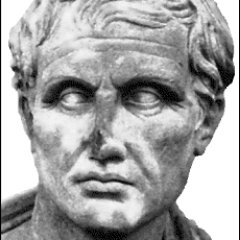
Jean-Jacques Rousseau – the original Woke
He invented it. Every premise of contemporary progressive ideology traces directly back to one man who had never met a "noble savage", never raised a child, and never lived according to a single principle he preached.
1. His foundational claim: man is naturally good and civilization corrupts. This sounds compassionate. It is the most dangerous idea in Western political thought. Because if man is naturally good, then every failure, every crime, every inequality is caused by the system – never by the individual.
Responsibility evaporates. The oppressor is always external. The victim is always pure. This is the complete architecture of Woke in one sentence, written in 1755.
2. The "Noble Savage" is Rousseau’s Form – his version of Plato’s ideal. The uncorrupted man, untouched by property, competition, and civilization, living in natural harmony. Rousseau had never met one. He invented him from an armchair in Paris, extrapolating from travel accounts of peoples he had never visited. The Noble Savage is not an anthropological observation. He is a political weapon – a club to beat civilization with, wielded by someone living comfortably inside it.
3. The "General Will" is the most dangerous concept in modern political philosophy. Not the actual expressed will of actual people – but the deeper will, the will people would have if they were "properly enlightened". Whoever claims to know it can do anything in its name. Robespierre knew it. Every revolutionary vanguard since has known it. Today’s progressive institutions know it – which is why they can override democratic majorities, suppress dissent, and compel speech, all while insisting they represent the people’s true interests. The General Will is the intellectual license for every tyranny that calls itself a liberation.
4. The chain from Rousseau to today is unbroken. Rousseau to Robespierre and the Terror. Robespierre to Marx, who secularized the General Will into historical necessity. Marx to every "liberation" movement that ended in a gulag. And today: replace civilization with white supremacy, replace the Noble Savage with the marginalized community, replace the General Will with lived experience – and you have the complete operating system of contemporary progressivism. The software is the same.
5. Voltaire, his contemporary and rival, saw him quite clearly: Rousseau made primitivism intellectually respectable. He gave the comfortable classes of every generation a way to signal virtue by denouncing the civilization that produced them, from inside it, without cost. The French Left Bank intellectual denouncing capitalism from a café. The Harvard professor deconstructing Western civilization from a tenured chair. The hedge fund billionaire funding the abolition of meritocracy. All of them are living in Rousseau’s armchair.
6. He sent all five of his illegitimate children to a Paris orphanage. Then wrote Émile – one of the most influential books on education in Western history, a detailed guide on how to raise a virtuous child in harmony with nature. He did not find this contradictory. This is not hypocrisy in the ordinary sense – this is obłuda (remember the obłuda of communism?👇🏻). The defining structural feature of the ideology he invented: the sermon is inversely proportional to the practice. The performance of virtue replaces the exercise of it. Naming the oppressor substitutes for personal accountability. Rousseau didn’t just invent Woke – he lived it, in every detail, before anyone had the word.
7. The original Woke was woke about a fiction he invented – and spent his life performing outrage about a civilization he depended on and never left. Two and a half centuries later, the performance is the same. The noble savages have been updated. The General Will has new names. The orphanages are metaphorical. But the man who sends his children away and then lectures everyone else on how to raise theirs – that man is everywhere.

Phil Cooke retweeted
Karl Marx – The Man.
You know him as the author of the Manifesto.
But behind the manifesto there was a man – an envious, deceitful and lazy one – constitutionally averse to productive work. The theory is just a result of that. It is the man, elevated into a system.
Do you recognize any of this in the socialists and communists around you? Read on.
1. His father Heinrich was a hardworking lawyer from Trier who wrote his son letters in the tone of a man watching a slow-motion disaster he cannot stop. Not angry – exhausted. "Is your heart in accord with your head, your talents?" he wrote in 1837. "Is that demon heavenly or Faustian? Will you ever be capable of truly human, domestic happiness?" The tone was like: "My heart often sinks when I think of you and your future." The despairing correspondence of a disciplined, hardworking man who cannot understand what is wrong with his brilliant, promising, and comprehensively useless son. A loving father watching his brilliant son consume money, accumulate debts, drink heavily as a student, produce poetry of remarkable mediocrity, and demonstrate a comprehensive inability to translate intelligence into anything useful. A father asking his clever son whether he is a visionary or a catastrophe. The answer turned out to be both. Heinrich died before seeing the full scope of the disappointment. He was spared the Manifesto.
2. He never worked. The foundational fact about the man who devoted his life to the theory of labor. For most of his adult life he was kept by Friedrich Engels – son of a factory owner, manager of a Manchester textile mill – who spent his days doing the precise capitalist management the theory condemned, so that Marx could theorize about it in comfort. Engels also paid the rent, covered the debts, funded the cigars, and at one point claimed paternity of Marx’s illegitimate child – born to the family’s unpaid servant – to protect his friend’s reputation. The servant was not paid. The child was not acknowledged. The theory of "liberation" was produced in conditions of domestic exploitation that would have embarrassed a Victorian mill owner. If you remember Rousseau you’ll notice a pattern here…
3. Helene Demuth – cooked, cleaned, raised the Marx children, and managed the household through decades of poverty that was chronic not because of capitalism but because Marx could not hold a job and would not try. Her specific working-class life was spent in unpaid service to the man theorizing about her liberation. He did not liberate her. He did not pay her. He fathered her child, denied it, and let Engels take the blame. The secret held until after both men were dead. Engels confessed on his deathbed.
4. The debts are almost comic. In one year at university he spent 700 talers – his father noted with incredulous precision that "the richest spend less than 500." Expelled from Belgium, France, and Prussia. Ended up in London, stateless, in damp apartments, pawning the family silver, writing to Engels for money with the regularity of a man who has made extracting funds from a friend into an art form. Several of his children died young in conditions produced by his inability to earn. Marx noted the deaths in letters and continued the manuscript.
5. The envy is the key to everything. A brilliantly clever man who felt the world had not given him his due – who watched others succeed and experienced their success as an offense requiring theoretical explanation. The result: the most sophisticated intellectual expression of resentment ever produced. A complete systematic account of why the successful are guilty, why their success is stolen, and why the man who has not succeeded is the true repository of value. A theory of envy with footnotes. Nietzsche called this ressentiment. He was describing the same type, from a different angle, at roughly the same time.
6. He died in 1883. Eleven people attended the funeral. Engels compared him to Darwin – generous, since Darwin spent twenty years accumulating evidence before publishing and Marx spent twenty years accumulating debt. His wife had died two years earlier, exhausted. His servant had spent a lifetime unpaid. His illegitimate son grew up unacknowledged. The Manifesto was by then on its way to inspiring experiments that would kill approximately a hundred million people.
7. The Manifesto was not written from the bottom. It was written by a clever man funded by a factory owner’s son, who had never done a day of proletarian labor, who exploited the people closest to him, whose father despaired of him, and whose considerable talents were deployed entirely in explaining why the world owed him more than it had given. Look around you. The envious intellectual who has never built anything but knows exactly what is wrong with everything others have built. The "man of the people" who cannot manage his own affairs. The revolutionary funded by the people he condemns. You have met this person. You may have voted for him.

From Plato to Bernie and AOC – A Brief History of Communism
Twenty-four centuries, one idea. It always starts the same way and always ends the same way.
1. Plato, 380 BC. The world is badly made, the wise should redesign it, and the rulers may lie to the people for their own good – he called it the noble lie. Property abolished among the guardians, the family abolished with it. Everything since is a version of it, with progressively worse writing and progressively higher body counts.
2. The millenarian sects. Property abolished, the chosen in charge, purification required – a thousand years before capitalism existed. The idea needs no economy to appear.
3. Rousseau, 1762. Man is good, institutions corrupt him, so institutions must be remade. The General Will – the collective desire of the people, which the correct leader can identify and implement regardless of what individual people actually want. The philosophical foundation of every subsequent revolution that murdered people in the name of their own liberation. Whoever refuses to obey shall be forced to be free. Rousseau personally abandoned all five of his children to the orphanage. He wrote extensively about the correct upbringing of children. This is a pattern.
4. Kant and Hegel. Kant splits the world as we see it from the world as it is. Hegel adds that history is going somewhere. Together they supply the phrase that ends every argument: the wrong side of history.
5. 1789, French Revolution. The idea gets a country. Virtue is the goal, and virtue turns out to need enforcement. Four years from liberation to the guillotine and the Terror.
6. Marx, 1848. The same idea in a scientific costume – now you weren’t arguing for it, you were reading the future. Written by a man who had never worked in a factory, funded by a man who owned one.
7. Lenin, 1917. The vanguard party: a small group of professionals who know what the workers need better than the workers do. Delivered to Russia in a sealed train by a German general who wanted Russia out of the war. He got that, and more.
8. Stalin, Mao, Pol Pot. What it looks like when it wins. Terror as government, and a lie so complete that people lost the ability to tell what they thought from what they had to say. Tens of millions dead in China, a quarter of the population in Cambodia. Not a deviation. The same premise, applied with enthusiasm. Collectivization, the gulag, the Great Leap, the killing fields – roughly a hundred million dead in one century. Each time preceded by intellectuals explaining why this time would be different.
9. The Frankfurt School. The workers in the West refused to revolt, so the explanation changed: the problem is cultural, and Western civilization itself is the oppressor and has to be deconstructed. Everything to be criticized, nothing to be built.
10. Gramsci, Spinelli, Dutschke and 1968. Don’t storm the parliament – get a job in the editorial office. Power in the West rests on consent, and consent is made in schools and newspapers – so take those instead. The long march through the institutions. The generation that failed in the streets became the professors, editors and judges. It worked, which is why elections now change the government but not the direction.
1989 – the system collapses, the archives opened, and in the Western universities almost nobody changed their mind. A faith, not a theory.
11. Bernie and AOC. Same idea, new clothes, and nobody left who has read the source material. Free everything, paid for by the billionaires. Honeymooned in the Soviet Union in 1988 – three years before it collapsed – and came back impressed. Three houses. Net worth in the millions of dollars. Democratic socialists. The reasoning is Plato’s, the aesthetic is TikTok.
From Plato to Bernie and AOC: Even communism isn’t immune to decay…
What follows
12. The lie is not a side effect. It is the system.
13. Where truth is handed out instead of found, anyone who insists on finding it is in the way.
14. It survives because it protects positions, not beliefs. Ask who is best for the job and every protected position is at risk. Ask who belongs in the room and the same people stay in it for life.
15. The managerial class is the nomenklatura. Same selection, same script, same immunity to results. Only the letterhead changed.
16. Where everything needs permission, permission becomes the currency – and whoever knows the apparatus rules, whoever wins the election.
17. Silence is not ignorance. It is knowledge plus a calculation: speaking costs everything, silence is free.
18. Underneath, it runs on two fuels: envy and fear. Envy supplies the motive – someone else has what you don’t, and the system promises to take it. Fear supplies the compliance – everyone can see what happens to those who say the wrong thing. Neither has anything to do with justice, and neither ever built anything.
19. The idea never learns, because the error is not in the implementation. It is in the premise: that the "wise" can plan the lives of the many better than the many can plan their own.
20. The answer is not a better plan for society. It is refusing to let anyone hold the pen.
Reality is not negotiable. Say so out loud, build things that work, and hand them to your children.
Tell the truth. Have courage. And build.


Phil Cooke retweeted

Yasmine Mohammed: “We talk about colonialism like it only came in one language and one skin color.
But North Africa didn’t magically become Arab.
Iraq didn’t magically become Muslim.
Afghanistan didn’t magically stop being Buddhist.
Islam spread through empire, conquest, and forced cultural erasure just like every other empire.”


Phil Cooke retweeted

Remarkable that putting men in women's sports is still the hill these people are willing to die on.

Phil Cooke retweeted

In 1968, teenage Red Guards were beating their professors to death with clubs in Beijing courtyards.
Meanwhile, Jean-Paul Sartre sat in Paris calling Mao's Cultural Revolution a model of revolutionary democracy. The most celebrated intellectual in France looked at a country burning its own libraries and saw liberation. He sold the Maoist newspaper La Cause du Peuple on French street corners himself, holding it aloft like a sacrament.
Between 1966 and 1976, the Cultural Revolution killed between 500,000 and two million people. Schools shut down across the entire country. Students dragged teachers onto stages, hung placards around their necks, forced them to kneel on broken glass, then murdered them. The historian Bian Zhongyun, vice-principal of a girls' school in Beijing, died on August 5, 1966, beaten by her own students with nail-studded clubs.
Sartre swooned at this, calling it the people governing themselves. Why did a man this intelligent get it this wrong? Sartre believed knowledge served power, that truth was whatever the revolution required, that the individual existed to be dissolved into the collective will.
So when Mao abolished the distinction between teacher and student, between expert and mob, Sartre cheered. He had spent decades arguing that bourgeois reason was a class weapon. Here was a regime taking him at his word and clubbing the reasoners to death. This is what economic illiteracy gets you.
Mises had already explained the calculation problem in 1920. Hayek explained dispersed knowledge in 1945. Sartre had access to both and chose the dunce cap of the collective instead, then handed out its propaganda on the Rue de Rennes.
He died in 1980, mourned by 50,000 followers, never having retracted a word about Mao. The professors of Beijing got no such funeral, only a philosopher in Paris explaining that their murder was freedom.
