






NoFap retweeted

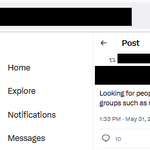
Man watches porn and masturbates in first class on United flight out of California - as woman speaks out trib.al/n1DhkTG

NoFap retweeted
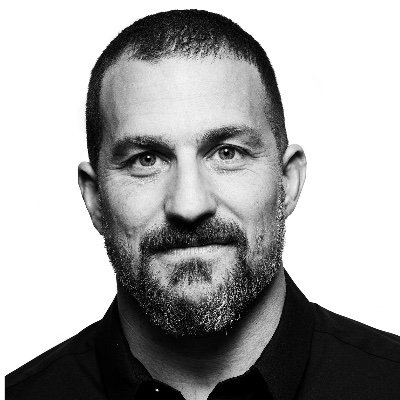
For many addicts, they relapse b/c things in life are going poorly. But just as many relapse when things are going well. Correction: *because* they’re going well.
Dr Anna Lembke MD addiction expert @Stanford explains

You're most likely to relapse when things go well:
For some people the trigger is loss and stress. For others it's success.
Usually it isn't the reward itself - it's the removal of the hypervigilant state required to keep their use in check.
Seeing that you're most vulnerable when things are going well is the valuable insight. That's when you put barriers in place or go to more meetings.
Dr. Anna Lembke on @hubermanlab
NoFap retweeted

Eight hours of sleep and a daily walk outside will solve as many of your problems as any guru or life coach.
Another issue we’ve seen is the claim that “porn addiction” and “sex addiction” are the same concepts. The issues may at times overlap, but we believe they are distinct categories.
Problematic pornography use should be classified separately from compulsive sexual behavior involving partnered sex. In our observations, many people struggling with compulsive pornography use choose pornography over opportunities for partnered sex, suggesting that pornography use is not simply interchangeable with partnered sexual activity.
@WHOICD11, for example, specifies gambling disorder as predominantly online or predominantly offline. Similarly, any future classification by @WHO or @APApsychiatric addressing problematic pornography use should distinguish compulsive pornography consumption from compulsive partnered sexual behavior.
WHY IS THERE HARDLY ANY RATIONAL DISCUSSION ABOUT THE SCIENCE OF PORN?
Unfortunately, the porn as a behavioral addiction debate is largely dominated by activists with strong personal views on pornography. Many rational, level-headed professionals have left the field or steer clear of it.
On one side, anti-porn moralizing activism—for example, bringing broader culture-war rhetoric into addiction arguments. On the other, industry and aligned academics deny science highlighting porn’s potential adverse effects, instead attributing potential problems to non-porn causes—blaming anything but porn.
Porn addicts become collateral damage in a culture war they never asked for. There is a substantial body of scientific research on the potential effects of pornography overuse, but far fewer scientists are willing to publicly discuss their work and risk career retaliation from activists.
It often feels like there are rarely any nuanced takes about porn on X (formerly Twitter). Many of the clinicians and scientists we’ve spoken to either aren’t on X or rarely post. Most of what we see instead is anti-porn activism or pro-porn activism. If anyone can point us toward some more balanced accounts to follow, we’d appreciate it.
Some people portray themselves as balanced, but aren’t really in the middle of the debate—they’re actually far to one side of it. And to be clear, it isn’t balanced to insist that every porn user who experiences problems simply has moral objections to otherwise healthy porn use, or that the presence of a co-occurring issue means pornography itself cannot be a rewarding behavior similar to gambling, which can be abused and potentially contribute to adverse effects for some users. Likewise, not all pornography use qualifies as problematic from a mental health standpoint.
Our team feels strongly that we do not want to publish AI-generated content.
Why? Because we don’t want to share the "average" of the knowledge already available on the topic. We’re in touch with world-class researchers and clinicians, and have spent years building substantial knowledge about problematic porn use and recovery. In our view, AI-generated articles would probably be lower-quality and less accurate than what we can write ourselves.
We have the knowledge to publish information that is among the top 1% in the field for accuracy and helpfulness.
We may use AI for things like grammar checks, but we do not use it to generate our website content. We plan to formalize this soon with an AI policy page, similar to a privacy policy.
We’ve seen a growing number of websites and apps publish what amounts to “AI slop” in the addiction recovery field, and we think that trend is harmful. It can flood an already complicated subject with repetitive, shallow, and inaccurate information while making genuinely useful resources harder to find.
We already use AI-assisted tools to help moderate user-generated content—for example, to identify potentially rule-breaking posts for review—and we intend to continue developing those tools as we’re able.
But the humans behind NoFap intend to stick with human-written content for the foreseeable future.
Quitting porn—or even attempting to—is something to feel good about, not ashamed of.
Trying to better yourself is something to feel great about. Working to overcome a behavioral addiction is a tremendous accomplishment.
And often, those trying to shame you are hypocrites—mocking you for confronting an addiction they may be unwilling to confront in themselves.


What is the financial cost of porn addiction? 💰🔽
If you spent 4 hours per day watching porn for 60 years, those 87,600 hours could represent:
$15/hour: $1,314,000
$25/hour: $2,190,000
$35/hour: $3,066,000
$75/hour: $6,570,000
If that money were instead earned and invested each year with a hypothetical 10% annual return, it could grow to between $66,462,479 and $332,312,395 over those 60 years. 🤔