

EIC: @IBS_Maastricht Eds: @nicolascenac @AndreaShin_GI DReed @NehaSantucciMD AMalcolm KSmithEdwards @Pierfra_Visaggi @ThisIsButt KElfers WMorales @Rajan___Singh
- Tweets1.9K
- Following758
- Followers2.7K
- Likes1K
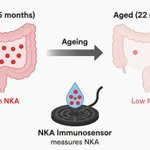





ALT Key Points A sensitive and selective electrochemical immunosensor was developed for the quantification of Neurokinin A (NKA) in colonic tissue and fecal samples. Basal and mechanically evoked NKA release are significantly reduced in the aged mouse colon and are associated with lower colonic NKA content. Ondansetron inhibits mechanically stimulated NKA release in young but not aged colon, indicating age-related alterations in serotonergic regulation of NKA signaling. Fecal NKA levels decline with age and mirror reductions in colonic NKA content and release, supporting further investigation of fecal NKA as a noninvasive biomarker of age-related bowel dysfunction.
ALT Key Points A sensitive and selective electrochemical immunosensor was developed for the quantification of Neurokinin A (NKA) in colonic tissue and fecal samples. Basal and mechanically evoked NKA release are significantly reduced in the aged mouse colon and are associated with lower colonic NKA content. Ondansetron inhibits mechanically stimulated NKA release in young but not aged colon, indicating age-related alterations in serotonergic regulation of NKA signaling. Fecal NKA levels decline with age and mirror reductions in colonic NKA content and release, supporting further investigation of fecal NKA as a noninvasive biomarker of age-related bowel dysfunction.

ALT Key Points Qualitative analysis of 7328 social media and e-forum posts captured candid, real-world perspectives from patients with IBS-C, revealing variability in perceived medication efficacy, treatment-related burden, intentional non-adherence, and barriers to adherence. NLP and AI methods demonstrated that the large language model reliably classified patient posts, achieving performance comparable to human annotators and supporting its use for larger-scale analyses of patient experiences. Given the complexity of patients' treatment experiences, these findings underscore the importance of shared decision-making and proactive management of treatment barriers to support personalized care and improved patient outcomes.

ALT Key Points Abdominal pain is recognized as one of the major symptoms in patients with FD or IBS, with limited safe and effective treatment options. Home-based taVNS with a special set of stimulation parameters via a wearable device was found to significantly improve abdominal pain and quality of life in both patients with functional dyspepsia and patients with irritable bowel syndrome. The ameliorating effect of taVNS was possibly attributed to the enhancement of vagal activity.

ALT Key Points Muscularis EGR1 expression is reduced in diabetic gastroparesis and is enriched in macrophages, particularly M2 macrophages. EGR1 deficiency disrupts TXN2-dependent mitochondrial oxidative phosphorylation, impairs M2 macrophage polarization, and enhances CCL5-mediated signaling associated with ICC injury. Local pyloric EGR1 restoration increases M2 macrophage and ICC marker expression and improves gastric emptying and pyloric slow-wave regularity without significantly improving glucose tolerance.
ALT Key Points Abdominal pain is recognized as one of the major symptoms in patients with FD or IBS, with limited safe and effective treatment options. Home-based taVNS with a special set of stimulation parameters via a wearable device was found to significantly improve abdominal pain and quality of life in both patients with functional dyspepsia and patients with irritable bowel syndrome. The ameliorating effect of taVNS was possibly attributed to the enhancement of vagal activity.
ALT Key Points Muscularis EGR1 expression is reduced in diabetic gastroparesis and is enriched in macrophages, particularly M2 macrophages. EGR1 deficiency disrupts TXN2-dependent mitochondrial oxidative phosphorylation, impairs M2 macrophage polarization, and enhances CCL5-mediated signaling associated with ICC injury. Local pyloric EGR1 restoration increases M2 macrophage and ICC marker expression and improves gastric emptying and pyloric slow-wave regularity without significantly improving glucose tolerance.


ALT 🚨The Rome Diagnostic Framework: Reflections on the Past and Perspectives for the Future‼️ Rome V represents a major milestone in advancing our understanding and classification of disorders of gut–brain interaction #DGBIs👏 🎯Where should the field go next? ✅Neurogastroenterology & Motility invites original research articles, reviews, and letters to the Editor that critically examine the Rome diagnostic framework and shape its future💡 Submission deadline: September 30, 2027 🔗 Learn more: https://onlinelibrary.wiley.com/page/journal/13652982/call-for-papers/si-2026-000907 Join us in advancing the conversation—from symptoms to signatures, from diagnostic labels to disease mechanisms, and from classification toward precision care.
ALT 🚨The Rome Diagnostic Framework: Reflections on the Past and Perspectives for the Future‼️ Rome V represents a major milestone in advancing our understanding and classification of disorders of gut–brain interaction #DGBIs👏 🎯Where should the field go next? ✅Neurogastroenterology & Motility invites original research articles, reviews, and letters to the Editor that critically examine the Rome diagnostic framework and shape its future💡 Submission deadline: September 30, 2027 🔗 Learn more: https://onlinelibrary.wiley.com/page/journal/13652982/call-for-papers/si-2026-000907 Join us in advancing the conversation—from symptoms to signatures, from diagnostic labels to disease mechanisms, and from classification toward precision care.
ALT 🚨The Rome Diagnostic Framework: Reflections on the Past and Perspectives for the Future‼️ Rome V represents a major milestone in advancing our understanding and classification of disorders of gut–brain interaction #DGBIs👏 🎯Where should the field go next? ✅Neurogastroenterology & Motility invites original research articles, reviews, and letters to the Editor that critically examine the Rome diagnostic framework and shape its future💡 Submission deadline: September 30, 2027 🔗 Learn more: https://onlinelibrary.wiley.com/page/journal/13652982/call-for-papers/si-2026-000907 Join us in advancing the conversation—from symptoms to signatures, from diagnostic labels to disease mechanisms, and from classification toward precision care.

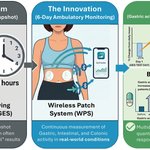
ALT Keypoints Diagnostic Limitation of gastric scintigraphy revealed: Current diagnostic testing for gastroparesis provides only a static snapshot and fails to capture the day-to-day variability of gastric function. The “Test Day” Effect: Multiday wireless monitoring revealed that gastric myoelectrical activity is significantly suppressed on the day of scintigraphy compared to subsequent days. Therapeutic Monitoring: Ambulatory monitoring successfully quantified objective physiologic improvements following treatment with anti-emetics, offering a novel biomarker for treatment response.


ALT The Auckland Classification v1.0, derived by international consensus, presents a structured framework for body surface gastric mapping-defined patient phenotypes. This classification provides a foundation for research and a standardized pathway for integrating BSGM into clinical care.
ALT The Auckland Classification v1.0, derived by international consensus, presents a structured framework for body surface gastric mapping-defined patient phenotypes. This classification provides a foundation for research and a standardized pathway for integrating BSGM into clinical care.