
The new firewall for the modern Internet. For help, check out https://xitter.cf/t.co/GYMNQJdvOT.
Joined May 2019
- Tweets257
- Following2
- Followers11.5K
- Likes12
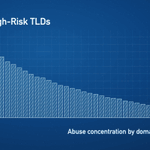




Attackers heavily favor certain domain extensions, like .top or .icu, for phishing sites, malware delivery and command and control (C2) servers.
Low prices and easy bulk registration let attackers stock up on disposable domains, often with little screening for brand impersonation or other signs of abuse.
Today, we’re introducing a security heuristic that automatically blocks domains with high-risk extensions from the very first DNS request.
We focus on extensions where an unusually high proportion of domains are used for abuse. We update the list as registration patterns change and make exceptions for known legitimate sites.
Block High-Risk TLDs now in the Security tab.
Follow @NextDNS for more Security Month releases.

In Interisle’s May–July 2026 study, .icu ranked first for reported phishing domains per 10,000 domains.
cybercrimeinfocenter.org/phi…
ICANN found that low prices and easy bulk registration were both associated with phishing abuse.
icann.org/en/system/files/fi…
A phishing page on a decentralized file-sharing network like IPFS can be virtually impossible to take down.
Public gateways act as proxies for the decentralized network. When you click an attacker’s link, the page loads in your browser like any other webpage.
🚨 Threat reports from Cisco Talos and Netcraft in the thread ↓
Today, we’re introducing a security heuristic that automatically blocks more than 650 gateways from the very first DNS request.
Block Decentralized Web Gateways now in the Security tab.
Follow @NextDNS for more Security Month releases.

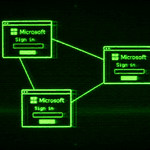
Cisco Talos documented a fake DocuSign PDF that led victims to a Microsoft sign-in page hosted on IPFS. The page sent their credentials to the attackers.
blog.talosintelligence.com/i…
Netcraft explains why takedowns are difficult. The same phishing page can reappear on IPFS under the same content identifier.
netcraft.com/blog/as-shipyar…

🚨 Yesterday, a major supply-chain attack used Optimizely to deliver malware through websites belonging to 178 organizations — including the BBC, CNN, Zoom and GitLab.
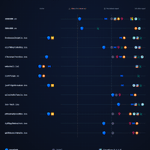
We conducted a forensic analysis of historical DNS telemetry and detection records to compare NextDNS with other security providers. The timeline below shows the earliest recorded detections, domain by domain.
NextDNS was far ahead of most providers on both coverage and early detection, by a margin that surprised even us. Our security heuristics and other advanced security features blocked domains used for malware delivery, payment data theft and iOS exploits.
Other providers were often hours or even days behind. Many still missed domains when we checked.
And now, back to our regularly scheduled Security Month programming.

Attackers use self-signed certificates to quickly set up encrypted command and control (C2) communications without exposing their domains in public Certificate Transparency logs. Browser warnings do not protect these connections: malware communicates directly and can simply trust its own certificates.
🚨 CISA/NSA malware analysis and @Unit42_Intel research in the thread ↓
Today, we are expanding our targeted attack surface reduction with a new security heuristic that blocks domains with untrusted certificates.
It recognizes legitimate private and previously trusted certificate authorities, and does not block domains simply because a certificate has expired.
Block Untrusted Certificates now in the Security tab.
Follow @NextDNS for more security releases in the coming days.

CISA/NSA malware analysis and independent threat reports:
🚨 CISA / NSA: malware generating its own self-signed certificates for encrypted communications.
media.defense.gov/2025/Dec/0…
🚨 @Unit42_Intel: why browser warnings do not help — “HTTPS C2 traffic for malware does not involve a web browser.”
unit42.paloaltonetworks.com/…
🚨 Bitdefender: malware deliberately disabling TLS certificate verification, allowing attackers to use arbitrary certificates.
businessinsights.bitdefender…
Attackers are increasingly abusing legitimate tunneling services for phishing, malware delivery, command and control (C2) and data exfiltration.
Services like ngrok and Cloudflare Tunnel let attackers hide their server IP addresses and quickly rotate public endpoints without changing the underlying infrastructure.
🚨 FBI advisory and independent threat reports in the thread ↓
Today, we are introducing a new security heuristic that automatically blocks tunneling endpoints across more than 100 services from the very first DNS request. This targeted attack surface reduction leaves provider websites and APIs accessible, and you can manually allow the endpoints you use.
Block Tunneling Endpoints now in the Security tab.
Follow @NextDNS for more security releases in the coming days.

FBI advisory and independent threat reports:
🚨 FBI / CISA: Akira ransomware operators using ngrok for command and control and data exfiltration.
fbi.gov/file-repository/cybe…
🚨 Recorded Future: Russian state-sponsored attackers using Cloudflare Tunnels to hide malware delivery infrastructure.
recordedfuture.com/research/…
🚨 Proofpoint: attackers using Cloudflare Tunnels to deliver remote access trojans.
proofpoint.com/us/blog/threa…
One in ten newly registered domains is algorithmically generated — tens of thousands each day. Malware, scams and malvertising campaigns use these domains to evade detection and blocking.
Today, we are introducing another new security heuristic — Algorithmically Generated Domains.
By combining advanced lexical and domain similarity analysis with frontier large language models, we can identify and block random-looking character strings, generated word combinations and numbered families — including names that may look ordinary on their own.
This goes far beyond limited lists of known DGA domains and basic entropy checks that attackers can deliberately evade.
Block Algorithmically Generated Domains now in the Security tab.
Follow @NextDNS for more security releases in the coming days.
Attackers have increasingly turned to free hosting platforms to spin up phishing sites in seconds and at zero cost — no domain name to register, no DNS records to configure and no infrastructure to manage.
These platforms also let anyone publish under a free domain name of their choice. That openness has created a new, actively exploited attack surface.
Today, we are introducing a new security heuristic to block those free hosting domains automatically across more than 200 platforms.
Once you turn it on, NextDNS blocks all matching domains by default from the very first DNS request. We monitor DNS activity to identify sites for review and make exceptions for legitimate sites.
Block Free Hosting Domains now in the Security tab.
Follow @NextDNS for more Security Month releases in the coming days.
Introducing Newly Active Domains (NAD) — a security heuristic few providers offer, and one that’s hard to get right.
NextDNS’s massive worldwide user base provides a baseline of tens of millions of domains with a recent history of activity. NAD lets those through and blocks the rest — even domains registered years ago.
And unlike traditional approaches that let the first visitors through before a domain ends up on some blocklist, NextDNS blocks from the very first DNS request.
Enable Block Newly Active Domains in the Security tab.
Stay put for more Security Month updates. Follow @NextDNS for every release.

Today, NextDNS is completely neutralizing the most common type of phishing attack: deceptive domain names.
By combining extensive early domain discovery, advanced multilingual lexical analysis and frontier large language models, we identify and block brand impersonation (including combosquatting, typosquatting and IDN homographs) and other phishing lures. Our zero-hour protection works even before a phishing site goes live.
Now included in AI-Driven Threat Detection. Enable it in the Security tab if you haven’t already.
Stay put for more Security Month updates. Follow @NextDNS for every release.

Buckle up for our biggest wave of security upgrades ever — NextDNS Security Month starts tomorrow.
We’ll be rolling out 11 new security features and a radical advance in AI-Driven Threat Detection — built for attack surface reduction and zero-hour protection.
More to come all November. Follow @NextDNS for every release.

New feature: Block Rotating Ad Domains
Some ad services rapidly cycle through new domains to evade blocklists. NextDNS recognizes their infrastructure and can block new domains instantly — before popular blocklists catch up.
Enable it now in the Privacy tab.
🤖 Made with AI

ALT Seven random-looking advertising domains arranged like a spinning reel on a black background. kistopctxrvar.online is sharp in the center, while the surrounding domains blur and recede to suggest rapid rotation.
NextDNS retweeted

You asked for more control. We heard you.
Custom DNS is now officially supported on iOS and macOS, so now you can specify your own DNS servers, including services like NextDNS or your own recursive DNS.
With this release, custom DNS is now available on all platforms.
1/2
