

very cool guy doing (mostly) inpatient/vascular #Neurology @UA_Neurology (rumored). passionate re:edu/medtraining/🤣/8bit/+! tweets are mine. he/him
Tucson, AZ
Joined February 2022
- Tweets4.6K
- Following324
- Followers473
- Likes13.1K





Pinned Tweet
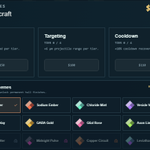
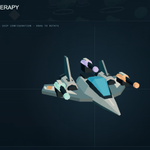
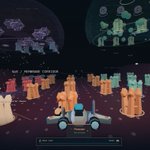
1/7🧵it's a brand new educational game! fire up those neurotransmitters for...
SYNAPSEBLASTER
micahetter.me/SynapseBlaster
fly around a synapse and fight seizures using antiseizure medications! for the combo pharmacology flight sim educational experience you never knew you needed!

Micah Etter MD retweeted

More than a decade ago, the trend led by top medical schools was 2-tier (pass/fail) grading for preclinical courses. The story of the last decade is pass/fail for core clinical clerkships (now at 12 of the top 25 schools). As a result, residency programs have more difficulty differentiating students from these schools, and students are increasingly driven to pursue extracurriculars (chiefly research/publications) and max their Step 2 score to distinguish themselves.

Micah Etter MD retweeted

Gene editing to treat disease in adults is now real.


In a phase 3, randomized trial of lonvo-z, an in vivo gene-editing therapy, patients with hereditary angioedema who received the drug had a significantly lower attack rate than those who received placebo. Full HAELO trial results and Research Summary: nej.md/4gaSsbi

ALT This image contains an excerpt from the Research Summary "In Vivo CRISPR Gene Editing in Hereditary Angioedema” published in the New England Journal of Medicine. It shows a comparison between Lonvo-z and Placebo. An illustration depicts an individual experiencing swelling from hereditary angioedema. The study includes 80 adults with a median age of 42 (women: 69%; men: 31%). A prompt to read the full Research Summary at NEJM.org sits at the bottom.
Micah Etter MD retweeted

This is a major trial which will have a big impact on clinical practice. 554 patients with an indication for RRT were randomized to CVVHD vs intermittent HD. Trial stopped early due to higher 90-day mortaslity in the IHD group.
In #neurocriticalcare we always avaid IHD in patients with brain edema, shift or ICP because of the fluid shifts and hypotension. This RCT will further tip the scales toward CVVHD in borderline pts where either approach might seem reasonable.
Or is this the beginning of the end for IHD in the ICU all together?
Intermittent or Continuous Renal-Replacement Therapy in Acute Kidney Injury | @NEJM
nejm.org/doi/full/10.1056/NE…

Micah Etter MD retweeted
This review indicates that there is no clear, well-supported recommendation to administer DDAVP to patients with antiplatelet-associated #ICH. Anfd there was also a soft signal towards more thromboembolic events.
link.springer.com/article/10…

Micah Etter MD retweeted

Long-awaited results of CREST-H are out. @MayoClinicNeuro Revascularization in Asymptomatic Carotid Artery Stenosis With Hemodynamic Impairment jamanetwork.com/journals/jam…

Micah Etter MD retweeted
Okay, this is pretty cool. solvely.ai/mini-games/info/0…

Micah Etter MD retweeted
And here's another meta-analysis yet again showing benefit (mRS 0-2) when giving TPA/TNK in the 4.5-24 hour window based on penumbral imaging.
When is this going to become mainstream?
Thrombolysis in the Delayed Treatment Window for Acute Ischemic Stroke: Updated Systematic Review and Meta-Analysis | @StrokeAHA_ASA
ahajournals.org/doi/abs/10.1…

Micah Etter MD retweeted
An updated look at average physician compensation and workload
This visualization includes 89 (sub)specialties with adequate data (compared to 53 when I last posted in March). Source: @MaritHealth's crowdsourced dataset on specialties with at least 60 respondents today (contribute yours: marithealth.com)

Micah Etter MD retweeted

A terrific paper in @JAHA_AHA using real data to subtype AIS using ISPS25. There are real world gaps in our approach to AIS. A good reason for not finding a potential mechanism is simply not looking enough. @GhilSchwarz #stroke
ahajournals.org/doi/10.1161/…
ahajournals.org/doi/10.1161/…

Micah Etter MD retweeted

Meet NDEC faculty educator Michael Kentris, DO (@drkentris) — founder of theneurotransmitters.com and The Neurotransmitters podcast.

Micah Etter MD retweeted

Nearly 2 million pediatric concussions occur in the US each year. In the first 24 to 72 hours after a potential head injury, a comprehensive concussion assessment can help identify important signs and symptoms in children and adolescents.
Video guides on how to perform comprehensive concussion evaluations can be found in the Rational Clinical Examination Review “Does This Child Have a Concussion,” published in JAMA. The videos highlight a step-by-step approach of how to evaluate children and adolescents for concussion, including screening for cervical spine injury, checking for neck pain or limited neck movement, assessing gait and balance, and examining eye movements using the Vestibular/Oculomotor Screening Tool.
📌 Learn more: ja.ma/46WouCk
Micah Etter MD retweeted

Equal Time for Nerve Roots?
Bell discovered motor role of ventral nerve roots in 1811 (Magendie followed w/sensory dorsal roots in 1822)
Bell's beautiful osteology of the vertebral column doesn't show spinal nerve roots which are the focus of his 1825 engraving
Great triptych!


Micah Etter MD retweeted
If you’re at all interested in how AI will fit into healthcare once it matures, you really should read this entire thread. Phase I is a success.

Our clinical trial of AMIE, a patient-facing AI system, was just published in The Lancet.
I want to explain what *I* think this study ACTUALLY means.
It's about a fundamental question: how do we know that clinical AI works?
🧵⬇️
xitter.cf/Google/status/21083245…
Micah Etter MD retweeted
"Evidence on exercise for osteoarthritis remains largely inconclusive, suggesting negligible or short-lasting small effects comparable to, or less effective than, other treatments."
rmdopen.bmj.com/content/12/1…

Micah Etter MD retweeted

What resonates most with me about the exciting new Parkinson’s drug solengepras (CVN424) is that it represents a genuinely novel mechanism of action and a potential new addition to our treatment armamentarium. Rather than acting directly on dopamine, this once-daily medication blocks the GPR6 receptor in the brain’s indirect motor pathway, essentially easing the foot off the brain’s brake on movement. In the Phase 3 ARISE trial involving 341 people with Parkinson’s disease, the 150 mg dose reduced daily OFF time by 1.56 hours compared with 0.95 hours on placebo, a net benefit of approximately ~30-40 minutes per day, while also increasing good ON time without troublesome dyskinesia. These are modest but meaningful improvements, particularly for patients struggling with unpredictable motor fluctuations. The study also reported improvements in daily functioning, daytime sleepiness, and quality of life, although insomnia was more common (6.2% versus 0.9% with placebo). What excites me is not that this drug is a game changer for everyone, but that we are finally expanding beyond traditional dopamine-based approaches. Every additional treatment option matters, and even 30–40 minutes of better movement each day can make a difference for some people living with Parkinson’s. One important clarification: solengepras has not yet received FDA approval. These positive Phase 3 results are an encouraging step toward a potential regulatory submission, and we should celebrate the progress while awaiting full data and FDA review.

Micah Etter MD retweeted

What if,
for any scientific claim,
you can search 100M+ papers to find the strongest evidence for and against it
⚡️in 1 second?
That’s now possible with Evidence API! 🚀
paperclip.gxl.ai/evidence-ap…
For example, does drinking coffee reduce diabetes risk?
Micah Etter MD retweeted
Meta-analysis of almost 5K patients validating the fact that treating penumbral tissue on CTP with IV lytic therapy between 4.5-24 hours improves outcome — despite a small increase in ICH risk
@GreenJournal
neurology.org/doi/10.1212/CP…
Micah Etter MD retweeted

Who could have predicted that a new treatment in psychiatry overpromised and underdelivered?
Some were telling me that withholding SAINT TMS was unethical. While I am a fan of short and time-limited interventions, we should learn to moderate our enthusiasm.

SAINT (SNT) TMS once promised outsized recovery rates for refractory depression, but two new trials from independent centers bring it back to earth:
psych-partners.com/a-setback…
Thanks for the find @RecoveryDoctor

Micah Etter MD retweeted

There is a narrative in neurology that success means subspecializing, pursuing multiple fellowships, publishing, and working primarily in academic medicine.
But for many, community neurology may be where they can make the greatest impact.
Across Canada, patients are waiting months and in some cases years to see a neurologist.
Community neurologists are caring for the full spectrum of neurological disease: stroke, epilepsy, headache, movement disorders, cognitive disorders, sleep, and neuromuscular conditions etc. It is intellectually challenging, clinically rewarding, and desperately needed.
Fellowship training can be incredibly valuable. It develops expertise, builds confidence, and is essential for some career paths. But it is not the only route to becoming an outstanding neurologist, nor is it necessary for every community practice.
One of the greatest strengths of community neurology is scope of care. The same neurologist can have the skillset be able to manage a patient’s stroke, treat their chronic headaches, and, if they later develop post-stroke epilepsy, continue to care for them rather than fragmenting their care across multiple subspecialists. Patients benefit when their neurologist understands the whole clinical picture, not just one narrow specialization.
Excellent clinical judgment comes from seeing lots of patients, taking ownership of decisions, and continually learning throughout your career.
Community neurologists also have the opportunity to build innovative programs, collaborate closely with primary care and emergency medicine, teach learners, and improve access to care where it is needed most.
As we think about the future of neurology, we should celebrate all career paths not just academic ones. We need outstanding clinician-educators, clinician-scientists, and outstanding community neurologists.
For residents deciding on their future: choose the path that aligns with your interests and where you believe you can have the greatest impact not the one you think you’re “supposed” to choose or what you see others do.
Our patients need more neurologists and neurologists seeing a increased volume of patients. They especially need more neurologists in the community.
Micah Etter MD retweeted
As an editor or reviewer looking at technical medical/scientific writing, I’m personally okay with undisclosed AI writing. What matters is the authors take responsibility for the content, and it’s well written. This journal (JACC) no longer requires disclosure, a departure from ICMJE guidance. jacc.org/doi/10.1016/j.jacc.…
