

President of the Aristotle Foundation for Public Policy
Joined January 2022
- Tweets3.7K
- Following1.2K
- Followers2.3K
- Likes1.7K





Mark Milke retweeted

Africa was not colonized equally.
Britain was building while the others looted.
There were two kinds of colonization in Africa: British colonization, and then everyone else managing slave camps with a flag.
The French, the Belgians, the Portuguese, the Spanish, the Germans, and the Italians did not come to build nations. They came to take rubber, gold, ivory, and bodies, and to leave a hole in the ground.
Britain came to extend an empire, and an empire, to survive, needs order. It needs roads, courts, and schools. It needs people who can read, write, keep accounts, and run a railway. So Britain built.
In British colonies such as Kenya, Ghana, Nigeria, Zimbabwe, Zambia, and Uganda, the British built a school system: government schools, teacher training colleges, and universities. Examples include Makerere in Uganda, the University of Ghana at Legon, the University of Ibadan in Nigeria, and the University of Zimbabwe.
Education was not an accident. It was policy. The British needed clerks, teachers, nurses, engineers, soldiers, and administrators, so they educated Africans to a standard.
In French, Belgian, and Portuguese colonies, education was deliberately kept low. Belgium educated almost no one in Congo beyond primary school.
At independence in 1960, Congo had fewer than 30 university graduates in the whole country.
Thirty, for a country the size of Western Europe. Portugal did the same in Angola and Mozambique: keep them illiterate, keep them obedient.
British colonies inherited functional infrastructure: railways that connected the interior to the port and to each other, tar roads between towns, post offices, telegraphs, water systems, electricity grids, and courts that kept records.
In Kenya, the Uganda Railway became the spine of East Africa. In Ghana, the rail and harbour system at Takoradi and Tema worked. In Zimbabwe, Rhodesia Railways was one of the best-run systems on the continent.
In French and Belgian colonies, the infrastructure was a funnel: one road from the mine to the port, one railway from the plantation to the port, and nothing for the people.
When the Belgians left Congo, the 85,000 km of tar roads they had built for extraction were left to rot because there was no local class trained to maintain them. They were not built for a nation. They were built for a robbery.
British colonies left behind economies that could function: a civil service, a central bank, a legal system based on common law in which contracts meant something, a free press tradition, a parliamentary tradition, land registries, and property rights.
That is why, after independence, Ghana, Kenya, and Nigeria, despite all their problems, had educated elites, newspapers, lawyers, doctors, and a middle class on day one.
Compare that to Congo, Angola, Mozambique, Guinea, Chad, and the Central African Republic. At independence, they had no civil service, lawyers, doctors, or engineers, because the colonizer never intended them to govern themselves. He intended them to remain a camp.
Britain injected a civilizational upgrade.
It brought the English language, which connected those colonies to global trade, science, and law. It brought common law, which protected property and limited the chief.
It brought parliamentary democracy: flawed, but a model. It brought the Protestant work ethic, schools, discipline, and bureaucracy. It brought the idea of the nation-state: not just a tribe or a king's farm, but a country with borders, citizenship, and institutions.
France gave assimilation on paper but kept Africans as subjects. Belgium gave paternalism, treating Africans like children forever. Portugal gave forced labour until 1961. Germany gave genocide in Namibia. Italy gave poison gas in Ethiopia.
Britain gave empire, and empire, for all its cruelty, wanted to last. To last, it had to build.
British colonization was different. The others ran slave camps. Britain built nations.

Mark Milke retweeted

I have no idea where the two-spirit designation came from. My Haisla First Nation has no such title or cultural designation

CBC is really going all-out on its pro-SOGI messaging. And to think: we taxpayers are forced to subsidize this activist propaganda masquerading as journalism.
cbc.ca/news/indigenous/two-s…

Mark Milke retweeted

La periodista rusa Anna Politkóvskaya dijo en 2005/
“Putin desatará la guerra. No sé cuándo, pero lo hará. Y ustedes, europeos, se quedarán atónitos cuando descubran que esa guerra también va dirigida contra ustedes. Creen que lo que ocurre en Moscú no les afecta, que es un problema nuestro. Putin odia a personas como yo, por supuesto. Pero, a través de nosotros en Rusia, o de los revolucionarios en Ucrania y Georgia, a quienes realmente odia es a ustedes: su democracia, su sociedad, sus libertades.¿Creen que su régimen es una amenaza solo para nosotros? Su despertar será brutal. “
A Politkóvskaya la asesinaron acribillada en el edificio que vivía.
Hoy en día cuando se han cumplido las palabras premonitorias de esta periodista, muchos prefieren hacerse la vista gorda ante las pretensiones de Putin.

Mark Milke retweeted

You don’t have to go to law school to understand that judges are humans who get things wrong and that criticizing their derisions is healthy for democracy. By this logic, Dred Scott should’ve said “well, the court has spoken, I guess African Americans aren’t citizens after all!”

Mark Milke retweeted

Harvard is being praised for its classic humanities course, yet Vancouver Island University discontinued its own Liberal Studies BA program—established 13 years earlier—after calling it too "old-fashioned". David W. Livingstone, a Senior fellow with the Aristotle Foundation explains in The Epoch Times why Canada needs more programs that teach students to read deeply, think critically, and engage with the human experience in an age of AI, not fewer.


Mark Milke retweeted

As a teacher, I think several things are happening here. Here are a few:
1. Too many schools still don't teach phonics, even though the cognitive science of early reading has been settled for almost 30 years. Schools and teachers are still using inquiry-learning methods like "balanced literacy" that allow for more student choice, instead of a structured, systematic phonics program led by a teacher. In fairness to them, many teachers' colleges discourage phonics teaching for ideological reasons: they don't like the idea of teachers as a "sage on the stage" preferring instead a "guide on the side," even when research indicates the kids would benefit from being taught by such a sage.
2. Even once kids have learned to decode words, we aren't getting them to read very much content anymore. Knowledge-rich textbooks are basically gone in most schools now, as are challenging, high-lexile level novels. They've been replaced with online research tools, short text excerpts, and video lessons that emphasize a kind of proto-critical thinking or social-emotional learning approach without providing enough context for students to really engage thoughtfully with the material. This means kids lack the background knowledge and vocabulary they need to help them comprehend new texts, and it reduces their overall capacity to reason.
Plus, many schools have given up on assigning regular reading homework. This worsens the general cultural problem of replacing of the habit of reading for pleasure with the habit of watching short videos on phones.
3. While there's always a place for special education, we've tend to over-accommodate student learning needs instead of actually addressing causes them--which we often could, if only we'd introduce more discipline and structure into our classes and schools. For example, a student with ADHD who is having trouble learning how to read may be allowed to listen to questions read aloud to him on standardized tests, but we won't do what it takes to provide him with a quiet, orderly classroom that would better enable him to focus so he could learn to read in the first place.
4. Student absenteeism is way up since COVID, including for long visits to see family overseas during the school year. While you can understand that it's expensive to travel with family during school holidays, missing six weeks of Grade One is disastrous for most kids' basic phonics learning, especially if they are learning English as a Second Language, and they almost always struggle to catch up. But there's a real reluctance to push parents on it because schools don't want to appear insensitive.
I could go on--and likely will!--but suffice it to say we have real problems, some of which are cultural and hard to resolve, but others which are completely in schools' control and that we should be prioritizing fixing ASAP.

Literacy levels have plunged to an ‘all-time low’ in Canada, report shows ctvnews.ca/canada/article/li…

Mark Milke retweeted
Are ideological requirements in STEM hiring fading, or becoming more entrenched?
Our new study finds that academic culling in computer science job ads on CS-CAN rose sharply between 2024 and 2025, driven largely by mandatory DEI pledges and statements that filter candidates on non-academic grounds before they ever reach the interview stage.

Mark Milke retweeted
Who relies on subsidized housing across Canada's provinces today? As housing affordability pressures grow, see how the age makeup of subsidized households differs from coast to coast—and what it reveals about local demand.

A nice find about 17 politicians in Quebec who are lawyers and one would think would understand the concept of the rule of law.

In fact, 17 current members of the National Assembly, including 6 PQ members, are members of the provincial bar. As such, they would be exposed to disciplinary proceedings in the event they were to counsel or participate in an attempt to evade a court order.
pivot.quebec/2026/10/08/qui-…

This.
My latest, on the Quebec oath mess: Quebec’s legislators are shocked – shocked! – to discover they cannot vote to defy the Constitution theglobeandmail.com/opinion/…

It's time to call the bluff of Quebec separatists. Quebec is not going to separate and catering to the separatists in Quebec is unhelpful for Quebec and the rest of Canada. See the latest poll. cultmtl.com/2026/11/support-…

I'm in Toronto and the first glimpses of the morning sky showed up around 6:45 and it's fully light a half-hour later. I much prefer this to Calgary where because Alberta abandoned daylight savings time we don't see light until 830ish. Given Calgary is further north, never mind Edmonton, this was always going to be a bad idea. (In late December, Edmonton's sunrise will be near 10am.) And I'm hearing complaints from parents about their kids going to school in the dark. I'll be surprised if the new AB and BC policy lasts.


3
289
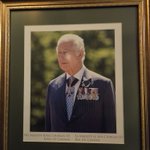
The miss-the-point crowd is out in full force today on the oath to the monarch and the judicial ruling. It's not about whether one supports the monarchy or opposes it. It's not about whether one like the fellow below or despises him. The oath is part of the constitution and has been since 1867. If one doesn't like that, start a movement to repeal that part of the constitution. One cannot simply ignore the constitution if one believes in the rule of law.

Mark Milke retweeted
Be clear on one thing: this isn’t about the King. It’s about the whole constitutional order in Canada, of which the King is a symbol. The PQ could no more swear an oath of allegiance to the Constitution of Canada than they could to the King, because it is that constitutional order that they are determined to overthrow. It’s just that it makes better politics to frame it as being about the King.
The problem they have is that the Constitution itself requires that elected officials swear an oath of allegiance to the Constitution, via the oath of allegiance to the King: the one implies the other. They are inseparable.
Which is why the premier, in his desperation, has lately embarked upon the remarkable project of directly attacking the Constitution — the whole thing, not just the Charter or the package of amendments enacted in 1982 — as illegitimate, in explicitly ethnonationalist terms.
I understand why he is doing this. He has to, in a way, for the Constitution and the rule of law are immovable obstacles to his ambitions. But it’s difficult to square with his government’s decision to appeal the ruling — that is, to invoke the same Constitution he has just rejected before a court sworn to uphold it to argue that the judge erred in his reading of it. If he really believed what he was saying — or rather, if he thought anyone else believed it — he would have the courage of his convictions, and simply ignore the court: that is, plunge Quebec into the revolutionary void, where governments are not bound by the laws they expect everyone else to follow. But those sorts of experiments rarely end happily.
Mark Milke retweeted

Not only that but it was in the Quebec Act 1774 that the King of England *created* the Province of Quebec. It did not exist before then. Quebec, as an entity, exists because the King willed it into existence. Military conquest became in time a Contract btw the King and people of Quebec.
Mark Milke retweeted
Writing in the National Post, senior fellow with the Aristotle Foundation Peter MacKinnon examines efforts in Alberta and Quebec to promote merit-based hiring and academic freedom at universities—citing a recent study by the Aristotle Foundation showing nearly half of Canadian students hide their political views out of fear of retaliation.
Should other provinces adopt similar policies for higher education? Share your thoughts below.

Quebec separatists have always been a problem for Canada, with both bad policy for Quebec and via the federal government, for the rest of Canada. They are narrow ethno-nationalists uninterested in the wider world and learning anything from it, and bathed in a permanent grievance culture. Pierre Trudeau understood this which is why he castigated them time and again (and is about the only thing Trudeau was correct on).
As for the Plains of Abraham forward, British colonies be they Canada, Hong Kong, Singapore, Australia, New Zealand and others thrived in history because of the rule of law, separation of powers, anti-corruption efforts and a light-touch free enterprise economic philosophy. French colonies sank because of top-down, state-led policies which suffocate entrepreneurial activity among other poor outcomes.
I wouldn't expect a Quebec separatist leader to acknowledge any of the above but the rest of us don't need to play along with his anti-monarchical, anti-Canada petulance or ever give into what will inevitably be a new round of separatist demands. It's time for the rest of Canada, as a judge just did, to just say no.

Le gouvernement du Québec dénonce fermement un jugement qui va clairement à l’encontre de la volonté démocratique des Québécois, qui ont exprimé leur volonté d’en finir avec l’acte déloyal du serment envers le roi britannique et avec le carcan monarchique en général.
Nous avons répété à plusieurs reprises que notre gouvernement n’est loyal qu’à nos gens, qu’à la nation québécoise. Les 127 députés de l’Assemblée nationale sont arrivés au même constat : nous sommes unanimes sur le principe de prêter uniquement serment au peuple du Québec.
Nous avons la ferme intention, en ce sens, de faire respecter la volonté démocratique du peuple québécois. Il n’est donc pas question d’obliger les députés du Québec à prêter serment au roi d’Angleterre Charles III. Nous ne pouvons demander aux nouveaux élus de mentir à titre de premier geste à l’Assemblée nationale.
Comme premier ministre du Québec, je me dois également de rappeler que les « règles constitutionnelles » sur lesquelles est fondé ce jugement n’ont en fait aucune légitimité démocratique. La constitution de 1867, sur laquelle nous ne nous sommes jamais prononcés comme peuple québécois, relève d’une conquête militaire d’un peuple sur un autre. Nous n’avons jamais non plus signé la constitution de 1982, laquelle s’est imposée par la nuit des longs couteaux, dont le fondateur de mon parti, René Lévesque, a fait les frais. À nouveau, pas de consentement. Il s’agit de manœuvres antidémocratiques hostiles à la nation québécoise qui sont à l’origine de ce jugement qui vise à contraindre les élus de notre Assemblée nationale à ce geste humiliant.
Notons également que la constitution du Canada ne prévoit en soi aucune sanction dans l’éventualité où le serment n’est pas fait. Il est donc pour le moins étonnant que la créativité juridique à laquelle nos tribunaux nous ont habitués au cours des dernières années dans l’interprétation de la constitution, cet « arbre vivant » capable de s’adapter aux réalités contemporaines, ne soit pas au rendez-vous quand il y a volonté démocratique unanime de notre parlement alors qu’aucune sanction n’est indiquée dans la constitution.
Il s’agit d’une décision sur une demande préliminaire, sans débat au fond, mais qui impose dès maintenant l'issue finale de ce débat, en plus de compliquer la rentrée parlementaire. Notons toutefois que le dispositif final de la décision n'ordonne pas en soi aux députés de prêter serment au roi dans son dispositif final, bien que cette volonté du juge soit clairement énoncée dans les explications du jugement. Ce sera donc au prochain président de l’Assemblée nationale de trancher, en prenant notamment en compte le fait que depuis la décision de Nathalie Roy sur cette même question, les parlementaires se sont prononcés unanimement en faveur de l'abolition du serment au roi. La souveraineté parlementaire doit prévaloir.
Nous allons donc analyser toutes les options juridiques et politiques qui s’offrent à nous pour nous assurer que ce serment n’ait pas lieu. À cet effet, des démarches seront entreprises sans délai afin d’interjeter appel de ce jugement devant la Cour d’appel du Québec et demander la levée de l’exécution de celui-ci jusqu’à l’obtention d’une décision finale.
Nous demandons l’appui des autres partis politiques, qui ont d’ailleurs tous refusé de prêter serment au roi. Et nous demandons, bien sûr, le soutien de la population.
Crédit photo : Journal de Montréal.

Seconded.

One last thought on the flood of replies to my JFK assassination posts yesterday. Very grateful to those who stayed with the evidence instead of wandering into Bigfoot territory.
Thirty-three years after Case Closed, I still hope that people might do a little basic research before posting. Some do. But, much of what I saw was misinformation or recycled claims debunked decades ago. And even when corrected, people refused to abandon their echo chamber. It's like whack-a-mole, no sooner do I answer some crazy claim that it spawns a dozen more. And they often end with a version of 'you are a government shill.'
Little wonder we will never reach a consensus on 'who killed JFK.' I know I sound like a broken record, but Read Case Closed. Get if from a library or borrow it from a friend. Stop giving Oswald a free pass.
1
360
