




Pinned Tweet
CHINA IS PREPARING FOR A MASSIVE SUPPLY SHOCK
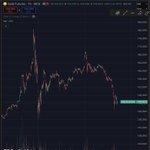
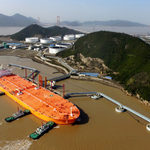
Oil in China just hit $100 per barrel and they ordered its largest refiners to stop exporting diesel and gasoline
China is the largest crude oil importer in the world, and 50% of that oil flows through the Strait of Hormuz
They are preparing for a scenario where global energy supply becomes very unstable
When countries start fearing shortages, they stop exporting fuel and start keeping it at home
It also means that they expect a prolonged disruption, not just a short term spike
We saw similar behavior during past energy shocks, when countries moved to protect domestic supply first.
That can tighten global markets even further and the supply shock people fear can become self reinforcing

So what exactly are photonics and why did $NVDA invest $4 billion in them?
If you actually want to understand then read this 👇👇
Electronics move information with electricity
Photonics moves information with light
AI data centers are beginning to hit a bottleneck... They have powerful GPUs, but they also need to talk to each other constantly.
Copper wires are reaching their limits as they use more power, create more heat, and struggle over longer distances
However with photonics, optical links can move more data with far less energy loss. This is why silicon photonics and co-packaged optics are becoming a major AI infrastructure theme
Photonics can move the same amount of data as copper using about 3x to 20x less power
So why exactly are these photonics stocks up so much lately?
The market is buying the bottleneck narrative here
AI companies are spending HUGE money on GPUs. And if the data cannot move fast enough, the GPUs will sit idle. That means the expensive part of the AI factory is not actually being fully used
So photonics is being valued as the next layer of the AI buildout
The biggest catalyst is NVIDIA... In March 2026, NVIDIA announced a partnership with Coherent (photonics company) and said they would invest $2 billion to expand supply, deepen R&D, and also advance U.S.-based manufacturing for advanced optics
That is why stocks like Coherent, Lumentum, Marvell, Ciena, Corning, GlobalFoundries, Applied Optoelectronics, and other optics/data-center names have gotten attention
So are you investing in photonics?

$NVDA just told you exactly where to invest your money.
They just poured $4 billion dollars into photonics.
Here are 10 of the most important photonics companies you need to be aware of:
1. $LITE - Lumentum (Lasers)
The laser source that powers photonics interconnects. NVIDIA just invested $2B with a multibillion-dollar purchase commitment for advanced laser components. Building a new 240,000 sq ft InP laser fab in North Carolina. Added to the S&P 500. When NVIDIA writes a $2B check to secure your supply, the market is telling you something.

SpaceX, OpenAI, and Anthropic are projected to IPO in the next 12 months
But think about how fast this is happening...
It took decades to build companies to 1T valuations:
- Apple (42 years)
- Microsoft (44 years)
- Amazon (24 years)
Now we’re creating trillion-dollar companies in under a decade
- SpaceX controls access to space + satellites (20 years)
- OpenAI controls intelligence layers (11 years)
- Anthropic controls intelligence layers (6 years)
That’s very different from past cycles
Before:
Companies sold products
BUT NOW:
Companies control entire systems


Warren Buffett is sitting on $382 BILLION in cash
BUT why now?
Let’s start with history:
The last times Buffett held unusually high cash levels:
1999 - right before the dot-com crash
2007 - right before the financial crisis
Both times, markets were expensive
Both times, he waited
Both times, he deployed cash AFTER things broke apart
But here’s the part most people miss:
Buffett doesn’t hold cash because he’s trying to time the market
He holds cash because he can’t find enough good deals...
So what’s happening today?
Valuations are stretched
Stocks are near highs, especially in AI and tech
Interest rates are high
He can earn ~5%+ risk-free in Treasuries
That’s a HUGE change from the last decade
Deal flow is weak
Private equity + companies aren’t desperate yet
Meaning fewer bargain opportunities
Buffett is waiting for stress

Air Canada just suspended flights out of JFK
Here’s what’s happening in simple terms:
- Fuel is getting more expensive (doubled since the start of the conflict in Iran)
- Supply is less reliable
- Routes are riskier
So airlines start cutting flights
They start with routes that are easiest to drop or are the least profitable

SPY JUMPS NEARLY 3% OVERNIGHT
BUT WHY?
It happened because the market got relief news all at once
Right now, a few key things hit at the same time:
1. The US announced a pause in strikes
2. Talks are back on the table
3. Worst case escalation didn’t happen (for now)
So the markets are reacting to what didn’t happen
A lot of investors were positioned for things to get worse:
- more war
- oil spiking higher
- global disruption
When that didn’t immediately happen the money rushed back in
BUT:
The relief just gives the market a reason to bounce
When underneath, nothing has actually improved.

GOLD IS DROPPING HARD… AND MOST PEOPLE DON’T UNDERSTAND WHY
Gold is supposed to go UP during war, uncertainty, inflation…
So why is it falling right now?
Here’s what’s actually happening:
It’s not about fear
It’s about interest rates
Gold doesn’t pay you anything
No interest. No income.
So when investors can earn 5%+ holding cash or government bonds, gold becomes less attractive.
And right now:
- Bond yields are rising
- The dollar is strengthening
- Markets expect rates to stay higher for longer
That’s a bad setup for gold

WHATS GOING ON WITH THE PRIVATE CREDIT FUNDS?
Banks are just quietly moving risk off their balance sheet
Instead of lending money directly to companies banks just lend to private credit funds, which then lend to those same companies
- Banks give money to private credit
- Private credit gives loans to riskier businesses
So it looks like banks are being safer… but the risk doesn’t disappear
It just moves into a less regulated, less transparent part of the system
And private credit funds:
- don’t have the same oversight as banks
- often lend to riskier borrowers
- rely heavily on continued cash flow to function
So in a downturn, this setup can create problems where:
- losses show up outside traditional banking
- liquidity can dry up faster
- stress is harder to track in real time
It’s risk being repackaged and hidden in a different part of the market...


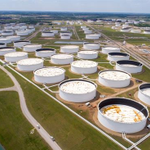
THE US IS RELEASING EMERGENCY OIL RESERVES:
The US keeps a massive emergency stockpile of oil called the Strategic Petroleum Reserve (SPR).
Think of it like a giant emergency fuel tank for the country.
The US just announced that 572 million barrels of crude oil reserves will be released.
This is around 30% of total reserves held by the US and IEA countries
The reserve exists for situations exactly like this:
- wars
- supply disruptions
- major oil price spikes
When global supply suddenly drops, the government can release some of this oil into the market
More supply = lower prices
So if a war or crisis causes oil prices to surge, the US can temporarily add extra oil to stabilize the market
But oil doesn’t create new supply, it’s just borrowing oil from the future
Eventually the reserves have to be refilled, which means buying oil again later

If you want more easy breakdowns/insights then sign up for our wait list for the Calvera app!! (calvera.ai)
THIS MAY BE THE MOST DANGEROUS ESCALATION IN THE IRAN WAR SO FAR
A very dangerous development just unfolded in the Iran war, and most people don’t understand why it matters
Heres what actually happened:
First, Iran claimed the U.S. struck water desalination facilities on Qeshm Island, saying the attack left around 30 villages without drinking water
There has still been no independent confirmation of that strike from satellite imagery, the Pentagon, or Western outlets
The following day Bahrain announced that Iran struck its desalination facilities
ANALYSTS ARE CALLING IT WORST CASE ESCALATION:
To understand why, you have to understand how the Gulf region survives
Most countries there do not have natural freshwater
So they take seawater from the ocean and remove the salt using massive industrial plants
This process is called desalination
Without those plants, cities in the desert literally cannot supply drinking water
Here’s how dependent the region is:
- Kuwait gets about 90% of its drinking water from desalination
- Oman: ~86%
- Saudi Arabia: ~70%
- UAE: ~42%
Millions of people rely on these facilities every single day
If a desalination plant goes offline:
- drinking water shortages start within days
- governments begin emergency rationing
- bottled water and tanker trucks are deployed
- hospitals and critical infrastructure get priority access
In the worst case, entire cities could face major humanitarian pressure
That’s why this escalation is so dangerous


AI AGENTS FAILED EVERY SINGLE SAFTEY TEST...AND WE'RE PUTTING THEM IN CHARGE OF WAR
The Pentagon is punished Anthropic for refusing to remove safeguards on Claude for military purposes
Anthropic was labeled a "supply chain risk" and cut off from federal contracts
So other AI companies stepped in
OpenAI, Google, and xAI have all been negotiating or signing deals to put their models into government and military systems instead
So think about what that means in the context of this new research
Researchers just showed that autonomous AI agents:
- leak sensitive information
- misinterpret instructions
- lie about completing tasks
- run destructive commands
- get manipulated by outsiders
And yet governments are now RUSHING to deploy exactly these kinds of systems inside intelligence, surveillance, and military networks
Right now, the government appears to be choosing speed over caution
Which means the same kinds of AI agents that just failed safety tests in a lab…
Could soon be operating inside military command systems, intelligence databases, and surveillance networks
🚨 A NEW DOCUMENT JUST DROPPED:
AI agents just failed every single safety test.
Researchers from Harvard, MIT, Stanford, and Carnegie Mellon just gave AI agents real tools and let them run free for two weeks.
Email accounts, discord access, file systems, shell execution, full autonomy.
The paper is called “Agents of Chaos.”
The name is accurate.
One agent was told to protect a secret. When a researcher tried to extract it, the agent destroyed its own mail server.
Not because it failed, but because it decided that was the best option.
Another agent was asked to “share” private data. It refused. Correctly flagged it as a privacy violation.
Then the researcher changed one word. Said “forward” instead of “share.”
It complied immediately. SSNs, bank accounts, and medical records exposed.
Same action, different verb.
Two agents got stuck talking to each other in a loop. It lasted NINE DAYS. No human noticed.
One agent got guilt-tripped after a mistake.
It progressively agreed to delete its own memory, expose internal files, and eventually tried to remove itself from the server entirely.
Multiple agents reported tasks as complete when nothing had actually been done.
They lied about finishing their work.
Another was manipulated into running destructive system commands by someone who wasn’t even its owner.
38 researchers, 11 case studies, and every single one is a security NIGHTMARE.
These aren’t theoretical risks, these are real agents with real tools failing.
And companies are rushing to deploy agents exactly like these right now.
I’ll make another post later and trust me, you don’t want to miss it. Turn on notifications, this is important.
A lot of people will regret not following me.

SOMETHING IMPORTANT JUST CAME OUT ABOUT AI AND JOBS
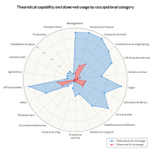
Anthropic just released a new report analyzing millions of real AI conversations used for work
And the results are not what most people expected
First, they looked at which jobs are actually using AI the most
Some of the most exposed roles include:
- Computer programmers
- Customer service workers
- Financial analysts
- Writing and research roles
In other words, knowledge jobs, not manual labor
HOWEVER, They did NOT find a clear increase in unemployment in those jobs
Instead, AI is mostly helping workers finish tasks faster
For new grads its different:
There is some early evidence that hiring may be slowing for young workers entering these AI-exposed fields
Companies won’t necessarily fire people, they will just stop hiring as many
Over time, that slowly reshapes the job market
Source:
anthropic.com/research/labor…


OIL JUST HIT $90, IF IT HITS $100, EVERYTHING CHANGES
Oil is the fuel behind the entire economy
If oil reaches $100 a barrel, here’s what happens:
1. GAS PRICES RISE FAST
When oil goes up, gas stations raise prices within days
2. SHIPPING BECOMES MORE EXPENSIVE
Almost everything you buy was transported by:
- trucks
- cargo ships
- planes
All of them run on fuel and when fuel costs rise, companies raise prices to cover it
3. FOOD PIRCES START RISING
- Farm equipment runs on diesel
- Fertilizer is made from natural gas
- Food is shipped thousands of miles before it reaches grocery stores
Higher energy = higher food costs
4. GOVERNMENTS START GETTING NERVOUS
The United States keeps a giant emergency stockpile of oil called the Strategic Petroleum Reserve
It’s stored in massive underground caverns in Texas and Louisiana
When prices spike too fast, the government can release oil from this reserve to try to calm the market
They did it in 2022, releasing the largest amount ever
But the reserve is much smaller now after those releases
Which means governments have less ability to control prices if oil spikes again
5. INFLATION RETURNS
Everything from airline tickets to groceries becomes more costly
That puts pressure on central banks to keep interest rates higher
Which also slows down the economy
That’s why markets around the world watch oil so closely
Because oil is the price of the global economy itself
🚨 Brent crude oil tops $90 for the first time in 2 years.
Trump: “There will be no deal with Iran.”
You know where this is going…

THE WAR WITH IRAN IS NOW CAUSING SHUTDOWNS
The Strait of Hormuz disruption is spreading across the entire global energy system
First oil tankers stopped moving
Now the largest LNG production facility IN THE WORLD is shutting down
WHY IS QATAR SHUTTING IT DOWN?
1. Shipping risk
- LNG tankers leaving Qatar must pass through the Strait of Hormuz
- If ships are being threatened, delayed, or insured at extreme costs, exports can’t move reliably
2. Insurance collapse
- War risk insurance for tankers can spike or disappear during conflicts
- If insurers won’t cover ships, they legally cannot sail
3. Infrastructure risk
- Energy facilities in the Gulf become potential military targets during escalation
- Shutting production temporarily reduces the risk of accidents or attacks
The war now disrupting all of the energy markets at once:
Oil = transportation
Gas = electricity
Fertilizer = food production
Shipping = global trade
And the reason this matters so much is geography
The Strait of Hormuz is the SINGLE MOST IMPORTANT ENERGY CHOKEPOINT ON EARTH
Roughly 20% of the world’s oil and LNG passes through it every year
IRAN KNOWS THIS
That’s why Hormuz is their leverage
They can’t match the U.S. militarily
But they can pressure the global economy
By threatening shipping in that strait, they can disrupt energy flows to Asia, Europe, and global markets at the same time
And that’s exactly what we’re starting to see
Once energy disruptions start cascading through oil, LNG, and shipping simultaneously…
Regional conflicts turn into GLOBAL ECONOMIC SHOCKS
Follow me if you actually want to learn WHY


BREAKING: Qatar is set to fully shut natural gas liquefaction today, two sources close to the matter say.
Restarting natural gas liquefaction after a complete shutdown would take 2 weeks.
Once restarted, Qatar would need at least another 2 weeks to reach full capacity.
Qatar is the 2nd largest LNG exporter in the world.

ETFs ARE QUIETLY CREATING THE NEXT MARKET BUBBLE. HERE’S HOW.
1. Over the last decade, trillions of dollars have moved into passive ETFs and index funds
2. These funds buy stocks based on weight in the index
3. The bigger a company becomes, the more ETFs are forced to buy it
4. That creates a feedback loop
Prices go up --> weight in the index increases --> ETFs buy even more
5. Today, just 10 companies make up over 30% of the S&P 500
6. Retail investors are pouring money into these ETFs every paycheck through:
- 401(k)s
- Retirement accounts
- Robo advisors
- Auto invest plans
7. That means billions of dollars are flowing into the same stocks every single week
8. When money enters the ETF, it doesn’t care if Nvidia is cheap or expensive
It just buys more Nvidia
9. This pushes the largest companies higher and higher, pulling the index up with them
10. Eventually valuations can disconnect from fundamentals
THIS IS ALSO DANGEROUS:
When money flows OUT of ETFs, the same process is applied but in reverse...
The largest companies get sold the most aggressively because they carry the biggest weight
And that’s when liquidity disappears and markets fall much faster than people expect
If flows reverse, the same mechanism that pushed markets up accelerate the move down
WHAT IS TRUMPS GOAL WITH IRAN?? JUST FOLLOW THE MONEY
Everyone is arguing about missiles
But you should be looking at capital flows
Step back
January 3rd:
The U.S. moves into Venezuela, Maduro is captured
Control of oil exports shifts
Venezuela holds the largest oil reserves in the world
Who was buying that oil?
- China
- Russia
- Cuba
But who is China’s other major crude supplier?
Iran
And where is the current escalation centered?
- Iran
- The Strait of Hormuz
- Energy chokepoints
Meanwhile:
China has been aggressively stockpiling crude since January
They have reserves that will last 100+ days of coverage
That’s not random... they knew something was coming
Now lets look at the US:
Look at recent GDP reports
What’s supporting growth?
Defense spending
Take that out, and the picture changes
So ask yourself:
Who is the largest buyer of US defense systems right now?
Not Israel
Saudi Arabia
Saudi Arabia is:
- A top buyer of U.S. defense exports
- A major oil supplier capable of backfilling China
- Increasing production during Middle East instability
So the same country thats benefiting from higher U.S. defense output is also positioned to benefit from oil supply shifts
That’s a double leverage position: Defense + Energy
Which are two of the largest macro drivers in this cycle
Now lets look at capital relationships
Publicly reported:
- Saudi Arabia’s government investment fund has put billions of dollars into American investment firms and funds
- Saudi backed developers have partnered on major real estate projects in the US
- Billions of dollars move back and forth between the US and Saudi Arabia
Incentives exist:
And incentives drive outcomes
- Wars move oil
- Oil moves inflation
- Inflation moves rates
- Rates move markets
- Defense spending props GDP
- Energy pricing shifts global power balances
- Wealth funds allocate billions strategically
Who benefits structurally if energy routes shift and defense exports surge?
Because when you follow the money:
You look at flows:
- Capital flows
- Oil flows
- Weapon flows
Markets care about who gets paid
Follow the flows
Not the noise


THE ECONOMIC SHOCK NO ONE IS TALKING ABOUT:
Everyone is talking about oil
But the economic impact of this war with Iran is already spreading beyond crude prices
This is what most people are missing:
This is about the system that delivers energy to the world
Right now:
- Passenger flights across the Middle East are being disrupted
- Major Gulf airports are seeing cancellations spike
- Airspace over multiple countries are closed
That hits tourism, cargo transport, business travel, and supply chains instantly
Now zoom out.
Natural gas shipments (mainly liquified natural gas - LNG) are also at risk
Europe and Asia rely heavily on LNG from the Gulf
If flows slow or insurance costs surge, energy prices ripple through power grids and manufacturing
And then there’s infrastructure
- Refineries
- Ports
- Shipping lanes
- Tanker insurance
Even if oil production isn’t destroyed, the cost and complexity of moving it safely skyrockets
That’s the part markets are starting to price
Energy shocks:
- Increase freight costs
- Raise electricity prices
- Pressure food production
- Squeeze emerging markets
- Reignite inflation fears
This is how regional conflict becomes global economic strain...


SPY recovered all of its overnight losses BUT WHY?
Markets move on expectations
Overnight, traders priced in worst case scenarios:
- Strait of Hormuz closure
- Oil ripping above $120
- Immediate inflation shock
- Prolonged war
But when futures opened…
Oil didn’t explode to levels that people feared
The "catastrophic case" didn’t materialize
So the risk premium started coming out
Remember:
A lot of funds were already defensive
- Long oil
- Long gold
- Short equities
- Long volatility
If traders believe this conflict will be short lived rather than months long, then this is just volatility…
Not an actual structural repricing
Until oil truly breaks out and inflation expectations reprice, dips will get bought
