

The Official Twitter account for The National Treasury.
Nairobi, Kenya
Joined November 2015
- Tweets5.1K
- Following206
- Followers54.5K
- Likes2.9K

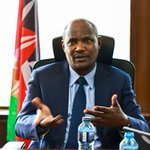

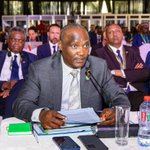
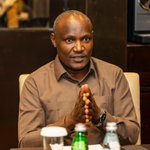




CS Hon. FCPA John Mbadi (@JohnMbadiN) says Kenya's next phase of tax reforms will seek to balance domestic revenue mobilisation with household welfare, business competitiveness and economic growth, ensuring that taxation finances public services without undermining the economy's capacity to generate wealth.
The reforms will be informed by research evidence and stakeholder input as the National Treasury prepares the Finance Bill, 2027, reviews Pay As You Earn (PAYE) taxation and develops the second Medium-Term Revenue Strategy (MTRS), scheduled to take effect in the 2027/28 financial year.
Speaking during the official opening of the Government of Kenya,African Economic Research Consortium (GoK,@AERCAFRICA ,UCPH,DERG) Stakeholder Workshop in Nairobi
Hon.Mbadi said the challenge was not simply how much revenue Government could collect, but how to raise it without weakening household purchasing power or discouraging productive investment.
"How do we strike a balance between the objective of financing better public services while not putting undue pressure on household incomes? How do we raise revenue without disincentivising investment and growth of enterprises?" he posed.
He noted that businesses require capital to expand, employ people and invest in productive activities, while households need sufficient disposable income to sustain consumption and savings. Tax policy must therefore consider not only immediate revenue yields but also the longer term implications for investment, employment and economic activity.
The 14 research papers presented at the workshop examine critical areas of the tax system, including personal income tax, petroleum excise, corporate taxation, Value Added Tax (VAT), electronic invoicing through the electronic Tax Invoice Management System (eTIMS) and informal payments. Other studies cover cross border trade and the Financial Inclusion Fund.
A major focus is the PAYE review, which will examine the distribution of personal income tax across income groups, the treatment of different income sources and the implications of existing exemptions and reliefs.
Research on income inequality and tax incidence will help establish who ultimately bears the tax burden and whether the system distributes obligations equitably. This goes beyond comparing statutory tax rates to examining taxpayers' actual ability to pay, the effect of taxation on disposable incomes and the benefits derived from public expenditure.
The second MTRS will build on lessons from the current strategy, with emphasis on broadening the tax base, improving compliance and addressing weaknesses in tax administration. Expanding participation in the tax system can strengthen revenue mobilisation while reducing excessive reliance on taxpayers already within the formal economy.
Hon Mbadi also emphasised that public confidence in taxation must be matched by accountability in the use of public resources.
"Taxpayers are entitled to ask what they receive for their contribution," he said, underscoring the relationship between revenue collection, responsible public expenditure and the delivery of essential services.
To translate the research into policy consideration, the Cabinet Secretary directed technical teams to consolidate the workshop recommendations into a policy review matrix identifying the supporting evidence, further analysis required and institutional responsibilities. The matrix will distinguish proposals requiring legislative action from improvements that can be undertaken through tax administration.
The process will provide an evidence based foundation for the forthcoming reforms, with the ultimate objective of strengthening public finances while sustaining household welfare, investment and a more productive economy.


The National Treasury retweeted

Presented the 2027 Budget Policy Statement (BPS) to the National Assembly Departmental Committee on Finance and National Planning, chaired by Hon. Francis Kuria Kimani.
The BPS outlines the Government’s priorities for sustaining economic growth, strengthening revenue mobilisation, maintaining fiscal discipline and safeguarding essential public services.
Kenya’s economy is projected to grow by 5.1 per cent in 2027, up from 5.0 per cent in 2026, building on an average growth of 5.0 per cent recorded between 2022 and 2025, compared to the global average of 3.5 per cent.


PUBLIC DEBT CLARIFICATION
The National Treasury clarifies the reporting of KSh233.4 billion in external loan agreements signed between May and August 2026.
The amount represents loan commitments, not an equivalent increase in outstanding public debt. Actual disbursements stood at KSh95.7 billion at the time the report was submitted to Parliament.
Read full statement below:
m.facebook.com/story.php?sto…

PS Dr Chris Kiptoo appears before the National Assembly Departmental Committee on Finance and National Planning to outline the National Treasury’s 2027 Budget Policy Statement (BPS), setting out the Government’s fiscal and economic policy priorities for the 2027/28 financial year, and respond to Members’ views and questions.
Follow live:
facebook.com/share/v/1CV1Mfo…
The National Treasury retweeted
Interdenominational Church Service, Marioshoni Centre, Molo Constituency, Nakuru County. xitter.cf/i/broadcasts/2peVPLRLA…

The National Treasury retweeted
The Government of Kenya has recognised Artificial Intelligence (AI) as a key driver of innovation, economic growth and job creation. Through the Kenya National Artificial Intelligence Strategy 2025 - 2030, the country seeks to become a regional leader in AI research and commercialisation while equipping young people with skills for the digital economy.
Officiated the opening of the Siaya Artificial Intelligence Youth Agency (SAIYA) Youth Centre in Siaya Town, alongside Dr. Ouma Oluga, Principal Secretary for Medical Services and Patron of the Centre.
The Centre provides a collaborative space for students, young professionals, entrepreneurs and creatives to access mentorship, develop digital skills and pursue enterprise opportunities. It will also offer programmes in youth leadership, access to finance, responsible use of AI and health.
I encourage the young people of Siaya to make full use of this facility to nurture their talents, turn ideas into viable enterprises and contribute to the county’s economic development.
@MoICTKenya @tanuijohn @ICTAuthorityKE @fnoluga


CS Hon FCPA John Mbadi @JohnMbadiN today chaired a meeting at the National Treasury to advance preparations for the rollout of education financing reforms, focusing on outstanding operational and financial arrangements necessary to facilitate smooth implementation.
The meeting follows H.E. President William Ruto’s State of the Nation Address to Parliament yesterday, in which the Head of State articulated his commitment to a fair, sustainable and effective tertiary education financing framework. The President emphasised that no student admitted to a university, TVET institution or Kenya Medical Training College should miss classes because of their parents’ inability to pay.
Hon. Mbadi is leading the National Treasury team in working with key sector institutions, including the Higher Education Loans Board (HELB) and the Universities Fund (UF), to finalise implementation arrangements and ensure the President’s commitment is backed by a practical, sustainable financing framework that safeguards access to higher education. @StateHouseKenya ,@WilliamsRuto


The National Treasury retweeted
The Judiciary is an important pillar of national development. Strong judicial institutions uphold the rule of law, protect citizens’ rights and strengthen public confidence in the administration of justice.
Held a consultative meeting with the Judicial Service Commission (JSC), chaired by Hon. @CJMarthaKoome alongside Commissioners and the Registrar, at the JSC offices in Nairobi.
The Executive, under the leadership of H.E. the President @WilliamsRuto, remains committed to supporting the administration of justice through adequate budgetary allocations, upgrading existing courts and constructing new ones, strengthening tribunal operations and financing staff welfare.
@Kenyajudiciary @jsckenya


State of the Nation Address,Parliament,Nairobi

State of the Nation Address, Parliament, Nairobi xitter.cf/i/broadcasts/2aWQZyKJB…

The National Treasury retweeted

State of the Nation Address, Parliament, Nairobi xitter.cf/i/broadcasts/2aWQZyKJB…
CS Hon. FCPA John Mbadi @JohnMbadiN breaks down the numbers behind the headlines tonight on The Explainer .
Tune in to Citizen TV at 9:00 PM as the CS unpacks the hard truths of "Economy: Plans vs Reality".
#TheExplainer #CitizenTV #KenyaEconomy @DrChrisKiptoo

CS Hon. FCPA John Mbadi @JohnMbadiN has reaffirmed Kenya's commitment to advancing a financially sustainable and self-reliant African Union, calling for stronger domestic resource mobilisation, prudent financial management and greater accountability in the utilisation of the Union's resources.
Speaking during the Extraordinary Joint Session of the African Union Executive Council and Ministers of Finance on Financing the Union in Accra, Ghana today, Hon. Mbadi outlined Kenya's position on strengthening the AU's financial architecture amid rising fiscal pressures and declining predictability of external development financing.
Hon Mbadi highlighted the importance of innovative financing approaches, including Government-to-Government (G-to-G) cooperation and strategic partnerships with African investors and institutions, citing Kenya’s engagement involving Dangote as part of the broader conversation on mobilising private-sector capital for development.
The National Treasury CS reaffirmed Kenya's commitment to the Kigali Decision on Financing the Union, particularly the 0.2 per cent levy on eligible imports. He noted that full implementation across Member States could generate an estimated US$1.2 billion annually, significantly strengthening the Union's revenue base. He also called for stronger programme based budgeting, a robust Medium-Term Expenditure Framework and closer alignment of budget allocations with strategic priorities and measurable development outcomes. On the African Union Peace Fund, he emphasised predictable financing, prudent investment management and transparent accountability.
In his address to the session, Prime Cabinet Secretary and Cabinet Secretary for Foreign and Diaspora Affairs, Hon. Musalia Mudavadi, who led the Kenyan delegation, conveyed Kenya's commitment to advancing the institutional reform agenda championed by H.E. President William Samoei Ruto in his capacity as the African Union Champion for Institutional Reforms. The Prime Cabinet Secretary emphasised that sustainable financing is fundamental to the Union's institutional independence, credibility and capacity to fulfil its continental mandate.
The significance of President Ruto's leadership was also recognised by Ghana's Minister for Foreign Affairs, Hon. Samuel Okudzeto Ablakwa and other speakers, who expressed appreciation to the Kenyan President for his initiative and commitment to advancing the African Union's institutional reform and financing agenda.
The Prime Cabinet Secretary outlined Kenya's endorsement of Option C as a viable pathway towards sustainable financing of the Union. The proposed framework rests on four pillars: a high-value programme aligned with Agenda 2063; a unified, resultsbased budget under a Medium-Term Expenditure Framework; financial autonomy through implementation of the 0.2 per cent levy and a US$1 billion Peace Fund endowment; and institutional rationalisation to eliminate duplication and improve efficiency.
Kenya also expressed support for a structured strategic partnership between the African Union and African Multilateral Financial Institutions to mobilise African capital, strengthen home grown financial institutions and accelerate the implementation of Agenda 2063. Kenya further welcomed Ghana's proposal to host an Extraordinary Summit on African Financial Institutions in 2027.
The Kenyan interventions reaffirm the country's commitment to African led solutions, stronger institutional accountability and sustainable financing as essential foundations for a more effective African Union, better equipped to deliver on the shared aspirations of its Member States.
@jumuiya @_AfricanUnion @_AfricanUnion


CS Hon. FCPA John Mbadi @JohnMbadiN joined the Kenyan delegation, led by Prime Cabinet Secretary Hon. Musalia Mudavadi, in Accra, Ghana, for consultations ahead of the Extraordinary Joint Session of the African Union Executive Council and Ministers of Finance scheduled for 13 November 2026.
The consultations provided an opportunity for the Kenyan delegation to exchange views on sustainable financing of the African Union, including strengthening domestic resource mobilisation, leveraging African institutional capital, improving financial and administrative systems, and enhancing institutional efficiency and accountability.
The discussions form part of the wider African Union institutional reform agenda championed by H.E. President William Samoei Ruto in his capacity as the AU Champion for Institutional Reforms. Under his leadership, the reform agenda seeks to strengthen the Union's financial sustainability, institutional effectiveness and capacity to deliver on its continental mandate, including the aspirations of Agenda 2063.
Kenya's participation reflects its contribution to advancing a more self-reliant, efficient and accountable African Union, with Member States assuming greater ownership of the Union's financing and institutional priorities.


CS Hon. FCPA John Mbadi @JohnMbadiN and Prime Cabinet Secretary Hon. Musalia Mudavadi @MusaliaMudavadi arrived in Accra, Ghana, ahead of the Extraordinary Joint Session of the African Union Executive Council and Ministers of Finance scheduled for 13 November 2026. Their arrival was marked by a cultural dance reception, reflecting Ghana's hospitality as African leaders prepare to deliberate on strengthening the continent's financial architecture and mobilising African capital for Agenda 2063.


5
1,046
PS Dr. Chris Kiptoo held discussions with H.E. Hiroshi Matsuura, Ambassador of Japan to Kenya, at the National Treasury, reviewing progress in the implementation of development projects supported by the Government of Japan.
Japan’s cumulative assistance to Kenya stands at 615.34 billion Japanese yen (approximately KSh 628.436 billion), demonstrating the scale and continuity of the bilateral development partnership and its contribution to Kenya’s development priorities.


Ongoing :16th Africa PPP Infrastructure Finance, Investment and Partnerships Summit 2026, Westlands, Nairobi.
Follow link:
facebook.com/share/v/1BzKHdQ…
The National Treasury retweeted
16th Africa PPP Infrastructure Finance, Investment and Partnerships Summit 2026, Westlands, Nairobi. xitter.cf/i/broadcasts/2ReWRdkjo…
