

Windows Internals enthusiast, Interested in hardware design & low-level programming. An active developer of @HyperDbg debugger. https://xitter.cf/t.co/TUALkTusHt
Joined July 2012
- Tweets855
- Following412
- Followers9.3K
- Likes20.4K






Pinned Tweet
I'm happy to announce that @HyperDbg v0.14 is released!
This version includes HyperEvade (beta preview), fixes Win11 24H2 compatibility issues, and adds multiple timing functions to the script engine (Special thanks to @0Xiphorus).
Check it out: github.com/HyperDbg/HyperDbg…
(1/3)

The new version of @HyperDbg (v0.25) is now released!
In addition to bug fixes and improvements to the HyperEvade project, this release introduces the ability to debug a Windows machine (guest) from a Linux machine (host).
Check it out:
github.com/HyperDbg/HyperDbg…


This one is really crazy. They're spreading malware disguised as a hypervisor debugger through a vibe-coded website, vt01[.]com. If you download it, it's malware. The sad part is that they're comparing it with @HyperDbg. 👀


> be me
> get dm
> its my friend @Intel80x86
> author of @HyperDbg
> wtf i love him
> open message
> "smelly i got goop"
> wtf i love goop
> "i found malware campaign"
> wtf i love malware campaigns
> "The Threat Actor(s) have created a website which is specifically tailored to malware analysts, or reverse engineers, who utilize hypervisor-based frameworks. Their malware campaign appears to have begun about 8 days ago. I became aware of the issue when their "product" compared themselves to HyperDbg. Their website is clearly vibe coded, however parts appear to be in Mandarin"
> wtf theyre targeting people who like goop
> sends url to website
> vt01[.]com
> look inside
> lol ai slop
> go to download page
> vt01[.]com/en/download
> immediately flagged as malware by firefox
> allow download plz
> split nanosecond touches the disk
> windows: OMFG MALWARE!!!
> ??? this malware STINKS
> sha256: 5934d1a64afd62e7d1badb81e8613e01efe9cf9c7d6748271c6d0761e3b11eb7
> look inside
> delphi, weird PE sections
> throw into triage
> YARA rules IMMEDIATELY identify the malware family
> XRed
> wtf is XRed?
> cant remember any family named XRed
> December, 2025: XRed impersonates Indian Ministry of Finance and Income Tax Department
> December, 2025: XRed targets US and UK companies that do business in India
> March, 2025: XRed targets manufacturing companies in the United Kingdom
> May, 2025: Threat Actors compromise ProColored, their driver update was compromised to push XRed
> July, 2025: Threat Actors compromise video game mouse company, push malware to video game players who use EndGame Gear for gaming
this is strange goop

I'm pleased to announce @HyperDbg v0.19.
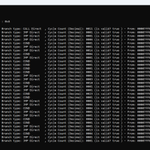
This release introduces a new module, HyperTrace, which brings hypervisor-level integration w/ tracing technologies such as Last Branch Record (LBR) & Processor Trace (PT).
LBR is now available, with more coming.
github.com/HyperDbg/HyperDbg…

This release wouldn't have been possible without the help and outstanding work of @MaxRaulea, masoudrahimi01, jtaw5649, @misharruuu, @Idov31.
7
578


Hi everyone!
If you're into hardware design & FPGA workflows, check out our new paper on hwdbg, an RTL-level debugger for chips & IP cores.
It’s still a work in progress, and we’d love your feedback to help improve it! 💡
dl.acm.org/doi/abs/10.1145/3…

Not Windows sec, but if you're into hardware design & FPGA synthesis, check out our new paper about our RTL-level hardware (chip and IP core) debugger, hwdbg.
Thanks to @S4l3hh and Soroush. Note that hwdbg is still a work in progress, but worth a read.
🔗dl.acm.org/doi/abs/10.1145/3…
If you're looking for better tools and a high Return on Investment (ROI), both @HyperDbg and @x64dbg are free, as in open-source and free beer.

Debugging costs money. You can spend cash on better tools and training for your team, or you can spend engineering time as the bugs elude you and your schedule slips. What has the better Return on Investment? Here's a sample ROI model: asset-intertech.com/resource…

The first HyperDbg release of 2025 is out! 🎉
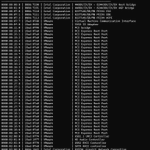
This version (v0.12) introduces commands for PCI/PCI-e device tree enumeration and IDT dumping, plus many bug fixes.
Huge thanks to @0Xiphorus, @reodus_, @binophism & other contributors!
🔗 Check it out:
github.com/HyperDbg/HyperDbg…


Great tutorial for verifying embedded PE signature.

While verifying the PE digital signature in Windows kernel, I encountered several new terms and concepts, such as PKCS7, ASN.1, calculating the thumbprint, and verifying signatures.
github.com/7eRoM/tutorials/t…
Today's interesting finding! I didn’t know MSRs starting with 'IA32_' and 'MSR_' have different meanings. It turns out that 'IA32_' MSRs are architectural (consistent across Intel CPUs), while 'MSR_' ones are model-specific.
stackoverflow.com/questions/…


It's now four years after this tweet, @HyperDbg has grown 4x bigger, now reaching more than 200,000 lines of code!
Huge thanks to all the friends and contributors who made this possible! 🤗
github.com/HyperDbg/HyperDbg


So far, Over 50,000 lines of code have been written for the @HyperDbg debugger.😊
github.com/HyperDbg/HyperDbg

Happy to announce @HyperDbg v0.10! 🎉🎊✨
This version comes with numerous bug fixes and stability improvements, plus new features like running assembly code directly in the events (VMX root-mode) and two new commands.
Check out the latest version: github.com/HyperDbg/HyperDbg…

For more information,
Assembly codes in conditions:
- docs.hyperdbg.org/using-hype…
Assembly codes in code sections:
- docs.hyperdbg.org/using-hype…
Assemble virtual address:
- docs.hyperdbg.org/commands/d…
Assemble physical address:
- docs.hyperdbg.org/commands/e…
4
571
Take advantage of VMware Workstation being free! ✨
Perfect time to learn hypervisor-based reverse engineering. Check out the HyperDbg tutorial at:
ost2.fyi/dbg3301
youtube.com/playlist?list=PL…

🔥 Summer's heating up, and so is the learning!
VMware Workstation is now free, making it the perfect time to dive into hypervisor-based reverse engineering.
Check out the free HyperDbg tutorial at @OpenSecTraining:
ost2.fyi/dbg3301 (preferred)
youtube.com/playlist?list=PL…
If you've ever worked with HyperDbg, you probably know that everything in HyperDbg is treated as an event.
This new debugger is designed to allow us to control the smallest unit in computers which is a clock cycle, so we can execute custom actions for each event (clock).
Soon we'll say welcome to our new family member, hwdbg. 🛠️⚙️🔲
Hardware Debugger, or #hwdbg, is a new class of event-driven chip debuggers that allows precise signal control down to the period of a single clock cycle.
github.com/HyperDbg/hwdbg
#FPGA #Chip #Hardware #Debugging

I'm happy to announce the release of HyperDbg v0.8! ✨🎉
github.com/HyperDbg/HyperDbg
In this version, we introduce a new event command called "!mode" which is able to detect transitions between user-mode <> kernel-mode.
More information:
docs.hyperdbg.org/commands/e…
For example, you have the option to write a simple script to temporarily stop (pause) the target process by ignoring user-mode execution:
docs.hyperdbg.org/tips-and-t…
...and also thanks to @Mattiwatti1 for resolving MTRR issues on the 13th generation of Intel processors.

@evernote used to be my favorite app, and I've been a loyal user for years. However, this last decision is something that I cannot find myself able to accept. Thank you for serving me for 6 years, but it's time to say goodbye. ❤️
You’re unable to view this Post because this account owner limits who can view their Posts. Learn more
1
67
