
iExec RLC (@iEx_ec) header
iExec RLC (@iEx_ec) profile picture

Programmable Privacy for Web3.

Joined September 2016
Photo by iExec RLC (@iEx_ec)Photo by iExec RLC (@iEx_ec)Photo by iExec RLC (@iEx_ec)Photo by iExec RLC (@iEx_ec)Photo by iExec RLC (@iEx_ec)Photo by iExec RLC (@iEx_ec)Photo by iExec RLC (@iEx_ec)Photo by iExec RLC (@iEx_ec)Photo by iExec RLC (@iEx_ec)Photo by iExec RLC (@iEx_ec)
In traditional finance, sensitive data is confidential by default and auditable on demand. Onchain, that balance is still missing. What matters most for institutions moving onchain?
33%Selective disclosure
33%Proof of execution
17%Data encryption
17%Native compliance rails
6 votes • 6 days
1
1
5
1,013
A lender needs to know if you can repay. It doesn't need to see your full transaction history. Privacy-first execution calculates the score without ever exposing your personal records. 🔐
5
1
23
1,547
Most breaches don't start at the company you trust. They start at a provider holding a copy of your data. Confidential computing lets providers deliver results from encrypted workloads without ever accessing the underlying data. 🔐
2
2
33
1,781
AI agents work with private keys, prompts and sensitive data. To be useful, they need access. To be trusted, they need hardware isolation.
3
27
1,643
Full transparency exposes your data. Full secrecy leaves nothing to verify. Selective disclosure keeps data confidential and auditable on demand. 🔏
2
19
1,597
Confidential computing is now as simple as typing a command. iapp init sets up a TEE-compatible iApp (iExec App) project in minutes, so builders can focus on the logic that matters.
4
3
1
33
1,957
"We don't look at your data" is a policy. Remote attestation is cryptographic proof. Before your data is ever shared, it verifies that the exact, unmodified code is running inside a genuine Trusted Execution Environment (TEE). Policies require trust. Hardware-backed verification gives you certainty.
3
1
1
25
2,325
Would you share personal data with an AI model if you knew no one, not even the operator, could see it?
31%Yes
18%Only with proof
27%Still no
24%Depends on the data
55 votes • Final results
2
1
11
2,162
“What evidence shows the product does what the vendor says?” For confidential computing, the evidence is attestation. The hardware proves which code is running before any data is shared with it.
When choosing privacy technology for tokenized deposits, it's often one pitch per technology and been left to compare them yourself. Our new write-up does that comparison with you. It takes one USD 3.2M supplier payment through the five main families on Ethereum and asks two questions: can the public still see who paid whom, and who can open the payment for your supervisor? Ethereum gives you all five on one chain, so you can choose by flow rather than commit to one vendor's approach. The write-up with questions to put to vendors is in the thread 👀
2
24
1,843
Every result depends on the code that ran, the data it used and the machine it ran on. Verifiable computation proves each of them without revealing the data or the logic.
18
1,501
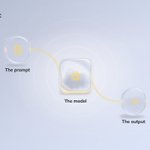
Before using an AI service with sensitive data, ask three questions: Who can read the prompt? Who can access the model? Who can read the output?
2
3
1
29
1,811
When software is updated, your data permissions should remain intact.
3
2
22
2,177
With DataProtector, access to a protectedData is granted explicitly and can be revoked the same way. revokeOneAccess removes one authorization. revokeAllAccess removes all of them, or only those for a given app or user. Control stays with the data owner at every step. 🔐
4
3
29
1,865
Onchain, everything is visible by default. Selective disclosure brings back a basic financial norm: Share what’s required, with whoever requires it.
1
19
2,484
What matters most before you give an AI agent access to your wallet?
43%Confidential execution
14%Onchain proof
22%Revocable access
22%Open-source code
37 votes • Final results
3
2
13
2,509
An agent compromised at the infrastructure level exposes everything it can access. Isolating its runtime limits that exposure. 🔐
2
16
2,275
Model owners won't expose their weights. Data owners won't expose their data. Confidential computing lets them compute together inside a hardware-isolated enclave, so neither side ever sees the other's plaintext.
1
2
21
1,880
How does a confidential app get paid for work on data it never sees? PoCo matches signed orders into an onchain deal, runs the task in an Intel TDX Trust Domain and verifies the proof. 🔐
1
2
20
1,863
Standard encryption protects data at rest and in transit. Confidential computing protects data in use.🔐
2
1
22
1,855
Building a confidential app used to mean complex TEE configuration, manual compliance checks and debugging after deployment. The iApp Generator removes that setup. 🔸 Ready-to-use templates in Python or JavaScript 🔸 Automated TEE setup 🔸 Built-in checks against the iExec iApp framework before you deploy An iApp is the part of your application that handles protected data, running inside a TEE.
1
1
11
1,895