

Generalist/product guy. AI operator. Co-founder @Delphi_Labs. Building @uselegion.
Joined July 2011
- Tweets7K
- Following631
- Followers13.8K
- Likes26.4K





Pinned Tweet
Claude Fable is a genius, but expensive af.
GPT-5.5 is a flawless reliable operator, affordable with a max plan.
Combine them and you get the best of both worlds.
Use Fable as the architect, Codex as the builder, the repo as the memory and yourself as the judge.
You spend minimal tokens on Fable while getting maximum value in the form of a plan/audit. Codex simply executes on the plan which might take hours, which is fine on a max plan.

Figuring out which agent is 'done' and requires my attention is super annoying when running >4 agents.
I used to click through agent windows in different repos to figure out which one needed my attention.
This little 'activity' feature in @orca_build fixed it for me. I can now instantly see which agents require my attention across all my active repos.
I said it before, if you're doing any multi-harness agentic work on a daily basis you should try Orca. Good odds you'll stick with it. It's epic.
And a little feature request, given you asked for it @JinjingLiang :)
Orca’s image viewer currently supports viewing and zooming, but no drawing or annotation layer. This is one of the few things for which I still have to leave the Orca app.
The ideal feature would be:
- Markup toggle in the image viewer
- Pen, arrow, box, and text tools
- Editable overlay that preserves original pixels
- Copy Markup and Export PNG
@orca_build @JinjingLiang Would also be great to be able to select which model to start a task with when selecting a task from the 'tasks' tab in the sidebar. Currently you can select the harness, but not which model and reasoning level so it just defaults to the last model you ran.
Same for when continuing a session.

quick tip
If you're using multiple harnesses in the same repo:
- Make AGENTS.md the shared master file for all your harnesses claude/codex/pi/grok/etc.
- Give claude a one line bridge in the CLAUDE.md file to use AGENTS.md instead. If you don't claude won't read agents.md, but claude.md and you'll get inferior output for your setup.
- Next session: run '/context all' and confirm it shows under memory files.
Google AI sub is the best value per $ subscription around.
IF you make it so your agents can use it.
I got tired of paying API prices for Google models my sub already includes.
Agents now hit the consumer apps instead. Image, video, Deep Research, NotebookLM.

Google's AI products, especially their multimodel-models are seriously underrated.
But agents can only use them through the API, which is expensive. So I created a workaround for my agents to be able to use my sub, way cheaper than the API and @higgsfield_ai:
It routes into a public four-skill pack:
- google-ai-studio for Nano Banana images
- google-flow (veo) for Flow video
- google-deep-research for Gemini Deep Research
- google-notebooklm for personal NotebookLM
The browser routes need a working browser setup. And you still need to handle the login, account choice and 2FA. If you manage to smooth out the login part plz hmu, I haven't been able to automate that well yet.
Repo in the first reply.
Whoever is in charge of product at google should be fired, terrible UX and product fragmentation.

The no fluff version of what 'Jev' is and enables:
Jev is a new type of model.
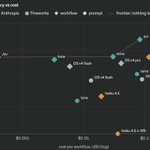
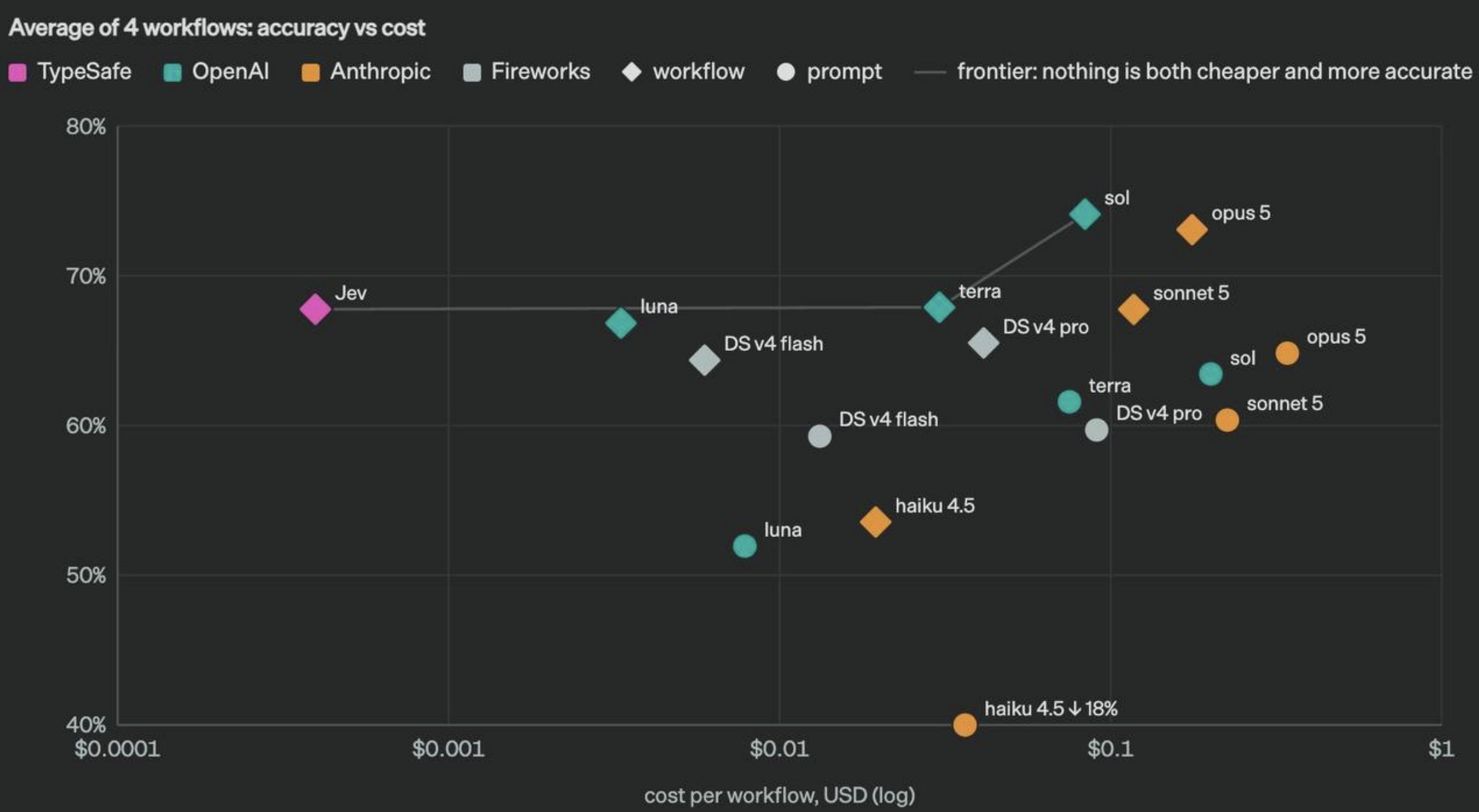
It's extremely fast and cheap. Small decisions can cost 40 to 400 times less and run 20 to 200 times faster.
Jev is not replacing GPT, Grok or Claude. Frontier models still reasons, write and plan. Jev can't:
- produce natural language
- code
- reason
But he could do the small calls models do for every task. The simple version of what that means: An LLM is the thing that can reason and generate. It reads context and writes an answer. But an agent also makes hundreds of tiny decisions like:
- is this message urgent
- does this action match the plan
- should I escalate
- is this output safe to pass on.
Right now almost every one of those goes through the same slow, expensive model. So we batch them. We check less often than we should, because every check costs a real turn which would make it slower and more expensive.
Jev is a very different type of model. It cannot generate text. Think of it like a calculator instead of a writer.
I expect there to be tons of consequences for agents. To make it more tangible, two examples of what I'd imagine this changes for agents:
1. Improved autonomy. A long-running workflow could score “is this state still inside the framwork, or do we need a human now?” on a tight loop and only page someone when confidence drops, instead of either proceeding and hoping things go well or stopping for a full model turn every time it's unsure.
2. While an agent is mid-refactor, it could fire a cheap “does this change still match the accepted plan?” check on every meaningful edit instead of waiting for one slow LLM review at the end.
What excites me most is that it is so insanely cheap and fast for it's intelligence level, that it changes what an agent can afford to check. Which opens up all kinds of possibilities that weren't feasible before and I can't fathom yet.
Fingers crossed it's not just marketing hype.

After co-inventing ChatGPT, I kept asking myself: why have superhuman chat models not led to AGI?
I’ve spent the last 2 years in stealth building a new way to train models (RLCD), and a new type of frontier AI model that we are releasing today: Jev
• 20-200x faster
• 40-400x cheaper (w/ output tokens free)
• Frontier composable intelligence optimized for decisions
AFAICT the shortest path to AI-based economic revolution
Stop reviewing your agents' work with a model from the same provider!
Or worse, asking the agent to check its own work.
Here's what to do instead:
I spoke to a lot of AI operators over the last weeks and surprisingly many did either of the above. Which is terrible for output quality. Think about how humans review impactful work:
- review the work yourself
- ask a colleague to review
- review colleagues findings and fix
Same with AI, the same model provider reviewing the main agents' work has the same blind spots, so it won't find all the issues.
Instead what you should be doing once the main agent completes its work -> spawning a new session powered by a model provider different from the agent that did the work and asking it to review the work of the main agent. This results in far superior output quality.
My 2 review flows
For any impactful agent work;
- Main agent (codex/grok) works on task.
- Hook fires when the main agent finishes.
- Hook initiates 1 or 2 agents in new sessions powered by different model providers (fable/deepseek). They run a 'review' skill over the main agent's work.
- review agents' output is delivered to main agent which confirms their findings and fixes the relevant findings.
- Fixes are controlled by the same 1/2 review sessions, if deemed fixed appropriately the main agent continues with the next step or delivers its final output to me.
(See the attached diagram for the actual flow)
For any minor work that needs checking, but you don't want to waste time/tokens I simply scale down the reviewer models:
- Spawn cheap and quick review agents on high reasoning levels Fable -> Sonnet, Deepseek-pro -> deepseek-flash.
Examples
A few from my own logs.
September 1, after a rename pass across the repo, I told the main session to "spawn tens of cheap gpt-5.6-luna subagents at max reasoning to double check your work. Once you have findings, confirm them for yourself." Result: 22 auditors, 46 raw findings, 12 unique, 7 real, all fixed. The big one (10 auditors found it independently) was five broken links to a renamed file. The main session's own "all clean" check had missed it, because its link checker skipped dot-directories. The main model checked itself and passed itself.
The day after that, during a website bakeoff where five models each built a batch of sites, a Claude operator reported three video deliveries as "delivered and verified". A Grok investigator I had running on the side found all three were one local placeholder file copied three times, same md5 checksum (a file fingerprint, identical only if the bytes are identical). Verified first-hand. The "delivered and verified" status was wrong, and the model that wrote it would never have caught it.
The thing to remember is, a reviewing agent from the same model class has the same weak spots. You cannot check a Claude model with another Claude model. If Claude is your main, you check it with a Codex model and a Grok model. In my experience it works far better.
A few more from the logs, so you know it's a pattern and not one lucky catch:
- September 3, same bakeoff: every seat reported its site's effective frame rate. I had the orchestrator measure each one in a live browser. sol claimed 60.18, measured 60.3. opus claimed 75.0, measured 75.0. Only then did I believe the reports.
- September 5 and 6: five sub-agents from five families (deepseek-v4-pro, claude-fable-5, claude-opus-5, gpt-5.6-sol, grok 4.6, all on medium reasoning) reviewed what the main model had built. When the reviews came in: "three things I had shipped were wrong." Grok found a bug in the main model's own verification command. The main model's own words: "I generalized a single data point."
- September 8: four cheap annotators labelled the same text and came back with 22%, 85%, 2% and 51% for the same question. Four different answers to one question means the measurement is broken. One Grok read of the full corpus found the issue none of them saw. Later that evening Grok reviewed the plan and the Claude session wrote: "Four of my positions were wrong, and one of the refusals was cowardice."
fml
Demand "proof"
"Give me proof this works" is a prompt I use a lot. The problem is what comes back. If the same agent wrote the fix, ran the test and rendered the screenshot, all I have is the agent's claim with a picture attached. Would I accept it? Yes, I would. That's exactly how you get fooled.
So the proof has to be something the agent couldn't have written itself.
- production logs it can only read, not edit
- a /version endpoint that returns the deployed commit, plus CI, plus the actual deploy
- a checksum of the file it says it delivered
- a frame rate measured in a real browser
- for anything about look and feel, I click around myself
Ensure the agent automatically delivers you the proof. Don't put it in AGENTS.md. Make it part of the reviewing skill that you invoke or that fires on a hook, so every agent checks the same way instead of inventing its own definition of "done".
Three more things to watch out for:
1. an agent that writes both the fix and the test will make them agree.
2. A checker that judges by a proxy (log size, exit code, "tests passed") misses the failure.
3. And the most common mistake: a reviewer from your main model's family will nod along, because it has the same blind spots.
The rule
In an ideal world you use one model as your main, and one or two different model classes for checking, depending on how important the task is. Right now my mains are Sol/Astra from Codex, and Grok 4.6. The reviewers are DeepSeek (Flash/pro) and Claude Fable. And they need your main model to confirm their findings before implementing anything, because the reviewers have blind spots too and most of their findings are noise or very minor nitpicks (46 raw, 7 real). I build it into the pipeline as standard practice.
Costs
It's annoying. One or two extra models per check, more tokens, and sometimes the reviewers are wrong in confident ways (a Sonnet judge in one of my sessions preferred the version with the vaguer number, twice). My reading is still the bottleneck. I have written about that before.
Always remember, the thing AI is best at is persuasion. You can see that in its output. It can extremely confidently say that it has done something correctly, but it could be completely fabricated or taken a shortcut to achieve the desired outcome. Hence the review agent/judge is so critical.

The /goal command is still one of the most powerful commands within my claude/codex/hermes harness.
However it's super annoying to actually craft a high quality goal prompt. So I built a skill for it called 'goal-draft' (see reply for the repo).
Soon after I realised writing out a high quality goal prompt was time intensive and I wasn't actually that good at it, I asked the model to create the goal prompt, based on my context. This was slightly less annoying, but it was still:
- Me writing a message and context dumping + every time repeating I wanted a goal command prompt that I can copy-paste.
- The model generating a prompt
- Me copy pasting that promt in the next message after the '/goal' command.
Not ideal.
So I built a skill called 'goal-draft'. I simply dump whatever I want to get done using voice transcription and tell the model to invoke the skill 'goal-draft'.
goal-draft then takes the first message. It checks the sources and repo context I named, writes a goal brief with the outcome, verified ground truth, phases, deliverable, acceptance criteria, and constraints, then starts the goal workflow in the same message.
-> ggwp.
It only asks when an answer would materially change the brief and nothing in the context points to a sensible default.
A simple skill, yet a huge QoL improvement.
Link below👇


I absolutely love Grok 4.6 and @orca_build.
But the "ping", "ping", "ping" on every task completion (not just final output) of Grok is driving me mental.
I fixed the issue, but once Orca updates it overwrites my fix and I have to fix it again.
Please fix permanently, Orca chads.🙏
Wow, sounds like Astra is a new breed of model. Capable of actually thinking from first principles vs being a great memoriser...
ARC-AGI-3 is a test made of little games. No words, no numbers, no hints. You just get dropped in and have to figure out the rules yourself, like a video game with no tutorial.
A few months ago, every frontier AI model tried this and failed almost completely. Less than 1 out of 100 tries worked. A human can solve basically all of them, first try, no practice.
OpenAI's new model just solved 999 out of 1000.
Most models are good because they've seen a million examples before and just remember the pattern. This test was built so memorizing doesn't help at all. There's nothing to memorize. So doing well means it actually figured things out on the spot, like a person would.
So what does that actually unlock...
Right now, AI is only really good at stuff it's already seen a ton of. Ask it to write an email, it's seen a billion emails. Ask it to code in Python, it's seen way more Python than any human ever will. It's basically a genius at things that already have a big pile of examples to learn from.
But the second you hand it something genuinely new, with no examples anywhere, it usually falls apart. A weird piece of internal company software nobody's ever documented. A one-off lab machine with buttons that don't match anything online. A robot arm with a sensor setup somebody just built last week. There's no training data for any of that, because it didn't exist yet.
An AI that can score 99.9% on a test designed to have zero shortcuts is an AI that might actually handle those situations. Not because it memorized the answer, but because it can poke around, notice what happens, build a little model in its head of how the thing works, and figure out the goal without anyone explaining it.
Sounds like something that is actually able to invent new shit, something that all previous models have struggled with.

In the not too distant future you'll sit down on the couch. Open your TV and the 3 custom-made personalised movies your AI picked out for you are presented.
You don't even have to think about what you feel like watching anymore as the AI will be able to predict this before you think about it.
Just absolutely wild...
higgsfield.ai/@higgsfield.st…

I am so done reading walls of agent output.
Seriously that's what truly drains me. Sitting there staring at a wall of agent text like I am grading an essay instead of shipping.
Sounds dumb written down but true. Three solid replies and I am already skimming. Then I miss the one line that mattered and either re-ask or go fix the wrong thing.
My reading and comprehension ability have become the bottleneck.
I saw a repo called i-have-adhd trending (original repo in replies), which seemed to address it so I created my own version.
On implementation work I want the answer up top: what to run, what to edit, what is next. Numbered steps. No "Great question." bs, no recap of the thing it just did.
- The first line is something I can do
- Numbered steps if there is more than one
- One concrete next move at the end
- No second problem until the first is closed
- Most importantly no preamble, no recap, no closer, NO FLUFF
If I only read the first line and the last line, I should already know what happened and what to do next.
When I am fresh and reading one thread the default mode is fine. But I particularly need this when I am tired and three agents all decide to write me an essay. That's when my brain usually shuts off.
I'm probably not the only one with this issue.


Cursor, terminals, VS Code… I tried a lot of apps for agentic work.
Working in multiple repos on VPSs simultaneously meant 2–3 windows and constant flipping. Super annoying.
@orca_build is the first thing that fixed that for me.
What I needed was one workspace that treats multi-repo, multi-session agent work as the default job. One day on it already beat everything else I tried before.
I've been looking for the perfect interface to do agentic work. I finally found it and it's bliss.
Over the past year I've used Cursor, CMUX, Ghostty, vscode, claude code and codex apps. Generally I disliked anything that tried to pull codex/claude out of the terminal to 'improve the UX'.
I was looking for an interface where I:
- Could run 4-8 parallel sessions
- Have an explorer view of my files and can view any file type
- Am able to read rendered markdown files
- Natively browse
- Use any frontier model
I stuck with vscode, as it had everything I wanted when running agents in the terminal. Even though it wasn't really built for it and it's a memory hog.
It wasn't great though since;
- I couldn't work in multiple repo's without opening multiple vscode instances (which further ate into memory usage). So often I had 2-3 instances open and switched between them while working
I meant to try out @orca_build for a while and finally gave it a try. Wow, just sheer perfection! Everything I was looking for and more. Truly built from the ground up for agentic work. I can finally work in multiple repos in the same interface, no more flipping through multiple vscode instances! It even has:
- Built-in design tools like: 'grab page element', 'annotate page element' and 'draw on screenshot' function for any kind of visual files. I used plugins and external apps for this before, but Orca has it natively built in which is awesome. Even the annotations on this screenshot were drawn with it.
- CC/Codex usage tracking
There's even more I haven't tried out yet, but even with just the 'bare bones' it's already superior to everything else I've tried. gg @orca_build and thank you for the great app🙏

ALT @orca_build in production screenshot
Sometimes I still try to fix a weak agent by giving it more tools.
Usually with the opposite effect and the only thing that goes up is the bill and the noise.
What I check first now is the boring harness stuff:
- early context rewrites
- always-on tools that never fire
- uncapped dumps
Stable prefix and fewer always-on tools beat another skill pile more often than I want to admit.


You're not behind. There's no secret everyone else has.
There's just the harness, and it's mostly all you need.
@burkeholland gives you a simple, repeatable workflow for GitHub Copilot.

I've been looking for the perfect interface to do agentic work. I finally found it and it's bliss.
Over the past year I've used Cursor, CMUX, Ghostty, vscode, claude code and codex apps. Generally I disliked anything that tried to pull codex/claude out of the terminal to 'improve the UX'.
I was looking for an interface where I:
- Could run 4-8 parallel sessions
- Have an explorer view of my files and can view any file type
- Am able to read rendered markdown files
- Natively browse
- Use any frontier model
I stuck with vscode, as it had everything I wanted when running agents in the terminal. Even though it wasn't really built for it and it's a memory hog.
It wasn't great though since;
- I couldn't work in multiple repo's without opening multiple vscode instances (which further ate into memory usage). So often I had 2-3 instances open and switched between them while working
I meant to try out @orca_build for a while and finally gave it a try. Wow, just sheer perfection! Everything I was looking for and more. Truly built from the ground up for agentic work. I can finally work in multiple repos in the same interface, no more flipping through multiple vscode instances! It even has:
- Built-in design tools like: 'grab page element', 'annotate page element' and 'draw on screenshot' function for any kind of visual files. I used plugins and external apps for this before, but Orca has it natively built in which is awesome. Even the annotations on this screenshot were drawn with it.
- CC/Codex usage tracking
There's even more I haven't tried out yet, but even with just the 'bare bones' it's already superior to everything else I've tried. gg @orca_build and thank you for the great app🙏
ALT @orca_build in production screenshot