

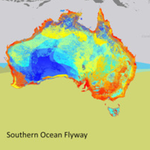


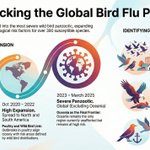


Influenza H5N1 arrived in Australia! Our prediction of potential hot spots for the arrival in Australia from more than one year ago
onlinelibrary.wiley.com/doi/…
vs the first cases detected now:


255
¡Nuevo artículo! Mostramos los patrones de movimiento de lobos, dingos y perros en función de factores biológicos y ambientales. Comprender estos desplazamientos es clave para entender su ecológica y conservación (p/mitigar conflictos humanos-cánidos) doi.org/10.1186/s40317-026-0…

1
25
New paper! We show how movement patterns of wolves, dingoes, and dogs vary according to biological and environmental factors. Understanding these movements is key from an ecological and conservation point of view, e.g., to mitigate human-canid conflicts link.springer.com/article/10…

GrInBiC retweeted

Our new publication now on line! Let's re-think biases in priority setting exercises that can affect conservation decisions.

GrInBiC retweeted

Online now: Rethinking representation when defining emerging conservation priorities dlvr.it/TSy2Bt

GrInBiC retweeted

Insights From Citizen Science and Opportunistic Records on the Trophic Ecology of Spizaetus melanoleucus (Accipitridae) - Barbar - 2026 - Biotropica - Wiley Online Library share.google/CIHgM8cPGTtJ2eW…
@Grinbic

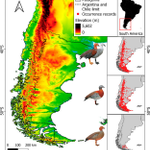
New paper! Climate change is modifying the distribution of many species. In Patagonia, changes in temperature and precipitation over the past 60 years are already having significant impacts on ecosystems and the species that inhabit them. In this study, doi.org/10.1016/j.biocon.202…

Our results suggest that, in general, sheldgeese are likely to shift southwards and to higher elevations, losing part of their current range in the long term.

1
31
These findings contribute to a better understanding of how climate change may affect the distribution of threatened species and provide key information for designing conservation strategies for species such as the Ruddy-headed Goose. authors.elsevier.com/c/1mo5y…

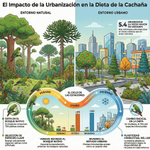
¡Nuevo trabajo! Urbanización y alimentación estacional de la cachaña
Investigamos cómo la urbanización y la estacionalidad modifican los hábitos alimenticios de la cachaña (Enicognathus ferrugineus), el loro más austral del mundo, en la Patagonia argentina onlinelibrary.wiley.com/doi/…

1
1
28
Mientras que en verano las cachañas prefieren los recursos de los bosques naturales para su reproducción, en los meses fríos las ciudades actúan como refugios alimenticios ante la escasez de comida silvestre.
1
1
16
Aunque las áreas urbanas ofrecen sustento estacional, también plantean riesgos antropogénicos y podrían facilitar la dispersión de especies invasoras. Se recomienda fomentar la plantación de vegetación nativa en jardines privados y espacios públicos
Ver: onlinelibrary.wiley.com/doi/…

11
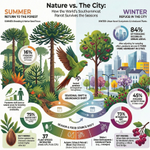
New article: Urbanization and Seasonality Increase Introduced Plant Consumption.
We investigate how urbanization and seasonality modify the feeding habits of the Austral parakeet (Enicognathus ferrugineus), the world's southernmost parrot. onlinelibrary.wiley.com/doi/…

Although urban areas offer seasonal sustenance, they also present anthropogenic risks—such as predation and collisions—and could facilitate the dispersal of invasive species into protected areas.
1
18
Global Mapping of the H5N1 Panzootic in Wild Birds: This research article examines the global escalation of the H5N1 avian influenza panzootic between 2017 and 2025, highlighting its rapid expansion from localized outbreaks to a nearly worldwide crisis. onlinelibrary.wiley.com/doi/…
