

Exploring new models & mechanisms for public goods funding, via events, residencies, hackathons & real-world pilots. Incubated by @ProtocolLabs. 🤝
The Commons
Joined June 2022
- Tweets5.2K
- Following800
- Followers8.8K
- Likes50.8K
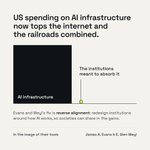








Ostrom’s design principles were built from real communities governing shared resources.
Agent-run orgs are a great new place to put them to work. 👇

1/ Why put organizations as the focus of an AI research agenda?
A slide from my recent talk at the London AO Summit hosted by @AO_Commons and @ARIA_research (short 🧵)

Factories that switched to electricity got almost nothing out of it for decades. The payoff came once plants were rebuilt with a motor at every machine.
In Science, @profjamesevans and @glenweyl argue our institutions are at that same point with AI.
science.org/doi/10.1126/scie…


Good morning from London! ☀️
FtC’s Kim Buisson is at #TC2026 today, in conversations on public interest AI and who it serves.
She’ll also be at the London AO Summit (@ARIA_research × AO Commons), focused on how autonomous organizations should be run & governed.
Come say hi!

Funding the Commons retweeted

Such an honor to support and mentor amazing startups from El Salvador 🇸🇻

Thank you to our mentors @mbarrbosa @NanakNihal @0xcush, who worked with @lcce01 and @david1casey from our team, and to the local partners who led sessions, like @CoreNestVC, @innogencapital, and @IDB_Lab.
And to @foundation_gsr for making it possible.


We’ve started a FtC community on Cuties, a social app built around communities and the people who vouch for each other inside them.
We’re excited to experiment and see whether it helps our network find each other! Come say hi 👇
cuties.app/community/funding…

Funding the Commons retweeted

El Salvador 🇸🇻 and @FundingCommons just hosted the first residency of its kind. From 106 applications, 4 public goods tech founders spent 6 days across the table from ministries, @UnitedNationsDP, funds, incubators, and development finance, with zero fees and zero equity thanks to @GSR_io. Grants and pilots are already rolling out, and more on this in the coming weeks. Thank you all involved!

This October we ran our first program in El Salvador.
Open digital infrastructure is often funded to launch and rarely to last, so we brought four founding teams to San Salvador for six days to work on what keeps it running. 🧵

No founder ever voted on their own money, and we have a written record of how each decision was reached.
We spend our time asking how shared infrastructure should be funded, so it felt right to experiment with our own money first.


Thank you to our mentors @mbarrbosa @NanakNihal @0xcush, who worked with @lcce01 and @david1casey from our team, and to the local partners who led sessions, like @CoreNestVC, @innogencapital, and @IDB_Lab.
And to @foundation_gsr for making it possible.
Anthropic is putting 5% of its shares into a new public benefit fund, worth around $100B if its IPO goes as expected.
AI money like this is expected to chase measurable impact, a hard standard for open-source software and research.
axios.com/2026/10/19/silicon…

Funding the Commons retweeted

Neurotech is Humanity’s Next Frontier!
I’ve been investing in neurotech since 2021 and working with teams building BCIs, NeuroAI, and connectomics. It now feels like AI did in ~2019.
We are entering an extraordinary era: neurotech already restores functions, it can enhance our capabilities, and will evolve what it means to be human.
PLC Neurotech is the fund backing the extraordinary founders and defining companies of this booming industry.
Funding the Commons retweeted

What is a philosopher-builder?
A philosopher-builder is someone who starts from a thesis about human flourishing.
Rather than simply looking for a gap in the market, they start out with a vision of the human capacities that are worth developing, what constrains them, and how we can expand them.
They reason from first principles about human potential and translate those insights into products or institutions.
To understand what a philosopher-builder is, it’s important to grasp what they are not:
1. They are not philosopher-kings. They do not have a blueprint for a society or a theory about how everyone out to live. Some of our most importance capacities are independent judgment, creativity, and the pursuit of knowledge. They seek to expand these capabilities, not prescribe outcomes
2. Open to disconfirming evidence. A strong philosophical starting point is open to rational criticism and has to be tested against reality. Their hypothesis is open to challenge and evidence should not only inform how they build their product, but potentially cause them to revise their underlying thesis. Philosophical seriousness demands intellectual humility.
3. Not a nihilistic iterator. “Make something people want” is a powerful entrepreneurial discipline, but by itself, it cannot establish whether satisfying people’s immediate wants advances human flourishing. You cannot outsource your belief in which ends are worth pursuing to market feedback.
The philosopher-builder is someone who combines philosophical conviction with empirical discipline. They have a vision, ambition, and an openness to revision.
We believe that AI isn’t a normal technology like the internet or the smartphone that society will simply absorb. Instead, it will create the biggest opening for institution-building since the American founding and philosopher-builders will be more important than ever.
If this vision of how to build resonates with you, we want to hear from you.
Funding the Commons retweeted

Announcing our first Long Now Labs awardees in partnership with the Protocol Institute. We received 370+ exceptional submissions — and we’re thrilled to unveil the three awardees chosen to develop their concepts into prototypes. The awardees for Book of Time are:
▪️Matthew Caren and Anastasha Rachel Gunawan for “Lagu Hantu,” a handmade instrument installation that remembers everyone who has ever played it.
▪️Eirini Malliaraki (@irinimalliaraki) with “One Billion Clocks” a kinetic sculpture that tracks the metabolic time of soil
▪️Sarah Friend (@isthisanart_) for “Thermodynamic Clock for LLMs” which will test whether giving models access to different experiences of time will alter their behavior
Over the coming year, each team will develop its concept into a working prototype with $25,000 in funding and support from Long Now. Their work will appear alongside 27 selected submissions in the Book of Time anthology, coming in spring 02027.
For our second Lab, Epistemic Cycles, UC Berkeley scholar Nina Begus (@ninabegus) will serve as Lab Lead. She’ll convene an interdisciplinary working group to build an atlas of information ruptures (from writing to generative AI) and of how societies have repaired them.
Our third Lab, Interspecies Protocols, launches in 02027.
Thank you to everyone who applied, to our partners at the Protocol Institute, and to our review panel. Read the full description of these incredible projects on Ideas here: na2.hubs.ly/H08xGzF0


仁, the Chinese character for humaneness, is made of a person and the number two.
Our humanity lives between people, not inside our heads. Worth remembering as we build what comes next.

This is perhaps one of the great ironies of our time: China is increasingly shaping the future of AI, yet very few people in the West have the faintest idea how its key thinkers see it - its philosophers, sociologists or ethicists.
As is too often the case, we - much like the frog in the well - assume our own AI debate covers every possible view, when much of it springs from the same cultural soil, built on assumptions about what defines us that we don’t even know we’re making.
Take for instance the assumption that intelligence is a key part of what makes us human. It’s so intuitively obvious to us that we literally named our species after it - Homo sapiens (Latin for "wise man").
If you think about it, just this assumption explains a large share of the anxiety: if intelligence is what makes us human, then artificial intelligence - or super intelligence - threatens the very thing that makes us us: we’re about to compete with artificial or super “us”. No wonder this feels existential.
But China has a tradition of thought as old as ours, if not older, and every bit as rich and sophisticated, which never placed intelligence at the core of what makes us human, and so meets the thinking machine from a completely different starting point.
Have you, for instance, ever heard of Zhao Tingyang? Probably not, and yet he may be the most original thinker on AI you’ve never read. He’s one of China’s most prominent philosophers, at the Chinese Academy of Social Sciences. While Silicon Valley spends billions trying to make AI share our values, he for one argues that doing so “may very well be a suicidal mistake”.
Sounds pretty important to hear him out, don’t you think?
Or take Liu Yongmou, a philosopher of technology at Renmin University in Beijing. His thinking is almost the opposite of ours. Where we fear machines that become more and more like us, he says that “humanity’s biggest problem is the machinization of humans, not the humanization of machines.”
You could even go back to antiquity, when, in many ways, we started asking questions about AI.
Did you know, for instance, that Aristotle, in the Politics, imagined a world where “the shuttle would weave and the plectrum touch the lyre without a hand to guide them”, and wondered about the social order consequences of this (mostly whether slaves would still be needed)?
There are Chinese equivalents to this. For instance, in the Zhuangzi, a foundational Taoist classic, you’ll find a similar thought experiment, with a completely different worry attached. An old gardener is watering his vegetables by hand, hauling water out of a well jar by jar. A visitor shows him a labor-saving device, and the gardener turns it down for the reason that whoever uses machines ends up with 机心 (jīxīn), a “machine-heart” - a mind that schemes, calculates and loses its simplicity. “It is not that I do not know [the machine],” he says, “but I should be ashamed to use it.”
Two labor-saving machines, two very different questions: where Aristotle wondered what automation would do to the social order, the Zhuangzi wondered what it would do to us, on the inside. Which, you’ll notice, is exactly Liu Yongmou’s worry, more than two thousand years earlier.
In fact, as we’ll see, 心 (xīn), the heart, is a motif that runs deep through the Chinese AI debate. It appears both in the fear, from Zhuangzi to Liu Yongmou, that machines could give us a “machine-heart” and its mirror image: the ambition to give machines a heart of their own. Zhu Songchun, who heads the Beijing Institute for General Artificial Intelligence, wants “to set a heart for machines” (为机器立心, wèi jīqì lì xīn).
“Heart” in the Chinese sense, that is, which differs totally from the Valentine's Day fluff we’ve reduced it to. 心 (xīn) means heart and mind at once: it’s where we feel but also where we think, tell right from wrong and care for others.
And, crucially, it’s in the heart that the quality Confucianism sees as the very definition of a human being takes root: 仁 (rén). We need two words to translate it, “benevolence” and “humaneness”, but in Chinese they’re one and the same: to be benevolent is to be human. It’s not about intelligence.
This is the entire point of my new article: to step out of our well for a moment and peer over the edge of China's.
What you’ll find there will, I think, surprise you, with questions you’d never thought to ask: from Zhao Tingyang warning that AI’s bad consequences can at least be fought, but that “humanity may die of all the good things AI creates”, to whether the fear that AI will make us “useless” rests on the false premise that a person is worth what they’re useful for.
A premise that a 2,300-year-old Taoist tree, which survived precisely because it was useless, demolished long ago. Could our predicted uselessness turn out, much like that tree’s, to be our saving grace?
Chinese thinkers’ answers to these questions are, I think, among the most interesting anyone has given to the defining question of our time. Whether or not you agree with them, they’re the intellectual backdrop of a country shaping much of AI, and with it our future: you might as well know what they think.
Enjoy the read here: arnaudbertrand.substack.com/…

