

Celestron is the world’s #1 telescope maker, recognized for superior optics and innovative technology.
Torrance, California
Joined February 2009
- Tweets5.9K
- Following434
- Followers21K
- Likes1.6K


👾 Waka waka waka… meet the Pacman Nebula!
Ron Brecher (@astrodoc.ca) turned the Celestron Origin Mark II toward NGC 281 for nearly 4 hours of imaging, capturing the glowing hydrogen gas, dark Bok globules, and star cluster IC 1590 tucked inside.
This was also Ron’s first “keeper” long-exposure image after moving Origin onto its equatorial wedge with StarSense Autoguider. He captured 474 30-second exposures and dithered every six frames.
And after imaging Pacman several times over the years? Ron says this version is his favorite yet. 🙌
📸 @astrodoc.ca
🔭 Celestron Origin Mark II
⏱️ 3 hours, 57 minutes total exposure

here's a LOT more hiding in the Milky Way than meets the eye! 🌌🔭
Astrophotographer Jason (@space.by.jase) takes us on a journey from a wide-field view of our galaxy to nine close-up views of some of its most fascinating deep-sky objects.
From glowing nebulae and stellar nurseries to the remnants of exploded stars, each highlighted region reveals an entirely different scene:
✨ North America Nebula
✨ Cygnus Wall
✨ Sadr Region
✨ Crescent Nebula
✨ Veil Nebula (four views spanning the Eastern to Western Veil)
✨ Dumbbell Nebula
And here's the incredible part: each of those tiny boxes in the original image contains enough detail to become its own astrophotograph!
Swipe through Jason's images and see what a closer look can reveal.
🔭Celestron EdgeHD 8"
#Celestron #Astrophotography #MilkyWay #DeepSky #Nebula


Astrophotographer @tyler_astronomy captured this stunning view of IC 5070, the Pelican Nebula, from his Bortle 8/9 backyard in Orange County, California. Despite the heavy light pollution, Tyler brought out the details and glowing structures of this emission nebula using 88 three-minute exposures. (That's more than four hours of imaging!) 🔭 Equipment: Celestron C8 telescope with HyperStar f/2 #Celestron

🤡 The Clown Face Nebula, NGC 2392, is a planetary nebula about 5,000 light-years away in the constellation Gemini. Its glowing layers of gas create a face-like appearance that's hard to miss!
Vince Laine captured this colorful celestial character using his Celestron NexStar Evolution 9.25" optical tube and Celestron Focus Motor. He stacked 26 exposures of 30 seconds each to bring out the details.
#Celestron #NexStarEvolution #Astrophotography #NGC2392 #PlanetaryNebula #Astronomy


🪐 Tonight’s the night—Saturn is at opposition!
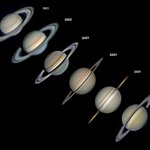
What a difference a few years can make. This progression from 2021 through 2026 by @hartunivers shows how our view of Saturn’s rings has changed—from wide open, to nearly edge-on, and now beginning to open up again.
Over the years, he’s captured these views with several Celestron telescopes, including the 114mm, C5, and C8.
With Saturn at opposition tonight, it’s a perfect excuse to get your own telescope out and add a 2026 view to your observing log. 🔭
📸 @hartunivers

Now THAT’S a close-up. 🛰️
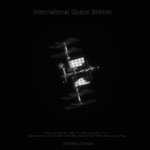
Charline Giroud captured the International Space Station as it passed over the UK.
By imaging the pass in HDR, Charline was able to preserve details such as solar panels and modules that can easily be lost in the ISS’s brightest and darkest areas.
Not a bad catch for something traveling about 17,500 miles per hour. 😮
🔭 Celestron CPC 1100 EdgeHD
📸 Charline Giroud (@charline.giroud_astro)


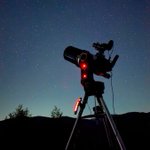
TGIF! 🔭✨ The telescope is set, the sky is clear, and the weekend is officially looking up.
📸: @astrophilia.it
Who’s getting their telescope out this weekend?

What catches your eye first? 👀
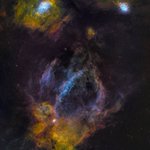
Was it the sprawling Lobster Claw Nebula, the bright Bubble Nebula, or the colorful Northern Lagoon Nebula?
No need to choose just one. Clint Shimer (@spacecityastro) captured all three in this single wide-field view from his backyard in Houston, Texas. Under Bortle 9 skies, it took more than 17 hours of imaging with a Celestron RASA 8 to bring this scene to life.
📸 @spacecityastro
🔭 Celestron RASA 8
⏱️ 17 hours, 36 minutes

🪐 We’re less than a week away from Saturn’s opposition!
On October 4, Saturn reaches opposition, when Earth passes between Saturn and the Sun. That means the ringed planet will be at its brightest for the year and visible throughout the night.
And Iacopo Nicolosi is already getting a great look. Captured from Rome, this image reveals subtle atmospheric bands stretching across Saturn’s globe.
🔭 Celestron XLT 120/1000 refractor
📸 Iacopo Nicolosi
Who’s getting ready for opposition? 🔭👀

Something spooky is happening overhead. 🎃🔭
October brings longer nights, two meteor showers, and plenty of reasons to spend an evening under the stars. No tricks here—just a month full of observing treats.
Here’s what to watch in October 2026:
🪐 Oct 4 – Mars & Moon Conjunction
🪐 Oct 6 – Jupiter & Moon Conjunction
🌠 Oct 8–9 – Draconid Meteor Shower peaks
🌑 Oct 10 – New Moon
🌠 Oct 21–22 – Orionid Meteor Shower peaks
🌕 Oct 26 – Full Moon
The Draconids kick things off early in the month, followed by the Orionids later in October. Add a New Moon for darker skies and a Full Moon just a few days before Halloween, and October is looking pretty good. 👻
What’s on your observing list this month?
Clear skies and happy observing!
#Celestron #Astronomy #NightSky #Stargazing #Orionids #Draconids #OctoberSky


Ever wonder why Sirius seems to put on a light show? ✨
Known as the Dog Star, Sirius is the brightest star in our night sky—and when it’s low on the horizon, Earth’s turbulent atmosphere can make its light rapidly shift and flash with color.
Scott Dunn captured that effect in this striking image, where the colors of Sirius have been stretched into a spectacular pattern across the frame. 🌈⭐
🔭 Celestron 8" SCT + 0.63x reducer
📸 Scott Dunn


Venus showing off its phases. 🌙✨
This crescent Venus was captured from New Delhi by @astronomy.delhi using his Celestron NexStar 6SLT. Because Venus orbits closer to the Sun than Earth, we see it go through phases much like the Moon.
📸: @astronomy.delhi
🔭: Celestron NexStar 6SLT
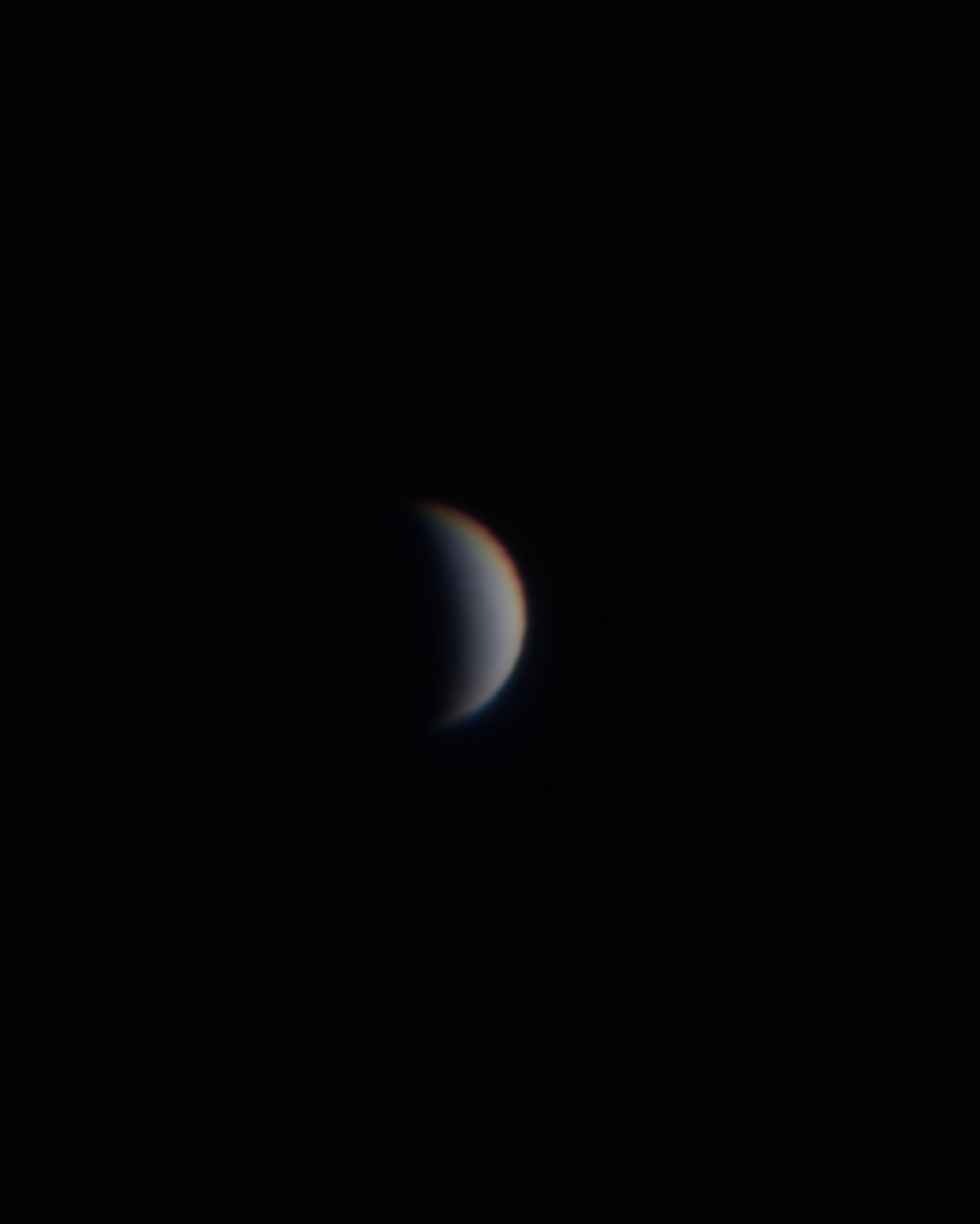

Now, where are Blinky, Pinky, Inky, and Clyde when you need them? 🕹️
This is NGC 281, appropriately nicknamed the Pacman Nebula for the dark dust lane that gives the glowing nebula its familiar shape.
Chuck Ayoub captured a much wider look at the region with his Celestron RASA 8, revealing just how much dark dust surrounds our hungry little friend. Those clouds aren’t ghosts, but they are part of an active star-forming region about 9,200 light-years away.
#Celestron #RASA8 #PacmanNebula #NGC281 #Astrophotography

Dario Orizio captured the lunar surface near the terminator, where low-angle sunlight turns craters, ridges, and long fractures into a landscape of extreme light and shadow.
Look closely and you can trace Rima Hyginus, Rimae Triesnecker, and Rima Ariadaeus across the surface, while craters including Manilius, Agrippa, Godin, Hipparchus, and Albategnius emerge from the shadows.
It’s one of the best places on the Moon to explore—the changing light can make familiar terrain look completely different from one night to the next.
🔭 Celestron C11
📸 @dario_orizio75
#Celestron #LunarImaging #Moon #Astrophotography #LunarPhotography

This is what a good night looks like. 🔭✨
📸 @dzvf.derpodcast
#Celestron #Astronomy #Astrophotography #Stargazing #ClearSkies

Ryan Thom turned his Celestron RASA 8 toward the Andromeda Galaxy (M31), revealing its bright central core, sweeping dust lanes, and faint outer reaches. Look around Andromeda and you’ll also spot two of its satellite galaxies: M32 and M110.
To preserve detail from the brilliant core all the way out to the much fainter edges, Ryan combined exposures of 10, 30, and 60 seconds into an HDR image—just under 47 minutes of total exposure time.
The result is a beautiful look at a galaxy roughly 2.5 million light-years away, captured from Mount Rainier National Park.
🔭 Celestron RASA 8
#Celestron #RASA8 #AndromedaGalaxy #M31 #Astrophotography #DeepSkyAstrophotography

A good pair of binoculars belongs on the adventure. 🌿🔭
Chayanika Maiti brought her Celestron binoculars along for a trek through Kalapathar, getting a closer look at the birds and wildlife she encountered along the way.
From the trail to the treetops, having binoculars within reach made it easy to take in more of her surroundings—and capture an experience she says she’ll “cherish forever.”
📸 @_chayanikamaiti
#Celestron #Birdwatching #Binoculars #JungleTrek #OutdoorAdventure

