

Assistant professor @EmoryGoizueta. PhD @Stanford Computer Science. Researcher in #ComputationalSocialScience #HCI
Stanford, CA
Joined July 2019
- Tweets1.1K
- Following2K
- Followers3.5K
- Likes3.6K





Pinned Tweet
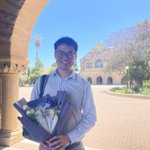
Life update: Thrilled to announce I will join @EmoryUniversity @EmoryGoizueta Information Systems & Operations Management Department as an assistant professor in summer 2025, after a year as a postdoc at Microsoft Office of Applied Research!

Hancheng Cao retweeted

Reunited with my HCI crew at @NotionStatus beautiful HQ
Always inspiring to talk UX and human–AI collaboration with them.
A few takeaways:
1. AI makes it easier to bring ideas to life. Knowing what’s worth making becomes more valuable.
2.Exploring more options can expand your creativity. Taste grows through choosing, understanding why something works, and learning from how people respond.
3. Another interesting observation: my academic circle seems quieter on X, while startup and industry people are sharing more and more. What we see shapes our taste, so it’s worth looking beyond the feed. Some of the most interesting work may come from people who rarely post.


Hancheng Cao retweeted

I get a lot of emails from prospective students/collaborators. I don't know if faculty more generally feel this way, but my advice:
1. If you're interested in our PhD program, just apply. I can assure you that we review every applicant. You don't need some prior relationship.
2. If you're a student wanting to get into research, just do research projects on your own that you think are interesting. I could never provide mentorship better than having the experience of working on a question you think is interesting and seeing where it takes you. The work you produce will almost certainly be terrible but the experience & feeling is important.
Hancheng Cao retweeted

Stop making your AI agents debate and vote.
New Stanford+Together AI paper shows teams that learn to check each other's work solve problems none of them got right alone.
Many agent setups just have models debate, then vote. That mostly picks an answer someone already had.
Here, 1 model reviewed past team chats and rewrote the team's playbook, like who double-checks whom and who plays devil's advocate. Learning this took just 15 practice problems.
On math and physics tests, the 3-model team averaged 66.7%, versus 48.8% for its best model alone. It even beat perfectly choosing among the models' own answers, so teamwork created right answers none of them had.
So skip the debate-and-vote script: give agents clear jobs like checker and challenger, and let past runs improve them.

Hancheng Cao retweeted

Banger paper from Stanford and Together AI.
They show why it might be a good idea to let your agent team learn its own way of working together.
(bookmark it)
Three models (o3-mini, Claude Sonnet 4 and DeepSeek-V3) averaged 66.7% across five math and physics benchmarks as a self-organizing team.
Their strongest member alone scored 48.8%, and a perfect router choosing among the members' independent answers scored 59.0%.
On AIME 2026 the team reached 71.2%, 13.4 points above that router.
One member reviews the team's earlier exchanges and rewrites the teamwork strategy, covering roles, the order of discussion phases, who participates and how partial answers are combined. The strategies were learned from only 15 AIME 2024 problems and then applied unchanged to held-out AIME 2024 problems and four new benchmarks.
Paper: academy.dair.ai/papers/self-…

Hancheng Cao retweeted

Recommended paper. Research on effective agent collaboration/communication is lacking, but self-organizing agents seem much more capable than previously thought.

Banger paper from Stanford and Together AI.
They show why it might be a good idea to let your agent team learn its own way of working together.
(bookmark it)
Three models (o3-mini, Claude Sonnet 4 and DeepSeek-V3) averaged 66.7% across five math and physics benchmarks as a self-organizing team.
Their strongest member alone scored 48.8%, and a perfect router choosing among the members' independent answers scored 59.0%.
On AIME 2026 the team reached 71.2%, 13.4 points above that router.
One member reviews the team's earlier exchanges and rewrites the teamwork strategy, covering roles, the order of discussion phases, who participates and how partial answers are combined. The strategies were learned from only 15 AIME 2024 problems and then applied unchanged to held-out AIME 2024 problems and four new benchmarks.
Paper: academy.dair.ai/papers/self-…
Hancheng Cao retweeted

"Self-Organizing Agent Teams Learn to Reason Together"
Most multi-agent systems are given a fixed way to collaborate.
This paper shows agents can instead learn how to work together from experience, developing teamwork strategies that let them challenge, repair, and build on each other’s reasoning.
With this setup, they were able to get 66.7% accuracy vs 48.8% for the strongest member and 59.0% for a perfect router.
So the agents aren’t just selecting the best individual answer, but reasoning together to solve problems none could solve alone.
alphaxiv.org/abs/2609.22682

Hancheng Cao retweeted

More capable intelligence emerges when AI agents organize themselves.
Great work by @aneeshpappu w/ awesome collaborators!

The recent breakthrough in Navier-Stokes has garnered a lot of attention to the new possibilities that emerge when agents work together.
We have been interested in this question for a while. How can a team of agents achieve more than agents working alone?
I'm excited to finally share our new work, "Self-Organizing Agent Teams Learn to Reason Together" 🧵

Check out our new work "Self-Organizing Agent Teams Learn to Reason Together"!
The recent breakthrough in Navier-Stokes has garnered a lot of attention to the new possibilities that emerge when agents work together.
We have been interested in this question for a while. How can a team of agents achieve more than agents working alone?
I'm excited to finally share our new work, "Self-Organizing Agent Teams Learn to Reason Together" 🧵
Hancheng Cao retweeted

🚨 Last call for papers!
The extended submission deadline for Managing Agents that Manage Agents: Workshop on Responsible Use of Meta-Agents at NeurIPS 2026 (@NeurIPSConf) is now TOMORROW AOE!
🌟 We’re excited to host an outstanding speaker and panelist lineup, including
@gneubig (CMU),
@chelseabfinn (Stanford),
@jennyzhangzt(Recursive Superintelligence & UBC),
@RobertTLange (Sakana AI),
@uiuc_aisecure (UIUC),
@CaoHancheng (Emory),
@yuandongtian (Recursive),
@ChenSun92 (Google DeepMind).
We strongly encourage new work and findings. Concurrent submissions and previously unpublished work are welcome, the workshop is non-archival. You may use the NeurIPS 2026 or ICLR 2027 LaTeX templates.
We welcome contributions on a wide range of topics related to meta-agents, including but not limited to:
🛠️ Automated design of agent harnesses
⚙️ Optimization and post-training of agentic systems
🔁 Recursive self-improvement and open-ended evolution
📊 Evaluation and benchmarks for meta-agents
🛡️ Misalignment and safety for meta-agents
🏛️ Governance and human oversight of agents
🎓 With support from @metaai and @e2b, we are offering 15 student registration awards, plus Best Paper and Best Social Impact Paper awards.
See you all in Sydney!
#NeurIPS2026 #MetaAgents #Harness #RSI #SelfImprovement

Hancheng Cao retweeted
Will be presenting our work on multiagent teams with @james_y_zou at ICML tomorrow, Tuesday, 10.30am poster session, #1909! Would be happy to discuss interesting directions for multi agent systems 🙂

Hancheng Cao retweeted
Our work on multi-agent teamwork is accepted to #ICML2026!
When agents operate beyond fixed workflows, teamwork is critical. We show that frontier LLMs often make poor teammates—not because they're unhelpful, but because they're too accommodating.
Great job by @aneeshpappu w/ awesome collaborators!
Hancheng Cao retweeted
Excited to share our work “Multi-Agent Teams Hold Experts Back” was accepted to #ICML2026 🚀
Thank you to wonderful collaborators @james_y_zou @elb4tu @CaoHancheng Carmelo di Nolfo @sun_yanchao and Meng Cao for making my first PhD project such a fun experience!
Hancheng Cao retweeted
Nice @ScienceNews article discussing our work on AI agents for science--and how teamwork proves surprisingly tricky for AI.

Supposedly, AI agents are the future of work. But teamwork proves tricky for these bots.
sciencenews.org/article/ai-a…

Hancheng Cao retweeted

Supposedly, AI agents are the future of work. But teamwork proves tricky for these bots.
sciencenews.org/article/ai-a…
Hancheng Cao retweeted
Thank you @ScienceNews for discussing our work with @james_y_zou on how teamwork can be difficult for AI agents. More here: arxiv.org/abs/2602.01011

Supposedly, AI agents are the future of work. But teamwork proves tricky for these bots.
sciencenews.org/article/ai-a…
Five years later, our research on meeting multitasking is still in the conversation, recently quoted in @TheEconomist!

Nothing beats a handwritten note for the very reason that it is inconvenient. Someone has taken the time and trouble to do something wildly countercultural. This produces a clear signal that they really are grateful economist.com/business/2026/…

Excited to share I’ve been appointed Associated Assistant Professor (courtesy appointment) at Emory University Department of Computer Science, while my primary home remains in Information Systems & Operations Management at @EmoryGoizueta!


My work sits at the intersection of AI, human-computer interaction, and organizations, and I’m excited that this role makes it easier to build bridges between computer science and management scholarship and collaborate across both communities!