

Nigeria's civic tech organisation, raising the standards of transparency, citizen engagement & accountability most especially in public finance. #AskQuestions
Joined March 2011
- Tweets79.4K
- Following2.9K
- Followers277K
- Likes6.8K





Pinned Tweet
Nigeria’s 2026 Federal Budget is worth N68.32 trillion. But whose needs are reflected in how that money is spent?
Think about the young Nigerian searching for opportunities, the girl who needs quality education, or the person with a disability who struggles to access public facilities. How much of the budget is directed towards their needs?
Thread!
#GetInvolved #AskQuestions #FollowTheMoney


Nigeria’s young population holds enormous potential to shape the country’s future. With AI creating new opportunities to develop solutions, work with data and tackle real-world challenges, young Nigerians have more ways to contribute to governance and civic participation.
Tomorrow, BudgIT will be at the 7th Kano Social Influencers Summit (KANSIS 2026), where @kunmioludiran, our Data Analyst with the AI Unit, will moderate a panel on “Young Voices, AI and the Future of Governance.”
Drawing on BudgIT’s experience with civic technology and tools like Bimi, the session will explore how young people can use AI to understand public finance, strengthen accountability and turn information into action.
🗓️ 22 October 2026
🕘 9:00 AM
📍 Khalifa Isyaku Rabiu University (KHAIRUN), Gadon Kaya, Kano State.
We look forward to meaningful conversations and insights on how young Nigerians can use AI to shape governance and drive change.
#KANSIS2026 #GetInvolved

Fuel price discount at NNPC filling stations?
Nigerians have questions!
The Federal Government’s announcement has sparked debate over what the discount really means. Is it a subsidy, a promotional offer, or simply a discount? With fuel prices influencing transportation fares and the cost of living, there’s a lot to consider.
This afternoon, our Country Director, @Thegrey8, will be live on @tvcnewsng to weigh in on the development and discuss the issues surrounding the fuel price discount.
📺 Tune in at 2:00 PM and follow the conversation!
#GetInvolved

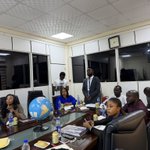
Last Wednesday, the @BudgITng team joined members of the Open Alliance for a courtesy visit to the Office of the Director of Legal Services of the Nigeria Police Force.
The meeting provided an opportunity to discuss the proposed establishment of state police, the progress of the process and how civil society can contribute to ongoing policing reforms.
The office shared updates on the state police proposal and the constitutional steps required for its implementation. The conversation also explored how the Nigeria Police Force and civil society organisations can work more closely, particularly by sharing information from communities and strengthening accountability.
At BudgIT, we are always eager to participate in conversations that bring citizens, civil society and public institutions together to exchange perspectives and contribute to decisions that affect Nigerians.
#GetInvolved #AskQuestions


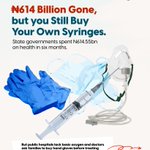
You are paying a double tax on your life.
Our latest subnational data tracking macro-fiscal reforms and state expenditures found that state governments collectively logged N614.55 billion on healthcare in a six-month window.
But on the ground, the clinical reality reflects an entirely different transaction.
When a public hospital lacks basic medical oxygen, or requires a family to personally buy gloves and syringes before treating an emergency, it functions as an involuntary double-tax on citizens.
You pay once through state-level public resources. You pay a second time out of pocket during your family’s most vulnerable moments.
If state governments are spending this much on healthcare, Nigerians deserve to see that investment reflected in the care they receive, not in another bill they must pay to stay alive.
#AskQuestions #FollowTheMoney


BudgIT Nigeria retweeted
Eleven years ago, BudgIT set out to examine the financial health of Nigeria’s states and what their fiscal realities meant for development.
That question gave rise to the State of States Report, which has shaped national conversations on state finances, revenue generation and fiscal sustainability, keeping public resource management in focus.
Over the years, the report has examined how states generate revenue, their dependence on federal allocations and their capacity to meet financial obligations. For the 2026 edition, we are taking a closer look at how states spend the resources available to them, the sectors they prioritise and how these decisions align with the development needs of their citizens.
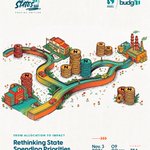
𝐓𝐡𝐞𝐦𝐞: 𝐅𝐫𝐨𝐦 𝐀𝐥𝐥𝐨𝐜𝐚𝐭𝐢𝐨𝐧 𝐭𝐨 𝐈𝐦𝐩𝐚𝐜𝐭: 𝐑𝐞𝐭𝐡𝐢𝐧𝐤𝐢𝐧𝐠 𝐒𝐭𝐚𝐭𝐞 𝐒𝐩𝐞𝐧𝐝𝐢𝐧𝐠 𝐏𝐫𝐢𝐨𝐫𝐢𝐭𝐢𝐞𝐬.
What will this year’s report reveal about where states are directing their resources and the needs they are prioritising?
The 2026 State of States Report launches on November 3, bringing these questions into sharper focus.
📅 November 3, 2026
⏰ 9:00 AM
#StateofStates2026 #GetInvolved #AskQuestions #FollowTheMoney

14 DAYS TO THE REPORT OF THE YEAR!
Nigeria, are you ready?
You already know how we do it at #StateofStates. The room, the questions, the conversations and the different takes that keep the discussion going long after the event. And trust us, this year’s conversations are ones you’ll want to be part of!
From Allocation to Impact: Rethinking State Spending Priorities. That’s what we’re bringing to the table this year, and we already have lots of questions that need answers!
November 3rd, we’re coming. The countdown is on!
#StateofStates2026 #GetInvolved #AskQuestions
BudgIT Nigeria retweeted

PREGNANT WOMEN DYING BECAUSE THEIR COMMUNITY HEALTHCARE CENTER IS NEGLECTED. This cannot be our new normal!🚨
For over six years, the Comprehensive Health Centre in Idi-Iroko, Adewole Community, Oluyole LGA, Oyo State, has struggled with deteriorating infrastructure, and has been unable to serve the community.
During our recent visit, we met a ghost house. Broken roofs, collapsed and broken walls, no medical equipment or attendant.
According to community members, the nearest alternative healthcare centre is about 10km away, which makes it harder for them to access quick medical attention.
Pregnant women, nursing mothers, children, older persons, and residents requiring urgent medical care sometimes get worse or die in the attempt to access care!
Dear Gov @seyimakinde, @OyoStateMOH, this is a call for IMMEDIATE intervention.
Accessible healthcare is a non negotiable!
#FixOurPHCs
Eleven years ago, BudgIT set out to examine the financial health of Nigeria’s states and what their fiscal realities meant for development.
That question gave rise to the State of States Report, which has shaped national conversations on state finances, revenue generation and fiscal sustainability, keeping public resource management in focus.
Over the years, the report has examined how states generate revenue, their dependence on federal allocations and their capacity to meet financial obligations. For the 2026 edition, we are taking a closer look at how states spend the resources available to them, the sectors they prioritise and how these decisions align with the development needs of their citizens.
𝐓𝐡𝐞𝐦𝐞: 𝐅𝐫𝐨𝐦 𝐀𝐥𝐥𝐨𝐜𝐚𝐭𝐢𝐨𝐧 𝐭𝐨 𝐈𝐦𝐩𝐚𝐜𝐭: 𝐑𝐞𝐭𝐡𝐢𝐧𝐤𝐢𝐧𝐠 𝐒𝐭𝐚𝐭𝐞 𝐒𝐩𝐞𝐧𝐝𝐢𝐧𝐠 𝐏𝐫𝐢𝐨𝐫𝐢𝐭𝐢𝐞𝐬.
What will this year’s report reveal about where states are directing their resources and the needs they are prioritising?
The 2026 State of States Report launches on November 3, bringing these questions into sharper focus.
📅 November 3, 2026
⏰ 9:00 AM
#StateofStates2026 #GetInvolved #AskQuestions #FollowTheMoney
BudgIT Nigeria retweeted
On October 5, 2026, residents of Ifedola Estate in Meiran-Ilewe, Alimosho, Lagos, raised concerns about a drainage project that had remained unfinished for over three years.
In the first half of 2026, that same local government received N20.38 billion in FAAC allocations, the highest of all 774 local governments in Nigeria.
Alimosho was not alone at the top. All 10 local governments with the highest allocations were in Lagos State, with even the lowest among them receiving N15.42 billion.
At the other end, seven of the 10 local governments with the lowest allocations were in Osun State. Ifedayo received N2.36 billion, the lowest nationwide. That is about N13 billion less than the lowest allocation among the top 10 local governments.
With 2026 drawing to a close, what do local governments have to show for the funds they received in the first half of the year? Residents should be seeing completed projects and better public services in their communities.
Look around your community. What projects or improvements in public services can you point to?
Read the full H1 2026 FAAC analysis to see how your local government compares: budgit.org/post_publications…
#GetInformed #AskQuestions #FollowTheMoney


BudgIT Nigeria retweeted

This is why I use @BudgITng to track whatever goes down in both State level and LGAs.
Everyone needs to know what goes on in their States.

When essential medicines and diagnostic tools are unavailable, “there’s no funding” can become the explanation. For Joy Bathram, a Supply Chain Pharmacist in Kebbi State, this raised another concern. How could she understand the funding behind these shortages without knowing how public money was being spent?
In this edition of our #BudgITAt15 Impact Stories series, we share Joy’s journey towards understanding public spending and accountability in healthcare, where funding decisions affect the availability of essential medicines and the services people rely on.
Through BudgIT’s State Fiscal Transparency League (SFTL) Fellowship, Joy learned how to follow state spending and examine how public funds are used.
And now with support from the Nigeria Youth Futures Fund, she plans to share this knowledge with young people in Argungu, helping them understand budget documents, track project implementation and advocate for a citizens’ budget.
#BudgITAt15 #GetInvolved #AskQuestions


On October 5, 2026, residents of Ifedola Estate in Meiran-Ilewe, Alimosho, Lagos, raised concerns about a drainage project that had remained unfinished for over three years.
In the first half of 2026, that same local government received N20.38 billion in FAAC allocations, the highest of all 774 local governments in Nigeria.
Alimosho was not alone at the top. All 10 local governments with the highest allocations were in Lagos State, with even the lowest among them receiving N15.42 billion.
At the other end, seven of the 10 local governments with the lowest allocations were in Osun State. Ifedayo received N2.36 billion, the lowest nationwide. That is about N13 billion less than the lowest allocation among the top 10 local governments.
With 2026 drawing to a close, what do local governments have to show for the funds they received in the first half of the year? Residents should be seeing completed projects and better public services in their communities.
Look around your community. What projects or improvements in public services can you point to?
Read the full H1 2026 FAAC analysis to see how your local government compares: budgit.org/post_publications…
#GetInformed #AskQuestions #FollowTheMoney
BudgIT Nigeria retweeted
Do you know Nigeria has the largest electricity access deficit in the world?
More than 80% of businesses and urban households reportedly rely on fossil fuel generators, contributing to an estimated $22 billion spent collectively on generator fuel every year.
Water access is another challenge. Up to 90% of Nigerians reportedly lack access to safely managed basic water and sanitation services.
When public infrastructure fails, the cost doesn't disappear. It shifts to you. You pay for alternatives, spend more to meet basic needs, and absorb expenses that should not have to come out of your pocket in the first place.
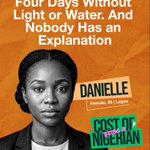
In Abule Ijesha, Lagos, Danielle, like millions of Nigerians, has to navigate this reality repeatedly. She is paying an extra price just to access basic amenities.
Read her story. 1/2
#CostofBeingaNigerian
Tell us, what does this look like where you live?
Have you had to pay out of pocket for basic amenities or find alternatives because public services are unreliable?
Share your experience with us at [email protected]


The federal budget gets all the headlines, but the real picture of Nigerian accountability includes your state government.
Between January and August 2026, a massive ₦7.41 trillion in gross FAAC allocations went directly to the 36 states. Lagos topped the list at ₦626.20bn, followed by Delta, Rivers, Akwa Ibom, and Bayelsa, while Ebonyi received ₦129.13bn.
Every single kobo of that public money is managed by state governors and monitored by state assemblies. Demanding transparency from federal leaders is vital, and matching that energy at the state level ensures complete accountability across the board.
Can you find your state on the list?
Use these numbers to start asking questions about your local roads, schools, and healthcare facilities.
#dataoftheday #GetInvolved #AskQuestions

The federal funds meant to fix your street, clean your drainages, and power your local health centers are not shared equally across Nigeria.
In the first half of 2026, an average local government in Lagos received 15.56 billion Naira from the Federation Account, while an average one in Osun got just 2.87 billion Naira.
This means a LGA in Lagos has over five times the financial power to develop its neighbourhood than one in Osun. This massive gap exists even when you account for the total number of LGAs in each state.
The Federal Account Allocation Committee uses multiple metrics to share these funds. Factors like population size, internal revenue generation, infrastructure needs, and socio-economic indicators dictate the final math. This formula creates drastic funding disparities across state lines.
Osun recorded the lowest average local government allocation at 2.87 billion Naira. Other states at the bottom of the list include Imo at 3.05 billion Naira, Akwa Ibom at 3.17 billion Naira, Ekiti at 3.18 billion Naira, and Abia at 3.27 billion Naira.
Slightly higher up the ladder, Cross River averaged 3.31 billion Naira per council. Jigawa followed closely at 3.35 billion Naira, with Kano at 3.37 billion Naira, Kebbi at 3.39 billion Naira, and Ogun at 3.41 billion Naira.
These federal allocations represent the exact pool of resources available to respond to local needs and deliver grassroots services in your community.
Explore the full H1 2026 FAAC analysis here 👉🏼 budgit.org
#H1FAACAnalysis2026 #GetInvolved #AskQuestions

