

Backend Engineer • Cloud-Native Systems • Blockchain & AI Enthusiast • Decentralized Web . https://xitter.cf/t.co/USffxEWMgN
Joined June 2020
- Tweets3.7K
- Following386
- Followers35
- Likes2.5K


Pinned Tweet
Every match is a market for ninety minutes.
I built Ninety — a live, play-money football exchange for World Cup 2026.
Price = probability. A goal halts the market, it reprices, an AI booth explains the swing, and Solana verifies the result.
ninety-nu.vercel.app

Sushii retweeted

🐘 Introducing Postgres Internals in 3D.
🌟 pgrun.dev/pi
Stop reading boring diagrams. Start exploring PostgreSQL.
An interactive 3D map to understand how Postgres actually works.
100% free. Built for developers.
xitter.cf/alxshp/status/21100494…

Introducing PGSync 🐘
Real-time PostgreSQL replication. FREE. OSS
Built in Rust. 🦀
Postgres 16 / 17 / 18.
No extensions. No triggers. No complex setup.
→ snapshot
→ replicate
→ stream changes
→ track WAL
→ recover from crashes
→ resume automatically
→ keep databases in sync
~15 MB RAM during streaming.
Built for developers. Built for AI agents.
Open source.
xitter.cf/alxshp/status/21078790…
Sushii retweeted

MORE TIPS ON HOW TO PASS Mercor.com ASSESSMENT
I FAILED MY FIRST ANSWER BEFORE I SAID ANYTHING INTERESTING.
The video interview catches people out for a reason nobody explains.
There's no interviewer.
Just a question on screen, a countdown, and your own face staring back at you.
No nodding. No "mm-hmm." No sign you're doing fine.
So people do one of two things.
They freeze and give thirty seconds of nothing.
Or they panic and talk for three minutes with no point.
Both score the same.
Here's the problem underneath it.
Most people answer like this:
"I'm very detail-oriented and I'm passionate about data. I'm a fast learner and I work well under pressure."
Read that again.
Every single applicant can say those words.
Nothing in that sentence belongs to you. It could be copied and pasted into ten thousand other interviews and nobody would notice.
Now compare:
"I pulled apart a freight database. Fourteen tables, eighty-five thousand delivery records. Found five places money was leaking out. About sixteen million dollars worth."
Same person.
Same experience.
One version is forgettable. The other is impossible to forget.
The difference is numbers.
Here's the rule I use.
Every claim needs a number or a name attached to it, or I delete it.
"I teach data analytics" becomes "I run a thirty-day Excel programme and grade every submission myself."
"I have teaching experience" becomes "Four years teaching maths and physics at a secondary school in Ibadan."
Specific is believable.
Vague sounds like lying, even when it's true.
So before any recorded interview, write down four stories you can tell.
Put a number in each one.
Practise saying each in under ninety seconds.
That's the whole preparation.
Not confidence. Not charisma.
Four stories with numbers in them.


MORE TIPS ON HOW TO PASS Mercor.com ASSESSMENT
MY FINGER WAS ON CTRL+V.
Timed assessment.
Hard question.
And a thought arrives that I think everybody has had.
Just paste it into ChatGPT.
Nobody would know.
Here's what stopped me.
Not fear of getting caught, though you would — these companies screen for it, and they're the ones who build the models. They know what their own output looks like.
What stopped me was simpler.
Think about why this job exists.
They have an AI already.
They don't need another one.
They're paying a human being because they want the thing an AI can't give them.
A person who has actually sat with messy data at 2am.
A person who has watched a real student misunderstand a formula for the third time.
A person who knows what a wrong number looks like before they can explain why.
That's the product.
That's the entire product.
So when you paste the question into an AI, you're not cheating the test.
You're deleting the only thing you were being paid for.
You're applying for a job and sending someone else to the interview.
I wrote mine myself.
It took longer.
It was probably a bit rougher than what the machine would have produced.
But it was mine, and mine is what they were buying.
Your messy real experience is not a weakness you need to cover up with AI
polish.
It's the asset.
Stop hiding it.

Sushii retweeted

THIS IS A PURE F*CKING GOLDMINE
Anthropic just shared one of the best tricks for Claude Code.
The idea: let Opus 5.5 write the plan as a script, and let a swarm of cheaper agents run it.
Bigger jobs and way fewer Opus tokens, because the script holds the plan and Opus only sees the final answer.
You just launch Claude Code like this:
claude --model opus --effort ultracode
here's the split:
→ Opus 5.5 turns your task into a workflow script
→ Haiku 5.5 agents scan every file in parallel
→ Sonnet 5.5 agents patch each fix in its own isolated copy
→ you stop burning Opus context on a hundred agent transcripts
Opus only shows up at three moments:
→ writing the workflow before the run
→ reading the verified results after it
→ signing off before anything ships
Opus plans. Haiku scans. Sonnet ships.
JEV engineering is the same move one layer down: the forks that need no thinker (which file, which tool, retry or stop) go to JEV in milliseconds, and the big models only see the ones that split
the full tree
> Opus 5.5 runs the main session and writes the workflow
> scan audits every file on Haiku 5.5
> edit patches each fix on Sonnet 5.5 in an isolated copy
> verify cross-checks every finding on Sonnet 5.5
> Opus 5.5 reads only what survived verification
> JEV routes micro-forks in milliseconds
paste the tree and this prompt into Claude Code ↓
"Rebuild my Claude Code setup around this tree:
1. Run the main session on Opus 5.5 with ultracode on.
2. In every workflow, run read-only scan stages on Haiku 5.5 and edit stages on Sonnet 5.5, each edit in its own isolated copy.
3. Add one rule to CLAUDE.md: every finding gets an independent verifier agent before it's reported, and fix loops stop after two rounds with no progress.
4. Route fast deterministic forks (tool choice, path selection, retries) through JEV.
Show me every change as a diff first. No edits until I say go."
↳ code.claude.com/docs/en/work…
save it, it'll come in handy.


Sushii retweeted

Michael Truell (Cursor CEO) just released a prompt that turns Opus 5.5 into a software factory that actually builds and ships any app.
It's f*cking unreal...
Send it to Opus 5.5, and thank me later. Then read the full guide for Opus 5.5 Software Factory Engineering.


Sushii retweeted

You can (finally) change how Claude Code works.
Here are 12 mods worth building first:
Access them all here
→ charliehills.substack.com/p/…
A mod changes Claude Code itself (new panels, bars and buttons). Anthropic's launch post passed 4 million views.
Anthropic made three of these. I made five. The rest came from people on X.
See what Claude is doing
Open Loops → every ask, ticked only with proof
Token Weather → how full the chat's memory is
Progress Bar → fills up as each stage finishes
Mission Control → the plan and progress, live
Stop costly mistakes
Blast Radius → shows what a command would delete
Replay Theater → step through every edit Claude made
Safe Delete → deletes go to the Bin, with undo
Mod Check → a safety check before you install
Make it yours
Brand Theme → Claude Code in your own colours
Status Board → every session, a timer on each
Image Preview → see the image you just pasted
Doom Lobby → Doom inside Claude Code (433,351 views)
So I'd pick the one you'd use daily and build that first. Mine took 3 minutes (the edition has both prompts).
Repost ♻️ to help someone in your network.


Sushii retweeted

This is absolutely insane.
A Stanford AI research group joints JEV with Claude Code to sort 100+ billion data points every 15 minutes.
the trick is stupidly simple:
JEV runs a cheap first pass on everything. Claude only gets the hard cases.
so instead of: everything -> Claude -> $$$
it’s: everything -> JEV filters -> hard stuff -> Claude thinks
the boring stuff never touches the expensive model.
Claude gets a tiny pile that actually deserves deeper analysis.
faster. cheaper. way less compute burned.
basically, JEV sorts the mail so the genius only opens what matters.
LLMs think, JEV decides
Read the full Jev setup guide in the article below:


Sushii retweeted

best way to clone a project/company is try to find a vulnerability in it. Reverse engineers the architecture and gives you a decent idea of whats happening under the hood.
Sushii retweeted

Jev Founder, Diogo Almeida (ex-OpenAI):
"The next era is not the Claude Code or Codex era, they are still part of the assistance era with human in the loop - JEV is what comes next for LLMs
x200 faster, x400 cheaper, 0 hallucination, no human in the loop - that's JEV, this is how LLMs will look like"
in 36-minute tech talk, Jev Founder explained why RLHF isn't a thing anymore and how modern LLMs will be built
this talk is worth more than a Stanford Machine Learning degree
watch today no matter what, then learn how to become a Jev Engineer in the article below


Sushii retweeted

Anthropic Product Manager:
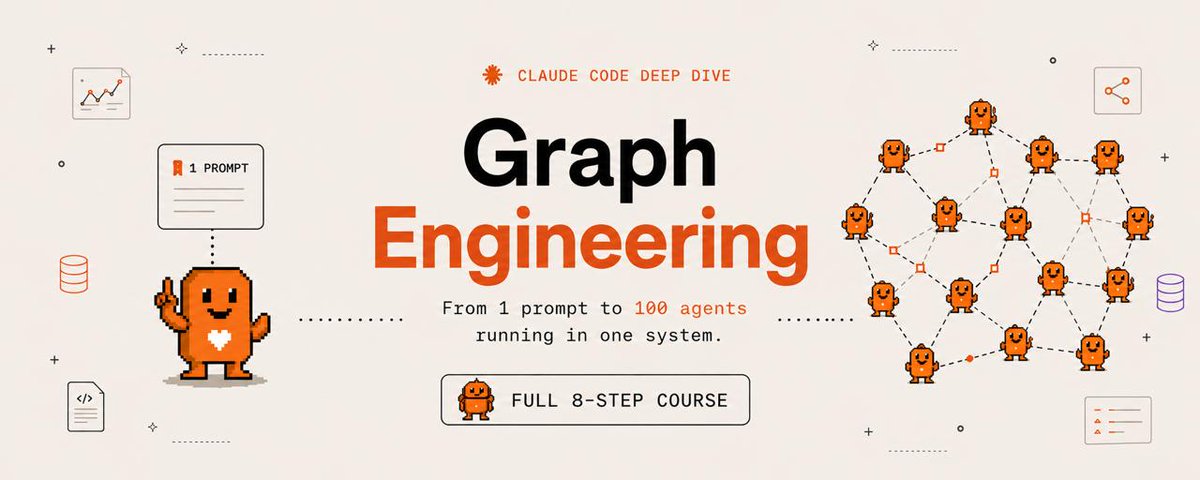
"Now everyone is moving toward agentic graphs. Prompting is basically finished."
in 10 minutes she builds her whole Claude Code setup live, from an empty terminal
Terminal → Agents → Loops → Graphs
prompting was the workflow everyone learned
graph engineering is the one that replaces it
same model, same tokens, and the only thing that changes is the shape you run it in
this 10-minute breakdown is worth more than most $1,000 agent engineering courses
watch it today, then save the full graph engineering guide below
Submitted my Veilo Solana privacy_pool security review to @veilolayer via @SuperteamEarn.
Two relayer-gated fund-loss findings, a deterministic offline PoC, and remediation diffs. No live funds were moved or put at risk. veilo-submission-site.vercel…
Spent the last two weeks building ProofKiosk for the @SolanaBrasil ZeroClaw bounty, and it changed how I think about agents.
I came in knowing software. I left understanding how software meets the physical world.
Most payment demos stop at “paid.” ProofKiosk does not.

Huge thanks to @SuperteamBR and @SolanaBrasil. I learned more about embedded systems and secure agent design than I expected.
Repo: github.com/Sushant6095/proof…
One-pager: proofkiosk.vercel.app/

Sushii retweeted
Anthropic engineer just dropped a 2-hour+ workshop on Graph Engineering.
"80% of our engineers are already using self-improving loops.
Now everyone is building agentic graphs."
04:43 - RAG and graphs
26:30 - Nodes and edges
1:09:11 - Index agent data inside graphs
1:30:50 - The three graph layers
1:48:15 - Self-verifying Adaptive RAG
2:16:37 - What comes after agent loops
Most people are still building isolated agents.
Anthropic engineers are already connecting them into graphs.
Loops are the old workflow.
Graphs are the new one.
This 2-hour workshop is worth more than most $500 agent memory courses.
Bookmark and watch it before everyone catches up.
Then read the full graph engineering roadmap below

Sushii retweeted

🚨 stop rebuilding your agent harness.
langchain just open-sourced the finished one. free
sub-agent spawning, todo-list planning, a virtual filesystem, durable runs on LangGraph. batteries included.
it's called deepagents. the exact harness you keep re-inventing - already done.
26,000+ stars. MIT. one install.
you were about to build this again. don't. it's already done, and it's free.
save it before your next agent build.

I finished it, but the submit form had already closed, before your own 11:59 PM PT deadline. @base44 github.com/Sushant6095/hivem…
