

Director, Perception & Brain Dynamics Laboratory @nyu; Cognitive neuroscientist interested in how the brain generates the mind; “He” rhymes with “the” /hə/
Manhattan, NY
Joined February 2020
- Tweets256
- Following221
- Followers3.7K
- Likes277






Nice work! See this paper from our lab earlier this year showing that one-shot perceptual learning-induced activity change onsets in IT before early visual ctx, the underlying plasticity likely residing in IT, and an ANN model capturing this phenomenon.
nature.com/articles/s41467-0…


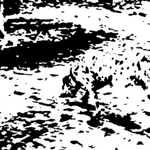
Single trial learning: Same pixels, new perception. 🧠
Researchers uncovered the neuronal mechanisms underlying the “aha!” moment. We recorded the activity of >1,000 human neurons to explore how rapid learning reshapes what we see—and what AI might learn from it.
The picture didn’t change. The brain did.
Armendariz et al, Nature Neuroscience 2026. Read more here:
kreimanlab.com/code/rapid-vi…
Biyu Jade He retweeted

Object perception subjectively feels instantaneous to us, but how do the different levels of object categories (e.g., superordinate like animacy, or basic-level like the object's common name) emerge in our awareness? See @BiyuHe's thread below, and check out our new paper!

New paper from our lab! Led by @ayaka_hach and Thomas Baumgarten.
Does conscious object perception proceed in a "coarse-to-fine" or "fine-to-coarse" sequence? We used neural geometry analyses applied to object category information in HD-EEG to find out.
jneurosci.org/content/early/…

New paper from our lab! Led by @ayaka_hach and Thomas Baumgarten.
Does conscious object perception proceed in a "coarse-to-fine" or "fine-to-coarse" sequence? We used neural geometry analyses applied to object category information in HD-EEG to find out.
jneurosci.org/content/early/…
These results show that at the object category level, conscious vision proceeds in a fine-to-coarse manner, with a basic category representation prior to an abstract superordinate representation. An early superordinate representation is present but largely unconscious.
1
2
195
We propose a mechanistic, dual-stream model to account for these findings. Read our paper to find out more!
Coauthors: @luakoenig and Dillan Spector. Thanks to support by our funders and NYU Grossman School of Medicine!

2
198
This paper is now published!
cell.com/iscience/fulltext/S…
And here is a news digest from Yahoo! Tech:
tech.yahoo.com/ai/articles/a…

New preprint from our lab!
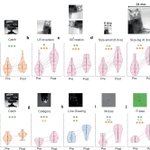
Systematic image perturbations reveal persistent gaps between human and machine vision.
biorxiv.org/content/10.64898…
We compared humans and >200 DNNs in their visual cue usage during object recognition, and reveal systematic differences.

Biyu Jade He retweeted

Humans beat AI at recognizing objects in distorted images.
Learn more in iScience: cell.com/iscience/fulltext/S…
Mugihiko Kato & Biyu J. He
@iScience_CP

ALT first page of article: Systematic image perturbations reveal persistent gaps between human and machine vision
📢My lab at NYU currently has two open post-doc positions. We are interested in understanding perception, thinking, and hallucinations.
We employ a range of cutting-edge techniques in human neuroscience (eg, 7T fMRI, MEG, iEEG/DES) and computational approaches (eg, DNN modeling)
New preprint from our lab!
Systematic image perturbations reveal persistent gaps between human and machine vision.
biorxiv.org/content/10.64898…
We compared humans and >200 DNNs in their visual cue usage during object recognition, and reveal systematic differences.

Current DNNs perform remarkably well in object recognition, but do humans and DNNs really see objects in the same way? I’m excited to share our new paper addressing this question.
biorxiv.org/content/10.64898…
Biyu Jade He retweeted

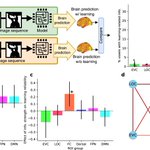
New research featuring @BiyuHe shows the brain predicts sounds before they happen using a broad network of regions, not a single “prediction center,” offering new insight into how we process speech and complex sounds. Via @nature
nature.com/articles/s41467-0…

Biyu Jade He retweeted

Over 200 people registered! Come join us!

@CogCompNeuro Satellite Event:
COMPUTATIONAL CONSCIOUSNESS SCIENCE
Saturday, 1 August 2026
New York University
Bringing computational modelling, neuroscience, and philosophy together to understand consciousness
NYU Center for Mind, Brain and Consciousness
#CCN2026

New paper alert from our lab!
nature.com/articles/s41467-0…
We used stimuli sequences following 1/f statistical patterns—an ubiquitous statistical structure in natural stimuli—to probe predictive processing in the human brain.
How does the brain predict upcoming sensory input?
We found increased directed influences in the dorsal auditory pathway (parietal->frontal) as the auditory sequence evolved, while directed influences across the rest of the brain generally decreased over time, highlighting the dorsal auditory pathway in time-forward predictions.
Please read our paper to find out more! This work was co-led by Thomas Baumgarten and Lua Koenig. Many thanks to our funders and collaborators!
@nyugrossman @NYULH_Neuro