

Heather Holm - author of Pollinators of Native Plants, Bees, and Wasps. Pollinator Conservationist and Environmental Educator
Minnesota
Joined May 2015
- Tweets641
- Following756
- Followers2.5K
- Likes1.2K
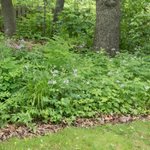



My latest storymap features Soft Landings, a concept developed by Leslie Pilgrim and me. This concept builds upon @DLNarango's research on leps and host plants.
Soft Landings are diverse native plantings under the dripline of keystone native trees.
Link: arcg.is/1Lvry

Heather Holm retweeted

Fantastic storymap by @BeesNativePlant on creating "soft landings" of native vegetation & leaf layer under keystone trees to support butterflies, moths, bees, fireflies and many other wildlife species in our gardens.
storymaps.com/stories/7942b5…
@NWF @Garden4Wildlife
Heather Holm retweeted

And so happy to be alongside rockstars @BeesNativePlant and @SaveWildBees Go team bees!
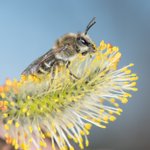
Yesterday, cellophane #bee (Colletes inaequalis) females perched at their nest entrances in morning, waiting for temps to warm up. Males patrolling nest aggregation. In afternoon, females visited pussy willow. Nest provisioning iminent after today's rainy weather subsides.


Heather Holm retweeted

Join CWF April 11th as Heather Holm, highly-respected researcher and award-winning author, shares her discoveries and beautiful photography of our native wasps. 🐝
Register here: ow.ly/T2aj50Nt5Q3

"It turns out I’ve been filling my yard with a mix of ecological junk food and horticultural terrorists." 😆
wapo.st/3KmL8rC

My latest storymap titled Signs of Spring, features the unequal cellophane bee (Colletes inaequalis). Learn more about the natural history of this early spring solitary bee and the native plants it depends on:
arcg.is/1K0v4y
#bees #pollinators #nativeplants

Latest video on my YouTube channel features the unequal cellophane bee (Colletes inaequalis). This bee species is active in early spring—as early as the end of March in MN. Watch the video to learn more about this bee's natural history:
youtube.com/watch?v=mf9BbNR-…
#bees #pollinators
My latest video features the fraternal potter wasp (Eumenes fraternus), the amazing architect of jug-shaped mud nests!
youtube.com/watch?v=-BDMUURb…
#wasps #wasplove
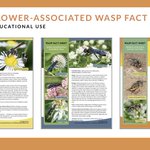
I have been working on some new flower-associated wasp fact sheets for common species occurring in central and eastern North America! Several are now available to download from my author website here:
pollinatorsnativeplants.com/…
More to come when time permits 🙂
#wasps #WaspLove


A Myzinum quinquecinctum female (five-banded thynnid wasp) sips on some nectar from common boneset. This parasitoid wasp lays its eggs on white grubs (scarab beetle larvae) located belowground. Check out my new fact sheet about this #wasp: tinyurl.com/eytntytv
#wasplove #wasps

Wasp photos taken Thursday including another observation of Zethus spinipes, a recent arrival to MN.
Photo 1) Zethus spinipes spinipes
Photo 2) Parancistrocerus leionotus
Photo 3) Episyron biguttatus
Photo 4) Ancistrocerus adiabatus
#WaspLove #nativeplants #beneficialinsects


Heather Holm retweeted

We got Pollinators of Native Plants by @BeesNativePlant in the mail today and it is such an amazing book. Just so much incredible information with amazing pictures and tips/best practices/instructions. Super excited haha


Heather Holm retweeted

Loving the positive press #wasps are getting this summer!! @BeesNativePlant Thanks @NWF @InsectFan! Reconsidering Wasps nwf.org/Magazines/National-W… #wasplove @RoyEntSoc – at Republic of Croatia

My friend Angela Grill emailed me about some bicolored striped striped sweat bees (Agapostemon virescens) nesting in the lawn at her workplace. A communal nest with four separate tumuli. Photos of nest guard and female departing.
#bees #pollinators #nativebees #nests


The large black cherry that fell in our yard had several types of wasps nesting in the dry, rotting core including an Ectemnius (possibly E. cephalotes), Crossocerus annulipes, and a Pemphredon (not shown). See photos of prey (flies and leafhoppers). #wasplove #wasps #crabronid


The second wasp I observed collecting clumps of clay in the garden to partition/seal her nest - Trypoxylon sp. Trypoxylon generally nest in preexisting cavities although the organ pipe mud dauber (Trypoxylon politum) constructs free-form mud nests that resemble organ pipes. #wasp
An Auplopus female gathers a clump of damp sand. Spider wasps in this genus construct mud nests, usuallly attached to an object. I am still looking for this wasp's nest — it may be underneath a rock. Stay tuned. #spiderwasps #beneficialinsects #wasplove


