

Saving America's Battlefields.
Washington, DC
Joined March 2009
- Tweets23.7K
- Following973
- Followers52.3K
- Likes3.3K




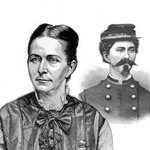

Hoping to slow Union Maj. Gen. Phil Sheridan’s progress in the Shenandoah Valley, Confederate Maj Gen. Jubal Early attacked Union forces at Cedar Creek #OnThisDay October 19, 1864. Early initially drove three Union corps from the field, but when he paused to reorganize, Sheridan arrived, rallied his troops, and launched a counterattack from which Early could not recover. This Union victory extinguished Early’s hopes of future Confederate offensives in the Valley. battlefields.org/learn/civil…

After six years of war, both the British and Continental armies were exhausted. The British, in hostile territory, held only a few coastal areas in America. On the other side of the Atlantic, Britain was also waging a global war with France and Spain. The American conflict was unpopular and divisive, and there was no end in sight. For the colonies, the long struggle for independence was leading to enormous debt, food shortages, and a lack of morale among the soldiers. Both sides were desperately seeking a definitive victory.
Outnumbered and outfought during a three-week siege in which they sustained great losses, British troops surrendered to the Continental Army and their French allies at Yorktown, Virginia, #OnThisDay October 19, 1781. This last major land battle of the American Revolution led to negotiations for peace with the British and the signing of the Treaty of Paris in 1783.
Did you know that visitors to Mount Vernon have claimed to see ghosts walking Washington’s estate? In 1806, Josiah Quincy III stayed in Washington’s bedroom at Mount Vernon and claimed to see his ghost. He speculated that Washington’s spirit could not rest in peace after relic hunters disturbed his tomb. Perhaps his spirit now rests easier thanks to the preservation work still ongoing at his former home. battlefields.org/learn/head-…

#OnThisDay October 18, 1776, Gen. William Howe’s men landed at Throg’s Neck, New York, at a spot called Pell’s Point. As they advanced, the British were shot at by Comm. John Glover’s forces from behind a series of natural stone walls. The Americans ultimately withdrew as the British advanced, but their tactics delayed the British invasion and bought Washington time to regroup at White Plains.
battlefields.org/learn/revol…

#OnThisDay October 18, 1862, as Confederate troops were retreating from the Battle of Perryville, action took place on the grounds of Henry Clay's "Ashland" Estate. Approximately 1,800 Confederate troops under the command of General John Hunt Morgan engaged in a skirmish with 294 Union troops from the Third and Fourth Ohio, who were camped on farmland at the estate. By the end of the fighting, Morgan's men captured a total of 290 Union soldiers.
battlefields.org/visit/herit…

Attempting to turn over a new leaf and leave behind the disaster that had unfolded at Fredericksburg, Major General Ambrose Burnside ordered the whole army to march downriver in January 1863 to cross under the cover of a cavalry feint upstream. But heavy rains exacerbated by massive deforestation — due to soldiers burning the surrounding woods for warmth — caused the already bad roads of Central Virginia to deteriorate further. In what is remembered as “The Mud March” and “The Union’s Valley Forge,” the Army of the Potomac became hopelessly mired in mud that was supposedly so deep and thick as to have swallowed entire gun carriages and limbers of artillery. battlefields.org/learn/artic…

When it rains nowadays, the only thing most people have to worry about is remembering an umbrella. But during the American Revolution, rain could change the outcomes of entire battles! On October 8, 1777, the British army under Lieutenant General John Burgoyne tried to escape north after fighting at Bemis Heights, but cold, hard rain forced them to stop and encamp near Saratoga, New York. Hungry, weary, and out of options, the British dug in and prepared to defend themselves, but within two days the Americans had them surrounded. #OnThisDay October 17, 1777, after negotiations, Burgoyne's army surrendered. This American victory impressed the French, and France signed a formal Treaty of Alliance with the United States, changing the course of the American Revolution. battlefields.org/learn/artic…

After extensive negotiations, British Lieutenant General John Burgoyne and his forces surrendered to American forces under Major General Horatio Gates #OnThisDay October 17, 1777, in Saratoga, New York. Impressed by the Patriots’ resistance to Britain during the Battle of Saratoga, France signed the formal Treaty of Alliance and Treaty of Amity and Commerce with the Americans, formally acknowledging the United States as a sovereign nation and guaranteeing French military and commercial support. This support, along with later aid from the Spanish and the Dutch, tipped the balance of the conflict in the United States’ favor. battlefields.org/learn/revol…

October is Family History Month! To celebrate, the Trust is highlighting resources to help you explore your own family history and bring the past to life: battlefields.org/making-the-…
Share your connections to history in the comments!
In the heat of the battle, during the Battle of Antietam, a Minnie ball tore through Confederate Brig. Gen. George B. Anderson’s ankle. After being transported multiple times from town to town to get medical attention in order to spare himself amputation, Anderson eventually ended up in Raleigh, North Carolina, where doctors were forced to amputate his foot. However, the wound had already been infected, and he died of the complications #OnThisDay October 16, 1862. He was one of six generals killed or mortally wounded at Antietam. battlefields.org/learn/biogr…

#OnThisDay October 16, 1859, abolitionist John Brown and 21 men raided the Federal Arsenal in Harpers Ferry, Virginia (now West Virginia). They hoped to use the weapons there to arm and free the enslaved along the Appalachian Mountains. However, Brown’s plan quickly fell apart when the local enslaved people refused to join the raid, and Robert E. Lee’s Marines successfully subdued the raiders and captured Brown. Before being hanged, he uttered these prophetic words: “I John Brown am now quite certain that the crimes of this guilty land will never be purged away; but with Blood.” battlefields.org/learn/biogr…

For nearly 40 years, preservationists have fought to protect Brandy Station from development. Now, another remarkable opportunity is within reach: 414 nearly pristine battlefield acres valued at more than $8 million can be permanently protected if we raise the final $62,500 needed for acquisition!
But saving the land is only part of the long game. An additional $59,563 will support restoration work to help return portions of Brandy Station closer to their historic appearance — making the total goal $122,063 to save and restore this hallowed ground. Learn more and donate today! battlefields.org/give/save-b…

After the Civil War had raged for two long years, John Ortega mustered into the United States Navy and was assigned to the USS Saratoga, a sloop-of-war under the command of Commander George Musalas Colvocoresses. In January 1864, the sloop-of-war headed toward Charleston, South Carolina, where it joined the South Atlantic Blockading Squadron to prevent trade from reaching Southern ports. Ortega joined the ship’s landing party, which launched a series of raids in August and September, destroying supplies and capturing prisoners. For his actions, he was promoted to master’s mate and awarded the Medal of Honor. He deserted the Navy in June 1865 for unknown reasons. #HispanicHeritageMonth
Explore the Medal of Honor Valor Trail to learn more about Ortega and other Medal of Honor recipients: bit.ly/47gUFfY

ALT A star-shaped metal object rests on a fabric surface next to a ruler. The object has engraved text with words including "Personal Valor," "Senator," "U.S.S. Santiago," and "Conduct," along with a reference to "two separate engagements.
Captured on camera around 1850, Chainbreaker, also known as Governor Blacksnake, was a Seneca leader who fought with the British during the American Revolution, notably at the Battle of Oriskany on August 6, 1777. He recounted his experiences to Benjamin Williams in the 1840s, and this recollection became one of the earliest and most important memoirs of the Revolution from the Indigenous perspective.
Discover more rare 19th-century photos that bring Revolutionary veterans to life here: bit.ly/4s0kiLg

ALT A historical portrait of an individual in formal attire, set in an ornate frame. Below the image, the name "Black Snake" is written.
Did you know that without Napoleon, we wouldn’t have evaporated milk? In 1795, Napoleon offered a cash prize of 12,000 francs, about $300,000 today, to anyone who could improve food preservation for a hungry army on the move. In response, French chef and confectioner Nicolas François Appert presented a grateful nation with an airtight preservation process: sealing food in glass jars and then boiling them for a stable shelf life. He tinkered with all kinds of food to develop this process, including preserving milk in sterilized glass bottles and even evaporating it. In the mid-1850s, American inventor Gail Borden, Jr. improved both the process and the taste, and canned sweetened condensed milk was born. Recognizing its convenience and nutritional value, the federal government began placing bulk orders soon after the Civil War broke out. By 1863, factories in New York’s Hudson River Valley were churning out 14,000 quarts per day! battlefields.org/learn/artic…

The fight at Bristoe Station #OnThisDay October 14, 1863, stalled General Robert E. Lee's advance long enough for General George G. Meade to continue his retreat to Centreville, Virginia. Embarrassed at the fiasco, General A.P. Hill apologized to Lee, who cut him off, saying, "Well, well, general, bury these poor men and let us say no more about it." battlefields.org/learn/civil…

Did you know that the United States established the Continental Navy #OnThisDay October 13, 1775? Relying primarily on merchant ships converted into warships, the American Navy knew it couldn't go toe to toe with the Royal Navy. Instead, they focused on raiding British shipping and defending their trade routes. These privateers kept the Royal Navy busy and allowed Americans to collect much-needed supplies from captured British ships. battlefields.org/learn/artic…

The Battle of Queenston Heights, fought #OnThisDay October 13, 1812, was the first major engagement of the War of 1812 and ended with a British victory and the death of Major General Sir Isaac Brock, Commander-in-Chief of British forces in Upper Canada. battlefields.org/learn/war-1…

Did you know that before becoming “the father of sea novels” and the author of works like “The Last of the Mohicans,” James Fenimore Cooper spent several formative years as a sailor in the U.S. Navy during the lead-up to the War of 1812?
However, Cooper is not the only author connected to the military. Dive into our newest Head-Tilting History below ⬇️ to explore the military figures who traded swords for stories and made literary history. battlefields.org/learn/artic…

Led by Argentine-born Lt. Col. Henry Pleasants, soldiers of the 48th Pennsylvania dug a 510-foot tunnel beneath the Confederate position near Cemetery Hill, southeast of Petersburg. After filling it with black powder, they ignited the fuse on July 30, 1864. While the Battle of the Crater ended in a Union defeat, Pleasants was promoted to brigadier general for his service during the Siege of Petersburg. #HispanicHeritageMonth

ALT Portrait of a man wearing a Civil War uniform.