

A former Air Force test pilot & astronaut--hoping to pass along my passion for space & the country I love--I dare you to dream! Views are my own
Houston, Texas
Joined October 2011
- Tweets3.2K
- Following236
- Followers96.3K
- Likes5.7K





On the list of absurdly difficult places to explore the lunar south pole is near the top. From the temperature and lighting to the terrain - it's a beast. So we did what any good flight team does: we stopped arguing with the environment and started adding sensors. Lots of sensors. Our team was even able to feed it real south pole imagery from IM-2 to train the navigation software with actual polar lighting instead of reference maps. Trinity is going to the Moon fully stacked and loaded.

The United States Space Academy is a chance to build, from the ground up, the people who will take us farther than we’ve ever gone. Space isn’t a destination you visit once and write home about. It’s a profession. If we treat it that way, we stop scrambling for the next operators, engineers, flight directors, and explorers who can actually carry the load. We teach the next generation how to reach for the stars. Graduates will know how to lead a team while integrating civil and commercial systems. That's how you get sustainable exploration. Dream big - then build the people who can make the dream hold.

I adapted to life on Earth pretty quickly — as long as my eyes were open. Getting your vestibular system to work again is a whole different animal. Vision will cover for you and you think you’re fine, but close your eyes and that inner-ear compass you spent months ignoring suddenly starts shouting the wrong directions. That’s why they run the platform test and why you’re harnessed in for a reason. Without the strap you’d be eating the floor in about two seconds. Scott Kelly’s readjustment is actually really impressive, especially after being in space for almost a year. The nicest way I can describe my platform test is: comical.
Jack Fischer retweeted

$LUNR - Listen to Trent Martin (SVP for Advanced Space Systems, Intuitive Machines) talk about the CLPS program at the 2026 AAS Glenn Symposium. Full panel discussion now available on YouTube.
youtu.be/YwJ75sgkqtc

Intuitive Machines has a long history of building spacecraft for SiriusXM and this bird is flying high (it isn’t a small one). More than 15,000 pounds at launch. About 28 feet tall. Solar arrays stretching 106 feet tip-to-tip. SXM-11 is the highest-power spacecraft in the SiriusXM fleet. I’m constantly impressed with this team. Whether they’re stacking a lunar lander, standing up a communications system, or flying a giant satellite, they keep showing up — and they keep making life a little better for everyone down here.

Sixty-eight years ago today, NASA opened its doors. A handful of dreamers walked in as one agency and walked out as the team that would take us to the Moon, build a laboratory in orbit, and take us back with Artemis, still pointing humanity toward the stars. Happy Birthday NASA - you're still the coolest team on - or off - the planet.
I love coffee on Earth, it's pretty much my favorite thing ever. But I loved it even more in space because it turned into little caffeinated balls of awesomeness. Can't let today slip by without celebrating those little spheres of yummy! #ILoveCoffeeBalls #NationalCoffeeDay

Leadership never sleeps when you’re building something nobody’s ever done before. You can’t draw the lines in advance—there aren’t any yet. What you can do is build the blueprint on trust and mutual respect, so the team grows together and figures out what “right” actually looks like. That’s what we’ve got at Intuitive Machines, and I’m darn proud to chase the stars every day with this crew. Big things are coming ✨


Jack Fischer retweeted
“Now is absolutely the best time to be in the space business”. Check out KHOU’s inside look at Intuitive Machines’ IM-3 lunar lander with @CrainTim
khou.com/article/tech/scienc…

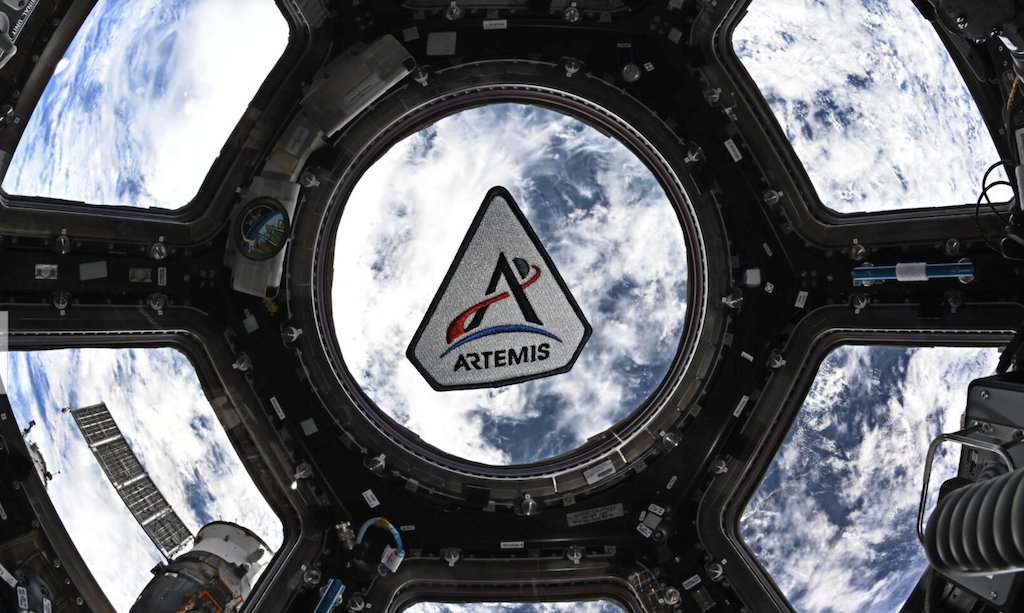
This view hits quicker than a kid who just heard the first note of the ice cream truck. It's easy to see why it's called the 'window to the world.'

Jack Fischer retweeted

Gov. Abbott announced @DrGregBonnen will lead a team securing Texas as the permanent home of the U.S. Space Academy.
No state matches what TX offers: NASA's Johnson Space Center, a leading commercial space industry, military installations, & an unmatched aerospace workforce.

Jack Fischer retweeted

Congratulations to SiriusXM! SXM-11 is on orbit and fully operational.
Following a successful launch and in-orbit testing, SiriusXM’s newest satellite is now in service, marking another milestone in our more than 20-year partnership and 13 spacecraft built together. Learn more: tinyurl.com/47rha3ad
#spaceinfrastructureleader #BuildConnectOperate #IM1300Series

I’m an old pilot, so I’m usually working through some back pain—but when I got to space, my back felt great. I remember telling my wife how amazing it felt, except that now, the back of my neck was killing me. She goes, “Well dude, why are you flying around like Superman all the time?” I’m like, “’Cause I can.” And she’s like, “Can’t you just… fly normally?” I’m like, “Good point.” So I started adopting this low-rider, Harley-style position—and man, it completely changed the experience (and the neck pain).


Jack Fischer retweeted

Back at it again with a long one, but can't help myself on the Space Academy topic.
Interesting to read some of the policy experts who have taken skeptical, and in some cases negative, public positions on the need for a United States Space Academy. People are certainly entitled to their opinions. There are also those who believe we should not build a single spaceship or invest in technological progress until we solve every problem on Earth. That is simply not how you build a better future for our children.
I suspect, for some, the objection has more to do with the politics than the merits. So let me address a few of the common concerns and offer some rationale.
Global dependence on space is increasing at an astronomical rate. Weather forecasting, disaster response, precision navigation, communications, agriculture, national security and scientific discovery all depend on capabilities in orbit. Connecting the disconnected and expanding access to knowledge is itself foundational to solving many of the world's problems. The data we will be taking in, whether from Earth observation or instruments like Roman, will answer questions we do not even know to ask today.
And there is no going back from the trajectory we are on. A decade ago, the FAA was overseeing barely more than a dozen commercial space launches per year. Today, nearly a dozen U.S. companies are operating or developing orbital launch systems, chasing economic opportunity measured in the trillions. But the upside is far greater than economics. Think about what we stand to learn scientifically, what technologies will have to be pioneered to explore out there, and how many of those breakthroughs will make life better back here.
Our new national space transportation policy calls for the United States to support more than 1,000 launches annually by 2030. Some already believe that is off by an order of magnitude.
America will certainly establish a permanent outpost on another world in the years ahead, and we are not alone in our ambitions. That outpost will become NASA's proving ground for where we go next. Mars. And then we continue on. It is our destiny to harness more of the energy of our star, unlock more of the energy potential in matter, and venture farther outward, in the same spirit as the explorers of centuries past who discovered the New World.
And we have no idea how quickly that timeline could accelerate in a world transformed by artificial superintelligence, robotics, quantum technologies and additive manufacturing. All of it is unfolding in the context of a great power competition where falling behind could materially affect our way of life and the trajectory of civilizations.
I do know the future will require a bright new generation educated and prepared for this environment. Many will serve in inherently governmental roles. They will need specialized education in disciplines that barely exist today, including nuclear power and propulsion for space applications, before having the opportunity to continue careers across government or the private sector.
If you understand the increasingly important and contested environment above us, then a Space Academy is as timely and necessary today as the Space Force has already proven to be.
So what are the objections? It blurs the line between peaceful applications in space and the military.
This may be the weakest argument I have seen. NASA's history began with astronauts flying to space on ballistic missiles. Several Space Shuttle missions were, and remain, classified. NASA Aeronautics flies repurposed U-2 spy planes for high-altitude research and F-15s for high-speed research. Breakthroughs pioneered through NASA aeronautics have benefited civil aviation and national security alike.
The U.S. Merchant Marine Academy, under the Department of Transportation, graduates students who go into industry, government and the military. Some have even become astronauts. Three of the four Artemis II astronauts came from the military, as have many NASA astronauts throughout our history, and some have continued serving in uniform after their NASA careers.
NASA's mission is as peaceful as it is patriotic. We explore for the benefit of all humankind, but we go there under our flag. That mission would be impossible without the Guardians standing watch over the domain as we venture outward. There is no contradiction in giving future civil, commercial and national security space leaders a common educational foundation, especially when our adversaries draw no such distinction themselves.
What about the cost? Congressional leaders and Governors from both parties have been reaching out and assembling potential funding packages.
It is interesting, I face questions during congressional hearings over whether we are investing enough in STEM education. We can absorb billions of dollars in canceled programs from mismanagement. But investing in the education of the next generation, in a domain increasingly central to our scientific, economic and national security future, is somehow uneconomical?
We should look past the politics on this one.
Go back to 1963, when the world was captivated by the possibilities of space, and remember another iconic JFK speech. He reminded us that we all treasure our children's future. Fittingly, he delivered those words at a university commencement.
It is time for another great American academy. A United States Space Academy worthy of the extraordinary adventure ahead.
Twenty-five years later, I still remember exactly where I was on September 11, 2001. Like so many of us, that day didn’t just change the country—it changed the trajectory of my life. I flew two combat tours in the F-15E after 9/11 because this nation is worth defending with everything I've got. Today we honor and remember the nearly 3,000 lives lost, the first responders who ran toward the fire, and every American who answered the call that followed. Their sacrifice is why I still get emotional when I see that flag. God Bless the United States of America.

Jack Fischer retweeted
Today, @NASADepAdmin and I hosted the first meeting of the Commission on the United States Space Academy. We were honored to welcome @SecWar, @SecAFOfficial, and leaders from @NASA, @WHOMB, @WHOSTP47, @WhiteHouse and across the Administration to @NASA Headquarters.
Under President Trump’s leadership, the Artemis Program, Artemis Accords, and Space Force were established, and soon there will be a prestigious United States Space Academy to help ensure American leadership in space by developing the talent necessary to advance our national security, scientific, and economic interests across the great frontier.


The future just got a little more connected. @Int_Machines got authorization to proceed from a private customer to work on a multi-satellite communications infrastructure program. We will handle the entire process, from planning to building to supporting the satellites, using our industry leading IM 1300 satellite platform. Above all, this represents a milestone of trust in our company. A customer selecting Intuitive Machines for multiple high-performance spacecraft is a strong vote of confidence in our team and capabilities. Huge milestone for the team and for commercial space!

The pre-breath before a spacewalk is the least glamorous, but most important part of going outside. Humans breathe in nitrogen with every breath, and it's fine on Earth or in a controlled environment like the Space Station, but in a pressurized spacesuit, it turns into little bubble that can get stuck in your joints and cause all sorts of issues. If the spacesuit ran at the same pressure as the station, we wouldn’t need that long pre-breathe at all. But a high-pressure suit would be stiff as a board—like trying to do precision work while wearing a giant inflated balloon. The lower pressure keeps the suit flexible enough to move, grab tools, and get real work done out there.
