

Property Media Professional | Content Creator | Award-Winning Journalist | Speaker | Tweets are my own opinion not advice.📩For collaborations: [email protected]
South Africa
Joined February 2022
- Tweets17.7K
- Following3.7K
- Followers58.9K
- Likes27K





Pinned Tweet
Hi, I'm Ash.
With over a decade of experience writing about real estate in South Africa, I’ve built a career around turning concrete into compelling stories. My background as a property broker gave me the inside edge, and today, I use that knowledge to create media that connects, informs, and sells.
I’m the founder of Ask Ash, a media house dedicated to marketing real estate across South Africa — from bustling retail hubs to industrial parks, luxury homes, and commercial developments. Whether I’m crafting sharp copy, creating video or social content, or speaking at industry events, my goal is simple: to make property relatable and marketable in a modern, digital-first world.
I work with developers, agencies, landlords, property-related companies, and brands that want more than listings - they want narratives that move people and media campaigns that matter. That’s where I come in, blending strategy, storytelling, and market insight to help property brands stand out and stay relevant.
Ready to turn your property into a story worth sharing? Let’s create media that actually moves the market.
For collaborations: [email protected]

Over the past year, I have come across one zoning dispute after another. A luxury apartment block in Sea Point and a place of worship and instruction in Sandton, to name two. An owner wants to do something new with a piece of land, the neighbours object, and the debate grinds through the system for years. By the time a decision arrives, both sides are exhausted, and often neither is satisfied.
Some of these cases are nearing a decision, which is why I wanted to write about them. One in Johannesburg has been running for nearly 20 years and returns to the Municipal Planning Tribunal later this month. In Cape Town, residents who won their appeal took the fight to the High Court in August because construction never stopped. Whether the plot holds a block of flats or a place of worship, the fight usually comes down to who gets the final say, and why it takes so long to get there.
Every piece of land in South Africa comes with a set of rules about what you are and aren’t allowed to do on that erf. Zoning specifically tells you what the land can be used for. On top of that sit development controls, like how tall you may build and how many parking bays you need.
Some properties also carry conditions in the title deed itself, often written when the suburb was first laid out. If an owner wants to change any of these, they apply to the municipality; neighbours can object, and in Johannesburg, a panel called the Municipal Planning Tribunal (MPT) weighs it all up and decides.
Read the full article below.


I wrote about Diary of a CEO host Steven Bartlett’s Bishopscourt mansion, examining the asking price and what that figure means in the context of Cape Town’s luxury property market.
The story caught the attention of international media, and correspondents from The Times and Al Jazeera subsequently contacted me for further insight into the property and the Cape Town market.
The Times has now published its piece, which includes some of my commentary.
You can read the article here: thetimes.com/world/africa/ar…

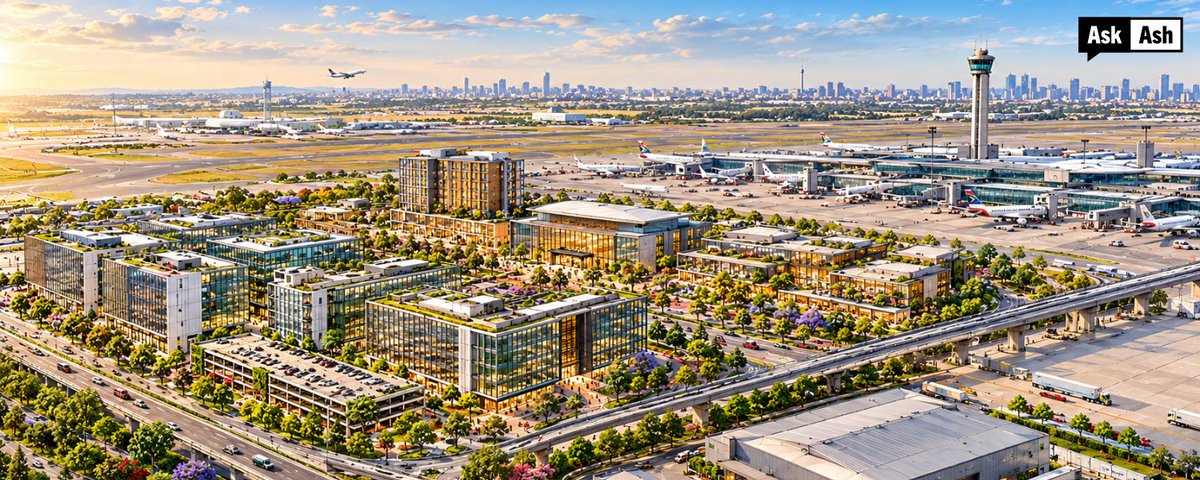
Just before COVID hit, the state-owned company that runs nine of South Africa's airports had a plan for a stretch of vacant land at O.R. Tambo International Airport that would have changed the airport's western skyline.
ACSA wanted to develop a 180 000m² mixed-use precinct, on roughly 8.5 hectares, across seven phases: offices, a hotel, retail and conference facilities, all built on airport-owned land.
Phase one, the smallest slice of that seven-phase plan, was costed at R4.5 billion. It would comprise three six-storey office buildings totalling 30 000m² of space, plus around 2 000 parking bays.
Then the pandemic halted air travel. Passenger numbers collapsed, ACSA's revenue went with them, and a plan built on the assumption that more and more people would keep flying suddenly became a luxury nobody could afford. The hotel, the conference centre and most of the retail space were shelved.
The project was basically scrapped, except phase one, which survived largely intact.
What actually got built was Aviation Park: 33 000m² of office space across three buildings with parking underneath, home to ACSA's own head office and the South African Civil Aviation Authority. Compared with the original 180 000m² vision, that's only around a fifth of the full precinct.
To read the full article, DM me for the link to my WhatsApp channel.
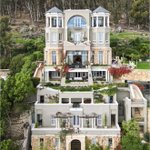
You can drive up a ramp and park at your own front door on the fifth floor🤔
I sat down with the VP of Zimbali Lakes, Neil Cocker, to hear more about the major development plans for Zimbali Lakes in Ballito, including Vilasita in the Tatali precinct, its newest residential launch.
The Tatali precinct alone is a R5 billion precinct. Neil drove me around in his car and showed me the busy site currently under construction, where about R20 million a month is going into earthworks and foundations.
Crazy to think the owner of Zimbali Lakes, IFA Hotels & Resorts, committed $100 million to Zimbali in 2003, back when the area barely promised potential.
Today that big bet has paid off. The group says it has invested more than R30 billion in Zimbali, and its 2030 vision includes a R50 billion investment pipeline.
Vilasita Development details:
• Storeys: 6
• 80 villa-style homes launching in phase one
• Prices from R2.95m for one-bedroom, two-bedroom, three-bedroom, and four-bedroom apartments
• 23 penthouses - priced from R8 250 000. The largest penthouse is 720m2, with its own rooftop pool, four-bay garage, and a price tag of R55 million.
• Every unit faces out over the lake, the ocean or Zimbali Coastal Estate.
• Ground-floor homes open onto gardens, a conservancy and the lakeside promenade.
• Amenities include a 10ha non-motorised water sports lake, Zimbali Square - a 20,000m² centre anchored by Checkers and Woolworths, an 18-hole Ernie Els Signature Course and clubhouse, padel, tennis, a driving range under construction and 15km of trails and a tunnel under the M4 to the beach.
Neil says that Zimbali Lakes closed 2025 with just over R400 million in real estate sales and passed R300 million in the first nine months of this year. These numbers are nothing short of phenomenal.
My take is that Vilasita is for the downscaler who wants to leave a big house but not the estate lifestyle, and this coast has had very few options like this (and perhaps other coasts have been too pricey to invest). The ease of pulling up to your own door with the shopping in the boot is what will sell Vilasita.
Sales open 7 November 2026 at 9 am.

An article I wrote recently ended up taking me a little further than I expected.
I wrote about Diary of a CEO host Steven Bartlett’s Bishopscourt mansion, looking at the asking price and what that figure actually means within the context of Cape Town’s luxury property market.
The story caught the attention of international and local media, and correspondents from both The Times and Al Jazeera contacted me to provide further insight into the property and the Cape Town market.
The Times has now published its piece, featuring some of my commentary, and News24 has also covered the story.
It’s exciting to see my research and insights contribute to a wider conversation around Cape Town’s luxury property market and its growing international appeal.

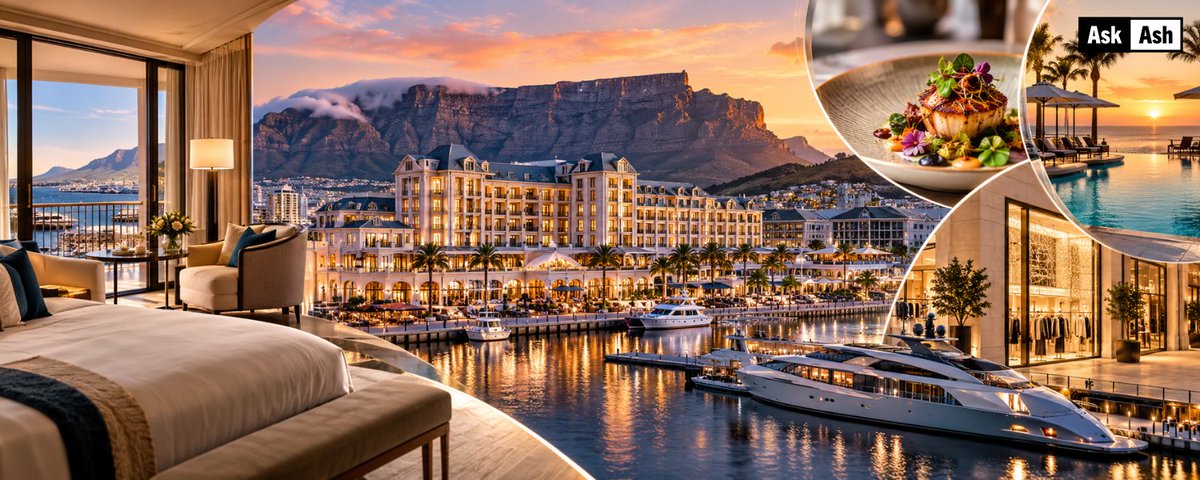
My friends in hospitality always say if you want to see where the hotel industry is heading over the next few years, pay close attention to what's happening at the V&A Waterfront. And after spending a night at the newly reimagined InterContinental Table Bay, you can see it for yourself very quickly, too. This hotel renovation is a preview of where Cape Town tourism is heading as far as our roaring hospitality sector goes.
This property, initially developed by the legendary hospitality king, Sol Kerzner and inaugurated by Nelson Mandela in May 1997, sits in the busiest, most ambitious tourism magnet on the continent right now. At the time of development, the project took four years of planning, cost R250 million to build over a period of 18 months and was the biggest five-star hotel in the Cape.
I was also there for the official launch, aptly titled The Art of Arrival, an evening that took you on an immersive journey of the hotel's transformation through theatre, dining and dancing. Guests were walked through moments that recreated Table Mountain's cloud cover rolling in, guided by a beautifully put-together travel dossier unpacking the craftsmanship behind the redesign. You could tell an enormous amount of thought (and money) had gone into every single detail. And like any successful hospitality enterprise, everything is in the details.
Speaking of money, the redevelopment cost more than R1 billion and took 18 months to complete. Rooms, restaurants and common areas all received a much-needed makeover.
Read the full article below
You can exclusively rent this 1700m2 Villa for R230 000 per night this December in Clifton, Cape Town🌊☀️
Nettleton Road is situated in the suburb of Clifton in #CapeTown. It’s home to some of the country’s most glamorous and expensive mansions. 21 Nettleton is a 7-storey castle-esque mansion situated in this street. The mansion was originally designed to be a private home, however, today it’s open to the public for bookings.
The pool has been custom designed to look like a musical note while the interior of the home is filled with grand pianos, an extensive art collection, chinese vases and rococo clocks. The mansion has 6 bedrooms (5 suites and a 250m2 penthouse) each with their own theme of decor. The mansion also has a full time butler, fitness centre, sauna, steam room, and hammam.
You can rent the entire mansion for 12 adults and 6 children, alternatively you can book individual rooms. I checked a local online booking website and you can book a room in the hotel early next year for an average of R14 000 - R35 200 per night (cost changes depending on the month) with a 3 night minimum stay. The price includes airport transfers, free shuttle service within 10km of the property, certain alcoholic beverages and all non-alcoholic beverages, laundry services, breakfast and sunset canapes daily.
If you could spend December at this villa, which friends are you taking with?😁 – at Cape Town, South Africa


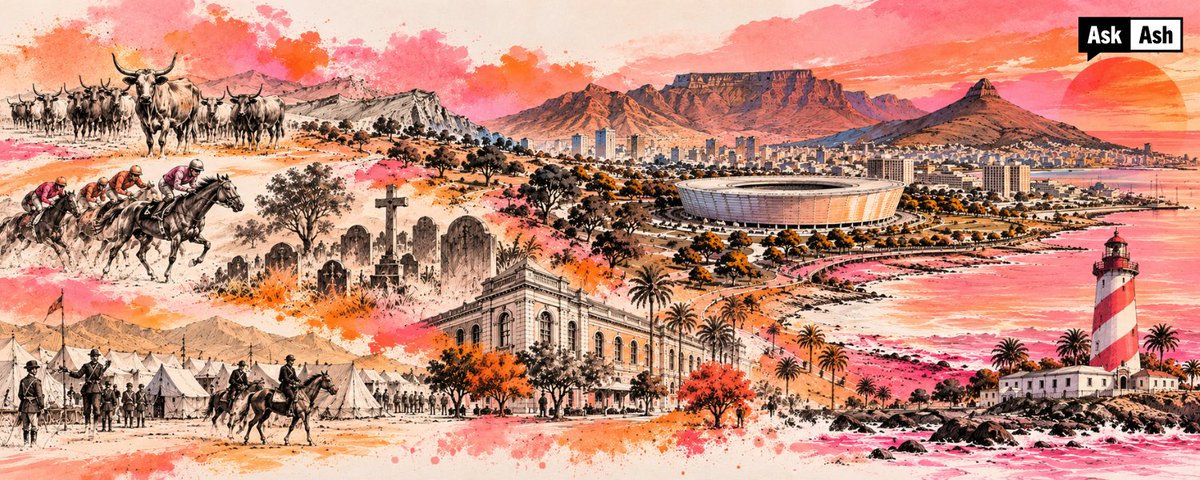
Today Green Point, the suburb between the Cape Town CBD and Sea Point, is where the parkrun crowd gathers on Saturday mornings, families stroll the park’s leafy paths, and the streets fill with “gees” when the stadium lights up on game nights.
Over roughly three centuries, this patch of land has been a cattle post, a racecourse, a burial ground, a hospital precinct, a military camp and a fairly ordinary corner of the city before it became a prime address on the Atlantic Seaboard. Each generation has built something different here. What never changed was where it sits, between the city and the sea, and in property, you know what they say: location, location, location.
Long before any European ship dropped anchor, and according to the Green Point Burial Grounds Project, Khoi-San herders grazed their cattle around Table Bay, and people were being buried in the sandy ground along this shore for more than a thousand years before the Dutch arrived.
Once the Dutch East India Company set up its refreshment station, this flat, windswept land west of the settlement became a cattle grazing station, and the Dutch called it De Waterplaats.
Nobody was building a home out here. It was the edge of town, open land you walked your cows to.
Read the full article below
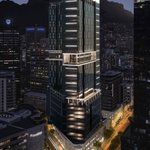
13 months since construction started on Cape Town’s second-tallest skyscraper: Acsiopolis Cape Town🚧🏗️
Details about the new glossy tower:
• 505 hotel rooms
• 270 residential apartments
• 4,000m2 of retail space
• A rooftop swimming pool
• Estimated height: 131m
• Total construction area: 66,000m2


I am always reading insightful articles about South Africa’s most expensive schools and what they cost to attend each year. Hilton College in KwaZulu-Natal Midlands is the most expensive school in South Africa. This year it will cost you R451,557 to send your son to this school. Other schools topping the R400k mark for annual school fees include: Michaelhouse, Roedean School for Girls, and St Andrew’s College.
Fees are the easiest number to brag about over a braai, but we never really review who actually owns South Africa’s most valuable school real estate.
Fees are rented status, while the dirt beneath the classrooms, quads and cricket pitches is owned wealth. Interestingly, when you look at the value of the land rather than what parents pay annually, the league table flips upside down. Hilton doesn't even feature near the top.
Hilton's estate is enormous. According to their own website, the property measures 1,600 hectares. 650 hectares of this is their very own nature reserve bordering the uMngeni River, stocked with zebra, impala, wildebeest, giraffe and over 300 species of birds.
Michaelhouse, its Midlands neighbour and closest rival when it comes to school fees, sits on 680 hectares. St Andrew's College in Makhanda reportedly has roughly 310 hectares. By hectare count, these are the undisputed heavyweights of South African schooling - Hilton alone could swallow roughly fifteen campuses the size of St Stithians' 105-hectare estate in Sandton and still have some left over room.
Here's the problem with bragging about hectares in the Midlands: land at that scale doesn't trade like a residential stand. KwaZulu-Natal farmland, however picturesque, generally trades between R15,000 and R120,000 a hectare, depending on land use, water rights and region.

Here’s an interesting hotel portfolio that many people might not know about.
Three hotels in completely different locations, each with its own unique personality and offering. Here’s the breakdown:
1. The @Sandton Hotel is South Africa's second-largest hotel, with 562 rooms in Sandton, Johannesburg. The complex also includes 476 serviced rental apartments, a spa, a creche, and a co-working space.
2. The @Franschhoek Hotel, with 69 hotel rooms, sits on a working farm about three kilometres outside Franschhoek village in the Cape Winelands and shares its grounds with Hey Joe Brewing Co, a working brewery built around a 1961 copper brewhouse imported from Belgium. The conference centre on-site seats 45 comfortably, up to 90 at a push, and rooms start around R3,500 a night, including breakfast and use of the conferencing facilities.
3. Acsiopolis 02 Mixed-Use Development in the Lower Foreshore, Cape Town. A 42-storey tower currently under construction in Cape Town's CBD, set to become the city's second-tallest building when it's finished in late 2028/early 2029. It'll include 467 hotel rooms, 252 residential apartments, and 4,000m2 of retail, wrapped around a heritage building the developers incorporated into the design. It's also one of the only major new hotel developments to break ground in Cape Town's inner city in the last five years, in a market where tourism demand has outpaced new hotel supply since the pandemic.
Acsion Limited, a JSE-listed property company, owns these hotels. The company was founded in 1981 by Kiriakos Anastasiadis, an engineer who completed his first commercial development, the Gardenia Centre, and then spent more than four decades building a portfolio that now stretches from regional shopping centres in Limpopo and Mpumalanga to a retail mall in Cyprus.
Acsion has spent more than four decades building and holding property rather than building and selling it. A developer who sells a building the day it's finished makes a profit and moves on to the next site. A developer who holds onto what it builds is betting on that area for the next twenty years, because it's the one still collecting the rent.
The group was listed on the JSE in December 2014, and at the time it was positioned as the only fund on the exchange offering investors full exposure to its own development company.
An apartment-style business hotel in Sandton, a farm-and-brewery retreat and conferencing paradise in Franschhoek, and a 42-storey tower in the Cape Town CBD is a unique hospitality portfolio. Acsion has successfully designed three completely different products for three completely different markets (and they aren’t small projects either). All three hotels sit on prime sites, but the portfolio's range is fascinating.


Appreciate the mention🙏
Read my initial article here:
xitter.cf/askash/status/20968304…

The Diary of a CEO podcaster, who has listed his mansion for double what he paid for it two years ago, is at the centre of a row over soaring prices thetimes.com/world/africa/ar…

Thank you for the mention 🙏

Superstar UK podcaster lists Cape Town home for R189m – double what he paid
brnw.ch/21x5Z8w

Balwin Properties has officially been delisted from the JSE💸
This means Balwin is now a privately owned company after nearly 11 years on the JSE.
Steve Brookes, who founded Balwin 30 years ago, and MD Rodney Gray are staying invested in the business alongside the PIC, which is acting on behalf of the Government Employees Pension Fund. The management team is also staying in place.
Brookes says the move to private ownership does not change leadership or how the business operates. He says the discipline Balwin developed during its years on the JSE will remain part of the business.
So how did we get here?
Balwin listed on the JSE in 2015 at around R10 a share. Over the years, the share price fell substantially, while the company was dealing with the realities of running a large residential development business in a public market.
Then, in May this year, a consortium involving Balwin’s founder-management and the PIC offered R4.35 a share, valuing the company at about R2.26 billion. The offer represented a 41% premium to Balwin’s six-month volume-weighted average share price at the time.
I wrote about this two years ago for the Mail & Guardian, asking whether Balwin was too bold for the South African public market and whether it should consider delisting.
At the time, profits and the share price had fallen, revenue was under pressure, and dividends had been suspended.
Fast-forward to its latest results, and revenue was up 21% to R2.7 billion, apartment handovers increased to 2,053 units, and recurring profit rose 36% to R273.6 million.
So this was not a case of a developer being rescued from collapse. The focus was more on whether a long-term, capital-intensive property developer was suited to the public market.
During those 11 years, it delivered around 26,000 apartments, generated R28.3 billion in apartment sales, and completed its 100th residential development in 2025.
Now they plan to build the next chapter as a private company, with long-term institutional capital behind it and the founding management team still involved.
For me, this closes the loop on questions I first started asking two years ago.
Balwin is no longer on the JSE. The experiment with being a listed residential developer is over. Now we will see what Balwin can do with a private-market structure behind it.
