

Est. 1897 • Relaunched 2018 • The English weekly newspaper for Ahmadi Muslims around the world.
London, England
Joined January 2018
- Tweets16K
- Following11
- Followers35.5K
- Likes19.7K






Pinned Tweet
🇵🇸🇮🇱 LATEST: Hazrat Mirza Masroor Ahmad (aa) urges Ahmadi Muslims to pray for situation in #Palestine & #Israel, highlighting ongoing injustices. He calls for Muslim unity to help plight of innocent #Palestinians!
His Holiness said:
“I want to ask for prayers in relation to the current situation of the world. In the past few days, a war has started between Hamas and Israel due to which civilians on both sides - women, children and the elderly - are being killed or have been killed, without any distinction.
“Even at times of war, Islam does not permit the killing of women, children or anyone who is not participating in the war, and this teaching was strictly established by the Holy Prophet, peace and blessings of Allah be upon him.
“The world is saying - and it has some truth to it - that Hamas initiated this war and killed Israeli civilians indiscriminately. Leaving aside the fact that the Israeli army has been killing innocent Palestinians prior to this, Muslims should always act according to Islamic teachings. [...] If there is a legitimate war, then it can take place against the army, but not against women, children and the innocent. Nevertheless, the step Hamas took was wrong; it caused more harm than good.
“In response [to Hamas’ attack], the punishment or war should have remained against Hamas alone - this would have been true bravery and the correct response. However, what the Israeli army is doing now is extremely dangerous and it seems this will not stop. The number of lives of women and children that will be lost cannot be imagined.
“The Israeli government announced that it will completely wipe out Gaza and to do that it endlessly bombed Gaza, reducing it to a pile of ashes. The latest development is that the Israeli government is saying that more than 1 million people should leave Gaza, and some have begun leaving already.
“Thankfully, though a weak voice, the UN has raised some concerns that this is against human rights, is wrong and will create a lot of problems and that Israel should rethink this instruction. Instead of condemning Israel outrightly, they [the UN] are making a mere request to them.
“Nevertheless, the innocent who are not participating in the war cannot be blamed. If the world sees Israeli women, children and civilians as innocent, then the Palestinians are innocent too.
“The teachings of the People of the Book also say such killing is not allowed. Muslims are blamed that they have committed wrong, but these people should look at themselves too.
“The Ambassador of Palestine [in the UK] was interviewed by the BBC and, in response to a question, said that Hamas is a militant group, not the government and that the Palestinian government has nothing to do with them. He also raised a valid question - that if true justice had been established, then this situation would not have arisen. If world powers do not have double standards, then such disorder and warfare can never even occur. Thus, end these double standards and the wars will end themselves.”
His Holiness said he has been saying these points for a long time, in light of Islamic teachings, but in response, leaders agree without any action.
He continued:
“Ignoring justice, all the world powers - or Western powers - are uniting to punish Palestinians, and conversations are being held everywhere about sending armies.”
He also spoke about the misinformation in the media that is being spread. It is often the case that pictures are shared to try and prove injustice against Israelis, but later it is found out that the pictures were actually of Palestinians, yet there is no retraction in the media for this.
He said that it seems the world powers do not want this war to end. After World War One, the world powers created the League of Nations, but it proved to fail due to justice not being upheld, and World War Two ended up taking place. This is the same situation as the UN. It was created to end wars and aid the oppressed but has clearly failed in its objective.
His Holiness continued to say the war that will take place now due to the current injustice, we cannot even comprehend the destruction that will be caused and everyone knows this, yet there is still no focus on establishing justice in the world, nor is anyone highlighting this point.
He said at least the Muslim nations should pay heed and erase their own disagreements in order to establish unity. If Muslims have been told in the Quran to improve relations with the People of the Book, then why can Muslims, who share the same kalima, not place their problems aside and come together. This is the only way to rid the world of the disorder we see today. As one, Muslims must raise a voice against those who are oppressed.
If there is unity in the Muslim Ummah, there will be power in the voice that is raised. Otherwise, these Muslim nations will be responsible for the loss of innocent lives. We should keep the teaching of the Holy Prophet SA in front of us: To aid both the oppressed and the oppressor (by stopping them from oppression).
In the end, Huzoor (aa) prayed:
"May Allah the Almighty grant wisdom and understanding to the Muslim governments, and may they unite to uphold justice. May he also grant wisdom and understanding to the powers of the world, so that instead of causing destruction in the world, they strive to save it from destruction. [...] It should always be remembered that when destruction occurs, even these powers will not remain secure.”
“The only weapon we possess is the weapon of prayer. Thus, more than before, all Ahmadis should use the weapon of prayer.”


Hazrat Mirza Bashir-ud-Din Mahmud Ahmad, Khalifatul Masih II (ra), with the aim of promoting advanced scientific and industrial research and contributing to the development of India.
Read the full article here 👇
alhakam.org/shanti-swarup-bh…

A woman wrote to Hazrat Amirul Momineen, Khalifatul Masih V (aa), stating:
“I had a miscarriage and the bleeding stopped after the period of postnatal bleeding [nifas] ended. However, I have been experiencing spotting since the beginning of Ramadan. My period is not yet due. I am also taking contraceptive pills. I have a uterine fibroid, which causes me to pass these blood clots. The doctors have advised me to rest for now, prescribed medication for this condition and scheduled an appointment for full treatment. At present, I am experiencing blood clots, backache and occasional abdominal spasms. My period is due to begin in a few days. Once my period ends, may I fast and offer prayers despite this condition? Prayer and fasting are very dear to me.”
Huzoor-e-Anwar (aa), in his letter dated 15 April 2024, provided the following guidance:
“The condition you have described falls within the category of illness [marad]. Allah the Exalted has granted those who are ill an exemption from fasting and instructed them to make up the same number of fasts later. (Surah al-Baqarah, Ch.2: V.185) Therefore, first complete your treatment and, once you have recovered, make up these fasts. If you have the financial means, you should also pay fidyah, i.e. the compensatory payment for missed fasts.
“You have written that the doctor has also prescribed medication for your illness. Some medicines require a person to drink more water. If you fast, you will be unable to drink water. In any case, even if you do not need to drink more water, you should rest fully, as your doctor has advised.
“As for passing blood clots or experiencing spotting, this is an illness rather than menstruation. Therefore, in accordance with the guidance of the Holy Prophet (sa), you should continue to offer your prayers in this condition, performing fresh ablution for each prayer. (Sahih al-Bukhari)
“Thus, while offering prayers during illness remains mandatory, fasting is excused, since the fasts can be made up later.”

☝️ Names of Allah ✨️
8/99 Ya Wadud – O Loving! – يا ودود 🤍
Meaning
The root of wadud means love, and the word wadud can refer to one who loves or one who is loved. Al-Wadud means The Loving, or He who is beloved. (Lane’s Lexicon, Root: ود, Entry: ودّ، وِدٌّ، وَدُودٌ)
This root also refers to a stake, and since it is driven firmly into something, the meaning of love may have been derived from it. (Al-Mufradat, al-Raghib, Root: ودد) Thus, the root of wadud refers to a love that is driven firmly into one’s heart.
Similar names
Al-Waliyy (The Friend) and Al-Wadud (The Loving) are synonymous in their meaning of “one who loves” (muhibb). What makes Al-Waliyy different is its additional meanings, whereas Al-Wadud focusses on love.
Use in prayer
The word wadud refers to a love that results in spiritual nurturing. The Holy Prophet (sa) said, “Marry women who are loving (Wadud) and prolific, for I will boast of your great numbers.” (Sunan Nasa‘i, Kitab an-nikah, Bab karahiyati tazwiji l-‘aqim; Sunan Abi Dawid, Kitab an-nikah, Bab an-nahyi ‘an tazwiji mun lum yalid mina n-nisa’) Great numbers alone are no source of pride. The Holy Prophet (sa) can only be proud of his people if they are righteous, which is only possible if they are raised by mothers who spiritually nurture their children with constant love (wadud). This hadith shows us that the word wadud is deeply tied to spiritual nurturing. (Ta‘alluq Billah, Anwar-ul-Ulum, Vol. 23, p. 152-3)
The name Al-Wadud (The Loving) refers not only to the One who has an intense love for us but the One who is also the beloved of His servants. When we say Ya Wadud (O Loving!), we pray that Allah Almighty lovingly nurtures us and develops in us an unbreakable bond of love for Him.

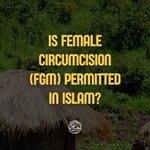
Someone from Egypt wrote to Hazrat Amirul Momineen, Khalifatul Masih V (aa), enquiring whether female circumcision is permissible.
Huzoor-e-Anwar (aa), in his letter dated 15 April 2024, provided the following reply:
“Neither the Holy Quran nor the blessed ahadith contain any command to circumcise women. Male circumcision, however, has been declared part of fitrah or human nature. Accordingly, Hazrat Abu Hurairah (ra) narrates in Sahih al-Bukhari that the Holy Prophet (sa) said that five practices are part of fitrah: circumcision, removing pubic hair, removing underarm hair, trimming the nails and clipping the moustache.
“Male circumcision is an established practice of the Muslim Ummah. In the case of female circumcision, however, we find no continuous practice originating from the time of the Holy Prophet (sa). As for the two or three ahadith that mention female circumcision, scholars of Hadith have criticised their narrators, describing some as majhul (meaning a narrator whose identity cannot be determined with certainty) and mudallis (a narrator who relates a report from a contemporary in a manner suggesting that they personally heard it from that narrator, although they did not hear it directly from the original narrator). They have classified these ahadith as da‘if (meaning a hadith that fails to meet one or more of the conditions required for an authentic narration) and munqati‘ (meaning a hadith in which a link is missing from the middle of the chain of transmission).
“Before the advent of Islam, female circumcision was practised among certain Arab tribes, just as it is still practised in some parts of Africa today. However, Islamic law has nowhere commanded female circumcision.
“Those who advocate female circumcision describe reducing sexual desire as one of its purposes. Yet sexual desire in both men and women is itself a natural endowment from Allah the Exalted. Islam has nowhere prescribed anything contrary to human nature. It has, however, provided various instructions to direct these natural inclinations towards their proper course. Adornment, too, is part of a woman’s nature. Islam has not forbidden her from this either, but has instructed her to adorn herself for her husband and not to appear adorned before non-mahram men, as this may give rise to social ills, which is contrary to Islamic teachings.
“If the purpose of circumcision is to eliminate a woman’s sexual desire altogether and thereby enslave her, this too is contrary to Islamic teachings, for Islam has taught against slavery and repeatedly commanded the freeing of slaves.
“During his Khilafat, Hazrat Umar (ra) was making his rounds through the streets of Medina one night when he heard a woman in a house reciting impassioned verses about her separation from her husband. He asked her, ‘What is the matter?’ She replied, ‘My husband has been away at war for several months and now my longing for him has overwhelmed me.’ Hazrat Umar (ra) asked her, ‘You have not entertained any improper intention, have you?’ She replied, ‘I seek refuge with Allah!’ He said, ‘Restrain yourself. I shall send a messenger to summon your husband.’
“He sent a messenger to summon her husband and then went to Hazrat Hafsah (ra), saying, ‘I am going to ask you about something that has troubled me, so put my mind at ease. How long can a woman restrain herself without her husband?’ On hearing this, Hazrat Hafsah (ra) lowered her head out of modesty. Hazrat Umar (ra) said, ‘Allah the Exalted is not shy of the truth.’ At this, Hazrat Hafsah (ra) indicated with her hand three or four months. Hazrat Umar (ra) consequently sent instructions to his officials that no soldier should be kept away at war for more than four months.
“If circumcision eliminated a woman’s sexual desire altogether and female circumcision was widely practised in Arabia, why did this woman feel the need for physical intimacy with her husband?

☝️Names of Allah ✨️
7/99 Ya Waliyy – O Friend! – يا وليّ 🤲
Meaning
The root of waliyy means two or more things coming in uninterrupted succession. Based on this, it refers to nearness, whether physical nearness, nearness in lineage, nearness in religion and doctrine, or nearness in friendship and support. (Al-Mufradat, al-Raghib, Root: ولي) The word waliyy means a friend, helper, protector, one who loves, or guardian of one’s affairs. (Dictionary of the Holy Quran, Malik Ghulam Farid, p. 837 ; Al-Qamus al-Muhit, Firuzabadi, الوَلْيُ, See “والوَلِيُّ: الاسمُ منه، والمُحِبُّ، والصَّدِيقُ، والنَّصيرُ” ; Friday Sermon, 23 Oct 2009.) Al-Waliyy (The Friend) means The Close and Loving Friend Who is The Helper and Guardian of His friends.
Similar names
Al-Rafiq (The Companion) and Al-Waliyy (The Friend) are synonymous in their meaning of “friend” (sadiq). The difference is that Al-Rafiq means a companion with an emphasis on accompanying us on our journey. Al-Waliyy means a close friend with an emphasis on supporting us.
This name is also mentioned under Al-Wadūd (The Loving) and Al-Wali (الوالي) (The Ruler).
Use in prayer
The name Al-Waliyy (The Friend) brings to mind the loving friendship Allah the Almighty has with His chosen servants, and it makes us realise that a close friendship with Him is also possible for us. When we say Ya Waliyy (O Friend!), we ask that we become His friend.
The Promised Messiah (as) once suffered from an illness that caused him great pain. He received the following prayer as a revelation, by observing which he was relieved of his ailment:
“In the name of Allah, the Sufficient (Al-Kafi), in the name of Allah, the Healer (Al-Shafi), in the name of Allah, the Most Forgiving (Al-Ghafur), the Ever Merciful (Al-Rahim), in the name of Allah, the Benevolent (Al-Barr), the Noble (Al-Karim). O Protector (Ya Hafiz), O Mighty (Ya ‘Aziz), O Companion (Ya Rafiq). O Guardian (Ya Waliyy), bestow healing on me.” (Tadhkirah [English], p. 717)

During the mulaqat of the national amila of Lajna Imaillah Bangladesh with Huzoor (aa), which was held on 14 November 2020, a member of Lajna Imaillah said, “Huzoor you are an exceptionally busy person. Do you have any arrangements for some time off from work during the week? How do you find time for your friends and family?”
Huzoor (aa) replied:
“I spend time off just like this. I am enjoying my weekly time off at this moment by holding a meeting with all of you. This is my weekly time off.”

We often forget that a comment which lasts only a few seconds for the speaker may remain in another person’s memory for years. A remark about someone’s social status, physical appearance, race or skin colour may seem harmless to one person, but its impact on another may be very different.
We do not always know what is going on inside another person. We do not know whether someone is doing well or struggling with pressures they have never told anyone about. We may not be able to know all the struggles someone is going through, but we can choose not to add to their burden.
We can choose not to humiliate someone in front of others or turn another person’s weakness into a joke. In a healthy conversation, both sides can laugh without losing their dignity. In an insult disguised as a joke, only one person enjoys the humour, while the other bears the pain and is expected to laugh along.
Saying “I was only joking” may explain the speaker’s intention, but it does not necessarily explain the impact on the listener. Good intentions do not always erase the hurt caused by our actions.
The Holy Prophet Muhammad (sa) gave us a simple principle with a profound meaning: “Whoever believes in Allah and the Last Day should speak good or remain silent.”
Islam teaches us to speak the truth, including when giving advice. However, truth delivered without wisdom can lose its power to bring about positive change. Protecting human dignity is not a trivial matter in social life. Another person’s weaknesses should never become a source of entertainment.
Children should be encouraged to ask themselves before they speak: Is this true? Is it necessary? Will it help? Is there a better way to say it?
“He utters not a word but there is by him a guardian angel ready to record it.” (Surah Qaf, Ch.50 : V.19)


Majlis Khuddam-ul-Ahmadiyya USA prepared a set of questions related to tarbiyat matters. One of the questions was as to how the political structure of the world would look like in case of the victory of Ahmadiyyat.
Huzoor (aa) provided guidance regarding this and in his letter dated 26 May 2018, he gave the following reply:
“In Surah al-Hujurat, Allah the Exalted speaks of two governments of the believers who fight against each other, while the rest have been commanded to make peace between them. There is also a prophecy therein that even when Islam will rule the world, there will not be a single global government, but rather various governments.
“Thus, when Ahmadiyyat will prevail in the world by the grace of Allah the Exalted, in terms of political structure, there will be independent governments whose national laws will not clash with Islamic laws, but at that time, matters of politics and faith will be dealt with separately.
“Although there will only be one true Islamic Caliphate on earth and all nations will seek intellectual and spiritual guidance from the Khalifa of that time, but he will not interfere in their political affairs, nor will the Khalifa attack any nation with an army.”

Switzerland’s National Majlis-e-Amila had a virtual mulaqat with Huzoor (aa) on 7 November 2020. One of the members asked Huzoor (aa) the following question:
“The Promised Messiah (as) had three rings made. It has been observed that Huzoor-e-Anwar (aa) wears two of the rings on his blessed hand. Who possesses the third ring Huzoor?” Huzoor (aa) replied:
“Hazrat Amma Jan (ra) [the noble wife of the Promised Messiah (as)] gave the ring with the inscription of أَلَیْسَ اللہُ بِکَافٍ عَبْدَہُ [Is Allah not sufficient for His servant?] to Hazrat Khalifatul Masih II (ra). She gave the ring with the inscription of the revelation of غَرَسْتُ لَکَ بِیَدِیْ رَحْمَتِیْ وَقُدْرَتِیْ [I have planted for you My Mercy and My Power with My own hand] to Hazrat Mirza Bashir Ahmad (ra) and she gave the ring with the inscription of مولیٰ بَس [The Lord (is) enough] to Hazrat Mirza Sharif Ahmad (ra).
“As far as the أَلَیْسَ اللہُ ring, which was given to Hazrat Khalifatul Masih II (ra), is concerned, he made a will that this ring should be given to whoever is elected as the next Khalifa and it should be passed down in the chain of successorship of Khilafat instead of remaining as his personal ring. Both brothers [Hazrat Mirza Bashir Ahmadra and Hazrat Mirza Sharif Ahmad (ra)]kept the other two rings given to them.
“The ring given to Hazrat Mirza Sharif Ahmad (ra) was later handed down to my father [Hazrat Mirza Mansoor Ahmad, son of Hazrat Mirza Sharif Ahmad (ra)] after his demise. After the demise of my father, my mother handed down that ring to me. Then when Allah the Exalted entrusted me with the mantle of Khilafat, I started wearing that ring.
“The third ring which Hazrat Mirza Bashir Ahmad (ra) had, was handed down to Hazrat Mirza Muzaffar Ahmad upon his demise. Mirza Muzaffar Ahmad Sahib did not have any children, so he adopted a child – the son of Amatul Jameel Sahiba [daughter of Hazrat Khalifatul Masih II (ra)] and Nasir Ahmad Sial Sahib [son of Hazrat Chaudhry Fateh Muhammad Sial Sahib (ra)]. He grew up in his home and so, that ring was handed down to him. He currently resides in America.”

In March 1927, two significant lectures presented contrasting perspectives on the relationship between God, religion and science. On 3 March, Hazrat Musleh-e-Maud (ra) delivered his landmark lecture Mazhab aur Science (Religion and Science), defending the harmony between genuine religious belief and scientific inquiry.
Just three days later, on 6 March, Bertrand Russell delivered his famous lecture Why I Am Not a Christian, presenting his arguments against belief in God.
Russell maintained that the universe was a “brute fact”, existing without an inherent cause or divine purpose. His First Cause critique questioned why God Himself should not require a creator. However, Hazrat Musleh-e-Maud (ra) presented a fundamentally different understanding, explaining that science and religion originate from the same divine source and cannot genuinely contradict one another.
He described religion as the explicit word of God and science as the observable act of God. While science investigates the mechanisms governing the natural world, religion addresses questions of purpose, meaning and humanity’s relationship with its Creator. Any apparent conflict, therefore, arises from misunderstandings of religious scripture or the provisional nature of human scientific knowledge.
Hazrat Musleh-e-Maud (ra) also highlighted intellectual humility, referring to Huxley’s principle of agnosticism: when sufficient evidence is lacking, one should honestly say, “I do not know.”
The Ahmadiyya Muslim Jamaat maintains that the universe's remarkable order cannot be dismissed as a purposeless occurrence. Rather, scientific discoveries, including the Big Bang and biological evolution, can be understood as mechanisms through which God's creation unfolds.
These two lectures, delivered just three days apart, represent two contrasting approaches to one of humanity's greatest questions: the existence and reality of God.


Read the full article here 👇
alhakam.org/god-russell-reje…

❓️How is Huzoor (aa) able to do so many tasks?
During a virtual mulaqat of Majlis Atfal-ul-Ahmadiyya Germany with Hazrat Khalifatul Masih V (aa), which was held on 29 November 2020, a tifl asked how Huzoor (aa) was able to complete so many tasks.
Huzoor (aa) gave the following reply:
“Firstly, one should get in the habit of completing their work on a daily basis as soon as time becomes available.
“Secondly, at certain times, two tasks can be carried out simultaneously. If I am listening to someone, at the same time, I may also be reading a letter; I can manage to do both tasks simultaneously. In this way, a lot of work can be completed in a short amount of time.
“Moreover, if one has the determination to finish a particular task, they will devote their attention to that task and in this way, it will be completed. If you also strive and endeavour to work hard, your work will also be completed. Develop the habit of working hard and you too can work in this manner. It is not difficult.”
📷 Image courtesy of @muslimtv (MTA INTERNATIONAL)

A religious community which receives a political leader courteously may be accused of approving his conduct, especially when his government oppresses the very people whom the community seeks to defend. For some critics, the welcome is sufficient to establish that faith has been compromised.
Islam makes an important distinction between mudarah (considerate and gentle treatment) and mudahanah (flattery or accommodation that compromises one's faith). The Holy Prophet Muhammad (sa) himself received a man warmly despite having expressed disapproval of his character. His example demonstrates that gentleness towards someone does not necessarily mean approving of their wrongdoing.
Islamic scholars, including Imam al-Ghazali, Ibn Battal and Ibn Hajar al-Asqalani, explained that considerate treatment can serve the purpose of admonition and correction. The Quran also instructed Moses (as) and Aaron (as) to speak gently to Pharaoh, despite his oppression of the Children of Israel. Gentleness, therefore, does not mean silence or surrendering one's principles.
The article examines how these teachings apply to the Palestinian cause and the responsibility of Muslims to demand justice from those in power. It also discusses the importance of examining Muslim disunity and shortcomings without excusing the aggression of others or diminishing the rights of Palestinians.
The Ahmadiyya Muslim Jamaat's consistent approach includes diplomatic engagement, public appeals, correspondence with political leaders and humanitarian assistance through Humanity First. Hazrat Khalifatul Masih V (aa) has repeatedly condemned the oppression of Palestinians and urged Muslims to work for peace and justice through lawful means.
Ultimately, the manner of admonition must remain guided by the Holy Quran and the sunnah. Courteous engagement can provide an opportunity to address those in power and remind them of their responsibilities, without endorsing their conduct.
Courtesy is not compromise, and gentleness is not approval of injustice.

Read the full article here 👇
alhakam.org/courtesy-without…
