

Follow me to learn about Crypto Sound Money | Build better money before fiat fail | Co-founder @HacashCom, not Hacash | @ns @ThreeDAOspace @BTCStartupLab alumni
Accept ₿ and ㄜ
Joined April 2018
- Tweets4.2K
- Following1.2K
- Followers2.4K
- Likes5.3K






Bitcoin was just the beginning. Three monetary properties still deserve far more attention:
- Privacy
- Fair Distribution
- Purchasing-power Stability
Zcash comeback has put privacy back in the spotlight. That's worth celebrating from a crypto sound money perspective.
But I believe the other two are even more fundamental, and remain largely unsolved.
Since its 2018 whitepaper, Hacash has explored both through a different PoW distribution model, market-driven monetary elasticity, and a proposed one-way BTC transfer.
Under the radar since 2018. Perhaps one of the most overlooked experiments in crypto sound money. Worth a closer look.
In 2025, I shared my prediction for PoW after 2026.
Now we're starting to see it unfold.
Zcash is becoming much easier to access through NEAR Intents. Other PoW assets are also finding their way into the broader onchain economy.
Most PoW chains were built to secure money, not to support a fully programmable financial ecosystem.
But that's changing.
@hacdlabs, which focuses on PoW-native asset launches, has built an EVM bridge for HAC and HACD, starting with Base.
Meanwhile, developers are experimenting with native DeFi applications using Hacash's HVM. In theory, this architecture could eventually allow assets from other chains to participate in a PoW-secured financial ecosystem.
I see two important directions emerging:
Bringing PoW money into DeFi.
Bringing DeFi into PoW money.
As crypto becomes increasingly regulated and institutionalized, I believe some of the most important opportunities for ordinary people will still come from permissionless PoW monetary systems.
And this goes beyond human finance.
AI agents will also need money. AI is making software and digital creation increasingly cheap. But energy and computation in the physical world still have real costs.
PoW is one of the few mechanisms that directly connects digital consensus to those physical costs.
This does not mean every PoW coin will become valuable. Nor does bridging automatically preserve native PoW security.
But I believe the convergence of PoW money, cross-chain liquidity, programmable finance, and autonomous AI agents could become one of the defining crypto trends of 2026–2029.
PoWFi is coming. Not just another DeFi narrative.
A new chapter for crypto-native sound money.

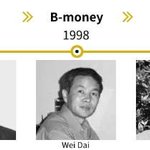
The five eras of Proof of Work.
Email: 1992–1999
Electronic Cash: 1999-2013
Mining: 2013-2026
DeFi: 2026-2029 (#PoWFi)
Sound Money: 2029-21XX

Ken You ㄜ retweeted

MoneyNex v0.4.1 is here:
• New browser side panel
• Smoother dApp connections & signing
• Connected sites management
• More reliable transaction requests
Self-custodial. Open source.
Your key to future money.
Get MoneyNex 👇
chromewebstore.google.com/de…

What a loss.
CoinEx was one of the few legitimate homes for the early PoW ecosystem, long before most of the market cared about it.
Nine years in crypto is an era.
Respect to Haipo and the CoinEx team for choosing to end it responsibly and with dignity.

Dear CoinEx Community,
Today, I am announcing that CoinEx will cease operations and begin an orderly wind-down.
First, what matters most: your assets are safe. CoinEx’s reserve ratio exceeds 100%, and every user asset is fully backed and available for withdrawal. Withdrawals are open starting today and will remain open until December 22, 2026. Certain tokens may take slightly longer to process while funds are moved between cold and hot wallets, but every withdrawal request within the withdrawal period will be honored and processed.
CoinEx officially went live on December 22, 2017. Exactly nine years later, on December 22, 2026, the platform will be formally closed. Nine years is a long time in crypto. Together, we lived through multiple bull and bear cycles, witnessed the rise and fall of countless projects, and watched many of our peers leave the market in one form or another.
After much reflection, I have come to accept a hard truth. CoinEx did not become one of the industry’s leading exchanges, and the security and compliance risks of running a crypto exchange have become increasingly difficult to contain. Revenues can decline, responsibility does not. Carrying unlimited risk for limited revenue is no longer a rational choice. That said, CoinEx has survived nine years in one of the most volatile and unforgiving industries, weathered every storm, and is leaving intact, and with dignity. We may not have won the race, but we are finishing with honor.
On CET: CoinEx will buy back CET at its initial listing price of 0.005 USDT per token, with no cap on quantity. To every CET holder who has supported us over the years, thank you. CET represents your belief in CoinEx and, for many of you, your belief in me personally. I am sorry that we were not able to create the long-term value we once hoped CET would deliver. The least we can do now is bring that chapter to a responsible conclusion.
I did seriously consider selling CoinEx. Ultimately, I decided against it. Users entrusted their assets to CoinEx because they trusted the platform and, in many cases, trusted me personally. I did not feel that handing the platform and that trust to a new owner was the right way to end this journey. A clean ending is the right ending.
Nine years, millions of users. I did not turn CoinEx into the “great” exchange I once hoped it would become. But I can give it a decent ending: making sure users can withdraw their assets in full, giving my employees a dignified farewell, and providing CET holders with a clear and responsible conclusion. This is the best ending I can give CoinEx.
To everyone who traded with us, built with us, and stood by us through the hardest days of this market, thank you. It has been a privilege to walk this road with you.
To the CoinEx team, thank you for building this platform with me, for carrying it across every cycle, and now for seeing it through to the very last day.
For detailed arrangements, please refer to the official announcement: coinex.com/en/announcements/…
Thank you all for nine years of trust.
Haipo Yang
Sept 15, 2026
Market Cap ≠ Monetary Value.
For almost 9 years, Zcash looked dead on CoinMarketCap. But market cap was never measuring what mattered: privacy, fungibility, censorship resistance, monetary policy, distribution, or verifiability. The market ignored much of Zcash’s monetary value for years.
Now it may be making the opposite mistake. As @satofishi points out, Zcash still carries serious monetary weaknesses in distribution, governance, and auditability. A rally does not erase them. Zcash can be undervalued as money at one price and overvalued as money at another.
That is the problem. CoinMarketCap and CoinGecko rank crypto by market value. They do not measure monetary value. Useful for trading, not enough for monetary value investing. We need a different map.

Zcash’s latest rally is a narrative bid. A big market cap does not mean a coin earned its place. Sitting near Solana and Hyperliquid on a ranking list does not mean Zcash does what those two do.
The launch was not fair. For the first four years, 20 percent of every block reward was taken as the Founders’ Reward. That money went to founders, staff, advisors, and early investors. It added up to 2.1 million ZEC, or 10 percent of the 21 million cap. Bitcoin paid miners. Zcash also paid a company and its backers. When that first cut was supposed to stop, a similar 20 percent cut came back as a “development fund”. A coin that writes itself into the block reward should not be sold as clean, neutral money.
The cut did not buy a real economy. Privacy was the sales pitch. Using it was optional. Open addresses stayed the easy path for exchanges and simple wallets. For most of Zcash’s life, most coins sat in the open. Optional privacy is marketing. Default privacy is the protocol. Management stayed a board fight: Electric Coin Company, the Foundation, Bootstrap, the brand name, the wallet, and who gets the cut. In January 2026 the whole ECC team left and said they were pushed out. That is not a side issue. That is how the project runs. A base-layer team that cannot stay in the same building as its nonprofit board is not “decentralized.” It is broken at the top.
Then came the security mess the market is already trying to skip. In May 2026 a serious bug in the Orchard pool was made public. It had been there about four years. In theory it could create fake ZEC with no clear on-chain trail. Because the pool is private, nobody can prove fake coins were never made. Ironwood in July closed the old pool and forced coins through a gate. That is cleanup, not a reason for a top-ten price. A money whose private supply cannot be checked like Bitcoin, and that needed an emergency fix after a four-year bug, is not “hard money.”
The point is plain. An unfair launch, a team cut without a matching product, years of board drama, and a four-year hole in the private pool are not the record of a top-ten network. They are the record of a story coin. Solana and Hyperliquid can be disliked for their own reasons. They still clear real use. Zcash cleared a listing and a squeeze. Those are not the same thing. Mixing them up is like sending 701.4 of the wrong asset, or treating EST and EDT as the same hour.


If you take gold and remove its flaws, you may get Bitcoin.
But Bitcoin is not gold perfected. It is a different monetary experiment.
Its fixed supply solved scarcity, but not purchasing-power stability. Its conservatism protected money, but left programmability to Ethereum.
I wrote about this 3 years ago: hackernoon.com/flaws-in-bitc…


Bitcoin is increasingly treated as a store of value, not something people naturally want to spend every day.
Hard money tends to be saved. So the real monetary problem is not how to make Bitcoin spendable.
It is whether a monetary system can preserve value and still remain something people naturally circulate.

What’s overlooked is that Hacash was designed around a similar architectural problem years ago:
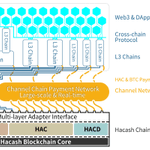
L1: PoW-native monetary assets
L2: payment channel network
L3: application chains
The more I study monetary architecture, the more underrated Hacash looks.


If the money itself is losing value, asset prices become a poor measure of real wealth.
This is the question crypto was originally born to confront.
Bitcoin gave us digitally scarce money.
Stablecoins gave us scalable digital payments.
But crypto still has not produced a native money that can credibly serve as a store of value, medium of exchange, and unit of account at the same time.
That is the unfinished monetary problem.

Bitcoin’s PoW, the immutability of 21M, and its rigid protocol made something historically new possible: a digital asset that can credibly store value for the long term.
But those same properties have not made Bitcoin a mass payment currency.
Bitcoiners have spent years trying to expand BTC as a medium of exchange. Yet even where Bitcoin is easy to spend, people often choose to spend weaker money and save the harder money.
That is not a failure of adoption. It is rational monetary behavior.
There is also a deeper structural problem.
More than 95% of BTC has already been mined. The remaining issuance is small, while Bitcoin’s protocol is deliberately difficult to change. Over the long run, this leaves an unresolved question around the economic security of the base layer.
Upgrading Bitcoin aggressively is not the answer.
Creating another “Bitcoin” is not the answer either.
A largely ignored possibility is a second Bitcoin mainnet:
BTC remains BTC, fully controlled by its holders.
But another PoW-native monetary system secures the second mainnet, absorbs the long-term security cost, and potentially uses Bitcoin itself as an anchor to regulate its monetary supply.
Bitcoin could remain the ultimate store of value.
The second mainnet could solve what Bitcoin was never designed to solve: economic security over the very long term and monetary circulation at global scale.
We don’t need to change the world overnight.
Think in decades.
Build one thing that works.
Execute it flawlessly.
Earn the right to play again.
Then repeat.
Let the results compound.
youtube.com/watch?v=DNL5iU0I…
Everyone wants to be a settlement layer now.
Institutions.
Public chains.
Stablecoin networks.
But most are still settling fiat-backed assets.
In 2018, an anonymous behind Hacash had already pointed to something deeper:
a native crypto settlement network.
Non-custodial.
PoW-based.
Built for value transfer.
It also placed Bitcoin inside a broader monetary system, not outside the discussion.
Eight years later, the market is finally catching up.
The real question is not only who settles stablecoins.
It is what settles crypto sound money.
“Make Ethereum the settlement layer of the global economy” sounds powerful.
But the real question is: Settlement layer for what?
If the final settlement asset is USDT/USDC, Ethereum becomes the settlement layer for stablecoins, not the monetary layer of the global economy.
ETH may be the most important asset inside Ethereum, but being gas, collateral, or programmable store of value is not the same as being money.
A global settlement layer needs a native monetary unit with settlement finality, purchasing power logic, and monetary neutrality.
This mission sounds familiar because crypto has been chasing it for years.
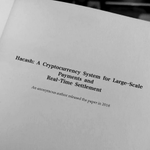
In 2018, Hacash already framed the problem directly:
Large-scale payments and real-time settlement.
The hard question was never only “which chain settles assets?”
The hard question is: What is the money being settled?

Proof of work, not proof of stake.
Build on the same PoW coin, not just on the same chain.
This is what makes HACD different.

Final day to apply for HACD Labs Season 2.
We have received 40+ builder applications.
Now we are reviewing every one carefully.
If your idea makes sense, fits HACD Stack, and shows real builder commitment, we will reach out through your X account first.
Please check your DMs over the next few days.
Selected projects will have the chance to launch on HACD Launchpad.
Not selected this time? No worries.
More seasons are coming.
Apply: hacd.it/incubator

Money has three functions:
> Store of Value
> Medium of Exchange
> Unit of Account
Bitcoin became the strongest crypto-native Store of Value. Stablecoins became the dominant onchain Medium of Exchange and Unit of Account.
But one is not used as money every day. The other is not crypto sound money.
The next frontier is obvious: a crypto sound money that can do all three.
I was surprised by this Hacash vs Ethereum comparison.
A lot of Ethereum “upgrades” are trying to patch problems created by its original architecture:
> approve / transferFrom risk
> account abstraction complexity
> state bloat
> opaque signing
> MEV / sandwich attack surface
> reentrancy
> proxy upgrade risk
> token standard fragmentation
> gas estimation pain
But Hacash seems to approach many of these from a different starting point. Not “add another EIP.” But redesign the transaction and asset layer itself:
> native asset actions
> multi-action atomic transactions
> protocol-level multi-asset support
> declarative transaction bodies
> storage rent
> P2SH-style custom verification
> native account abstraction hooks
> readable signing intent
The most interesting part to me is not that Hacash is “more flexible” than Ethereum.
It is almost the opposite.
Ethereum maximized general-purpose programmability first, then spent years managing the complexity created by that freedom.
Hacash appears to make a different bet: make the most important asset operations protocol-native, auditable, atomic, and harder to abuse by default.
Less arbitrary flexibility at the base layer. More structural safety for money and assets.
This is exactly the kind of architecture worth studying if we are thinking beyond “smart contracts” and toward Crypto Sound Money infrastructure.
github.com/hacash/doc/blob/m…

Bitcoin’s monetary experiment took around 8 years to truly explode. The trigger was not only ideology. ETH ICOs gave people a way to create, own, and capture upside.
Hacash has now run its monetary experiment for 7 years. HACD makes PoW pluggable, stackable, and attachable to any asset.
Its fair distribution slowed early growth, but HACD-native PoW issuance may now give builders the same thing ICOs gave in 2017: controllable upside.
Maybe history rhymes. Watching closely.
HACD Labs Incubator Season 2 is open.
This is a 7-day launch sprint for builders who want to form new assets on HACD.
Up to 10 projects will be selected and launched on HACD Launchpad.
The Top 5 successfully launched projects will each receive 100 USDT.
Timeline: June 24 — July 1
Apply Now: forms.gle/cTLsxufPqdAGq2ue6

“Make Ethereum the settlement layer of the global economy” sounds powerful.
But the real question is: Settlement layer for what?
If the final settlement asset is USDT/USDC, Ethereum becomes the settlement layer for stablecoins, not the monetary layer of the global economy.
ETH may be the most important asset inside Ethereum, but being gas, collateral, or programmable store of value is not the same as being money.
A global settlement layer needs a native monetary unit with settlement finality, purchasing power logic, and monetary neutrality.
This mission sounds familiar because crypto has been chasing it for years.
In 2018, Hacash already framed the problem directly:
Large-scale payments and real-time settlement.
The hard question was never only “which chain settles assets?”
The hard question is: What is the money being settled?

Announcing Ethlabs: a non-profit R&D lab for Ethereum and ETH
Our mission is to make Ethereum the settlement layer of the global economy.
The internet became global because shared protocols created a common language between networks. Private systems remained useful, but bounded. Finance is approaching a similar moment. As value, assets, and markets become digital, the world needs shared settlement infrastructure.
Ethereum is uniquely positioned to become that shared base layer, the neutral foundation on which users, institutions, and agents can transact without intermediation.
What we believe:
• We believe credible neutrality matters. Ten years of uptime and the lowest counterparty risk. Ground that cannot be pulled away by any one country, institution, company, or person.
• We believe ETH matters. The most valuable, programmable store of value. A decade of broad distribution, deep liquidity in onchain markets, and maximally trustless asset on Ethereum.
• We believe DeFi matters. Markets, liquidity, credit, exchange, and coordination, open to anyone.
• We believe adoption matters. Principles do not change the world until people benefit from them.
We sit between two worlds: real usage from the builders at the frontier, and the protocol that has to support it. We work with users, applications, wallets, L2s, infrastructure teams, institutions, ETH holders, core devs and researchers, then turn what they actually need into protocol work, shared standards, infrastructure, and shipped products.
Ethlabs is independent but Ethereum is a shared project. We are one node in a much larger network of stewards. This is the multi-node future.
We have spent the better part of the past decade contributing to Ethereum core research and development.
We are opinionated and transparent. We move with urgency, learn in public, and course-correct when we’re wrong.
We are building a lean, talent-dense team for people who want to do the most important work of their careers: join@ethlabs.org